(7% discount is applied at checkout)
Cart is empty
Your go-to destination for cutting-edge server products
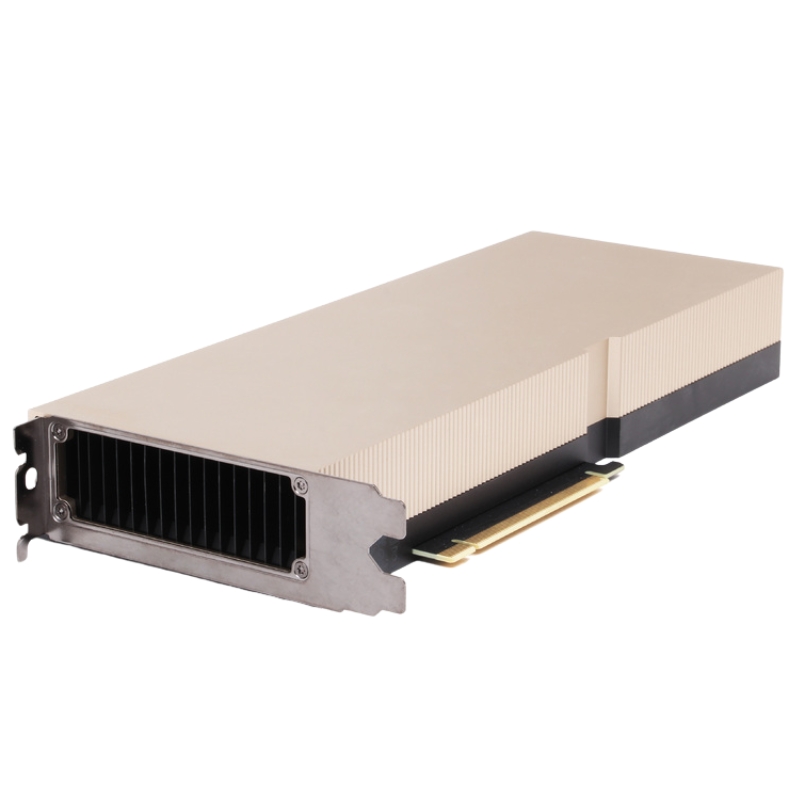


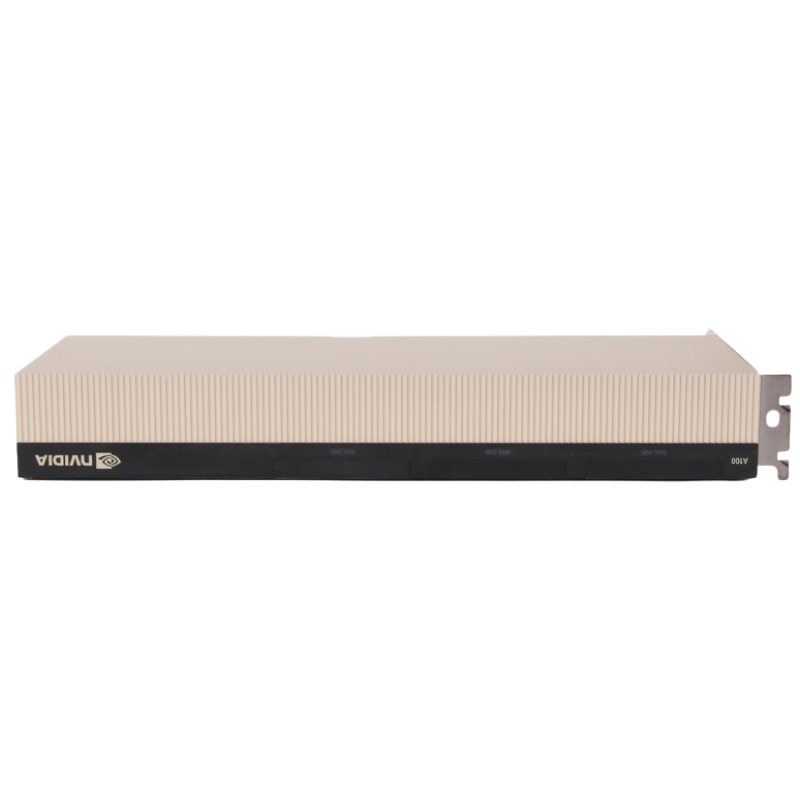
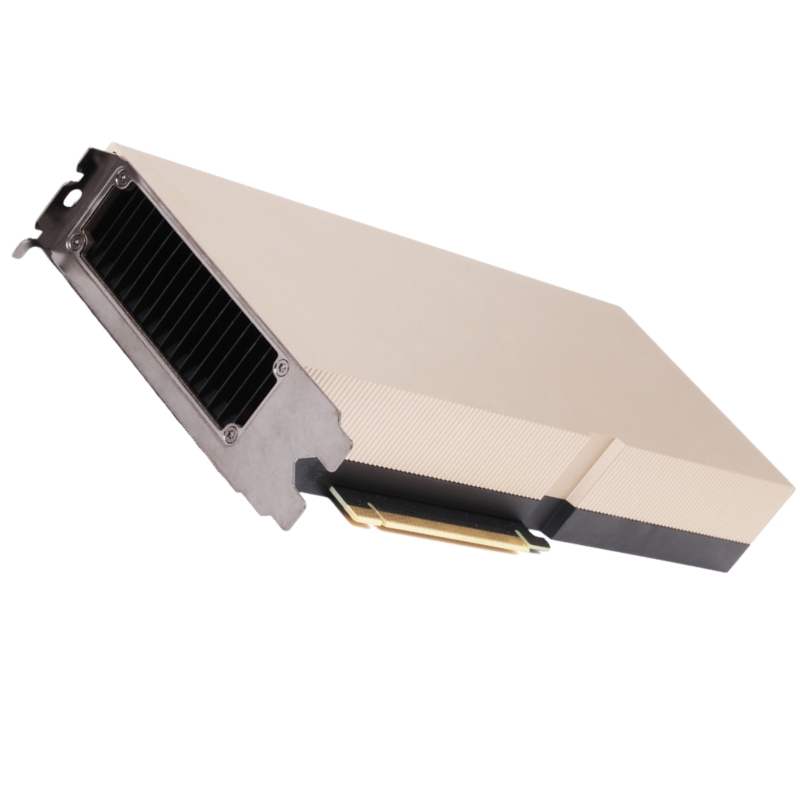
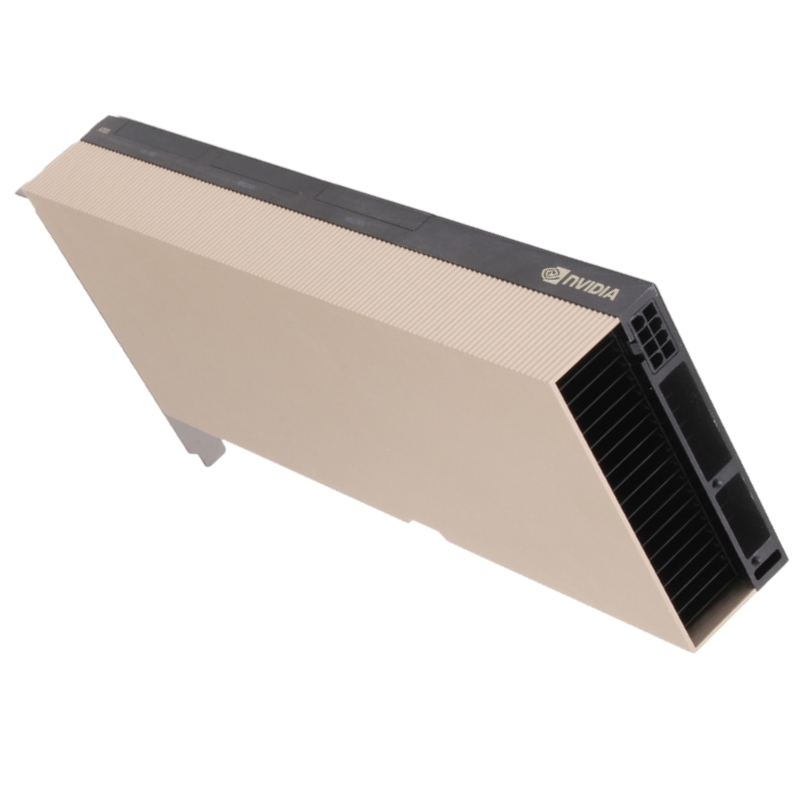
Nvidia 900-21001-0300-030 A100 40GB PCI-Express HBM2 Tensor Ampere GPU Computing Accelerator Card. Excellent Refurbished with 1 year replacement warranty. Call (ETA 2-3 Weeks)
The Nvidia A100 40GB PCIe Accelerator Card is engineered to deliver breakthrough performance for AI workloads, data analytics, and scientific simulations. Built on the cutting-edge Ampere architecture, this plug-in card transforms data centers with its unparalleled processing capabilities.
With its PCI-E interface, the A100 card integrates smoothly into existing infrastructure, offering flexibility for diverse deployment scenarios. Its full-height profile and plug-in design simplify installation across a wide range of server platforms.
The Nvidia 900-21001-0300-030 A100 40GB PCI-Express card represents a discrete, data-center-class implementation of the Ampere GA100 GPU in a PCIe form factor optimized for general purpose accelerated computing, machine learning training and inference, high performance computing, and large-scale data analytics. This specific part number identifies the 40 gigabyte HBM2 configuration delivered on a dual-slot, passive-cooled 10.5-inch PCIe Gen4 card that integrates the Ampere architecture’s full set of tensor computing features and memory subsystem optimizations into server ecosystems that either lack NVLink fabric or prefer PCIe connectivity. The card’s HBM2 memory capacity and extremely high sustained bandwidth make it suited to memory-bound workloads where large models, big batches or high concurrency are necessary.
The Ampere GA100 GPU in the A100 family rethinks mixed-precision acceleration by combining new Tensor Cores with expanded FP64, FP32 and FP16 throughput, delivering a flexible compute fabric that allows workloads to trade precision for throughput in a software-driven manner. This design amplifies throughput for linear algebra kernels, large matrix multiplies and deep neural network primitives while preserving IEEE-compliant double precision where scientific and HPC workloads require it. The GA100 die organizes compute into streaming multiprocessors and multi-instance partitions, enabling both large monolithic kernels and fine-grained multi-tenant partitioning. Nvidia’s multi-instance GPU capability (MIG) enables partitioning of a physical GPU into multiple logically isolated instances to maximize utilization and provide tenant isolation for inference and smaller training jobs.
This PCIe 40GB A100 leverages HBM2 stacks to reach extremely high peak and sustained memory bandwidth suitable for models and HPC problems that are limited by memory throughput rather than raw arithmetic. The datasheets and product briefs for the A100 series report memory bandwidth figures in the region of 1.5–1.6 terabytes per second for the 40GB HBM2 configuration, a level of bandwidth that reduces data starvation for the GPU compute engines and significantly improves performance on large matrix and sparse-dense hybrid operations. Architects should plan systems and host software to make full use of the available bandwidth by preferring contiguous memory accesses, fused kernels and careful placement of data to minimize host-to-device transfer overhead.
Forty gigabytes of HBM2 on the PCIe A100 provides a large on-device working set that is especially beneficial for training medium and large models, for inference scenarios where multiple models are co-resident, and for HPC simulations that require large per-process data capacity. System architects often combine the A100’s HBM2 with high capacity host RAM and Nvidia’s unified memory and page migration features to allow datasets larger than the device memory to be operated on efficiently while minimizing host-GPU synchronization points. The A100’s ability to run complex kernels with large resident data structures reduces the need to shard models aggressively across devices in some workloads.
The 900-21001-0300-030 A100 PCIe card is a dual-slot, full-height card designed for standard rackmount servers with proper airflow and chassis support. The passive heatsink design requires adequate front-to-back or front-to-top airflow inside the server because the card does not contain an active fan assembly. When planning deployments, ensure that the chosen server chassis and fan configuration can sustain the card within its thermal envelope across realistic sustained workloads, since data center airflow constraints directly impact performance stability and long-term reliability.
Because this PCIe variant uses a passive cooler, thermal management falls to the server platform. Data center integrators should provision directed airflow, chassis baffles and fan curves that maintain recommended inlet temperatures to prevent thermal throttling during extended training runs. Passive cooling simplifies device serviceability because fans and shrouds are managed at the system level, but it increases the responsibility of system architects to manage overall rack airflow and to monitor device temperatures via telemetry tools. The card’s active power draw under high load is substantial and may approach published thermal design power figures for this SKU; refer to vendor documentation for precise thermal and electrical numbers for the installed part and BIOS configuration.
The A100 family is explicitly engineered to accelerate large language models, vision transformers, recommendation systems and HPC kernels. In training workloads, the combined high core throughput and fast memory allow the card to process large mini-batches and to sustain high multiply-accumulate rates. For inference, the A100’s tensor cores and support for lower precision modes deliver substantial reductions in latency while enabling higher concurrency. Benchmarks published by Nvidia and validated by third parties show the A100 delivering orders of magnitude improvements versus older architectures for certain workloads, with the PCIe 40GB SKU achieving excellent performance per rack-unit where NVLink interconnect is not required. Real-world performance depends on model size, batch strategy, data pipeline efficiency and software stack optimizations.
Multi-Instance GPU (MIG) capability is a game-changer for shared infrastructure because it allows a single 40GB A100 to be partitioned into multiple smaller instances with guaranteed compute and memory slices. For inference-heavy deployments where utilization is sporadic or where multiple teams share a cluster, MIG increases overall utilization by enabling smaller workloads to run concurrently without interfering with each other. This capability also supports QoS strategies in multi-tenant environments where isolated resource slices reduce noisy-neighbor interference and provide predictable latency for production services. Configuring MIG instances requires kernel-level support and orchestration tools that understand the hardware partitions.
The PCIe A100 trades the high bandwidth, low latency NVLink fabric available on SXM-based A100 modules for broader system compatibility and simpler server designs. For workloads that scale across many GPUs with large inter-GPU communication, NVLink or SXM variants with NVSwitch fabric will often provide superior scaling efficiency. Conversely, if the deployment emphasizes single-GPU throughput, ease of integration into existing PCIe servers, or lower cost per GPU instance for certain procurement channels, the PCIe 40GB card offers an efficient and practical compromise. Choosing between PCIe and SXM/NVLink variants is fundamentally a systems design decision driven by communication patterns, cluster topology, and budget.
Training workloads that require high floating-point throughput and high memory bandwidth benefit from the A100’s tensor cores and HBM2 capacity. Researchers and engineering teams training transformer-style language models, large convolutional networks, graph networks with heavy neighborhood aggregation, and large recommender systems will find the 40GB PCIe SKU particularly useful when the cluster topology centralizes compute on single-socket servers or when NVLink is not part of the target architecture. In practice, many organizations use PCIe A100s as building blocks for heterogeneous clusters that mix PCIe and NVLink nodes depending on the dataset partitioning and communication demands.
Inference at scale benefits from the A100’s mixed precision capabilities, tensor core optimizations and MIG. Multi-tenant inference fleets that serve diverse models can provision multiple MIG instances per physical card to maximize throughput and reduce idle GPU time. Where low latency is critical, inference pipelines combined with Nvidia’s TensorRT and optimized runtime stacks can yield predictable latencies and extremely dense model consolidation on a per-server basis. For cloud or host-shared environments, MIG’s hardware isolation also simplifies billing and resource accounting.
HPC codes that are memory bandwidth sensitive or that require high double precision throughput also benefit from the GA100 design. Applications in computational fluid dynamics, molecular dynamics, climate modeling, and numerical linear algebra see meaningful acceleration when kernels are reformulated to use tensor cores for mixed precision while preserving numerical stability via appropriate error correction strategies. For HPC clusters, the PCIe A100 is often used in conjunction with fast interconnect topologies at the host level or within racks to achieve desired scaling characteristics for tightly coupled applications.


 Contact Us
 Information
 Catalog
 Solid State Drives (SSD)
 Network Switches
 Hard Disk Drives
 HBA & Controllers
 PC & Servers
 PC & Server Memory
 CPU & Processors
 Network Routers
 Power Supplies
 Tape Drives & Libraries
 Network Devices
 Computer & Network Cables