(7% discount is applied at checkout)
Cart is empty
Your go-to destination for cutting-edge server products
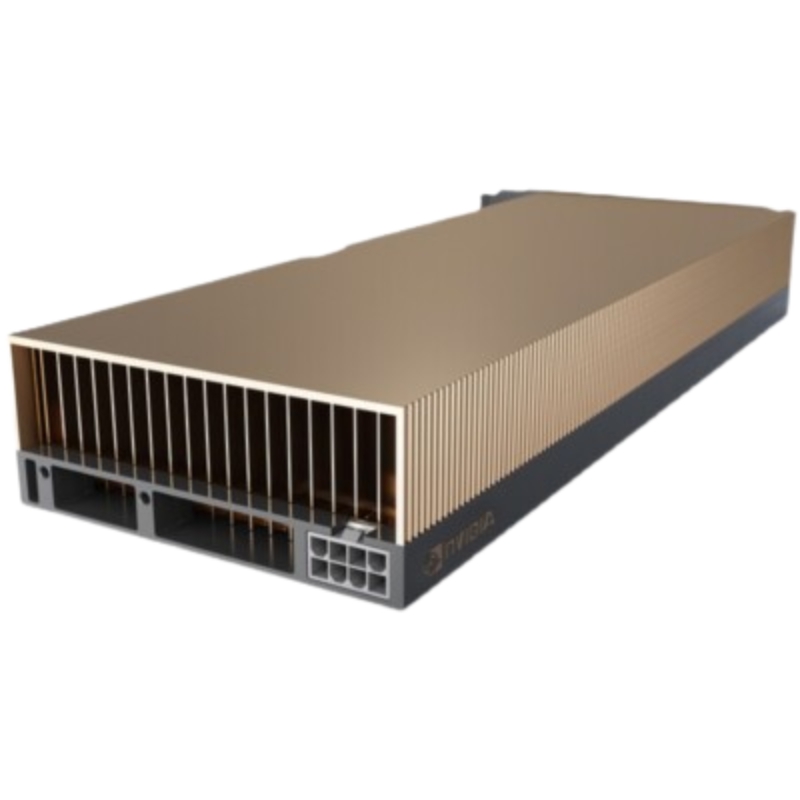


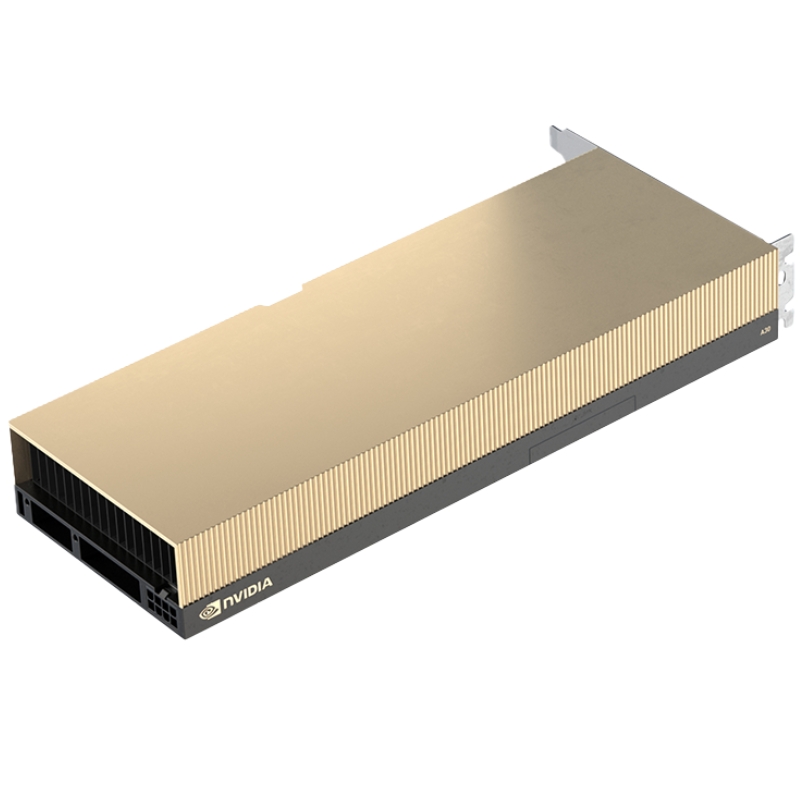
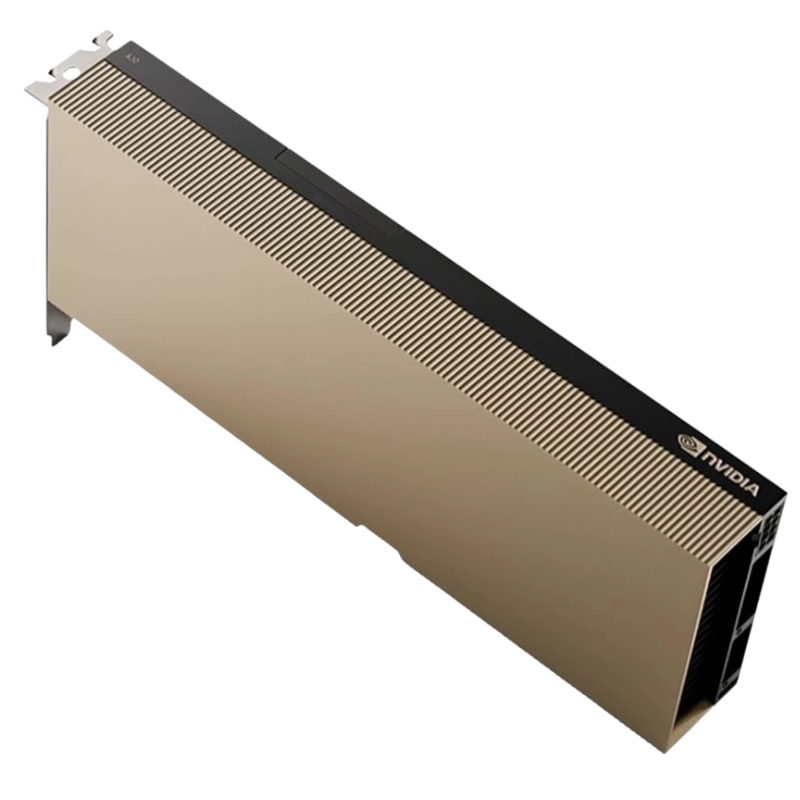
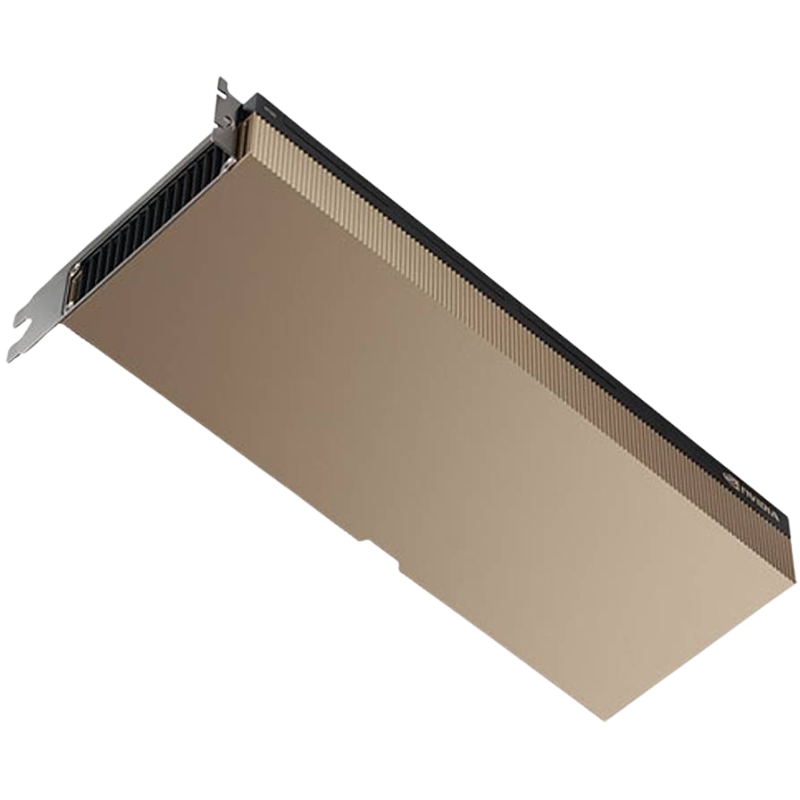
Nvidia 900-21001-3400-030 Tensor Core A30 24GB HBM2 2 Slot PCI-Express 4.0 Passive Cooling Gpu Card. New Sealed in Box (NIB) with 3 Years Warranty. Call (ETA 2-3 Weeks)
The Nvidia 900-21001-3400-030 Tensor Core A30 24GB HBM2 2 Slot PCI-Express 4.0 Passive Cooling GPU Card represents a powerful balance of compute density, memory capacity, and thermal efficiency targeted at data center inference, mixed workloads, and GPU-accelerated virtualization. This category page focuses on the A30 series configuration identified by part number 900-21001-3400-030, which features 24 gigabytes of HBM2 memory, a two-slot PCIe 4.0 form factor, passive cooling for optimized airflow in server chassis, and the Ampere architecture’s Tensor Core improvements. The text below explores architectural strengths, ideal deployment scenarios, memory and bandwidth considerations, form factor and mounting options, thermal behavior and passive cooling integration, system-level compatibility, software and driver ecosystem, performance tuning and benchmarking practices, and procurement and lifecycle considerations relevant to technical buyers, systems integrators, and enterprise procurement teams.
The Nvidia A30 leverages the Ampere generation of GPU architecture and integrates Tensor Cores designed to accelerate mixed-precision compute for workloads such as AI inference, small-batch training, recommendation systems, and media processing. The Tensor Core units are optimized for matrix math operations that underlie deep learning primitives and provide highly efficient throughput when using data types like FP32, FP16, BF16, INT8, and INT4 where supported. For inference-centric deployments, the A30’s Tensor Core acceleration significantly increases throughput per watt compared to previous generations, enabling more served requests in cloud and on-prem environments while preserving energy efficiency. Architecture-level optimizations also translate into reduced latency for single-request processing under carefully tuned drivers and runtime libraries, making the A30 a practical choice for real-time and near-real-time inference applications in 24GB HBM2 configurations.
The compute capability of this A30 SKU supports a high number of CUDA cores combined with improved scheduling and streaming multiprocessor efficiency. Multi-instance GPU (MIG)-style partitioning and virtualization-friendly features are available at the platform and software layer, enabling multiple isolated workloads to run concurrently. Enterprise operators will appreciate that the GPU supports robust context switching and hardware-level isolation mechanisms that facilitate consolidation, multi-tenancy, and deterministic performance for containerized applications. For workloads that require both scalar and tensor compute, the A30 provides a balanced ratio of CUDA cores to Tensor Cores, which reduces the need to choose between general-purpose GPU compute and specialized AI inferencing.
The inclusion of 24 gigabytes of HBM2 memory on the Nvidia 900-21001-3400-030 Tensor Core A30 equips servers with a wide memory bus and high sustained memory bandwidth. HBM2’s stacked memory architecture reduces latency and increases throughput compared to traditional GDDR variants at equivalent power envelopes. This is particularly important for models with large parameter counts, memory-resident datasets, or for multi-model serving where several models must be resident in memory concurrently. High bandwidth memory is essential for minimizing stalls caused by memory fetches during matrix operations, and it allows larger minibatches or longer sequences to be processed effectively without frequent host-to-device transfers.
The 2-slot PCI-Express 4.0 form factor of this A30 card is a deliberate compromise between density and thermal space. PCIe 4.0 doubles the interface bandwidth per lane versus PCIe 3.0, which is relevant for host-device communication during model loading, checkpoint transfers, and data prefetch in data pipelines. While HBM2 reduces reliance on host transfers during steady-state compute, the PCIe 4.0 interface still matters for bursty workloads and for initial model staging. The two-slot width allows the card to fit in standard 1U and 2U server designs when paired with chassis that support passive-cooled devices and directed airflow from front to rear, a typical arrangement in modern dense data centers.
System planners must confirm riser types, available slot pitch, and adjacent device placement when integrating a 2-slot passive A30. Some high-density chassis have limited clearances, and adjacent GPUs or storage modules might alter airflow patterns. The passive cooling designation assumes a chassis-level airflow strategy, commonly found in rack servers with front-to-back fans. Administrators should verify that the server platform provides sufficient inlet air and that ambient temperatures in the rack are managed through proper thermal zoning. Additionally, BIOS settings for PCIe lane configuration and power profiles should be reviewed to ensure the GPU operates at intended link widths and power states under heavy load.
Passive-cooled GPU cards like the Nvidia 900-21001-3400-030 rely on the server’s enclosure fans and directed airflow to dissipate heat. Passive designs eliminate onboard blowers in favor of a dense fin stack and heat pipes, which is advantageous when deploying multiple GPUs in a closed environment because it centralizes airflow control and reduces noise compared to active blower-style cards. From a maintenance perspective, passive cards reduce the number of moving parts on the GPU itself and shift airflow maintenance to the chassis. Effective deployment requires a plan for intake temperature control, hot-aisle containment, and the use of front-to-back directional fans to ensure consistent ambient temperatures across all installed GPUs.
Realizing the full potential of the Nvidia 900-21001-3400-030 Tensor Core A30 requires a tuned software stack. NVIDIA’s driver and CUDA toolkit versions must match runtime libraries such as cuDNN, TensorRT, and NCCL for distributed training or multi-GPU inference. Optimization layers like TensorRT provide kernel fusion and precision calibration tools that exploit Tensor Cores for lower-latency, higher-throughput inference while preserving accuracy. Developers and DevOps engineers should test mixed-precision workflows, quantization pipelines, and batch sizing strategies to find the best trade-off between latency and throughput for each target model. Inference-serving frameworks that support dynamic batching and model versioning will benefit from the A30’s memory and compute profile.
Enterprise and cloud operators commonly select the Nvidia 900-21001-3400-030 Tensor Core A30 for a range of use cases that tie together its memory, compute, and passive cooling benefits. Inference at scale for recommendation systems, natural language processing tasks, personalization algorithms, and video analytics are primary fits. The card also suits mixed workloads in virtual desktop infrastructure or GPU-accelerated databases where shared memory and multi-model residency matter. Edge datacenters that require quiet operation and coordinated chassis-level cooling may prefer passive designs to reduce acoustics while maintaining compute density. Organizations performing model development and validation may deploy A30s in pooled GPU clusters to provide developers with large memory capacity and high throughput without dedicating entire racks to active-blower cards.
When deploying multiple A30 cards in a chassis, power distribution and redundancy must be evaluated. Each card’s peak power draw can affect PSU selection, PSU redundancy, and power distribution circuitry in the chassis. Systems engineers should calculate worst-case thermal and electrical draws for racks populated with GPUs, ensuring power capacity for failover scenarios and for maintenance windows where other components may be offline. Redundant power supplies and a well-architected PDUs (power distribution units) help maintain uptime under partial failures while providing the headroom for bursts in load during batch processing windows.
The A30 integrates with mainstream AI frameworks including TensorFlow, PyTorch, and MXNet, among others. Optimized libraries such as cuDNN and TensorRT provide performance primitives that frameworks can leverage to accelerate convolutions, attention mechanisms, and matrix multiplications. For teams building inference pipelines, model conversion and optimization steps are typical, using tools that convert trained models into runtime-optimized formats. For distributed training and inference use cases, communication libraries like NCCL and RDMA-enabled transports help maximize scaling efficiency on multi-node deployments.
Deploying passive-cooled GPU cards in large clusters has environmental implications, including power consumption, cooling requirements, and acoustic profiles. Passive cards centralize airflow management, which can simplify acoustics control but increases the importance of robust data center cooling. Operational playbooks should include scenarios for thermal events, power outages, and failover to ensure graceful degradation. Incorporating sustainability metrics and considering renewable energy credits or carbon measurement tools can support corporate sustainability goals when scaling GPU-heavy infrastructure.
When evaluating the A30 SKU, consider adjacent families for different workload priorities. Cards with larger memory footprints or different cooling profiles may be better suited to extreme-large-model training or edge deployments respectively. The A30’s place in the product lineup is as a versatile, memory-rich, passive-cooled option that balances inference efficiency and moderate training capability. Upgrade paths typically move toward higher memory or higher Tensor Core density GPUs as model sizes expand or as latency constraints tighten, but many organizations find the A30 to be a long-lived component for inference and mixed workloads.


 Contact Us
 Information
 Catalog
 Solid State Drives (SSD)
 Network Switches
 Hard Disk Drives
 HBA & Controllers
 PC & Servers
 PC & Server Memory
 CPU & Processors
 Network Routers
 Power Supplies
 Tape Drives & Libraries
 Network Devices
 Computer & Network Cables