(7% discount is applied at checkout)
Cart is empty
Your go-to destination for cutting-edge server products
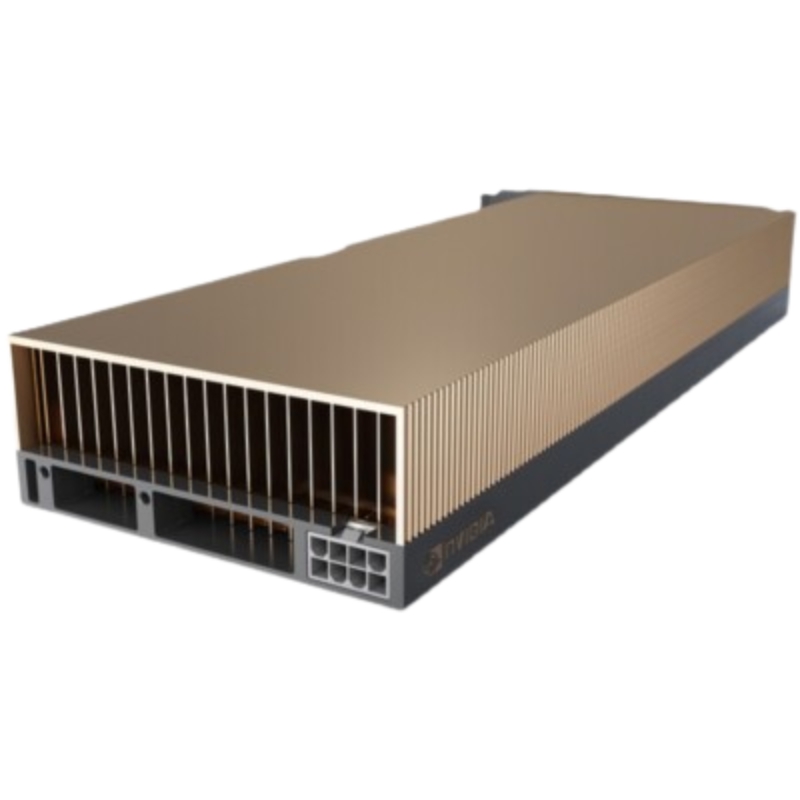


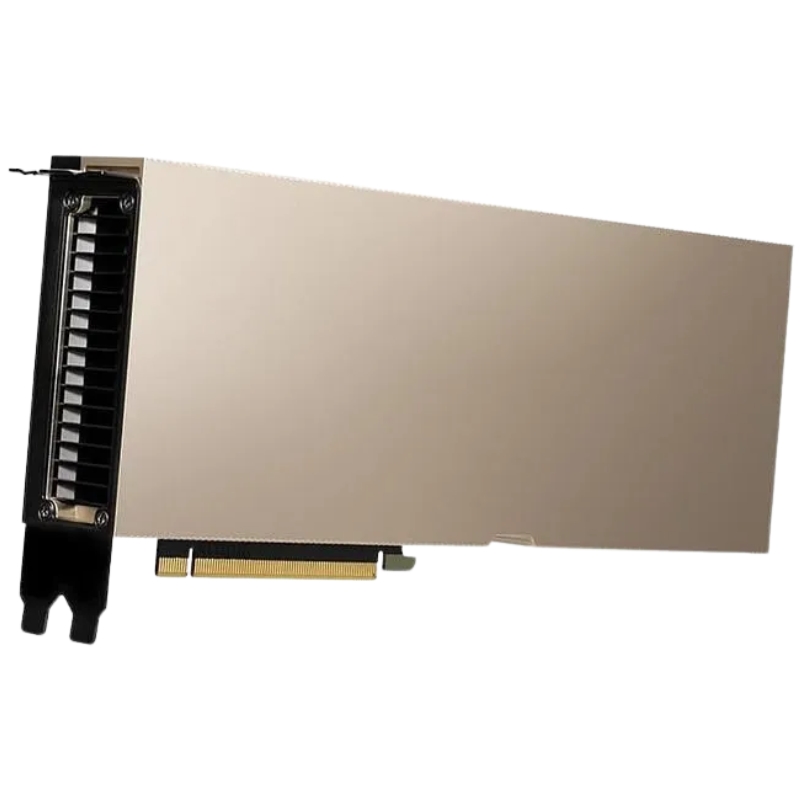
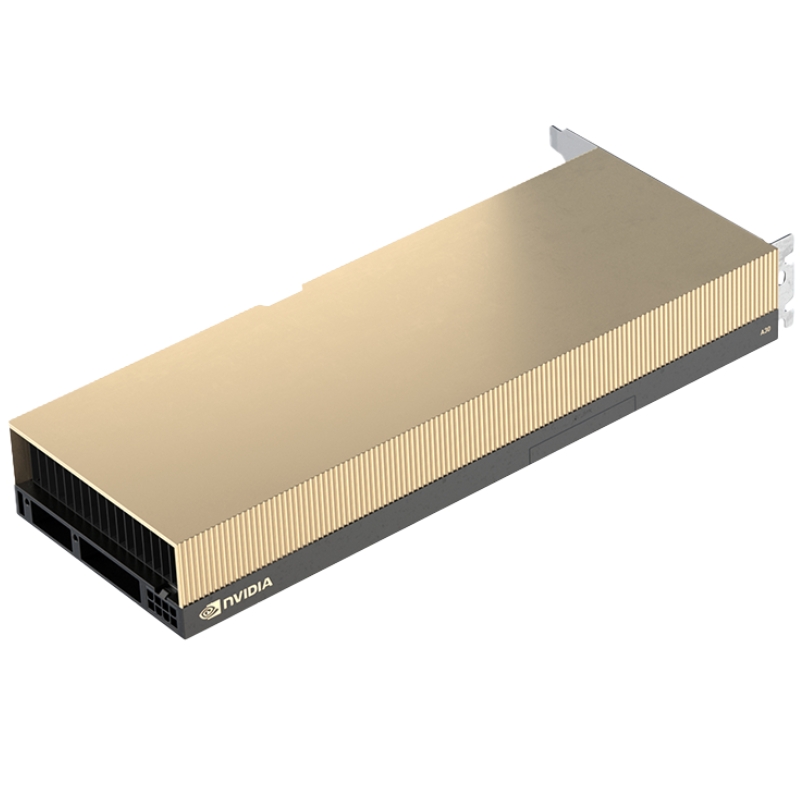
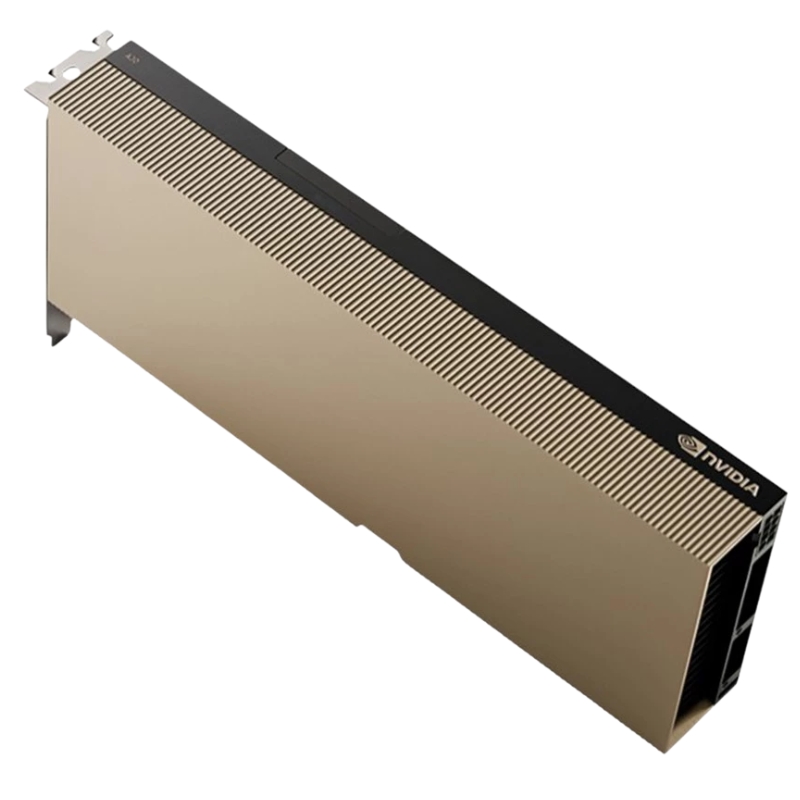
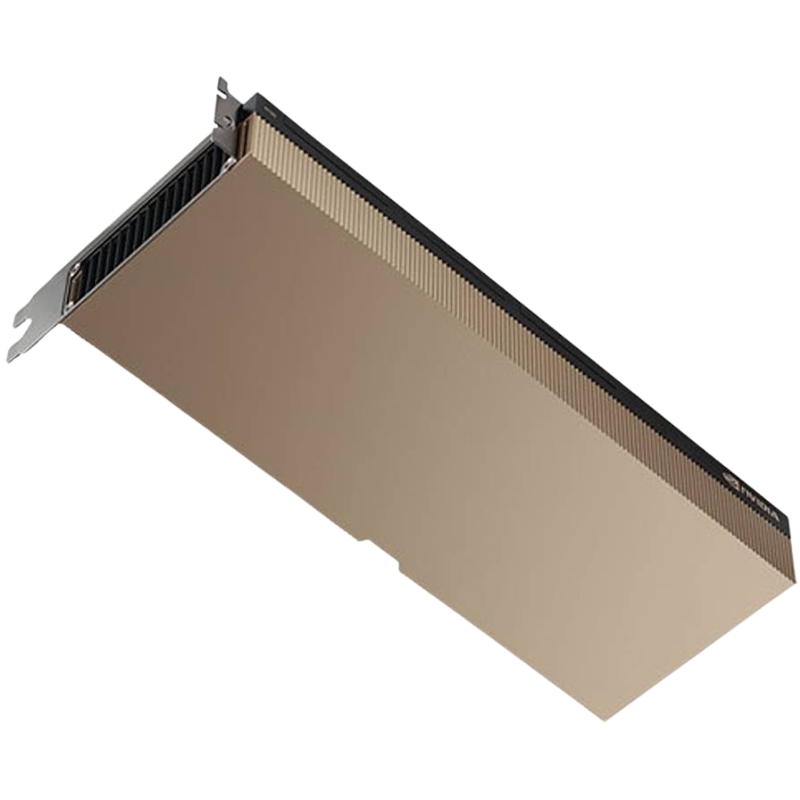
Nvidia 900-21010-0040-000 H200 NVL Tensor Core 141GB HBM3e Memory Gen 5.0 PCI-Express X16 Graphics Processing Unit. New Sealed in Box (NIB) with 3 Years Warranty. Call (ETA 2-3 Weeks)
The Nvidia H200 NVL Tensor Core graphics processing unit, identified by part number 900-21010-0040-000, represents a class-leading solution engineered for the most demanding artificial intelligence, high performance computing, and data center inference workloads. With a vast 141GB of HBM3e memory and compatibility with PCI-Express Gen 5.0 x16, this GPU provides a rare combination of raw compute, enormous memory capacity, and I/O throughput that modern enterprise-scale models require. The category encompasses both the hardware platform itself and the surrounding ecosystem of software, cooling, power delivery, and system integration that enable organizations to deploy large-scale transformer training, multi-model inference, and mixed-precision HPC simulations. This continuous category narrative emphasizes technical attributes, operational benefits, typical deployment patterns, integration considerations, thermal and power requirements, and the software stack that unlocks the H200 NVL's performance in production environments.
The H200 NVL is built around an advanced Tensor Core architecture optimized for matrix multiplication, sparse and dense linear algebra, and mixed-precision arithmetic. The defining hardware attribute for the category is the HBM3e memory subsystem: 141 gigabytes of ultra-high-bandwidth memory configured to sustain the throughput needed by modern large language models and multi-modal networks. HBM3e elevates available bandwidth per GPU dramatically compared to previous generations, reducing memory-bound stalls and enabling larger batch sizes during training and inference. The large memory capacity allows developers to fit entire model shards or extremely wide activation maps on a single device, simplifying parallelism strategies and reducing communication overhead between devices. For organizations assembling compute clusters, the H200 NVL's memory profile changes how they map models across nodes, permitting greater model parallelism headroom and decreasing the frequency of memory paging or host transfers.
Tensor Cores in the H200 NVL accelerate matrix math operations with specialized hardware paths for mixed-precision types commonly used in deep learning, including FP8, BF16, FP16, and INT8. These cores deliver high throughput for matrix multiply-accumulate operations (GEMM), fused kernels, and sparsity-aware algorithms. The architecture is optimized for sparsity, enabling models that exploit structured sparsity to realize near-linear throughput gains without sacrificing numerical stability. In practical terms, these compute enhancements translate to significantly faster training iterations and reduced latency for inference queries, particularly for transformer-based networks. The GPU's microarchitecture is carefully balanced to pair Tensor Core compute with the memory bandwidth and cache hierarchy, so that large matrix workloads are fed reliably and do not become I/O constrained.
Native PCI-Express Gen 5.0 x16 connectivity offers increased host-to-device bandwidth critical for workloads that move large datasets across the CPU-GPU boundary or rely on NVMe-based datasets streamed into GPU memory. The expanded lane bandwidth simplifies disaggregated storage designs and reduces the latency and queueing inherent in prior-generation interfaces. Systems integrating the H200 NVL should be engineered to take advantage of Gen 5.0 capabilities across the platform: CPUs and motherboards must support the same PCIe generation to avoid bottlenecking, and system architects will often pair these GPUs with Gen 5.0 NVMe fabrics, high-throughput NICs, and appropriately configured I/O fabrics to match the GPU's data ingestion potential. For many turnkey rack solutions, the H200 NVL is a plug-and-play compute node that can be deployed into existing PCIe 5.0-capable servers with minimal rework.
The H200 NVL category is built to address several high-value workload classes. First, large-scale deep learning training for language and multi-modal models is a primary target; the 141GB HBM3e memory allows sizable model parameters and activations to be kept on-device, enabling higher throughput and improved convergence characteristics at scale. Second, low-latency, high-concurrency inference serving of transformer models benefits from the GPU's mixed-precision Tensor Cores and abundant memory headroom, which together reduce quantization trade-offs and permit serving larger context windows. Third, HPC applications involving dense matrix algebra, computational fluid dynamics, and genomics can exploit the H200 NVL's floating point performance and bandwidth, yielding faster time-to-solution for simulation and analysis workloads. Fourth, data analytics and graph processing that require massive in-memory working sets will see reduced processing time and simpler memory management by leveraging the H200 NVL's large HBM footprint.
The practical utility of the H200 NVL category hinges on a robust software ecosystem. Libraries and frameworks have matured to support mixed-precision and sparsity-enabled training, including optimized kernels for Tensor Core acceleration. Deep learning frameworks remain a focal point; integrations that include efficient CUDA kernels, cuDNN updates, and accelerator-specific runtime optimizations are essential to realize advertised throughput. Distributed training frameworks and communication libraries must be configured to match the H200 NVL's characteristics: minimizing gradient synchronization latency, overlapping communication with computation, and leveraging topology-aware all-reduce strategies deliver the best scalability for multi-GPU and multi-node setups. Additionally, inference toolkits that support model quantization, pruning, and runtime optimization are part of the category conversation because they enable lower-latency, cost-effective deployment without sacrificing model accuracy.
Given the H200 NVL's high compute density and memory bandwidth, thermal design and power delivery are central elements of the category. Effective cooling solutions—whether passive, active, or liquid-cooled—are essential to maintain peak performance without thermal throttling. System integrators typically pair these GPUs with chassis and rack designs calibrated to the card's TDP, ensuring adequate airflow, pressure differentials, and exhaust paths. Power distribution must match the card's peak draw, and redundant power supplies are recommended for fault-tolerant deployments. For large-scale clusters, data center operators must plan electrical provisioning and cooling capacity in advance, and often run thermal simulations to anticipate hotspot zones and airflow interactions across densely packed nodes.
The H200 NVL's physical dimensions and slot profile influence server selection and rack planning. Full consideration should be given to adjacent PCIe slot availability, rear I/O access, and cable management for power and signaling. Some deployments may adopt mezzanine-style systems or GPU sleds to maximize density, while others prefer standard PCIe x16 installations for flexibility. Cable length and connector types are practical details that can affect signal integrity at PCIe Gen 5.0 speeds, which in turn impacts system reliability. Planning for maintenance accessibility and thermal monitoring sensors simplifies long-term operations and reduces downtime during hardware rotations or firmware updates.
Scaling to multiple H200 NVL GPUs within a node or across nodes requires careful interconnect planning. High-performance topologies that minimize latency and maximize available bandwidth will directly influence scaling efficiency for distributed training jobs. Within-node NVLink or similar high-speed device-to-device fabrics, if available in the platform variant, offer lower-latency communication for gradient exchanges and parameter synchronization than PCIe alone. Across nodes, RDMA-capable fabrics and advanced switch fabrics help maintain linear scaling as worker counts increase. The category includes consideration of hybrid topologies that combine high-speed intra-node interconnects with optimized inter-node fabrics to achieve near-ideal scaling for large model training runs.
The H200 NVL sits within a broader ecosystem of partner technologies: server OEMs, cloud service providers, software vendors, and systems integrators all play roles in bringing the hardware into production. Compatibility with major deep learning frameworks, distributed training libraries, orchestration systems, and turnkey inference platforms ensures that teams can adopt the H200 NVL without reworking the majority of their software stack. Strategic partnerships accelerate solution validation and deliver reference architectures, enabling customers to adopt best practices for deployment, optimization, and lifecycle management. For organizations evaluating hardware suppliers, compatibility certifications and proven integration stories are important risk mitigators.
As high-density compute accelerators increase data center power draw, sustainability and environmental impact become important aspects of procurement decisions. Organizations adopting H200 NVL GPUs should assess power efficiency metrics, cooling strategies, and opportunities for workload consolidation to reduce energy per inference or training iteration. Some data centers offset increased power usage with renewable energy contracts, heat recycling, or improved PUE targets. Efficient orchestration and auto-scaling policies can also reduce idle power consumption by scaling GPU resources to match demand, thereby improving the environmental profile of AI infrastructure over time.


 Contact Us
 Information
 Catalog
 Solid State Drives (SSD)
 Network Switches
 Hard Disk Drives
 HBA & Controllers
 PC & Servers
 PC & Server Memory
 CPU & Processors
 Network Routers
 Power Supplies
 Tape Drives & Libraries
 Network Devices
 Computer & Network Cables