(7% discount is applied at checkout)
Cart is empty
Your go-to destination for cutting-edge server products
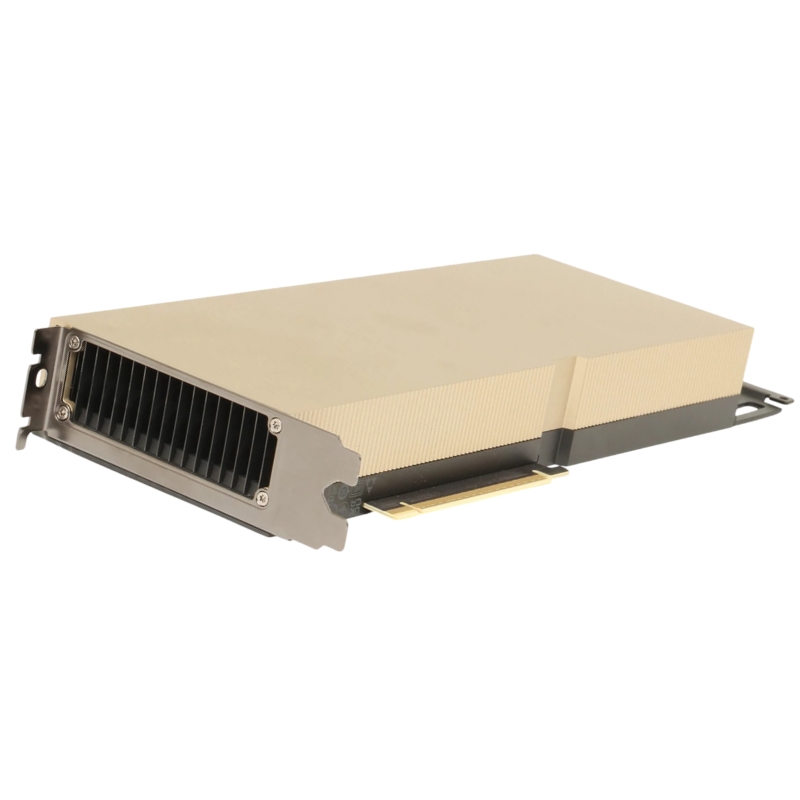


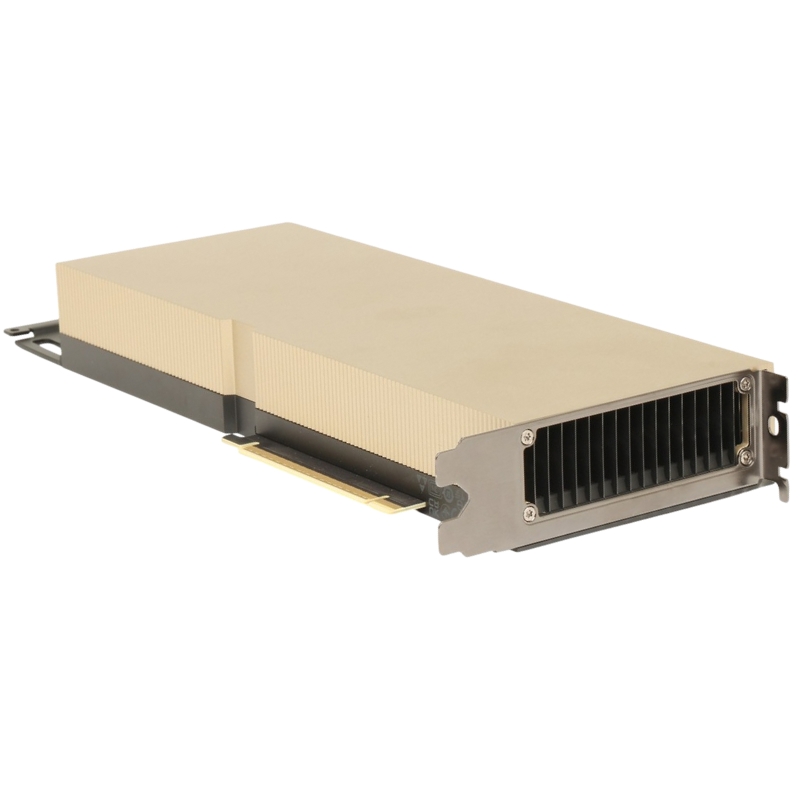
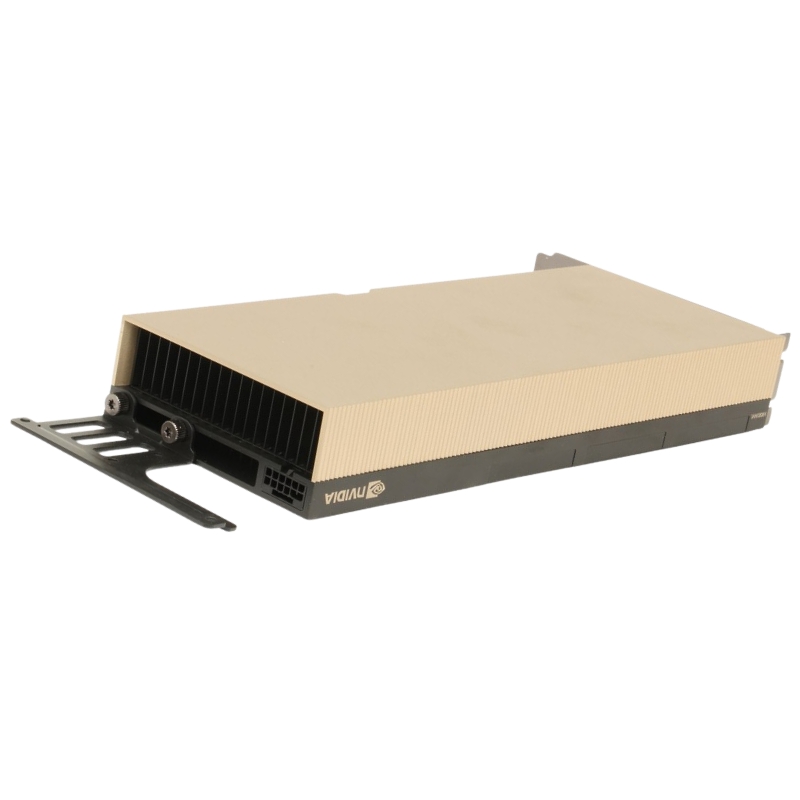
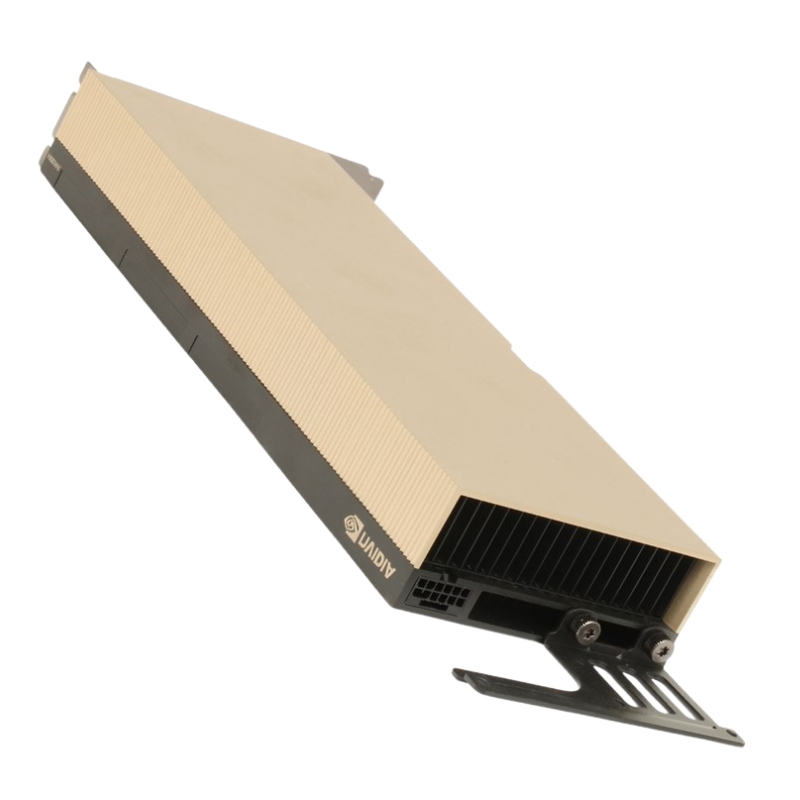
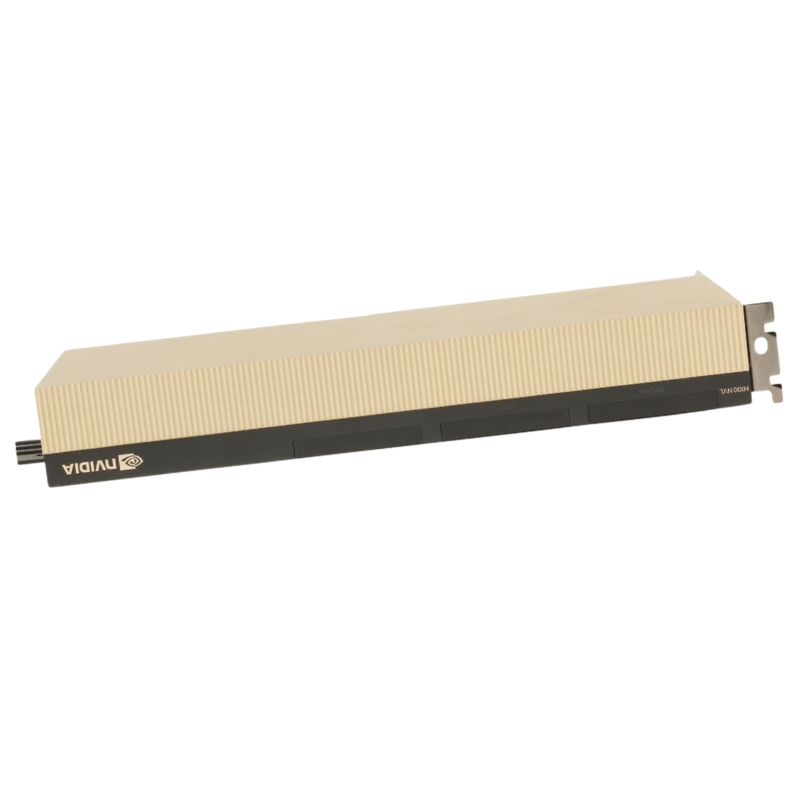
Nvidia 900-21010-0120-030 H100 NVL Tensor Core 94GB Memory Interface 6016 Bit HBM3 Bandwidth 3938GB/s PCI-E 5.0 X16 GPU. New Sealed in Box (NIB) with 3 years Warranty - Dell Version. Call (ETA 2-3 Weeks)
The Nvidia 900-21010-0120-030 H100 NVL Tensor Core 94GB GPU represents a high-density, high-throughput solution purpose-built for hyperscale AI training, inference at scale, and multi-tenant GPU server deployments. As a member of the H100 NVL family, this SKU emphasizes large memory capacity, expanded memory interface width, and the HBM3 memory subsystem tuned for enormous bandwidth demands. Designed for data centers, AI clouds, and purpose-built deep learning appliances, the H100 NVL 94GB SKU addresses workflows that require sustained memory capacity and memory bandwidth to accelerate large Transformer models, sparse and dense matrix operations, mixed precision training, and throughput-optimized inference. The categorical framing of this product places it at the intersection of GPU compute density and memory-centric model scaling, making it a natural choice for organizations that need to host many simultaneous models, shard colossal parameters across hardware, or run inference for large foundation models with strict latency and throughput SLAs.
At the heart of the H100 NVL SKU is Nvidia’s Hopper architecture, whose innovations rearchitect the GPU for modern AI primitives. Tensor Cores in this generation are designed to deliver significant improvements for mixed-precision matrix multiply-accumulate operations that dominate deep learning workloads. The architecture couples enhanced Tensor Core throughput with advanced sparsity acceleration and software-hardware co-optimization.
One of the defining characteristics of this SKU is its 94GB of HBM3 memory paired with an expansive 6016-bit memory interface. This memory configuration enables orders of magnitude greater memory throughput than conventional GDDR or earlier HBM variants. The 6016-bit wide interface, when combined with HBM3 stacks, produces sustained bandwidth figures that support the massive data movement needed for large attention-based models and memory-intensive data pipelines. For workloads that cannot be easily sharded across many smaller-memory GPUs, this category offers a middle ground: significantly larger per-GPU memory resources to reduce cross-GPU communication overhead and support larger per-batch or per-sequence sizes in natural language processing and multimodal model training.
HBM3 bandwidth plays a pivotal role in enabling larger batch sizes, longer context windows, and reduced memory spills to host memory. For inference pipelines that require rapid access to model weights and activations, the high bandwidth reduces lane contention and allows software layers such as CUDA, cuBLAS, and cuDNN to more efficiently schedule tensor operations without being bottlenecked by memory latency.
The H100 NVL 94GB specification lists a memory bandwidth figure in the multi-terabyte-per-second range, a capability that manifests in faster matrix multiplications and bandwidth-bound kernels. This throughput supports the transfer of large weight matrices and activation tensors at the scale demanded by transformer models with hundreds of billions of parameters.
Complementing the memory subsystem is the PCIe 5.0 x16 interface which enables high-speed connectivity to host CPUs, NVMe storage, and networking adapters. PCIe 5.0 doubles the per-lane bandwidth over PCIe 4.0, allowing server architects to design systems that minimize PCIe-induced bottlenecks for host-device data movement. In racks where multiple H100 NVL GPUs are orchestrated by software frameworks such as NVIDIA Magnum IO, NCCL, or high-performance RDMA networks, the PCIe 5.0 link ensures that host-to-device transfers and checkpoint I/O remain efficient.
This category naturally maps to several high-value use cases. For distributed training at scale, the H100 NVL 94GB enables model parallelism strategies with reduced communication overhead due to higher per-GPU memory. For inference, particularly for latency-sensitive large-language models and multimodal systems, the ability to host larger model partitions on a single device reduces inter-GPU hops and improves tail latency.
Within the category, it is essential to discuss how H100 NVL 94GB GPUs perform when aggregated across nodes and within the same host. These GPUs are often deployed in multi-GPU topologies using high-speed NVLink or PCIe fabrics, though the NVL form factor focuses on density and memory rather than maximum NVLink fabric counts. When used in clusters, the design considerations around inter-GPU synchronization, gradient aggregation, and sharded optimizer states become central. Considerations for sharded training approaches like tensor parallelism and pipeline parallelism are particularly relevant, and the category content should surface terms such as "tensor parallelism with H100 NVL," "reduce communication overhead with wide memory GPUs," and "efficient gradient synchronization for large-scale training."
Buying decisions require clear comparisons. The H100 NVL 94GB SKU should be contrasted with smaller-memory H100 variants and larger or denser NVL SKUs to help buyers decide when this configuration is right. Use-cases that benefit most include larger single-device model hosting, memory-bound workloads, and multi-tenant inference where each model requires a substantial memory footprint. Buyers seeking maximum compute per dollar for smaller models might favor different SKUs, while those prioritizing capacity per GPU for large models will find the 94GB NVL option compelling. Key comparative keywords include "H100 NVL 94GB vs H100 80GB," "choose GPU for large LLM hosting," and "memory-first GPU purchase guide."
Potential deployment patterns vary: cloud providers may offer H100 NVL-backed instances for rentable, elastic consumption; enterprises may buy servers populated with these GPUs for on-premises secure workloads; hybrid clouds can place sensitive or latency-critical workloads on-prem while using cloud bursts for peak demand. Discuss the trade-offs involved in selecting an on-premises versus cloud-hosted H100 NVL strategy, including regulatory compliance, latency, custom networking needs, and cost predictability.


 Contact Us
 Information
 Catalog
 Solid State Drives (SSD)
 Network Switches
 Hard Disk Drives
 HBA & Controllers
 PC & Servers
 PC & Server Memory
 CPU & Processors
 Network Routers
 Power Supplies
 Tape Drives & Libraries
 Network Devices
 Computer & Network Cables