(7% discount is applied at checkout)
Cart is empty
Your go-to destination for cutting-edge server products
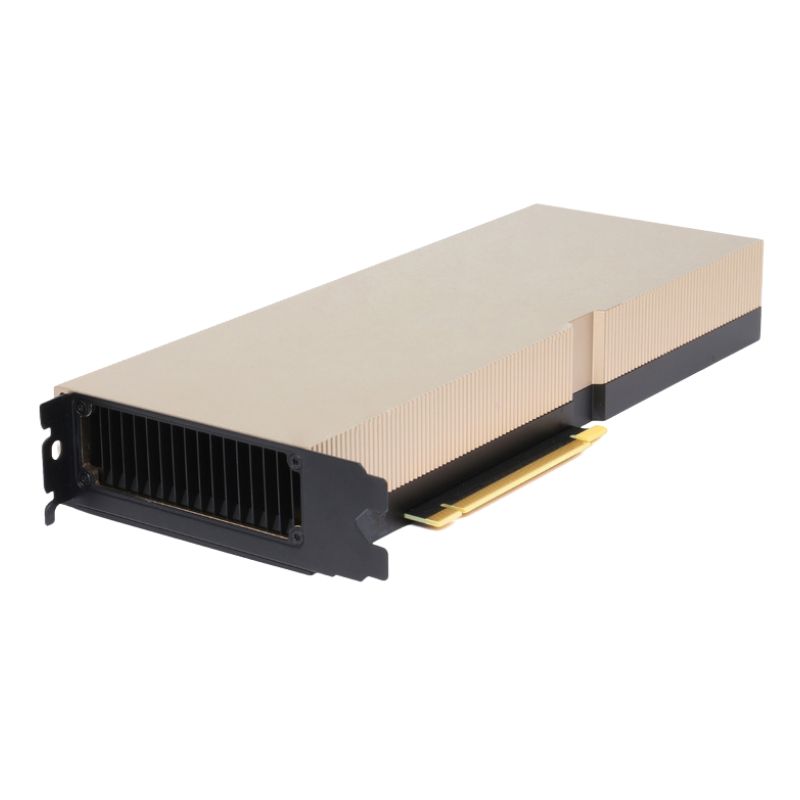


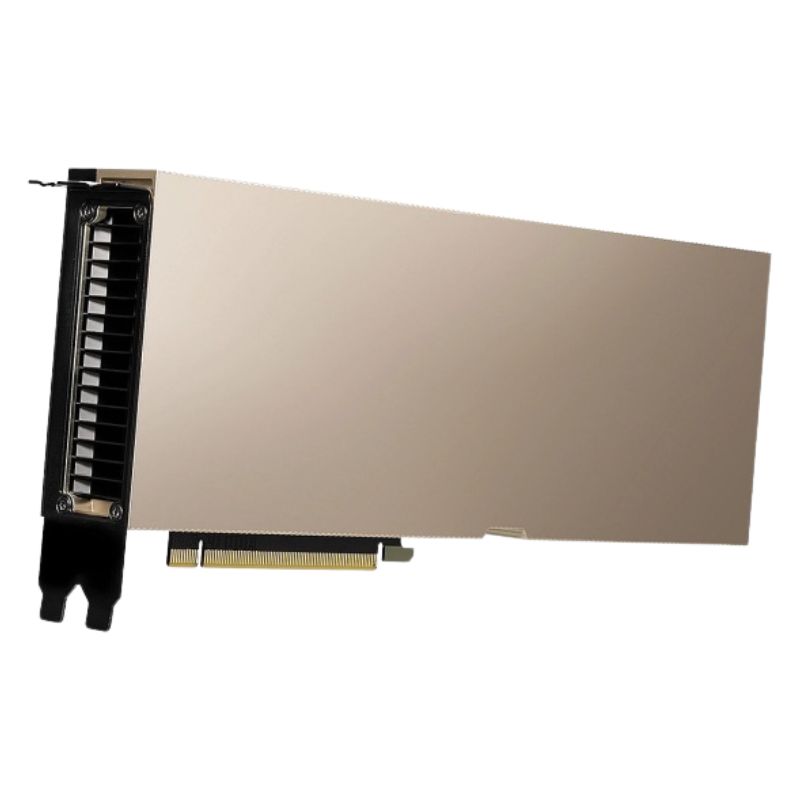
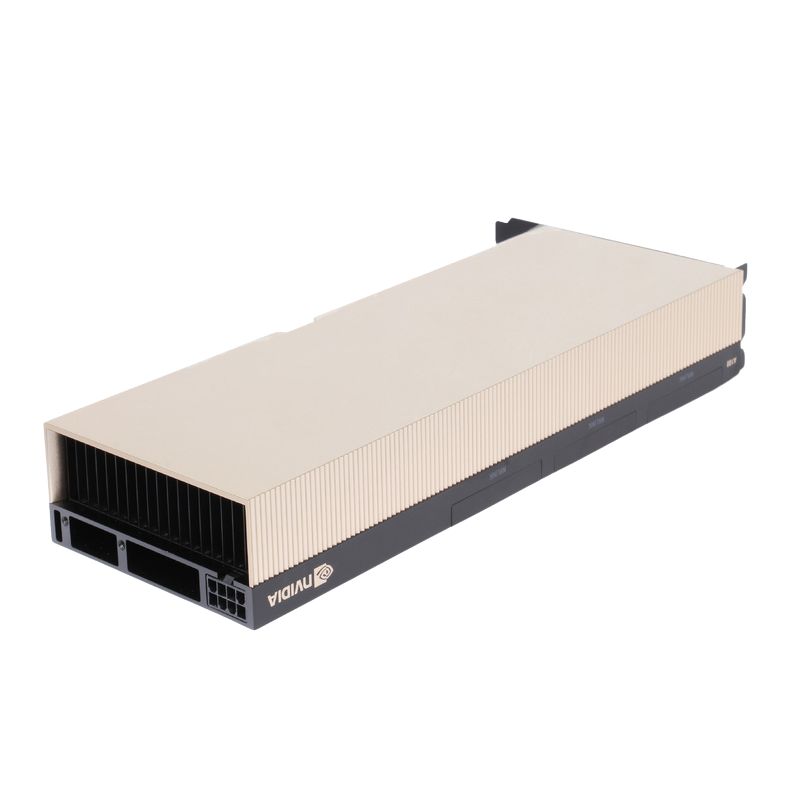
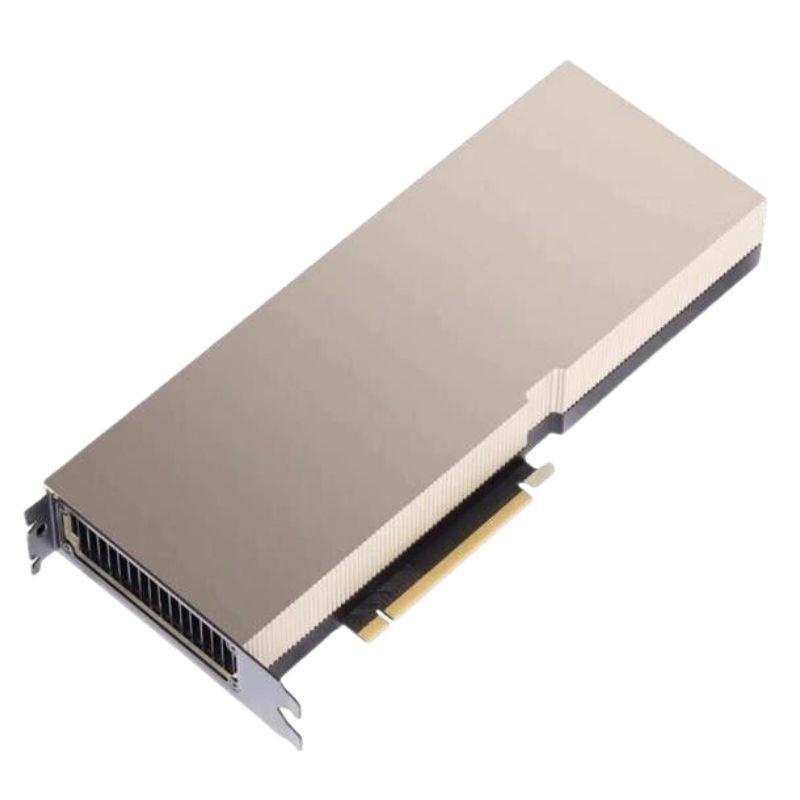
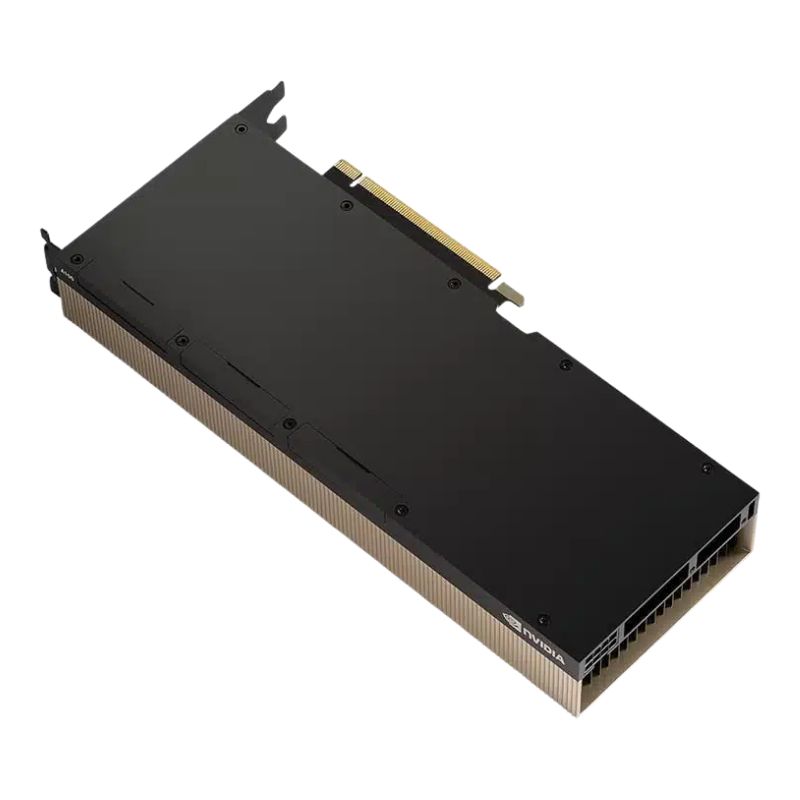
Nvidia 900-21010-0300-030 H100 80GB HBM2e 350W Passive Pcie Graphics Card. New Sealed in Box (NIB) with 3 years Warranty - Call. Eta 2-3 Weeks. No Cancel No Return
The NVIDIA 900-21010-0300-030 H100 80GB HBM2e 350W Passive PCIe Graphics Card stands as a cutting-edge solution for data centers, AI acceleration, and next-generation high-performance computing. Designed for professionals seeking unrivaled computational throughput, this GPU integrates the latest Hopper architecture, engineered to deliver extreme efficiency and scalability across AI training, inference workloads, and advanced visualization environments.
Key Advantages for Enterprise and Data Center Deployment
The NVIDIA H100 80GB HBM2e PCIe Graphics Card represents a monumental leap in accelerated computing. Built upon the groundbreaking NVIDIA Hopper architecture, this isn't just an incremental update; it's a fundamental reimagining of the data center GPU, designed to tackle the world's most demanding computational challenges. From powering the large language models that define modern AI to driving complex scientific simulations and high-fidelity graphics rendering, the H100 PCIe is the engine for the next generation of discovery and innovation. This category encompasses the pinnacle of data center acceleration, providing the raw computational horsepower and advanced features necessary for enterprises and research institutions to stay at the forefront of their fields.
At the heart of the H100 PCIe lies the Hopper architecture, named for pioneering computer scientist Grace Hopper. This architecture introduces several transformative technologies that collectively deliver a generational performance leap over its predecessor, the Ampere-based A100.
Recognizing that Transformer-based models are the backbone of modern AI, NVIDIA engineered a dedicated Transformer Engine. This innovative technology dynamically manages precision formats, intelligently toggling between FP8, FP16, and BF16 to accelerate transformer layer processing while maintaining accuracy. The result is a dramatic speedup—up to 6x faster training and inference for large language models compared to the previous generation. This makes the H100 PCIe an indispensable tool for developing and deploying ever-larger and more complex AI models.
Maximizing GPU utilization and guaranteeing Quality of Service (QoS) is critical in multi-tenant data center environments. The H100's second-generation MIG technology allows a single physical GPU to be partitioned into up to seven secure, fully isolated instances. Each MIG instance has its own dedicated compute, memory, and cache resources, operating as a independent, smaller GPU. This enables multiple users or workloads—such as different inference jobs, CI/CD pipelines, or virtual desktop sessions—to run concurrently on a single H100 with guaranteed resources and fault isolation, dramatically improving overall infrastructure efficiency and ROI.
The massive 80GB of high-bandwidth memory (HBM2e) is a critical feature of this GPU. For data-intensive workloads like AI, HPC, and data analytics, memory bandwidth is often the primary bottleneck. The H100 PCIe addresses this head-on with a staggering memory subsystem. With a peak memory bandwidth of 3.35 terabytes per second, the H100 can feed its immense computational cores with data at an unprecedented rate. This eliminates stalls and idle processing units, ensuring that the GPU is consistently saturated with work. This is particularly vital for models with enormous parameter counts that exceed the memory capacity of lesser GPUs, preventing the need for complex model parallelism strategies that can hamper performance.
The 80GB memory capacity itself is a key differentiator. It allows entire large-language models, complex scientific datasets, or massive scene geometries for rendering to reside entirely within the GPU's memory. This avoids the significant performance penalty associated with swapping data to and from slower system memory (RAM), enabling researchers and engineers to tackle problems previously considered infeasible on a single accelerator.
The Passive PCIe form factor of this specific H100 variant is designed for broad compatibility and integration into standard data center servers. Unlike the SXM form factor which requires a specialized NVIDIA DGX or HGX system, the PCIe version can be deployed in a vast array of existing and new server platforms that support a full-height, full-length PCIe card with adequate cooling.
The H100 PCIe leverages the PCI Express 5.0 interface, doubling the bandwidth available to the previous PCIe 4.0 standard. This provides 128 GB/s of bi-directional bandwidth between the GPU and the CPU, reducing data transfer latency and improving performance for workloads that require frequent communication with the host processor. This is crucial for applications like data analytics and some HPC simulations where the CPU and GPU work in close concert.
Understanding the raw numbers behind the H100 PCIe provides context for its performance claims. The GPU features a vast array of CUDA Cores, Tensor Cores, and new Hopper FP64 Tensor Cores. This translates to unparalleled peak performance in FP64, FP32, FP16, and the new FP8 precision formats. The dedicated Tensor Cores are specifically optimized for matrix operations, which are the foundation of all deep learning algorithms.
The 350W TDP indicates the maximum amount of heat the GPU is designed to dissipate under load. This high power envelope is a hallmark of performance-grade data center GPUs and necessitates a robust server power supply and the previously mentioned high-flow cooling solution to maintain optimal operating temperatures and prevent thermal throttling.
This is an end-to-end, cloud-native suite of AI software that is certified, optimized, and supported by NVIDIA. It includes tools for model training, inference, and deployment, simplifying the development and management of production AI workflows on infrastructure powered by the H100.
Prospective users must verify server compatibility, specifically ensuring the chassis has the physical space, a PCIe 5.0 x16 slot, a power supply with the necessary PCIe power connectors (and sufficient headroom), and, most critically, a cooling solution capable of handling a 350W thermal load with a passive heatsink. Most servers designed for GPU acceleration will have specific configurations and fan sets approved for this card.


 Contact Us
 Information
 Catalog
 Solid State Drives (SSD)
 Network Switches
 Hard Disk Drives
 HBA & Controllers
 PC & Servers
 PC & Server Memory
 CPU & Processors
 Network Routers
 Power Supplies
 Tape Drives & Libraries
 Network Devices
 Computer & Network Cables