(7% discount is applied at checkout)
Cart is empty
Your go-to destination for cutting-edge server products
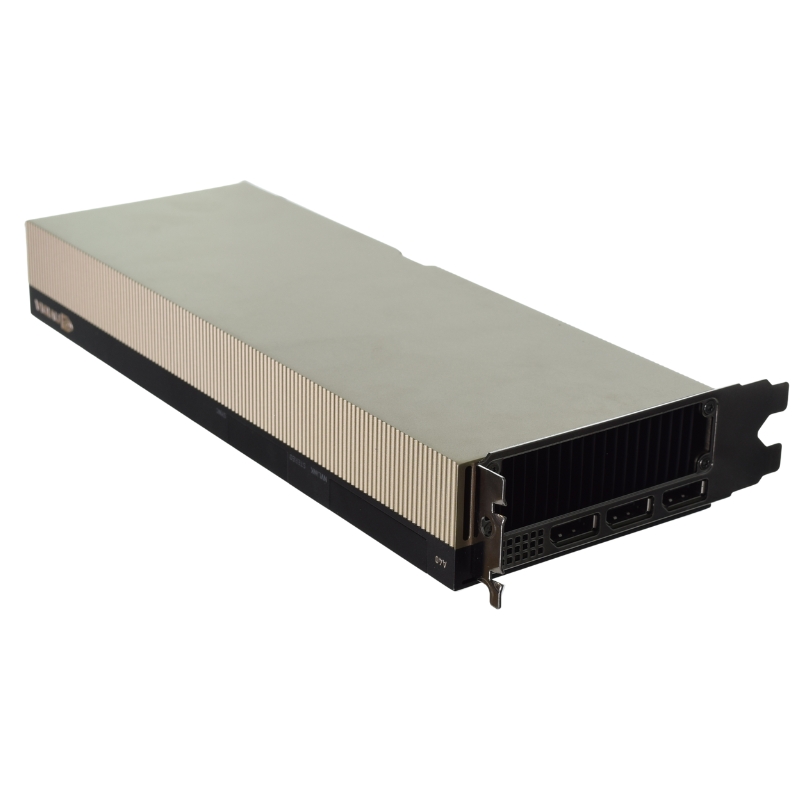


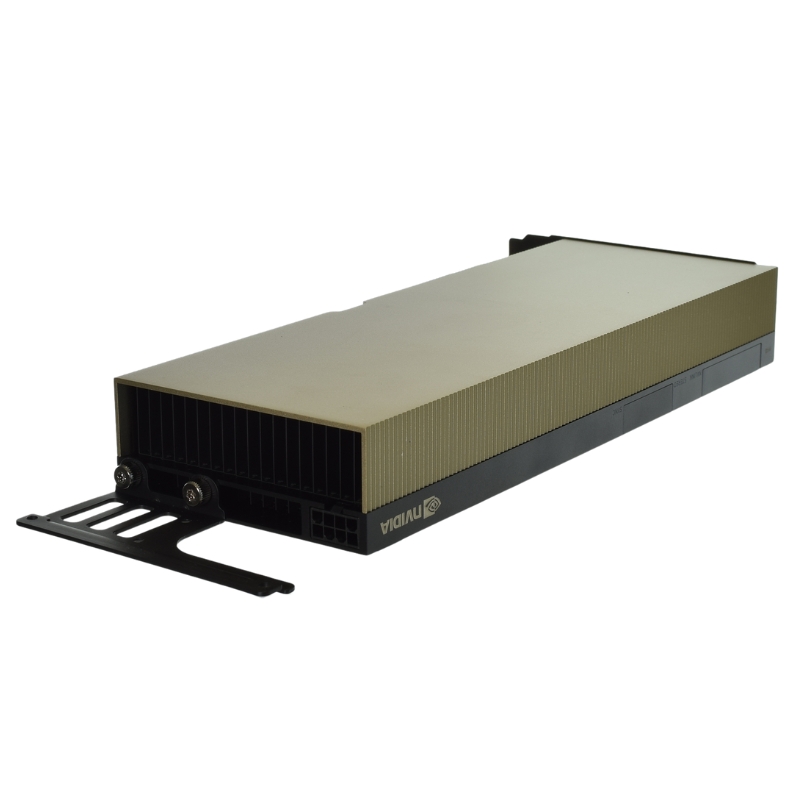
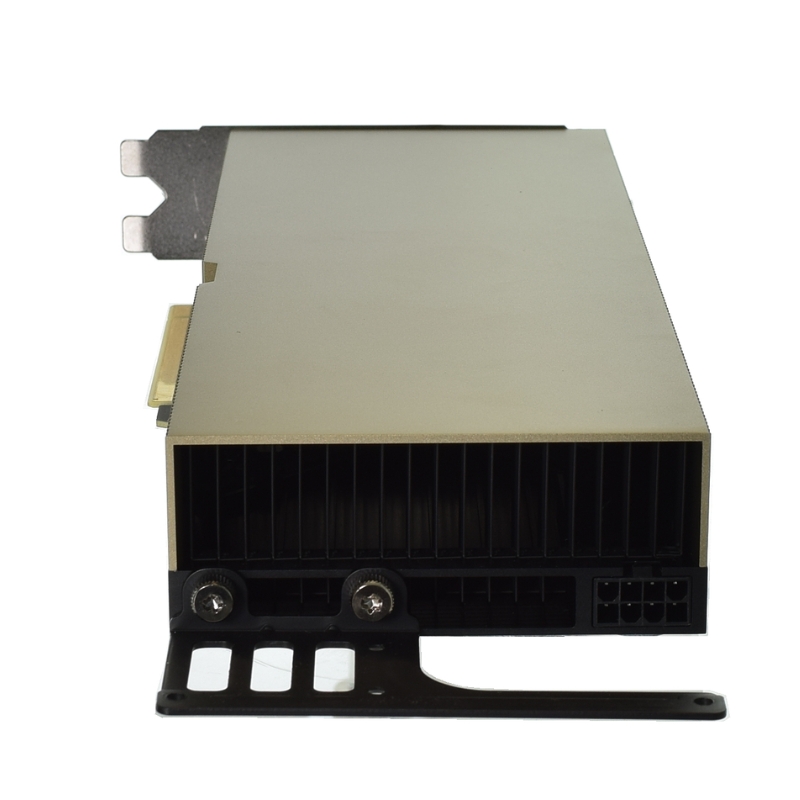
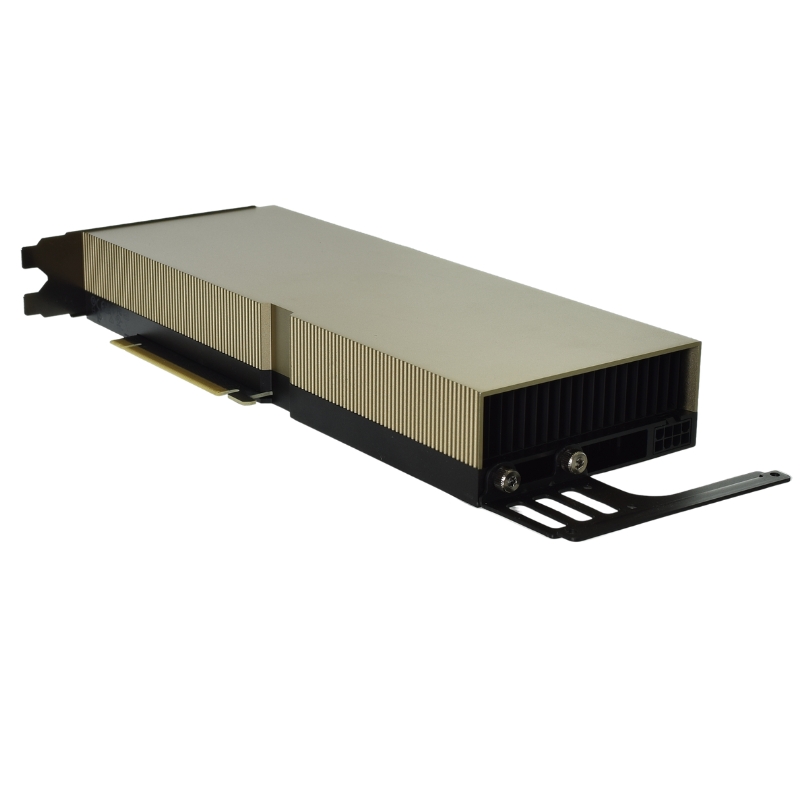
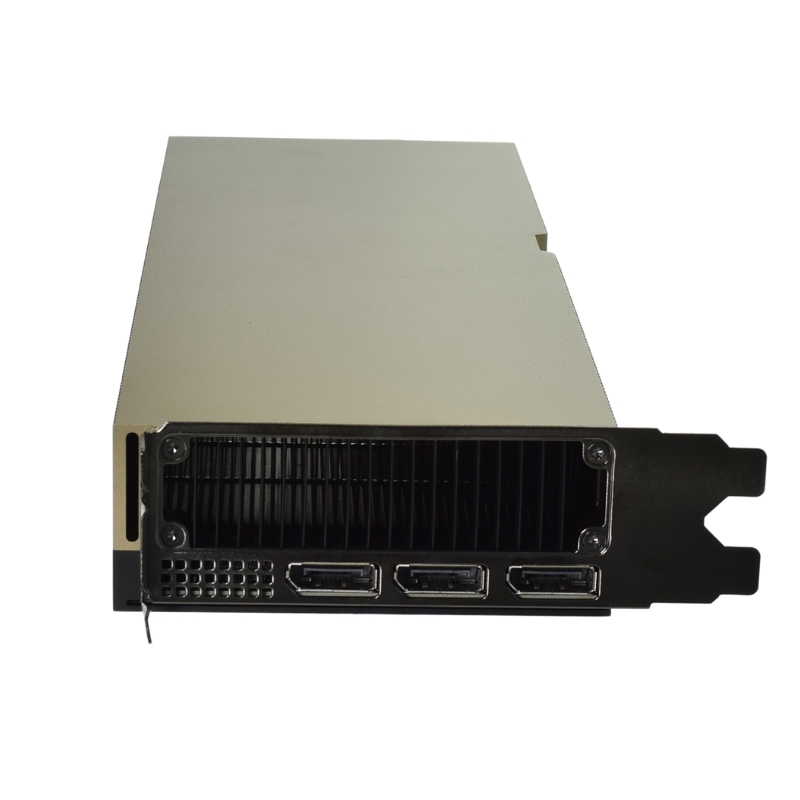
Nvidia 900-2G133-0000-100 A40 Ampere 48GB GDDR6 300W Passive Cooler Tensor Core with ECC PCI-Express GPU. New Sealed in Box (NIB) with 3 Years Warranty. Call (ETA 2-3 Weeks)
The Nvidia 900-2G133-0000-100 A40 Ampere 48GB GDDR6 300W Passive Cooler Tensor Core with ECC PCI-Express GPU represents a specialized class of professional graphics and compute accelerators designed for demanding data center, workstation, and server environments. Built on Nvidia’s Ampere architecture, this GPU blends very large memory capacity, error-correcting memory (ECC), and optimized tensor core performance into a passive-cooled, 300W TDP form factor tailored for dense rack deployments, blade servers, and chassis systems where airflow is supplied by the server rather than by the card itself. This category emphasizes reliability, precision, and longevity: features such as ECC-protected GDDR6 memory, robust FP32 and tensor throughput, and compatibility with PCI-Express slots make these accelerators ideal for heavy simulation, machine learning training and inference, virtualization, high-end 3D rendering, and multi-workload cloud GPU farms.
The Ampere generation brought notable architectural enhancements over previous GPU families, and cards in this category harness those improvements to deliver compute efficiency and memory bandwidth for professional workloads. Ampere’s refined CUDA cores, third-generation tensor cores, and improved RT core designs combine to accelerate both traditional graphics pipelines and modern AI workloads. For compute-heavy categories that rely on mixed-precision arithmetic, the A40’s tensor cores enable significant speed-ups in training and inference compared to older generations, while the large 48GB GDDR6 footprint supports models and datasets that exceed the capacity limits of consumer-class cards. The presence of ECC memory distinguishes the platform for mission-critical workloads by reducing the likelihood of silent data corruption and increasing the overall integrity of long-duration calculations in production environments.
One of the standout characteristics of this product category is the vast 48GB of GDDR6 memory paired with ECC. This combination allows engineers, researchers, and content creators to tackle large-scale models, high-resolution datasets, and complex simulations without frequent swapping or distributed memory workarounds. ECC provides an important layer of protection: for server and multi-user contexts where results must be reproducible and accurate over many hours or days, error-correcting memory helps maintain computational correctness and reduces the chance of transient bit flips corrupting results. As deep learning models continue to grow in size and as high-fidelity rendering workloads demand more VRAM, GPUs in this class become a clear choice for teams who prioritize stability and scale.
The passive cooler configuration and specified 300W thermal design power (TDP) identify the A40 family as optimized for chassis and rack systems that manage airflow at the system level. Passive cooled GPUs are intended to be installed in servers designed with front-to-back airflow where fans and system-level cooling solutions provide the necessary dissipation. This design reduces card-level mechanical complexity and allows denser packing of GPUs in servers where noise, serviceability, and integrated cooling are carefully controlled. While passive coolers require attention to chassis thermal design and rack airflow planning, they deliver the benefit of simplified card maintenance and improved acoustic characteristics at the server room level. For enterprises deploying GPU bays, multi-node servers, or GPU farms, the passive A40 form factor simplifies logistics and aligns with standard data center cooling topologies.
Understanding the 300W TDP and its implications for power distribution and thermal planning is fundamental when evaluating this category. Data center operators must calculate aggregate power draw, account for peak power scenarios, and provision appropriate power delivery and redundancy. Rack-level thermal modeling and airflow mapping are recommended before large-scale deployment to avoid hotspots and to ensure each GPU operates within its thermal envelope. Rack cooling strategies that include adequate intake filtration, controlled ambient temperature, and predictable airflow patterns will enable sustained boost frequencies and reliable long-term performance. Because the GPUs are passively cooled, the server’s internal fan arrays must be specified to handle the CPU and GPU thermal loads concurrently, and careful monitoring of inlet/outlet temperatures allows dynamic adjustments to fan curves and room HVAC settings to maintain uptime and optimal throughput.
Cards in this category typically occupy two PCI-Express slots and conform to standard full-height, full-length form factors compatible with modern server motherboards and workstation chassis. The physical integration requires checking slot spacing, backplate clearance, and adjacent card placement to avoid airflow restriction. When planning for NVLink, power cabling, and external bracket requirements, administrators must verify that the chosen server or chassis supports the physical connectors and provides unobstructed airflow channels. The PCI-Express interface ensures broad compatibility, but exact lane configurations, host CPU resources, and platform BIOS support must be validated to realize peak performance and to enable features such as SR-IOV and GPU passthrough for virtualization scenarios.
The performance of the A40-class GPUs is multi-dimensional: single-precision floating point (FP32) throughput, mixed-precision tensor operations, memory bandwidth, and PCIe interconnect performance all contribute to real-world application metrics. For deep learning training tasks, the third-generation tensor cores can accelerate matrix operations and convolutions, enabling faster model iteration and shorter time-to-insight for data scientists. In inference deployments, these GPUs offer both latency and throughput advantages for medium to large batch sizes, especially when models leverage mixed-precision inference paths. For 3D content creation, ray tracing and rasterization workloads benefit from Ampere’s improved RT and CUDA core efficiency, allowing artists to render higher resolution frames and iterate more rapidly. High-performance compute applications such as computational fluid dynamics, finite element analysis, and scientific visualization take advantage of the card’s double-precision and single-precision capabilities together with the substantial GDDR6 memory to manage large meshes and complex boundary conditions without excessive partitioning.
An important component of this category’s value proposition is the rich software ecosystem that enables administrators and developers to manage, monitor, and tune GPU behavior. Nvidia’s driver stacks for data center GPUs include enterprise-grade components optimized for compute stability and compatibility with virtualization frameworks. Monitoring tools provide telemetry for temperature, power draw, memory utilization, and GPU clocks, allowing operators to construct alerts and automated policies to maintain performance SLAs. In clustered environments, orchestration software can query GPU resource availability, schedule workloads based on utilization patterns, and handle multi-tenant isolation using mechanisms such as vGPU or passthrough. For developers, support for mainstream frameworks and libraries ensures models and applications can be ported with minimal code changes while taking advantage of acceleration primitives provided by the hardware.
Because these GPUs are targeted at enterprise deployments, compatibility and certification with server vendors, operating systems, and virtualization platforms are often a point of inquiry. Customers are encouraged to consult validated hardware lists and vendor-specific compatibility matrices to ensure that server BIOS, firmware, and driver versions align correctly. Many organizations opt for vendor-certified configurations to simplify support and warranty management. For environments requiring high availability and predictable behavior, certified solutions and proof of compatibility reduce integration risk and provide a clear support path in the event of hardware or software anomalies.
Enterprises deploying this GPU category often adopt a fleet management model where monitoring, telemetry aggregation, and automated orchestration are centralized. Fleet managers may implement policies for workload placement that consider thermal headroom, power constraints, and priority scheduling for ML experiments versus production inference. When deploying at scale, planning for spares, scheduled firmware maintenance windows, and capacity expansion is critical. Fleet-level telemetry helps predict hot spots, nightly utilization patterns, and potential hardware degradation, enabling proactive replacement cycles and minimizing unplanned downtime. Integration with enterprise IT service management systems ensures that hardware lifecycle events are tracked and that procurement aligns with consumption trends.


 Contact Us
 Information
 Catalog
 Solid State Drives (SSD)
 Network Switches
 Hard Disk Drives
 HBA & Controllers
 PC & Servers
 PC & Server Memory
 CPU & Processors
 Network Routers
 Power Supplies
 Tape Drives & Libraries
 Network Devices
 Computer & Network Cables