(7% discount is applied at checkout)
Cart is empty
Your go-to destination for cutting-edge server products
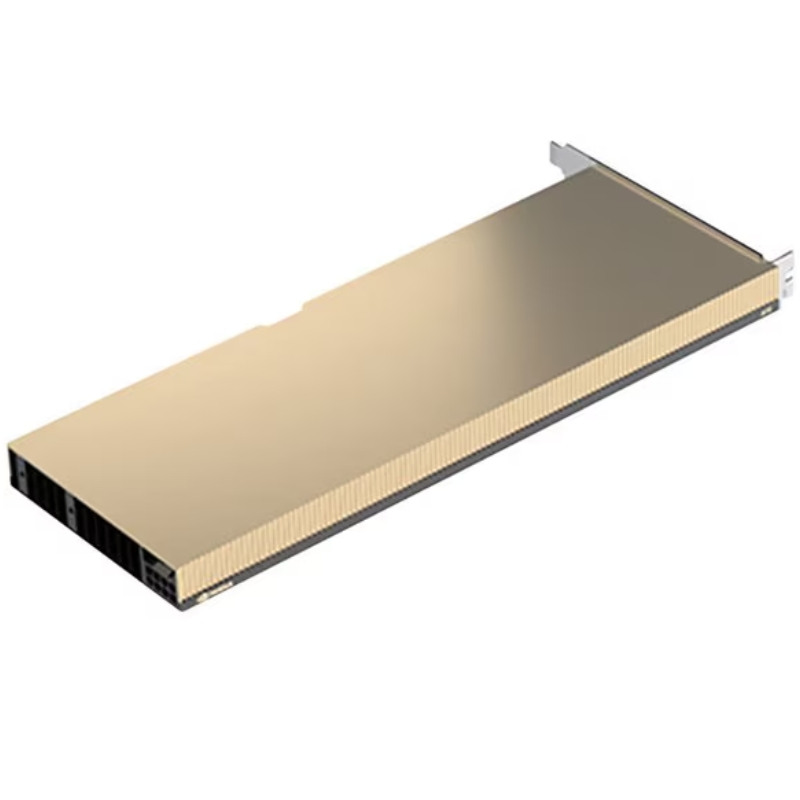


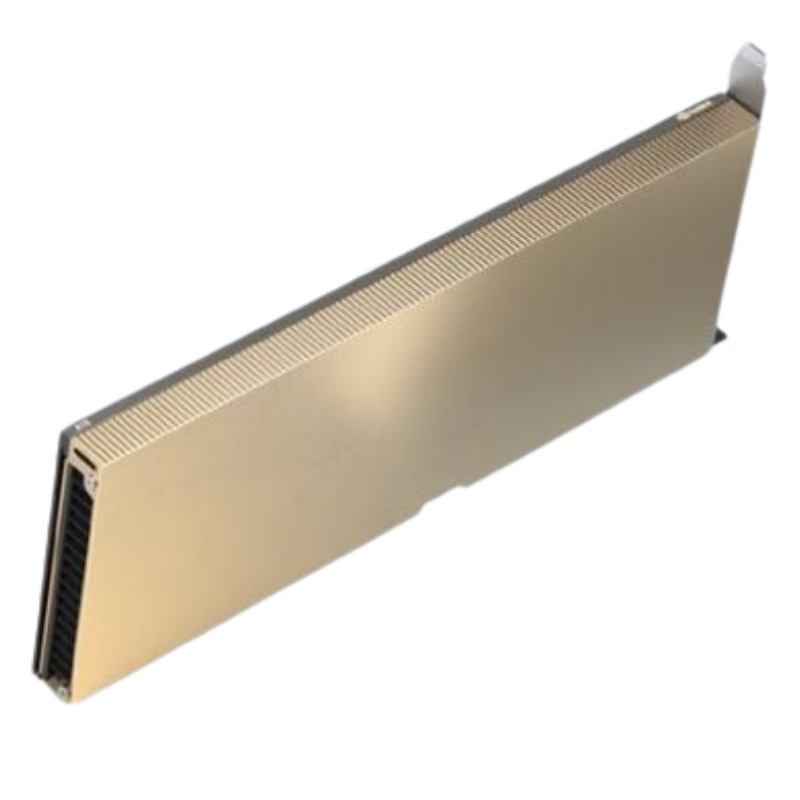
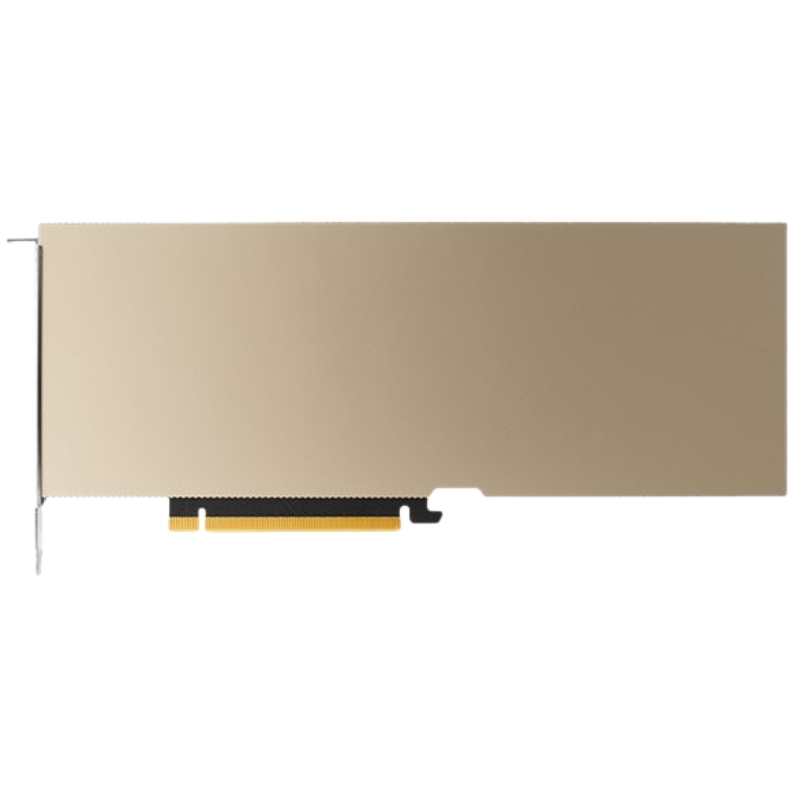
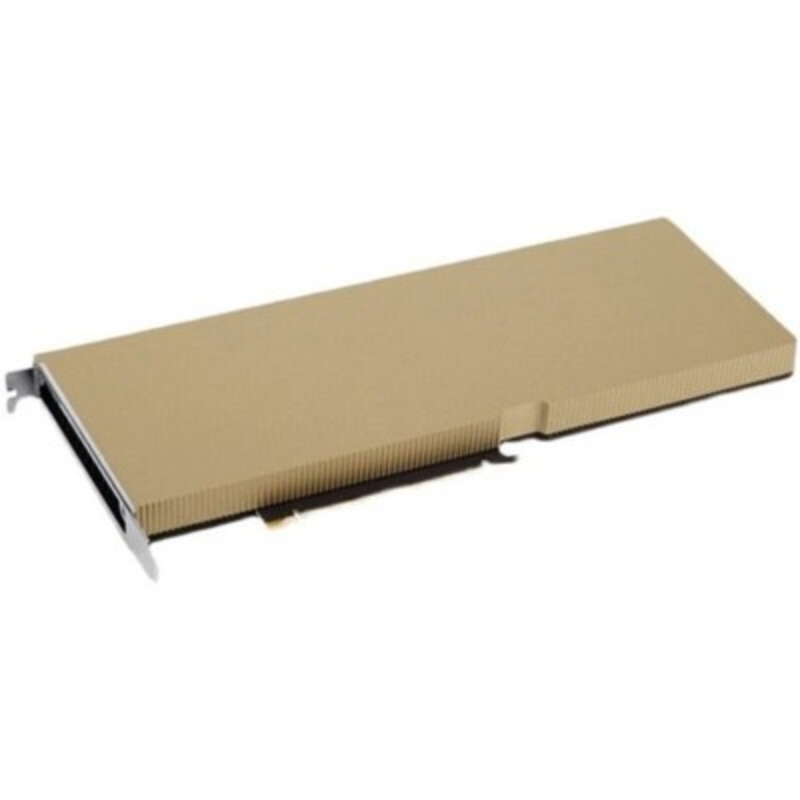
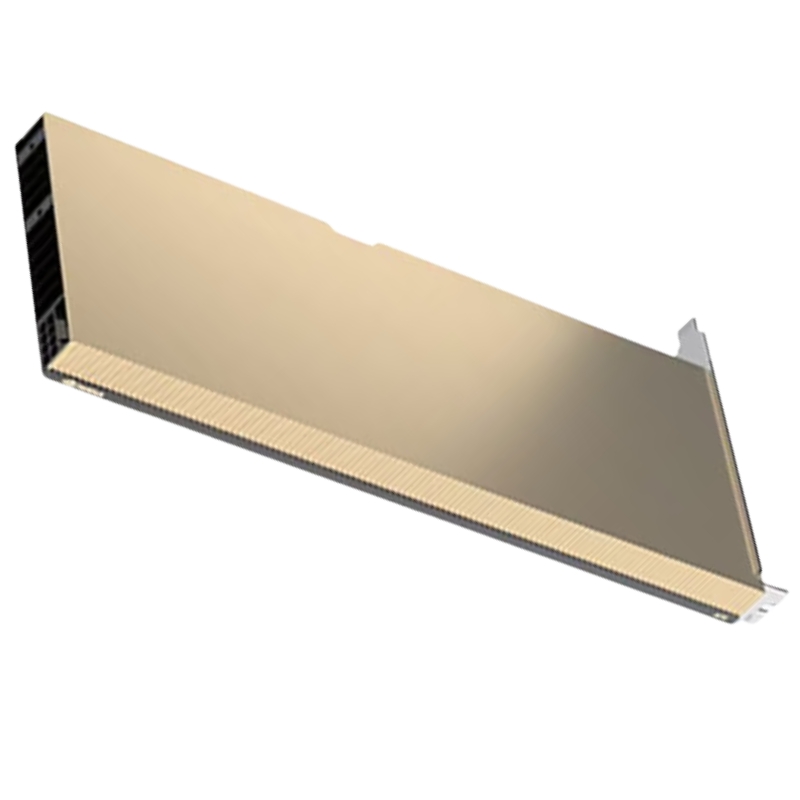
Nvidia 900-2G133-0120-130 Ampere A10 24GB GDDR6 PCI-Express 4.0 X16 1x 8-Pin 384-Bit Passive Cooling Graphics Processing Unit. New Sealed in Box (NIB) with 3 years Warranty. ETA 1-2 Weeks. No Cancel No Return
Engineered for data-intensive environments, the Nvidia 900-2G133-0120-130 Ampere A10 GPU delivers powerful acceleration for AI, deep learning, and professional visualization. Its advanced Ampere architecture ensures superior throughput and energy efficiency.
Designed to handle massive datasets, this GPU features ultra-fast GDDR6 memory with a wide 384-bit bus interface. The 24GB capacity and 600 GB/s bandwidth make it ideal for high-throughput tasks.
With 72 CUDA cores and a base clock of 885 MHz, the Ampere A10 excels in parallel processing. Its 8nm fabrication process ensures optimal power efficiency and thermal performance.
Built for silent operation, the passive cooling system eliminates fan noise while maintaining thermal stability. Its full-height, full-length single-slot form factor ensures compatibility with standard chassis designs.
Featuring PCI-Express 4.0 x16 connectivity, the Ampere A10 ensures high-speed data transfer and seamless integration with modern systems. The single 8-pin power connector simplifies installation and cable management.
The Nvidia 900-2G133-0120-130 Ampere A10 24GB GDDR6 PCI-Express 4.0 X16 1x 8-Pin 384-Bit Passive Cooling Graphics Processing Unit represents a focused balance of compute density, memory bandwidth, and enterprise-ready reliability. Designed for data center and professional workstation environments where thermal headroom is managed at the chassis level, this passive-cooled A10 SKU provides 24 gigabytes of GDDR6 memory on a wide 384-bit bus, harnessing the Ampere architecture’s improvements in tensor throughput, CUDA core efficiency, and PCIe Gen4 connectivity. The category of passive-cooled enterprise GPUs, which this product exemplifies, targets server blade integrations, high-density rack deployments, and chilled-air workstations where active fan noise or redundant cooling strategies make blower-style cards unnecessary.
At the heart of the 900-2G133-0120-130 is Nvidia’s Ampere GPU architecture, which brings generational improvements across parallel processing, mixed-precision computations, and memory compression. The Ampere architecture elevates tensor core performance, enabling accelerated AI inference and training tasks while preserving high throughput for traditional CUDA workloads. With its 24GB of GDDR6 memory and a 384-bit memory interface, this A10 variant ensures sustained memory bandwidth for datasets and models that are memory-hungry yet latency-sensitive, such as machine learning inference at scale, data analytics pipelines, and complex visualization tasks. PCI-Express 4.0 connectivity delivers doubled per-lane throughput compared to PCIe Gen3, reducing host-to-device transfer bottlenecks and enabling faster staging of model weights and datasets from system memory to the GPU.
The Ampere A10 excels in mixed-precision computing scenarios by leveraging specialized tensor cores optimized for FP16 and INT8 operations while maintaining robust FP32 throughput for legacy scientific workloads. This makes the 900-2G133-0120-130 ideal for teams moving toward quantized models for inference without sacrificing the ability to run high-precision training loops when required. Mixed-precision reduces memory footprint and increases effective throughput, enabling larger batches and higher utilization of the GPU memory. For enterprise customers that deploy models for real-time inference, the A10 delivers the necessary latency and concurrency characteristics to serve multiple models simultaneously or to run ensemble pipelines that combine several neural networks in a single request path.
Memory capacity and bandwidth are defining attributes of this category. The 24GB GDDR6 configuration paired with the 384-bit bus provides a wide channel for streaming texture, tensor, and buffer data across diverse workloads. Memory bandwidth is critical for AI models with significant parameter counts, high-resolution graphics rendering, and large-scale simulation tasks. The A10’s memory topology reduces the frequency of host-GPU transfers by retaining more of the active dataset on-device, which is especially valuable in inference servers where model swapping would otherwise add latency. Additionally, hardware-level memory compression and efficient paging strategies in modern drivers further increase effective memory throughput, delivering improved performance without changing the physical memory configuration.
Passive cooling changes how the GPU is integrated into the system chassis rather than altering the silicon’s thermal envelope. The 900-2G133-0120-130’s passive cooling approach is intended for use in server systems with controlled airflow designed to carry heat away from the card through chassis fans, rear-to-front rack ventilation, or liquid-assisted heat exchangers. This form factor is essential for noise-sensitive installations and for high-density racks where multiple GPUs operate in tandem and a centralized, redundant cooling solution is preferable to individual card fans. System integrators must account for the card’s TDP and ensure that the server's cooling subsystem can maintain recommended junction and ambient temperatures under sustained peak loads to avoid thermal throttling and to preserve long-term reliability.
Connectivity is a strong suit for this Ampere A10 SKU. The PCI-Express 4.0 X16 interface delivers sufficient bandwidth to match the card’s internal processing capabilities, and the single 8-pin power connector provides the necessary supplementary power for peak GPU operation. The 384-bit memory bus works in concert with wide memory channels to keep the compute engines fed. For deployments where multiple GPUs are used in a single server, motherboard layout and PCIe lane allocation should be planned to maintain lane counts and avoid downshifting to x8 or lower, which could restrict throughput. Careful power budget planning at the system level, including redundant power supplies and power sequencing, ensures the A10 operates within design limits while preserving headroom for CPU and other peripherals.
This GPU category addresses a variety of workloads across industries. In artificial intelligence, the 900-2G133-0120-130 is well-suited for medium-to-large scale inference tasks, real-time recommendation systems, natural language processing inference, and computer vision pipelines that demand low latency. For training, the card is valuable in hybrid clusters where a mix of training and inference tasks coexist; its memory capacity allows for fine-tuning and transfer learning on moderately large models. In professional rendering and visualization, the Ampere A10 provides accelerated shader throughput and fast texture streaming for workloads like CAD model visualization, medical imaging rendering, and virtual workstation deployments where remote GPU acceleration is needed. High-performance computing users will find the card adequate for certain simulation and numerical workloads that fit within the memory and compute envelope of the A10.
Achieving peak performance with the A10 involves a multi-layered approach. On the software side, enabling mixed-precision training and inference with proper loss scaling and quantization-aware techniques can dramatically increase throughput. Using Nvidia’s inference optimizers, such as TensorRT, converts trained models into highly optimized runtime engines tailored to the card’s hardware. Profiling tools like Nsight Systems and Nsight Compute help identify kernel-level bottlenecks, inefficient memory access patterns, and underutilization of tensor cores. System-level tuning includes aligning NUMA domains, ensuring optimal PCIe lane distribution, and placing large inter-process communication buffers in memory regions closest to the PCIe root complex. Finally, orchestration strategies such as multi-instance GPU (MIG) slicing are relevant for some Ampere-based GPUs; while MIG is more commonly associated with other Ampere datacenter SKUs, understanding partitioning and virtualization options in the platform’s firmware and drivers can enable multiple tenants or workloads to share a physical GPU resource effectively.
Operators integrating the 900-2G133-0120-130 should plan for airflow, power distribution, and server layout. Passive cooling cards mandate a thermally aware chassis design that provides consistent airflow across the GPU’s heatsink surfaces. Rack-level planning must include monitoring for hot spots and consideration for staging nodes with higher cooling capacity in the hottest aisles. Power redundancy is critical in enterprise environments; deploying redundant PSUs with hot-swap capabilities prevents single points of failure. Cable management and securing the 8-pin power connection are small but important details to prevent accidental disconnection or undue strain on connectors. Firmware and BIOS updates at the server level can enable improved PCIe tuning and device enumeration that helps avoid contention in multi-GPU systems.
When comparing the Ampere A10 900-2G133-0120-130 to other GPUs in Nvidia’s product stack, it sits between general-purpose workstation cards and higher-end datacenter accelerators. The A10 emphasizes a balance of memory capacity and efficient inference performance, while higher-tier datacenter GPUs may deliver larger memory footprints, more tensor cores, and hardware features tailored specifically to massive-scale training. Conversely, consumer-grade GPUs may offer higher frequency gaming performance or different thermal designs but lack the enterprise support and driver stability required for production AI services. For organizations choosing between variants, factors such as memory requirements, available chassis cooling, PCIe lane availability, and the intended workload mix (inference vs training vs visualization) should dictate the selection process. The passive-cooled A10 differentiates itself by enabling quieter, centralized cooling approaches in data center and remote workstation contexts.
Long-term reliability is essential for enterprise hardware. The passive Ampere A10 is built to withstand sustained workloads within appropriate thermal environments, and when integrated correctly it becomes a dependable building block for scalable infrastructure. Lifecycle planning includes scheduling firmware and driver updates, maintaining a warm spare strategy for critical nodes, and planning for capacity expansion ahead of demand peaks. Observability tools should be configured to collect performance telemetry and to alert when metrics deviate from expected baselines, enabling proactive remediation. For organizations handling sensitive data or regulated workloads, ensuring secure boot, firmware verification, and access control to management interfaces is part of a comprehensive operational security stance.


 Contact Us
 Information
 Catalog
 Solid State Drives (SSD)
 Network Switches
 Hard Disk Drives
 HBA & Controllers
 PC & Servers
 PC & Server Memory
 CPU & Processors
 Network Routers
 Power Supplies
 Tape Drives & Libraries
 Network Devices
 Computer & Network Cables