(7% discount is applied at checkout)
Cart is empty
Your go-to destination for cutting-edge server products
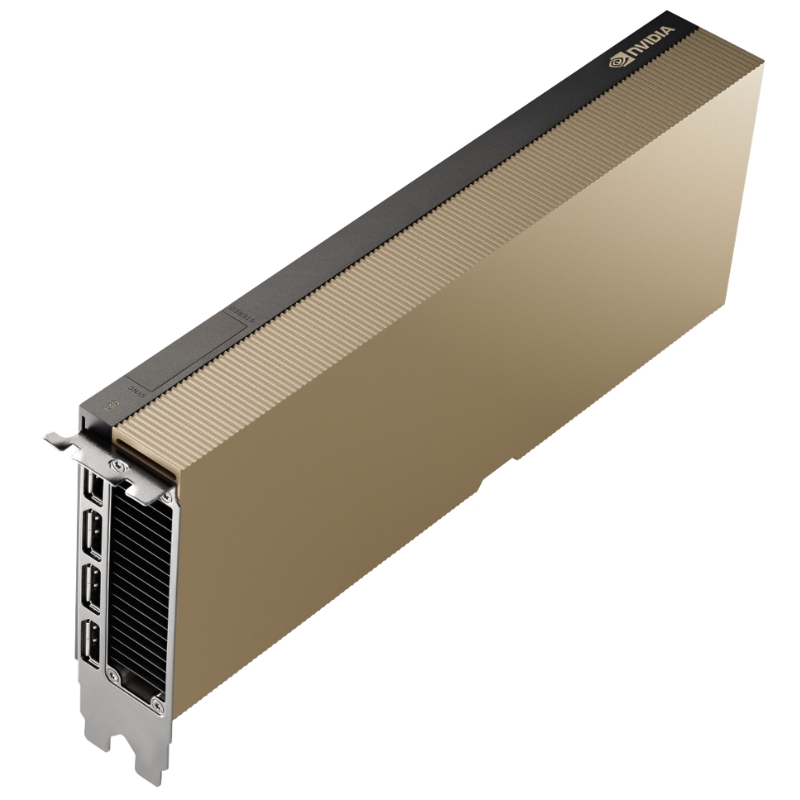


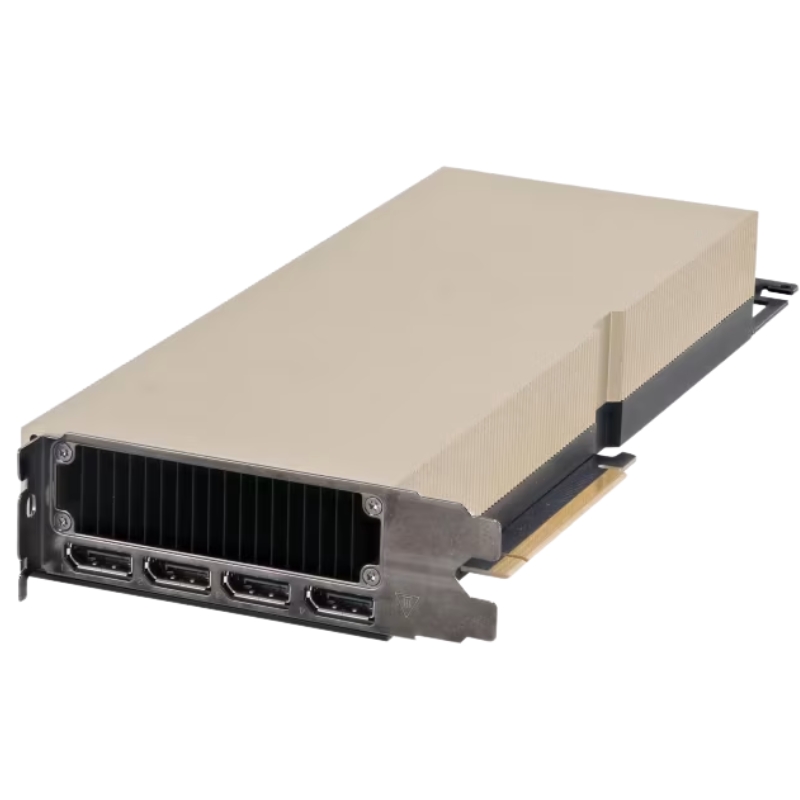
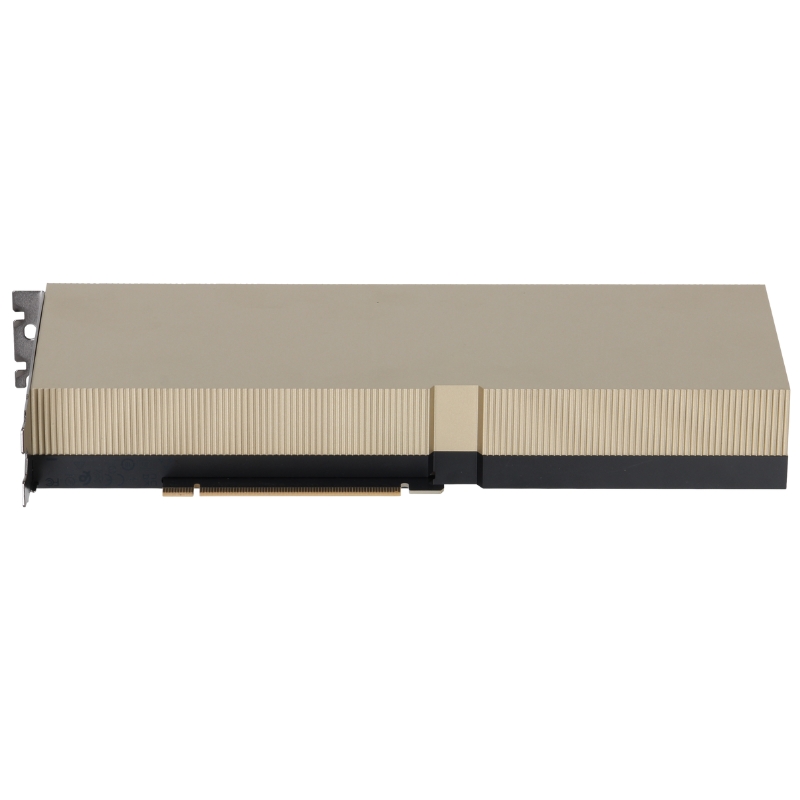
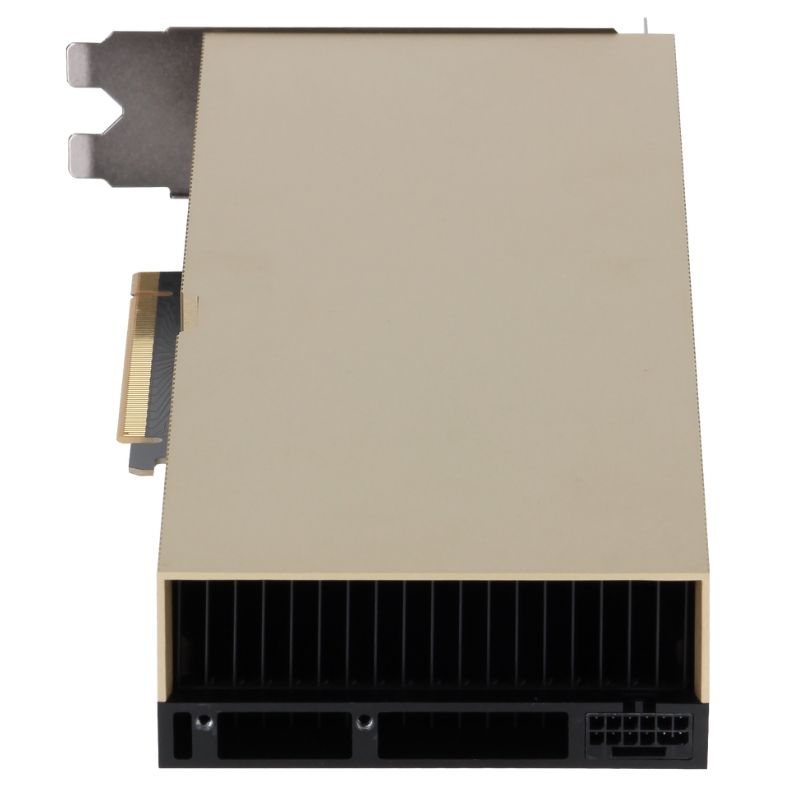
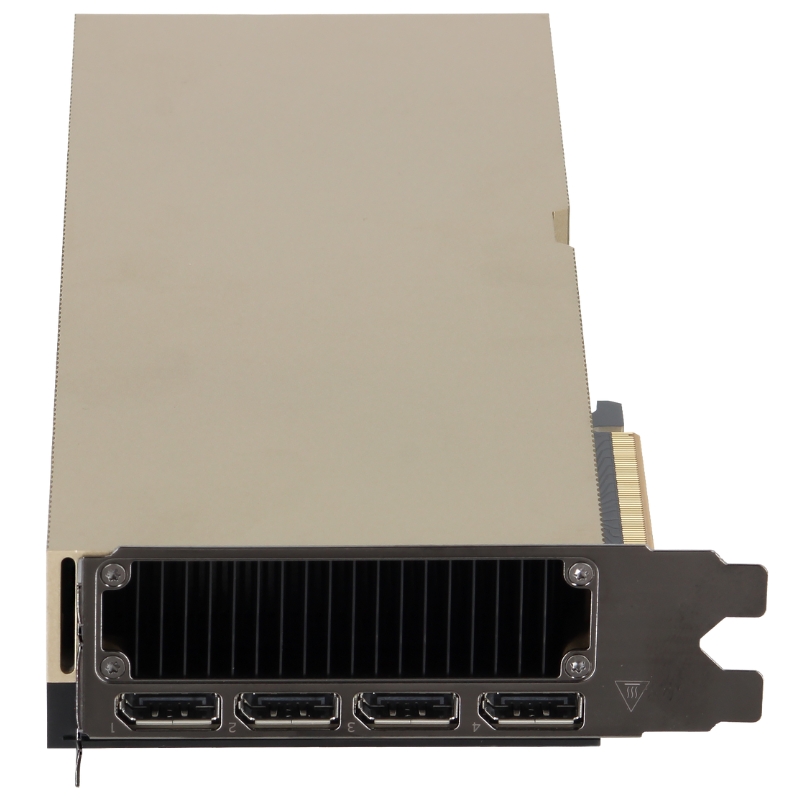
Nvidia 900-2G133-0180-030 L40S 48GB PCI-Express Gen4 Passive Dual Slot Tensor Cores GDDR6 Graphics Processing Unit. Excellent Refurbished with 1 Year Warranty.
The Nvidia 900-2G133-0180-030 L40S 48GB is designed as a versatile, high-density accelerative platform that addresses the converging needs of modern data centers: AI inference at scale, real-time 3D visualization, high-performance compute workloads and multi-tenant virtualization. Built on a GPU architecture engineered to maximize throughput with advanced Tensor Core acceleration and 48 gigabytes of GDDR6 memory, this GPU is tailored for deployment in rack-mounted servers and blade systems where PCI-Express Gen4 connectivity and passive cooling are required. The passive, dual-slot form factor reduces mechanical complexity and enables tighter packing of GPUs in server chassis designed for data center airflow patterns. For organizations that require an enterprise-class graphics processing unit that balances memory capacity, bandwidth, and energy-efficient integration, the L40S series models provide a robust option.
With 48 gigabytes of GDDR6 memory, the L40S offers a practical memory footprint that accommodates large inference models, mid-sized training checkpoints, and complex visualization scenes without constant memory swapping. The GDDR6 architecture provides an efficient balance of power consumption and bandwidth, enabling steady data movement between memory and compute units. This abundant memory capacity is critical for AI workloads that leverage large embedding tables and for multi-instance GPU virtualization where multiple virtual machines or containers share a single physical accelerator. For content creation pipelines, such memory allows artists and engineers to load high-resolution textures, dense meshes, and detailed simulation frames into GPU memory, reducing I/O bottlenecks and rendering latency.
Forty-eight gigabytes unlocks the ability to run larger batch sizes during inference, host multiple smaller workloads concurrently, and support multi-user remote workstation scenarios. In cloud and on-premise virtualization setups, this amount of memory helps administrators assign meaningful GPU memory slices to each virtual instance to maintain predictable performance for users and applications. The GDDR6 memory subsystem is engineered for consistent throughput under sustained load, which is essential in production environments where long-running inference pipelines and rendering tasks must remain stable and predictable.
Equipped with PCI-Express Gen4 compatibility, the 900-2G133-0180-030 L40S leverages doubled per-lane bandwidth compared to previous generation PCIe standards when paired with Gen4-capable motherboards and CPUs. This increased peripheral bus bandwidth reduces host-to-device transfer times for large datasets and enables faster exchange of model parameters or texture data. In multi-GPU server configurations that use a high-throughput PCIe fabric, Gen4 reduces the time spent on data staging and synchronization, which directly translates to improved end-to-end throughput for both inference and distributed data-parallel workloads. For deployments where NVLink is not the primary interconnect, Gen4 provides a robust, standardized pathway to move data between CPU and GPU with minimal overhead.
Tensor Cores embedded in the L40S deliver mixed-precision matrix compute acceleration that accelerates deep learning inference and certain training workloads. These specialized cores are tuned to accelerate matrix multiplications central to neural network computation, offering significant performance improvements over traditional CUDA cores for AI operations. For organizations focusing on large language models, transformer-based architectures, recommendation systems, and convolutional neural networks, Tensor Core acceleration provides faster inference throughput and more efficient model execution per watt. When paired with software stacks that exploit mixed-precision math—such as FP16, BFLOAT16, or lower-precision tensor formats—Tensor Cores yield substantial improvements in latency and throughput for production AI services.
The L40S family is designed to integrate with the same suite of developer tools and runtimes used across the Nvidia ecosystem, allowing engineers to leverage optimized libraries and inference runtimes. Integration with popular frameworks and deployment toolchains simplifies moving models from research prototypes to production endpoints. For data scientists and MLOps engineers, this GPU supports optimized inference runtimes that reduce development friction and provide predictable acceleration when models are deployed at scale. When used with containerized deployment and orchestration platforms, the card’s feature set allows for predictable resource mapping and easier autoscaling of inference services.
Reliability and multi-tenancy are crucial in commercial deployments. The L40S is tailored to operate in enterprise server racks with remote management, redundancy, and virtualization strategies. Support for GPU virtualization enables multiple users or instances to share a single physical GPU while preserving isolation and quality of service. This capability is particularly valuable for service providers, design studios, and research institutions that need to maximize hardware utilization and allow many users to run graphics-accelerated workloads simultaneously. In addition, the passive design minimizes moving parts on the GPU itself, which can reduce failure modes associated with onboard fans over long operational lifespans.
Typical usage scenarios for this GPU include production inference servers where batch sizes and model memory footprints require more headroom than smaller cards can provide. Real-time graphics pipelines such as remote workstation services, 3D CAD rendering farms, and cloud-based content creation platforms also benefit from the card’s ample memory and compute flexibility. Scientific visualization and simulation post-processing tasks that require large datasets in GPU memory will find the L40S’s memory size useful for reducing disk I/O and accelerating iterative visual analysis. Additionally, when multi-instance GPU virtualization is desired, administrators can partition the physical accelerator to host multiple concurrent user sessions with predictable performance characteristics.
For teams that need to deliver GPU-accelerated remote desktops and application streaming, the L40S offers a compromise between density and capability. Artists and engineers working with high-resolution assets and complex scenes require GPU memory for textures, geometry caches, and simulation snapshots. The L40S allows multiple creative professionals to have responsive, accelerated sessions hosted in the data center, enabling secure collaboration on sensitive projects while offloading expensive workstation hardware to the cloud or private servers. The passive cooling model suits these environments where noise and client-side thermal control are less desirable than centralized cooling and management.
System integrators and procurement teams should consider chassis airflow, power provisioning, server slot allocation, and compatibility with the host motherboard’s PCIe lane configuration when planning deployments. The dual-slot passive card requires a server chassis designed to route front-to-back airflow or push the appropriate volume of air across the card’s heatsink. Because passive cards transfer heat into the chassis, adequate case-level ventilation and thermally aware placement of components are essential to avoid thermal throttling. Power distribution should be aligned to the server’s power supply headroom and load balancing to ensure that peak workloads do not exceed the capabilities of the enclosure’s power delivery architecture. Additionally, compatibility with the host’s PCIe Gen4 lanes will maximize throughput; while the card remains backward compatible with earlier PCIe generations, leveraging Gen4 ensures the best host-device transfer performance.
Performance tuning for workloads on the L40S often revolves around optimizing memory usage, selecting appropriate precision for inference, and managing concurrency to maintain low latency under heavy load. Leveraging mixed-precision inference where acceptable, combined with optimized runtimes, will magnify the benefit of Tensor Core acceleration, reducing computational time and energy consumption. For visualization tasks, fine-grained control over texture residency, level-of-detail management, and streaming strategies can reduce memory pressure and keep frame times consistent. MLOps teams typically iterate on batch sizes, concurrency limits, and request routing to balance utilization and latency for user-facing services.


 Contact Us
 Information
 Catalog
 Solid State Drives (SSD)
 Network Switches
 Hard Disk Drives
 HBA & Controllers
 PC & Servers
 PC & Server Memory
 CPU & Processors
 Network Routers
 Power Supplies
 Tape Drives & Libraries
 Network Devices
 Computer & Network Cables