(7% discount is applied at checkout)
Cart is empty
Your go-to destination for cutting-edge server products
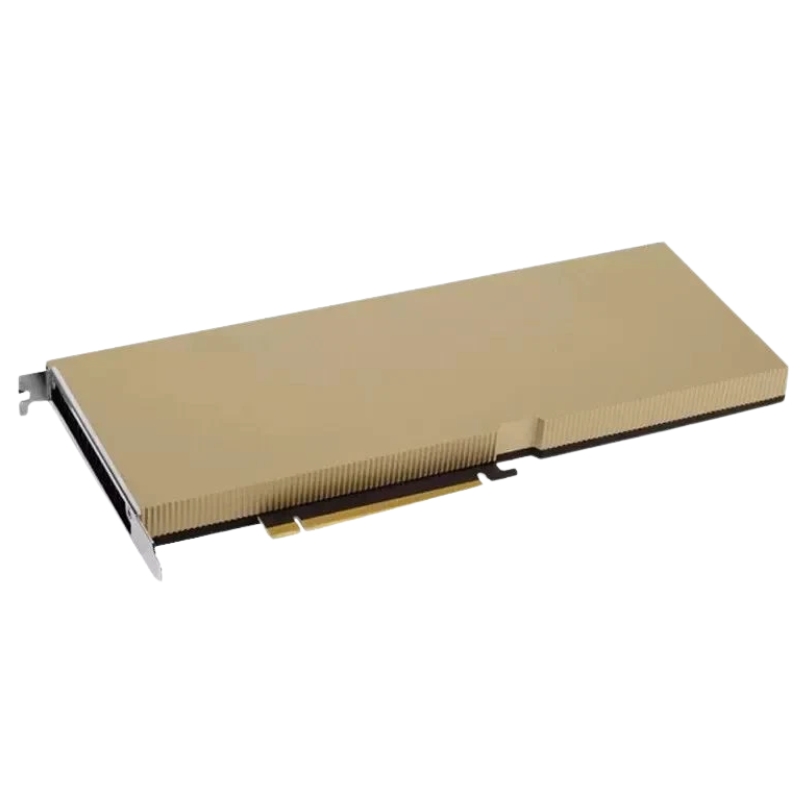


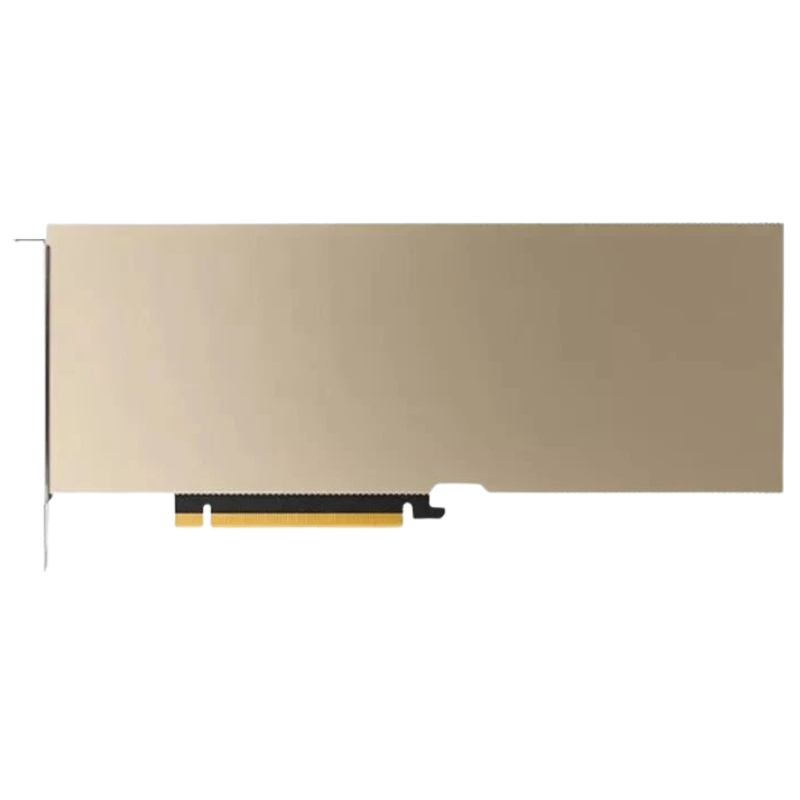
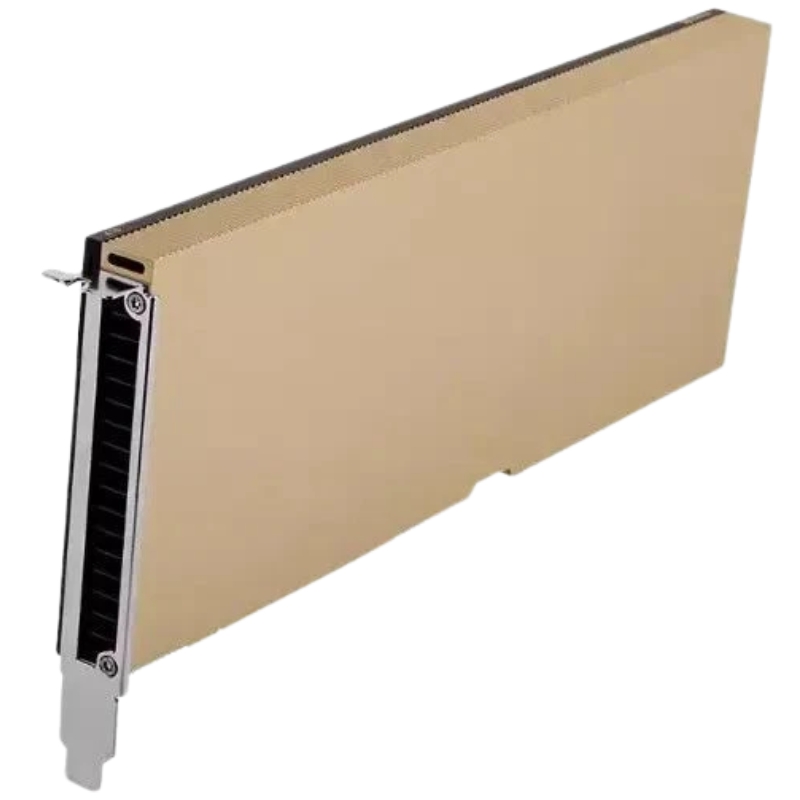
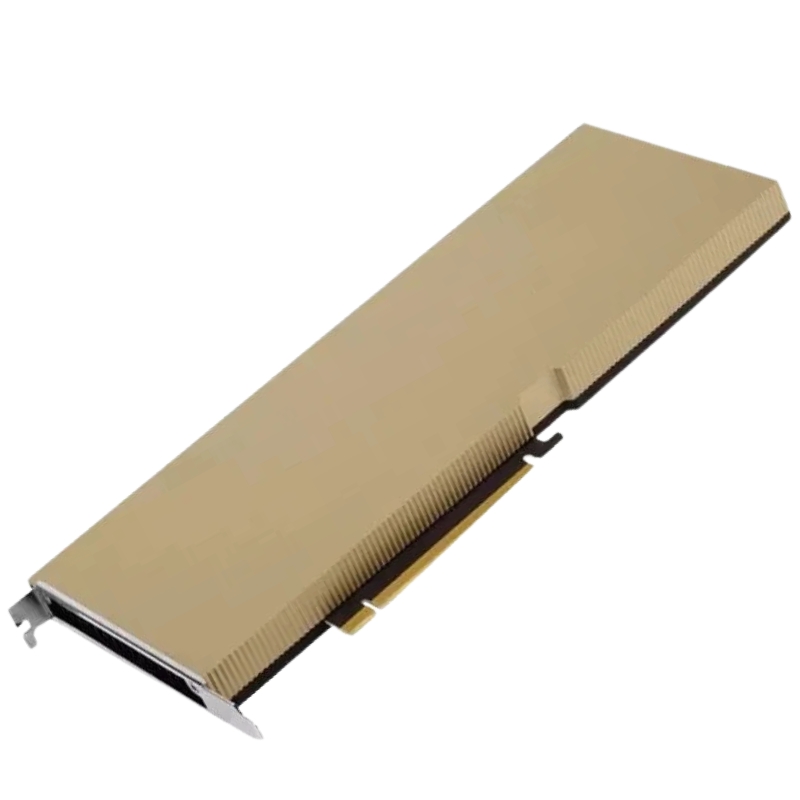
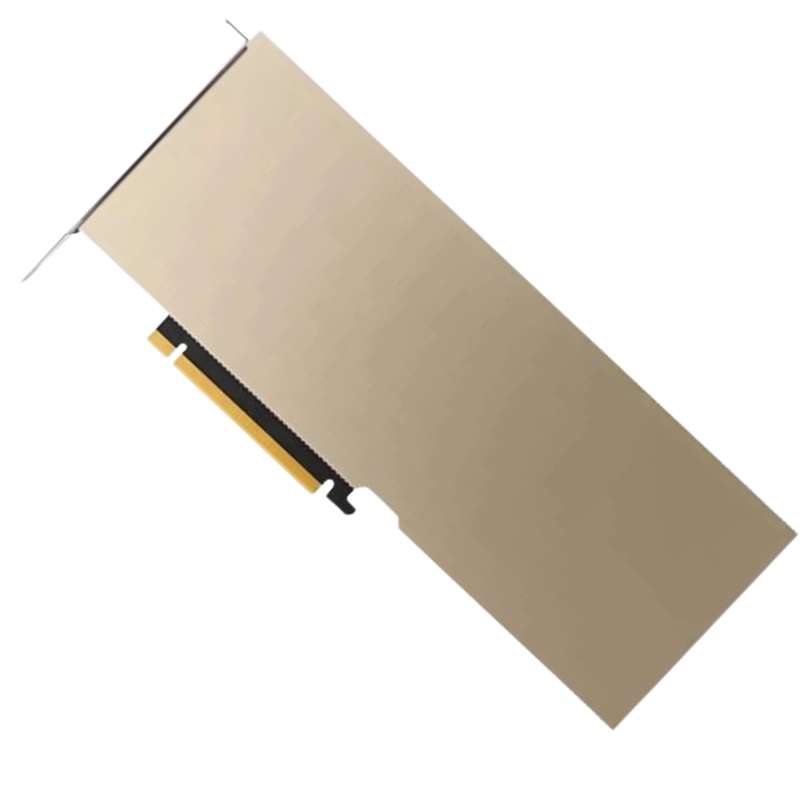
Nvidia 900-2G133-0320-130 A10 PCI-Express Non-CEC 24GB GDDR6 Graphics Processing Unit. Excellent Refurbished with 1 year replacement warranty - HPE Version
The Nvidia A10 GPU is engineered to empower professionals across disciplines—whether you're a digital artist, scientific researcher, or systems engineer. This single-slot, 150W powerhouse integrates seamlessly with Nvidia's Virtual GPU (vGPU) software, enabling robust acceleration for a wide spectrum of data center tasks.
Designed for flexibility and security, the A10 GPU supports scalable deployment across virtual desktop environments and AI-driven applications. Its compact form factor ensures compatibility with diverse server configurations.
The Nvidia 900-2G133-0320-130 A10 PCI-Express Non-CEC 24GB GDDR6 Graphics Processing Unit sits at the intersection of data center class graphics, accelerated computing, and scalable visual compute. This category page focuses on the A10 family in the context of PCI-Express Non-CEC deployment, optimizing the way organizations evaluate, select, and integrate a high-memory, mid-to-high-range professional GPU into server racks, virtual desktop infrastructure, rendering farms, and inference clusters. Emphasizing the core attributes evident in the model designation — A10, 24GB GDDR6, and PCI-Express connectivity — this description explores practical use cases, performance characteristics, integration strategies, thermal and power considerations, compatibility and ecosystem details, and procurement guidance that helps technical buyers, system integrators, and solution architects choose the correct GPU variant for their workloads.
The A10 24GB variant is positioned as a versatile accelerator for mixed workloads where substantial graphics memory and efficient compute throughput are required without the highest-end power envelope of larger, more power-hungry data center accelerators. This GPU is particularly well suited to graphics virtualization, professional 3D rendering, application streaming, and inference at scale. For organizations deploying virtual desktops, remote workstations, and GPU-accelerated application delivery, the large 24GB frame buffer enables multiple concurrent users or large scene datasets to be resident in memory, reducing swapping and improving responsiveness across complex, memory-bound graphics tasks. For AI inference and mixed-precision workloads, systems built around this A10 model allow inference servers to service many models concurrently or to host larger single-model instances, improving utilization and lowering per-request latency when used with optimized inference runtimes.
In rendering and professional visualization pipelines, the A10 24GB card acts as a workhorse for studios and engineering teams requiring high memory capacity to handle detailed scenes, volumetric data, and high-resolution textures. Whether used for ray-traced interactive previews or final-frame rendering in distributed render farms, this GPU provides a balance between memory resources and compute capability that helps keep job times predictable and allows more complex assets to be processed without simplifying geometry or reducing texture resolution. The PCI-Express form factor simplifies integration into a wide range of servers and workstations, making it easier for content production facilities to scale capacity horizontally by adding additional cards to existing infrastructure.
Teams deploying AI inference services at the edge, in private clouds, or within hybrid cloud architectures will find the A10's memory capacity and PCI-Express connectivity valuable for consolidating model instances and maximizing throughput per server. Inference workloads that demand larger on-device memory — such as multi-lingual transformer models, recommendation systems with large embedding tables, and ensemble inference pipelines — benefit from the 24GB frame buffer because it allows larger models or batches to execute without offloading to slower system memory. When combined with modern inference stacks that support mixed precision and hardware-accelerated matrix operations, the GPU can reduce inference latency, improve request-per-second metrics, and lower operational cost by increasing server utilization.
Selecting a GPU for production involves more than raw performance numbers; compatibility with existing software stacks, driver maturity, virtualization support, and ecosystem tooling are central to long-term success. The A10 model in this category leverages established driver ecosystems and widely adopted APIs, ensuring reliable operation with CUDA-enabled workloads, DirectX and Vulkan-based graphics, and industry-standard virtualization frameworks. For system builders and administrators, driver and firmware support from the vendor are critical to establishing predictable update cycles and minimizing service disruption during maintenance windows. Compatibility with containerized workloads and orchestration platforms also plays a major role for teams that prefer cloud-native deployment models for accelerated applications.
Virtualization capability is a central attribute for customers who need to host multiple virtual machines or virtual workstations on a single physical server. The A10's GPU memory and compute characteristics enable denser consolidation when used with supported GPU virtualization technologies, facilitating high-density virtual desktop infrastructure and application streaming. Administrators configuring multi-tenant clusters must consider memory partitioning, vGPU or SR-IOV configurations where available, and licensing models that affect how GPU resources are apportioned across users. Properly configured, this product category supports responsive interactive graphics for end users while keeping overall infrastructure costs manageable through efficient pooling and scheduling of GPU resources.
Because the A10 is specified as a PCI-Express Non-CEC device in this category, integrators must consider the host platform's cooling and power provisioning. The choice of chassis, airflow configuration, and server slot placement all influence sustained throughput and thermal throttling behavior. High-density installations should prioritize proper airflow, inlet temperature control, and thermal monitoring to maintain predictable performance under continuous load. Power management policies at the BIOS and operating system level can also influence performance and energy efficiency; configuring appropriate power profiles and driver-level power management ensures the GPU operates within desired thermal and power envelopes while delivering consistent computational throughput.
The PCI-Express interface simplifies mechanical compatibility across a broad range of enterprise servers and workstation platforms. Understanding the card's slot width, bracket type, and cooling requirements is important for seamless installation. For smaller form factor servers or specialized chassis, verifying available clearance, bracket compatibility, and whether passive or active cooling is required will prevent deployment delays. Cable management, proximity to other hot components, and placement relative to the server's primary air path are also important factors influencing long-term reliability and ease of maintenance.
There are multiple viable deployment patterns for the A10 category, each tailored to particular business goals. Architects designing GPU-accelerated clusters should evaluate whether centralized GPU servers with high PCI-Express slot counts or distributed GPU attachments across many smaller nodes better fit latency, throughput, and management goals. For rendering farms and content pipelines, a horizontal scaling model where each node provides one or more A10 GPUs often simplifies scheduling and job distribution. For inference services, co-locating GPUs with data caches and inference microservices may reduce I/O overhead. Hybrid approaches that combine dedicated GPU nodes for heavy training or batching with smaller inference nodes for low-latency requests can deliver a balance of throughput and responsiveness.
Comparing this A10 SKU against other GPUs requires a clear mapping of workload requirements to product capabilities. For teams prioritizing maximum AI training throughput, larger data center GPUs with more memory and interconnects might be preferable. For teams that need a balance of graphics, virtualization and inference performance with moderate power profiles and a strong memory footprint, the A10 24GB variant often represents a compelling middle ground. Key evaluation criteria should include memory capacity for target datasets, driver and ecosystem maturity, virtualization support, power and thermal constraints of the intended host, and long-term vendor support commitments.
This A10 category delivers tangible benefits across multiple industries. In media and entertainment, studios leverage the card's memory and compute for faster iterating on complex scenes and for delivering remote workstations to distributed teams. In healthcare and life sciences, image analysis and model inference workflows gain from the increased memory capacity for large volumetric datasets. In finance and analytics, GPU-accelerated Monte Carlo simulations, risk calculations, and pattern recognition applications benefit from the accelerated matrix operations and the ability to co-locate models with data caches. Across manufacturing and engineering, simulation and visualization pipelines become more responsive, enabling faster design validation and collaborative reviews.


 Contact Us
 Information
 Catalog
 Solid State Drives (SSD)
 Network Switches
 Hard Disk Drives
 HBA & Controllers
 PC & Servers
 PC & Server Memory
 CPU & Processors
 Network Routers
 Power Supplies
 Tape Drives & Libraries
 Network Devices
 Computer & Network Cables