(7% discount is applied at checkout)
Cart is empty
Your go-to destination for cutting-edge server products
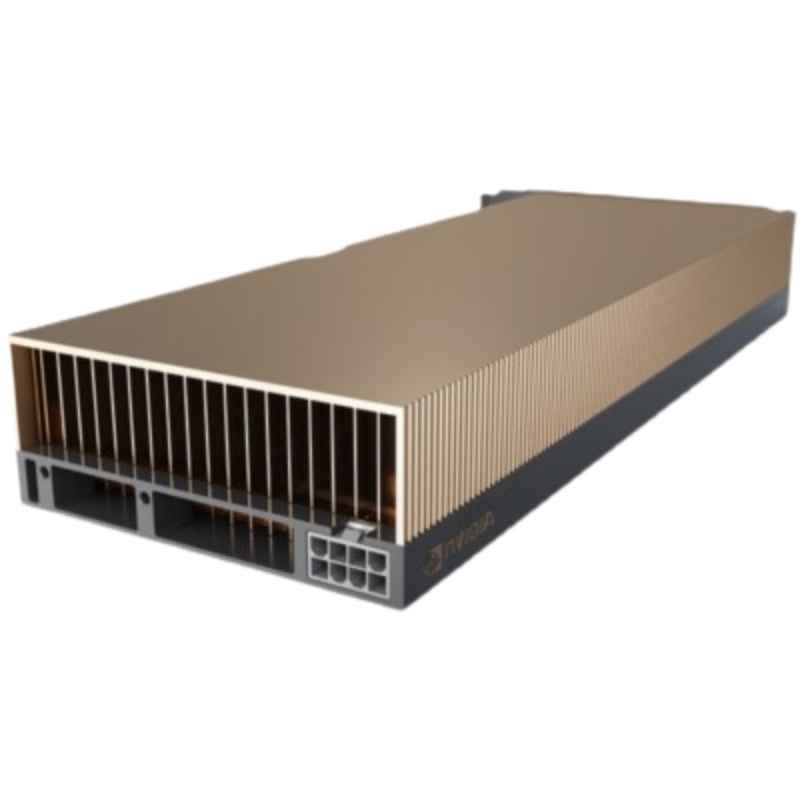


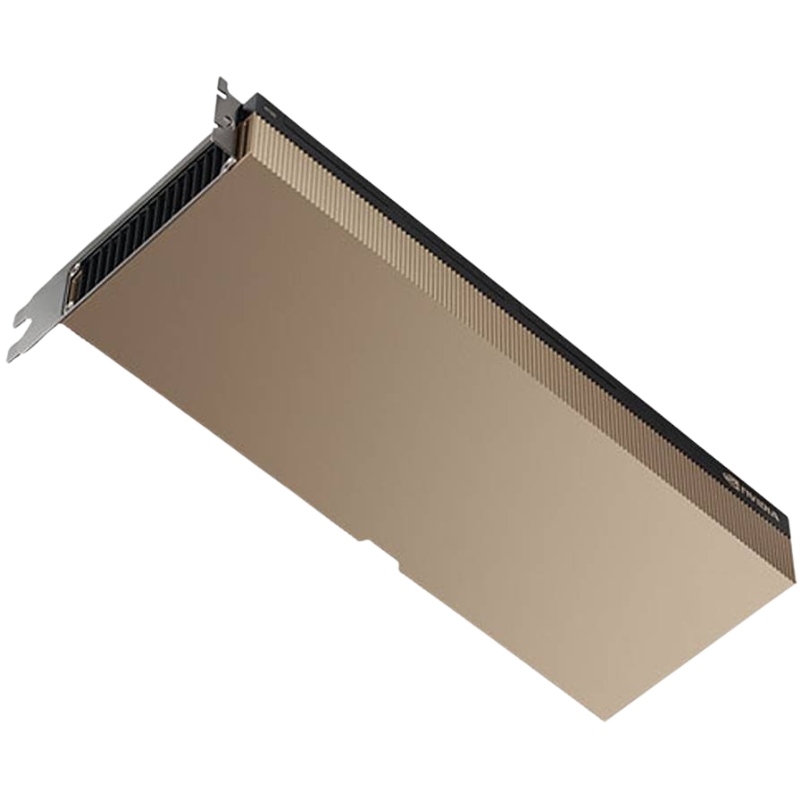
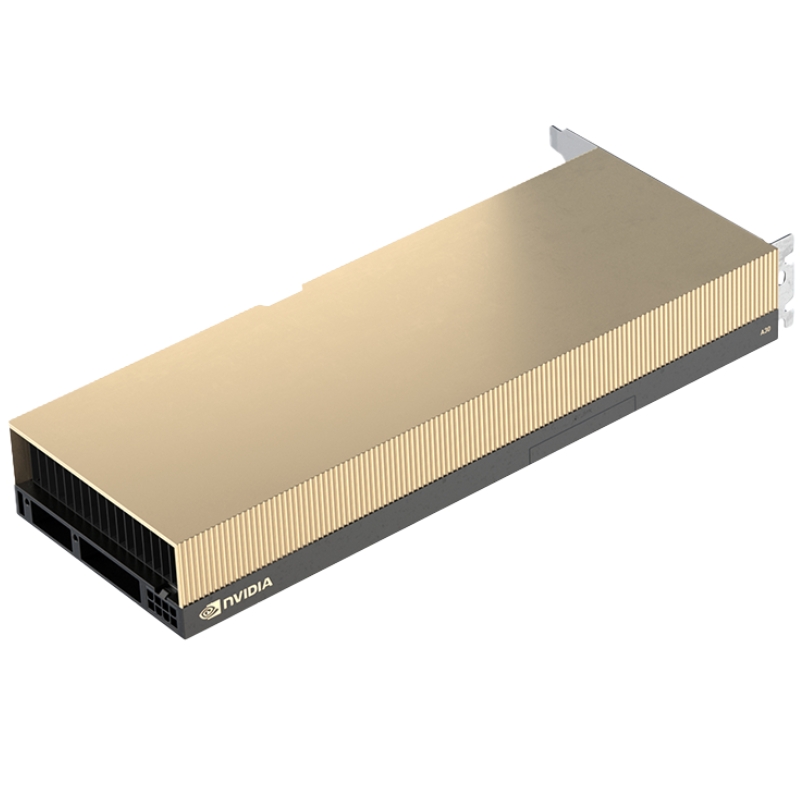
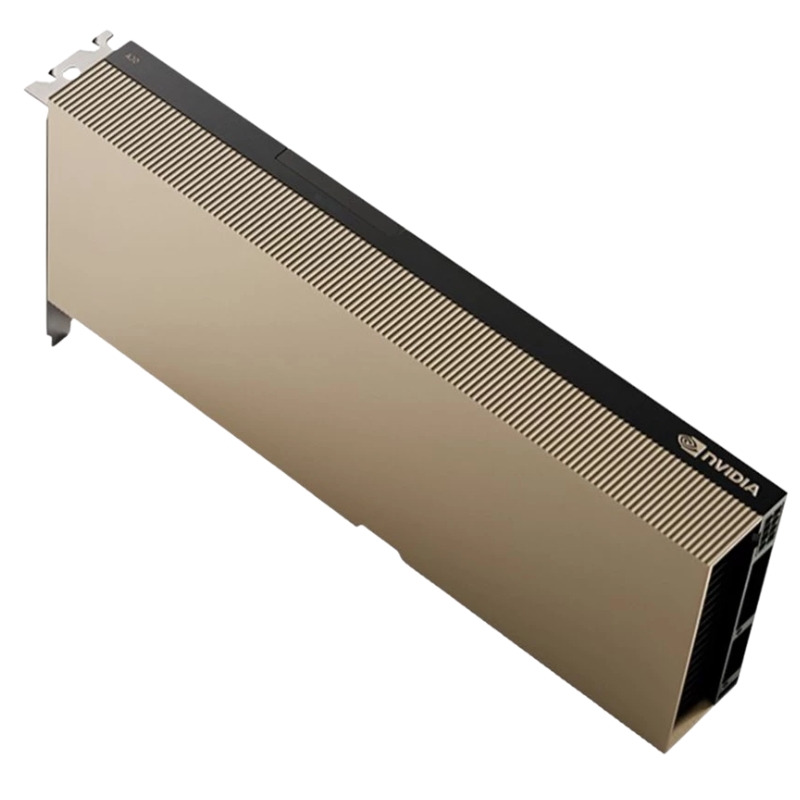
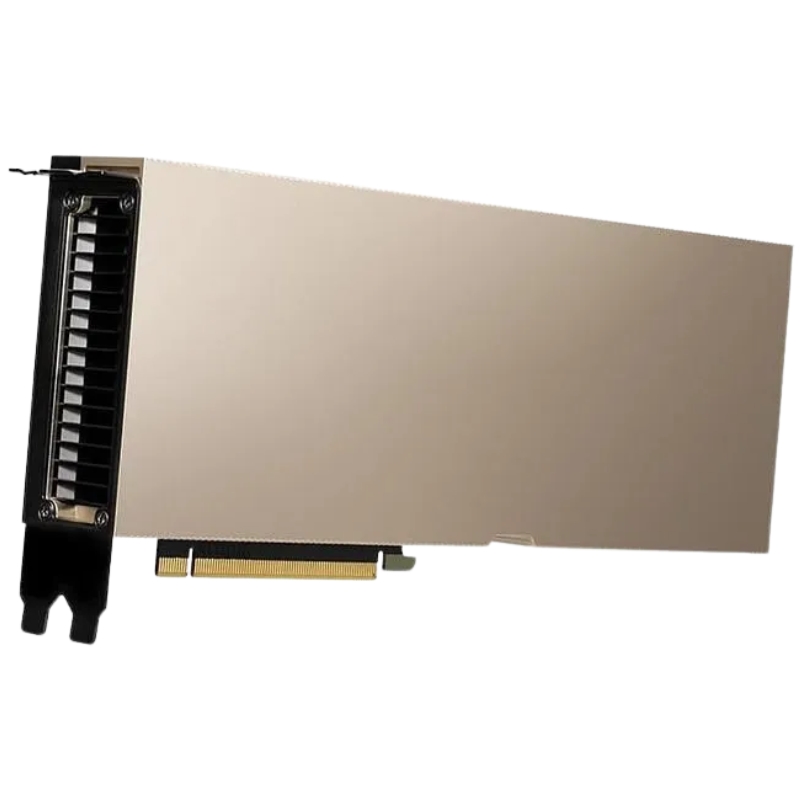
Nvidia 900-2G133-2710-030 L40 48GB 18176 Cuda Cores GDDR6 PCI-Express 4.0 X16 Graphics Processing Unit. New Sealed in Box (NIB) with 3 Years Warranty. Call (ETA 2-3 Weeks)
The Nvidia 900-2G133-2710-030 L40 48GB 18176 CUDA Cores GDDR6 PCI-Express 4.0 x16 Graphics Processing Unit represents a high-density compute and graphics solution designed for professionals, data centers, and demanding workstation users who require a balance of raw GPU compute, large framebuffer capacity, and modern interconnect bandwidth. Engineered to address a wide range of workloads from real-time ray tracing and 3D rendering to large-scale AI inference and mixed HPC tasks, this L40 SKU combines a substantial 48GB of GDDR6 memory with a large CUDA core count to enable high-throughput parallel processing and complex scene handling without frequent memory swapping. The PCI-Express 4.0 x16 interface ensures broad compatibility with modern motherboards and server platforms while offering sufficient link bandwidth for data-intensive transfers and multi-GPU configurations when supported by the host system.
The architecture behind the Nvidia L40 emphasizes both parallel compute density and memory capacity. With 18176 CUDA cores, the GPU delivers extensive parallelism across floating-point and integer operations, accelerating workloads such as neural network inference, physics simulations, and GPU-accelerated compute tasks. The inclusion of 48GB of GDDR6 memory positions this L40 variant as a strong candidate for working datasets that exceed the capacity of typical consumer GPUs, such as large 3D assets, multi-layered datasets, and batch large models used in inference scenarios.
The GDDR6 memory implementation provides a high sustained bandwidth profile suitable for texture streaming, large dataset manipulation, and memory-bound kernels. Designers and system integrators will find the large VRAM particularly beneficial for multi-pass rendering pipelines, complex compositing, and training/inference scenarios where model checkpoints or large activation maps must remain resident on GPU memory. The combination of a wide memory bus and high-capacity modules reduces the need for excessive CPU-GPU transfers, improving effective throughput for workloads that are sensitive to memory latency and bandwidth.
Equipped with a PCI-Express 4.0 x16 interface, the Nvidia L40 provides a modern interconnect standard that delivers significantly more theoretical bandwidth than earlier generations. This elevated link speed supports faster host-to-device communications, which is crucial for workflows that stream textures, volumes, or training batches across the bus during runtime. Compatibility with PCIe 3.0 slots ensures backward interoperability for older systems, though in those scenarios effective host-GPU transfer rates will be constrained by the lower link generation. For system architects planning multi-GPU configurations, PCIe 4.0 reduces the likelihood of the bus becoming a bottleneck in I/O-heavy scenarios while enabling flexible placement across server risers, workstation slots, and specialized chassis tailored for GPU density.
The Nvidia 900-2G133-2710-030 L40 is purpose-built to excel across a spectrum of professional workloads where both compute throughput and framebuffer size matter. Its large CUDA core count is advantageous for throughput-oriented parallel workloads: ray-traced rendering, voxelization, large-scene rasterization, and many GPGPU kernels benefit directly from the scale of parallel execution units. For AI inference, speech models, vision transformers, and recommendation engines that demand multiple concurrent batches or large model footprints, the 48GB memory allows for reduced model sharding or partitioning, enabling inference at higher batch sizes which improves total system utilization.
In visualization and creative content creation, the L40's memory allows artists to load enormous textures, detailed displacement maps, and complex scene compositions directly on the GPU, minimizing the time-consuming swaps between host and device memory. Real-time engines and virtual production setups benefit from the combined effect of CUDA parallelism and abundant memory, enabling higher fidelity assets to be displayed and manipulated interactively. Engineers running computational fluid dynamics, finite element analysis, or other HPC-style workloads will appreciate the GPU's ability to keep larger datasets resident and to execute large parallel kernels with reduced fragmentation.
Thermal management and power delivery are fundamental to extracting consistent performance from high-density GPUs. The L40’s thermal design will typically be optimized for high-efficiency heatsinks, vapor chambers, and controlled airflow channels when used in workstation or server environments. System builders must plan for the card’s TDP and ensure that the host system provides adequate cooling margin and stable power rails to prevent thermal throttling or power-related instability. Cable routing, fan curve tuning, and chassis selection all affect the card’s sustained performance; attention to these details ensures the L40 can operate at elevated utilization levels for extended batch jobs.
Power connectors and PSU sizing are critical. Depending on the specific OEM or board partner implementation, the L40 may require one or more auxiliary power connectors; integrators should confirm connector type and cable routing before installation. In multi-GPU systems, cumulative power draw can exceed standard workstation supplies; using enterprise-grade PSUs with high efficiency and strong transient response ensures reliable operation under bursty compute loads.
Compatibility extends beyond the physical slot to firmware, BIOS settings, and driver stacks. Ensuring the host BIOS supports large BAR (Base Address Register) mappings and Resizable BAR features where applicable can optimize data transfer patterns. The card is supported by Nvidia’s driver packages for professional and data center environments, which are continuously refined to improve stability and performance across applications. Organizations should stay current with validated driver distributions from the GPU vendor or system OEM, particularly when deploying clusters or production rendering farms where software compatibility is a requirement.
Choosing the Nvidia 900-2G133-2710-030 L40 should be guided by application demands. If the primary workloads involve massive models, extensive textures, or very large datasets that benefit from keeping data resident on GPU memory, the 48GB framebuffer becomes a decisive advantage. For studios focusing on high-fidelity cinematics, complex simulations, or real-time production environments, the L40 reduces the need to simplify assets and streamlines iteration cycles. In enterprise inference and hybrid cloud setups where model consolidation and throughput are prioritized, the L40 enables fewer GPUs to handle larger workloads, potentially reducing total system cost of ownership by minimizing synchronization overhead and cross-device complexity.
Conversely, if workloads are heavily dependent on specialized RTX features that are only available on specific RTX-labeled architectures or if absolute cutting-edge AI training throughput is required, organizations should evaluate how the L40 compares to other offerings in Nvidia’s portfolio relevant to training acceleration. For many mixed-use deployments, however, the L40’s balance of core count, memory, and PCIe 4.0 compatibility offers a versatile platform capable of addressing both visualization and inference tasks without the premium of niche accelerators.
When integrating the L40 into multi-GPU systems, planners must consider interconnect topology, workload partitioning, and cooling. PCIe slots that offer bifurcation or PCIe switch topologies can be used to place multiple L40 cards in a single server, but care must be taken to ensure the host’s CPU and chipset provide enough lanes and sufficient memory channels to prevent host-side bottlenecks. Networked clusters often employ GPU-aware scheduling and collective communication libraries to coordinate work across nodes; in such cases, pairing L40 cards with high-performance networking (such as InfiniBand or high-speed Ethernet) and GPU-direct RDMA can reduce host involvement and improve end-to-end throughput for distributed training or parallel inference tasks.


 Contact Us
 Information
 Catalog
 Solid State Drives (SSD)
 Network Switches
 Hard Disk Drives
 HBA & Controllers
 PC & Servers
 PC & Server Memory
 CPU & Processors
 Network Routers
 Power Supplies
 Tape Drives & Libraries
 Network Devices
 Computer & Network Cables