(7% discount is applied at checkout)
Cart is empty
Your go-to destination for cutting-edge server products


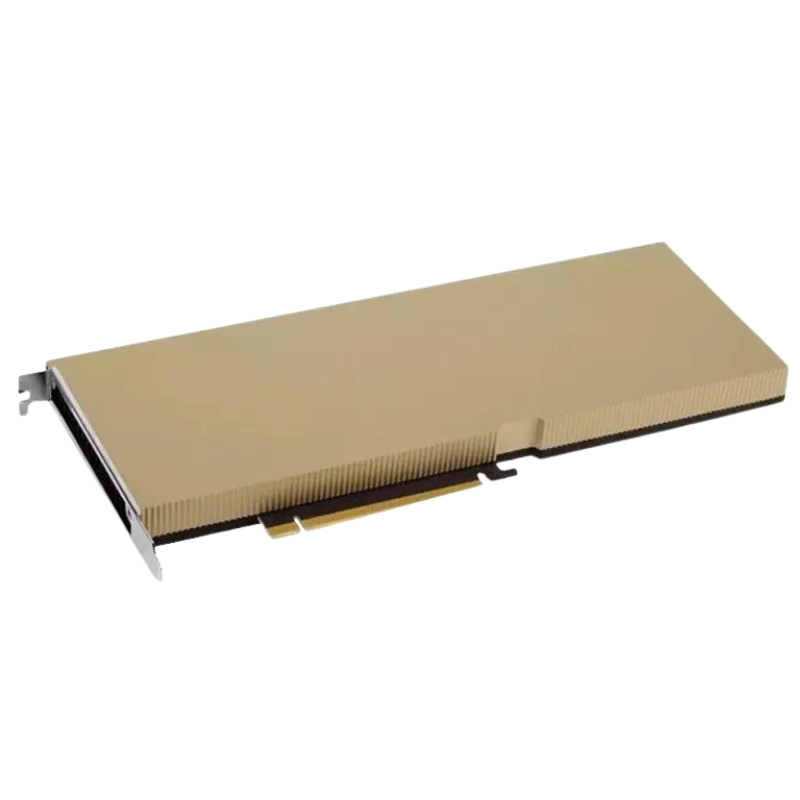
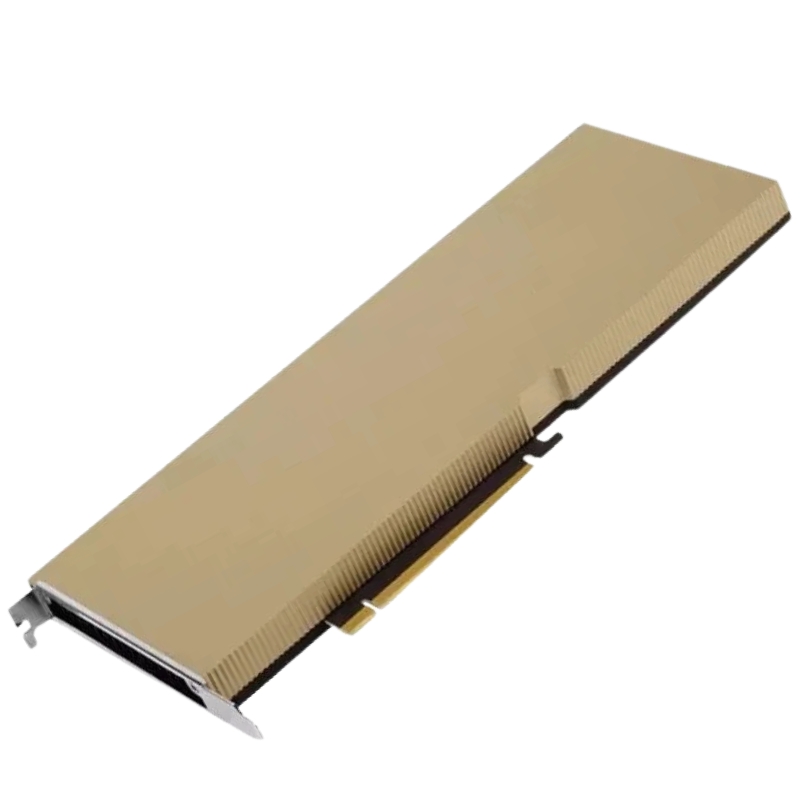
Nvidia 900-2G133-2722-100 Ampere A10 24GB GDDR6 384-Bit Passive Cooling PCI-Express Gen4 X16 1x 8-Pin Graphics Card. New Sealed in Box (NIB) with 3 Years Warranty. Call (ETA 2-3 Weeks)
The Nvidia 900-2G133-2722-100 Ampere A10 24GB GDDR6 384-bit graphics card is positioned in the spectrum between workstation-class accelerators and specialized data center GPUs, offering a balanced package of memory capacity, memory bandwidth, and PCI-Express Gen4 connectivity in a passive-cooled form factor designed for rack or chassis environments with directed airflow. Built on Nvidia’s Ampere architecture design principles, the A10 variant emphasizes high memory capacity and a wide 384-bit memory interface paired with 24 gigabytes of GDDR6 memory, making it suitable for memory-intensive professional workloads where frame buffer size and sustained data throughput are key. The passive cooling implementation makes the card a natural fit for blade servers, multi-GPU enclosures, and pre-configured systems where chassis-level fans take responsibility for heat dissipation.
Ampere architecture brought several generational improvements in parallel throughput, energy efficiency, and memory handling compared to earlier families. The Ampere A10 leverages architectural advancements to achieve stronger sustained performance per watt in many professional and data center scenarios. This means that when you deploy the Nvidia 900-2G133-2722-100 in a properly engineered server or workstation chassis, you should expect consistent compute and memory behavior across prolonged workloads. Its architecture supports modern CUDA enhancements and dataset streaming strategies that benefit deep learning inferencing pipelines, high-fidelity visualization, and HPC workloads where memory locality and bandwidth are decisive.
The combination of 24 gigabytes of GDDR6 and a 384-bit memory interface enables high aggregate memory bandwidth, which is essential for workloads that continually shuffle large data structures between compute units and video memory. For professionals working on multi-layer neural networks, datasets with large textures, or scenes with many high-resolution assets, the available on-card memory reduces the need for constant PCIe transfers or host memory paging. That reduction translates into lower latency, fewer stalls, and improved frame-to-frame consistency for rendering and simulation tasks. In virtualization contexts, the generous buffer size allows administrators to partition the card’s memory across multiple virtual GPUs with greater flexibility while maintaining per-instance performance.
PCI-Express Gen4 x16 doubles the per-lane bandwidth of Gen3, effectively enabling higher peak data transfers between CPU and GPU when the system platform supports it. For the Ampere A10 configured as a PCI-Express Gen4 x16 device, workloads that stream data in bursts or use unified memory strategies can exploit the additional link capacity. Real-world advantages include faster dataset staging from NVMe storage through the CPU to GPU, improved performance in certain virtualization passthrough scenarios, and reduced host-side contention when multiple devices share the same PCIe root complex. It is important to pair the card with a compatible Gen4-capable motherboard or server backplane to fully realize these benefits.
Passive cooling on professional and data center GPUs is a deliberate design choice aimed at centralized thermal management. The Nvidia 900-2G133-2722-100’s passive heatsink removes active fans from the GPU itself, relying on chassis-level airflow for heat rejection. This architecture plays well in densely packed servers and integrated systems where redundant or higher-capacity chassis fans provide predictable and controllable airflow. Passive-cooled cards simplify maintenance by eliminating per-card fan failures and help with acoustic suppression in shared lab and office spaces when the system enclosure is engineered to handle heat appropriately.
The Nvidia 900-2G133-2722-100 specifies a single 8-pin power input, which provides a straightforward connection requirement for systems and makes cabling simpler in multi-card configurations. Power planners should account for the card’s rated power draw during peak operation and ensure that power supplies deliver stable, ripple-compliant voltages. In data center contexts, redundant PSUs and monitored power distribution units help mitigate risks associated with single-point power anomalies. The single 8-pin connector also allows for easier retrofitting into existing server systems where available auxiliary power connectors may be limited.
The Ampere A10’s 24GB frame buffer and memory width make it a practical solution for AI inference and medium-scale model deployments. Many inference scenarios prioritize memory capacity and consistent latency over absolute peak training throughput. In production inference clusters, the Nvidia 900-2G133-2722-100 can host multiple model copies or larger batch sizes, decreasing the need to shard models across multiple GPUs and simplifying deployment. Its passive cooling makes it ideal for inference servers where low maintenance and predictable acoustics are desirable.
Because the Nvidia 900-2G133-2722-100 uses passive cooling, airflow architecture is critical. Chassis designers should orient fans to create laminar airflow across each card’s heatsink, avoiding recirculation zones and stagnant pockets. Baffle designs that channel air through card fin stacks and the inclusion of temperature sensors near the GPU can inform fan curves that dynamically balance acoustic and thermal goals. For retrofit installations, system technicians should confirm that existing server cooling meets the card’s thermal dissipation needs before production deployment.
Choosing the Nvidia 900-2G133-2722-100 Ampere A10 typically hinges on the need for large on-card memory, passive cooling for integrated systems, and Gen4 PCIe throughput. If workloads require extensive frame buffer resources without the absolute highest training throughput, or if your deployment environment prioritizes low-maintenance hardware with chassis-level airflow, the A10 is an attractive middle-ground solution. For organizations that need maximum raw tensor throughput for large-scale training, alternative Nvidia accelerators optimized for training may be preferable. Conversely, for basic workstation tasks or gaming-centric features, consumer GPUs focus more on active cooling and driver stacks optimized for gaming rather than the data center and professional features present in the A10.


 Contact Us
 Information
 Catalog
 Solid State Drives (SSD)
 Network Switches
 Hard Disk Drives
 HBA & Controllers
 PC & Servers
 PC & Server Memory
 CPU & Processors
 Network Routers
 Power Supplies
 Tape Drives & Libraries
 Network Devices
 Computer & Network Cables