(7% discount is applied at checkout)
Cart is empty
Your go-to destination for cutting-edge server products
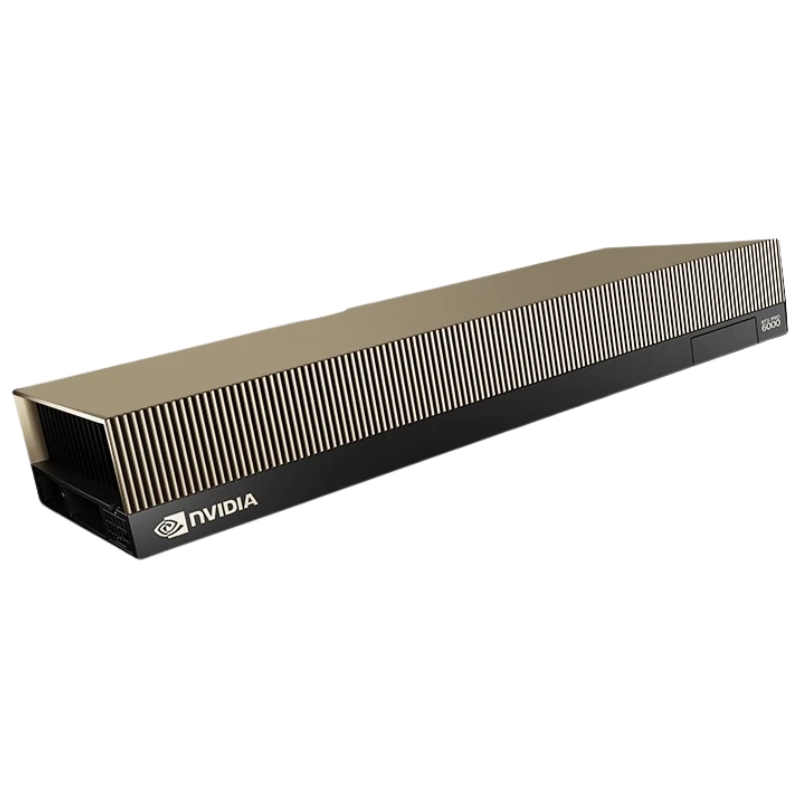


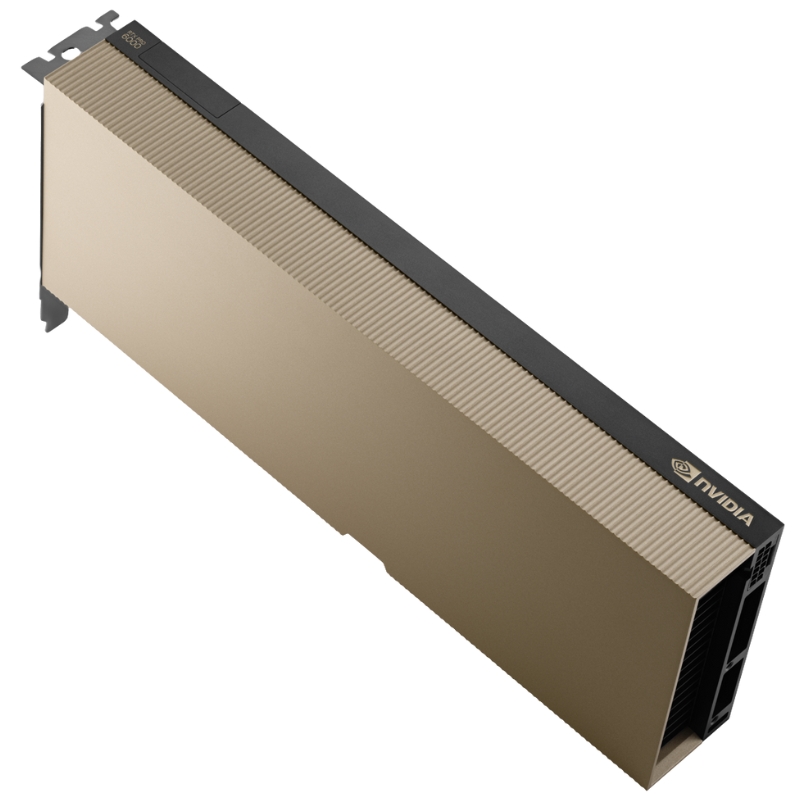
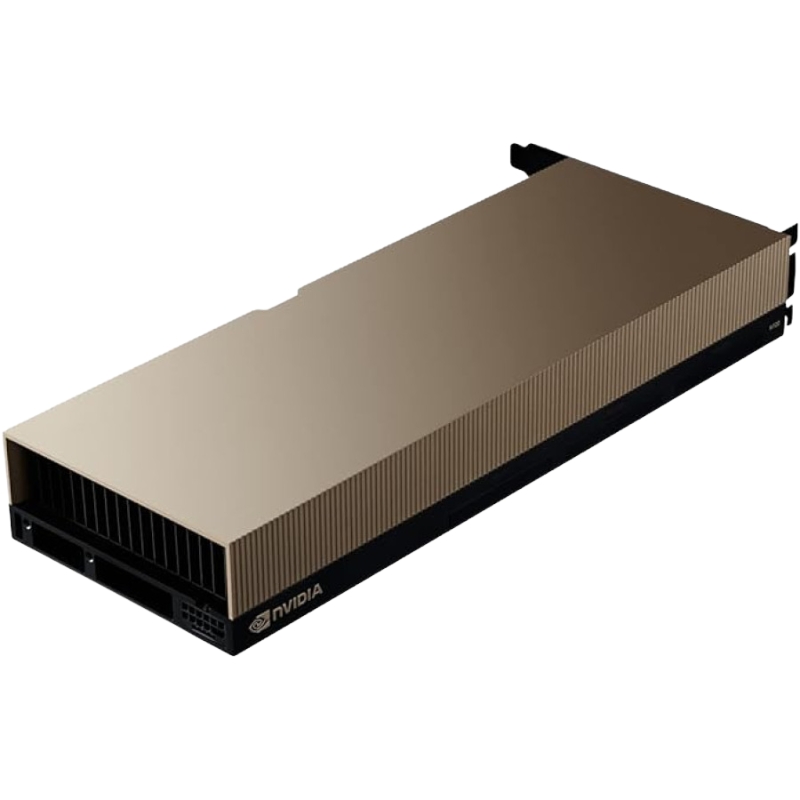
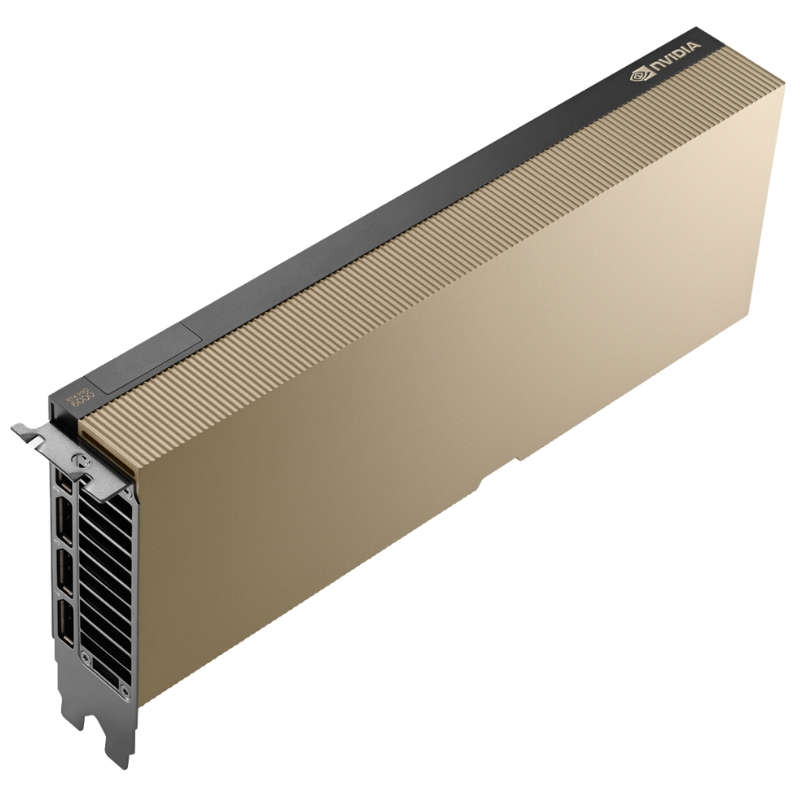
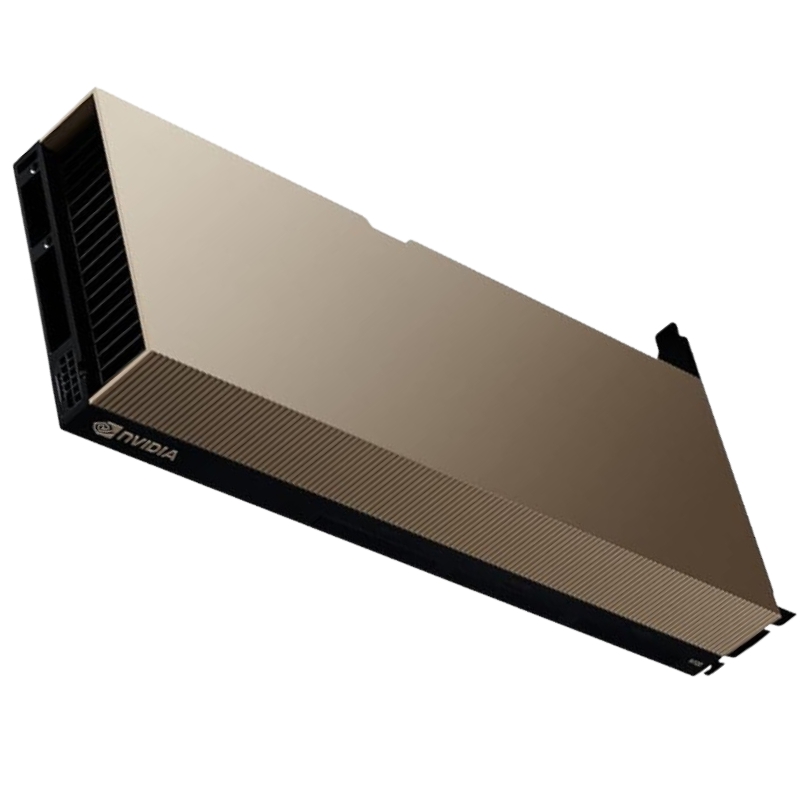
Nvidia 900-2G153-0000-000 RTX Pro 6000 Blackwell 96GB 24064 Cuda Cores Memory 512-Bit GDDR7 Bandwidth 1597GB/s PCI-E 5.0 X16 Graphics Processing Unit. New Sealed in Box (NIB) with 3 Years Warranty. Call (ETA 2-3 Weeks)
The Nvidia RTX PRO 6000 Blackwell, sometimes listed under vendor part number 900-2G153-0000-000, represents the pinnacle of single-GPU workstation capability, combining massive on-board memory, the Blackwell streaming multiprocessor architecture, and next-generation media and AI engines to accelerate design, simulation, visual effects, and on-premise AI model development. This model ships with a very large 96 GB of GDDR7 memory and an expanded 512-bit memory interface to support datasets, textures, and model weights that previously required multi-GPU systems or server racks. The architecture and memory subsystem are designed to reduce the need for costly distributed memory strategies, letting artists, engineers, and researchers work interactively with billion-parameter models and extremely large 3D scenes on a single workstation.
The RTX PRO 6000’s 96 GB of GDDR7 memory is paired with a 512-bit memory interface to deliver extremely high sustained bandwidth. This combination is purpose-built to keep SMs and Tensor units fed when working with multi-gigabyte data structures — large texture caches, multi-layer neural network checkpoints, simulation grids, and high-res film frames. Nvidia’s datasheet highlights effective memory bandwidth in the terabytes per second range, a critical attribute for both AI fine-tuning on large models and for viewport interactivity when manipulating hundreds of millions or billions of primitives. In practice this means fewer out-of-core swaps, less partitioning of scenes and models, and a more fluid professional experience when loading very large assets.
Moving to PCIe Gen5 x16, the RTX PRO 6000 benefits from doubled per-lane link rates over PCIe 4.0, leading to higher host↔GPU throughput for dataset staging, streaming textures, and remote storage access. For workstation builders and IT teams this means improved responsiveness when datasets are shared between CPU memory, NVMe storage and the GPU. The card’s physical interface and board design also consider power delivery and thermal behavior for the workstation chassis environment, calling for compatible PCIe Gen5 motherboards, a robust power supply and chassis airflow that can sustain the card’s full performance envelope.
The RTX PRO 6000 is specified with a total board power up to 600 W and uses a double flow-through thermal solution to control temperatures under heavy, sustained compute loads. In a workstation environment that means attention to case airflow, PSU headroom and cable management is mandatory. Nvidia’s engineering choices favor a double-flow path to maintain steady clocks under a 600 W design point, which benefits long render jobs, physics simulations, or AI fine-tuning runs that run for hours. System integrators should plan for higher-capacity PSUs and verified chassis cooling when configuring workstations with this GPU.
The RTX PRO 6000 supports Multi-Instance GPU (MIG) capabilities, enabling a single physical GPU to be partitioned into multiple isolated instances for simultaneous workloads or multi-tenant environments. This is particularly useful in shared workstation pools, development labs, or when running distinct concurrent jobs—such as rendering one scene while training a small model on a partitioned slice of the card. MIG support increases resource utilization and introduces operational flexibility for studios and research teams that need secure isolation without provisioning multiple full GPUs. The MIG architecture on RTX PRO 6000 lets you map memory and compute to different tasks in a controlled way.
Beyond silicon, the RTX PRO line is distinguished by enterprise-grade drivers, extended testing and ISV certifications for major professional applications such as CAD suites, DCC tools, medical imaging and scientific visualization packages. These enterprise drivers are tuned for stability and predictable behavior under mission-critical workloads; the certification programs and Nvidia’s workstation ecosystem support help IT departments maintain validated software stacks. The RTX PRO 6000 is sold through distribution partners and OEM channels with additional assurance of compatibility and long lifecycle support for professional installations.
At the core of the RTX PRO 6000 is Nvidia Blackwell, which introduces enhancements in streaming multiprocessors, new neural shaders and improved Tensor engine efficiency. Neural shaders integrate neural networks directly into programmable shader stages, enabling new classes of AI-augmented realtime effects, denoising, upscaling, and multi-frame image synthesis. For studios investigating AI-driven pipelines—such as automatic material generation, photoreal relighting, or neural scene compression—the Blackwell architecture offers both API integrations and raw performance headroom to prototype and deploy these features locally on a workstation. This architectural leap reduces iteration time for creative teams and shortens the feedback cycle between idea and visual proof.
The RTX PRO 6000 is built in an extended height, dual-slot form factor that requires careful planning during system integration. The card typically uses a high-density PCIe CEM5 16-pin power connector and is intended for workstations with sufficient physical clearance and power delivery. Integrators must validate chassis compatibility, PSU capacity, and airflow routing because running the card at rated board power for sustained periods places demands on cooling and power distribution. Many OEM workstation vendors offer compatible chassis and verified builds to help avoid common pitfalls during deployment.
Nvidia supplies RTX PRO 6000 variants for both workstation and server environments. The server edition offers packaging and features tailored to rack servers and dense GPU compute deployments, while the workstation edition focuses on desktop chassis and interactive workloads. Server editions may be offered with passive coolers and other form factors suited to airflow across multiple cards in a rack environment. When purchasing, verify the specific 900-2G153-0000-000 is commonly referenced for certain server or OEM configurations and can denote differences in cooling, power and connector schemes. System integrators planning multi-GPU racks should consult the server edition datasheets and vendor guidance for best practices.
Although the RTX PRO 6000 delivers enormous single-GPU capability, multi-GPU architectures remain relevant for extremely large HPC and LLM training jobs. Depending on SKU and vendor options, NVLink support may be available on certain server platforms or specific product variants, but many workstation variants target single-GPU, high-memory workflows and do not expose NVLink bridges. Architects planning large distributed training clusters should evaluate server GPUs or accelerator variants designed for NVLink topologies and consider the tradeoffs between PCIe Gen5-based clustering and NVLink/NIC-accelerated fabrics for low-latency inter-GPU communication. For many professionals, the RTX PRO 6000 reduces the need for multi-GPU setups by letting a single workstation run workloads formerly reserved for small GPU clusters.
When selecting a professional GPU, teams typically balance memory capacity, single-GPU compute, interconnect topology and power/thermal constraints. The RTX PRO 6000 is designed to excel where single-GPU memory capacity and general-purpose compute must be maximized within a single chassis. Alternatives such as server accelerators or multi-GPU rack appliances might offer different interconnects (NVLink, HBM-based memory) or denser scaling, but they also increase systems complexity. For design studios, small labs and AI teams that value single-system interactivity and local model iteration workflows, the RTX PRO 6000 often represents a more practical and cost-effective solution compared with assembling multi-GPU workstations.
The practical upside of the RTX PRO 6000 is the democratization of formerly cluster-bound tasks. Designers can iterate on photoreal scenes that would otherwise require queuing on a render farm. AI researchers can prototype and fine-tune larger models locally for faster experimentation cycles. Simulation scientists can run higher-resolution grids interactively and visualize outcomes in real time. This convergence of memory capacity, raw compute and enterprise software support compresses project timelines and reduces the friction that previously slowed iteration cycles, enabling a smaller team to achieve results that once demanded larger infrastructure.


 Contact Us
 Information
 Catalog
 Solid State Drives (SSD)
 Network Switches
 Hard Disk Drives
 HBA & Controllers
 PC & Servers
 PC & Server Memory
 CPU & Processors
 Network Routers
 Power Supplies
 Tape Drives & Libraries
 Network Devices
 Computer & Network Cables