(7% discount is applied at checkout)
Cart is empty
Your go-to destination for cutting-edge server products
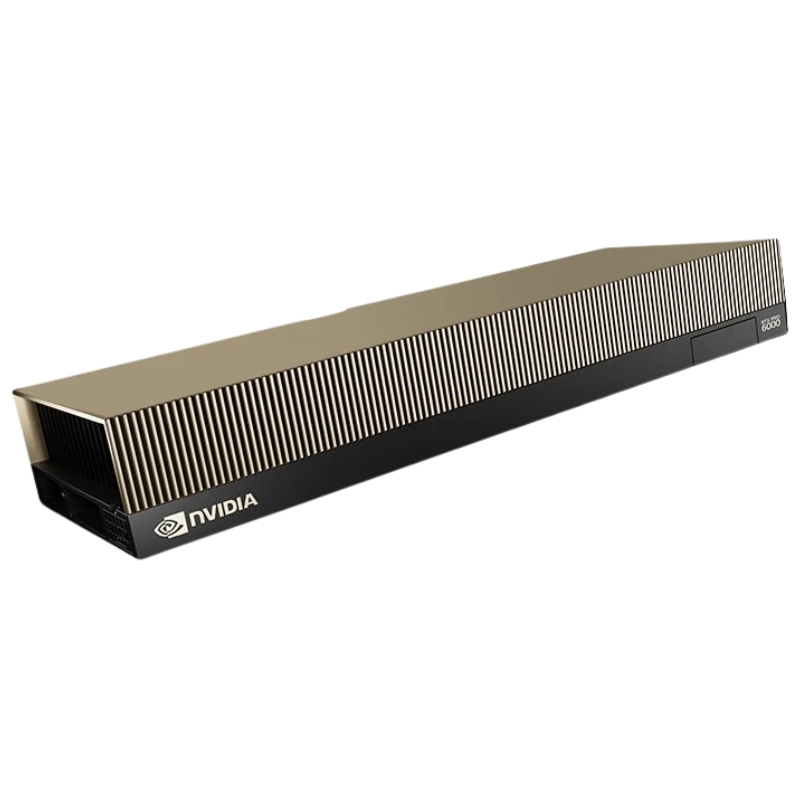


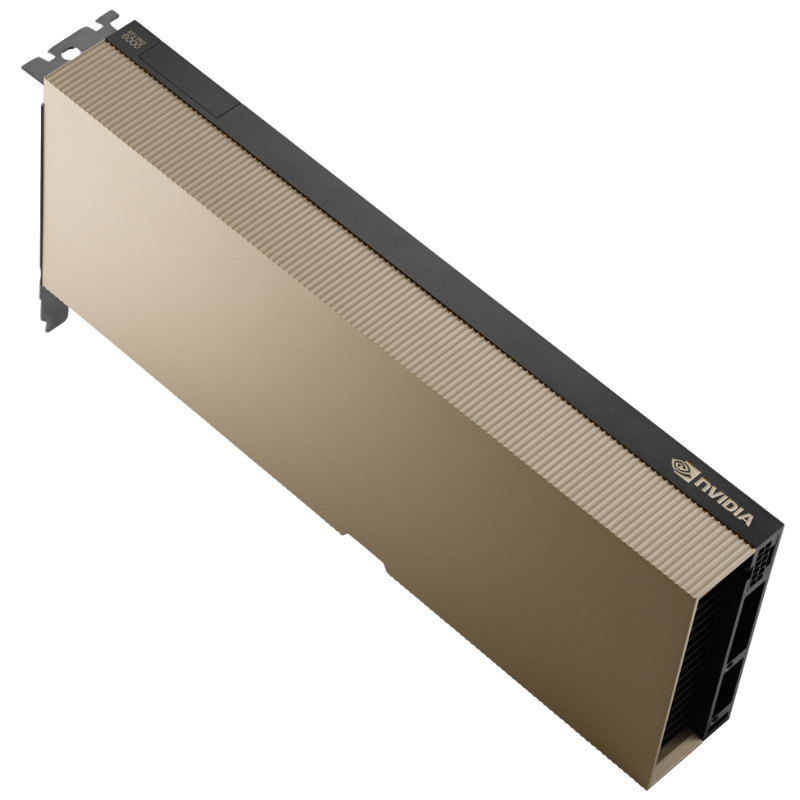
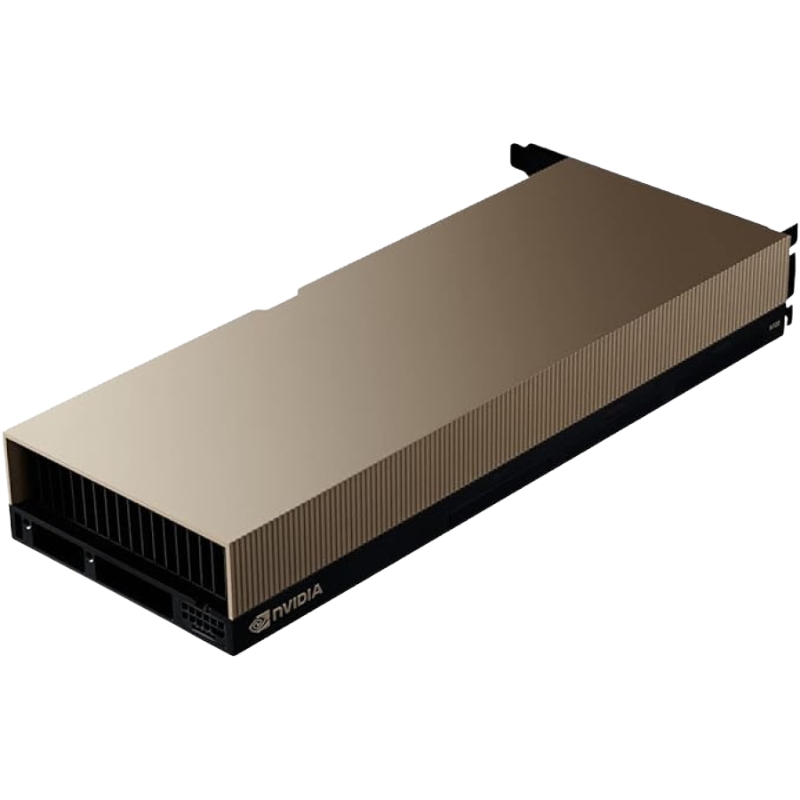
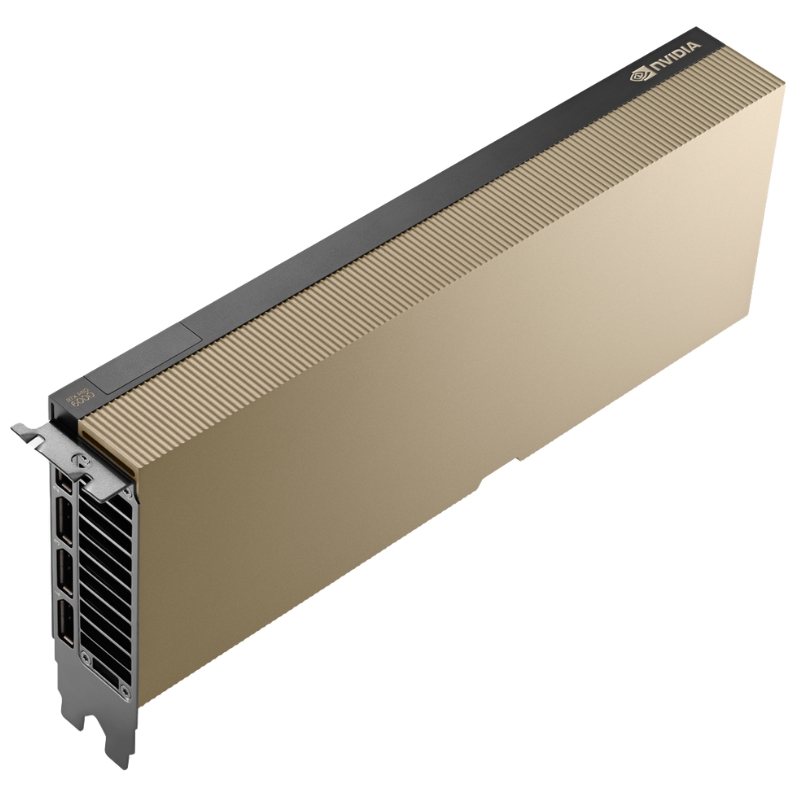
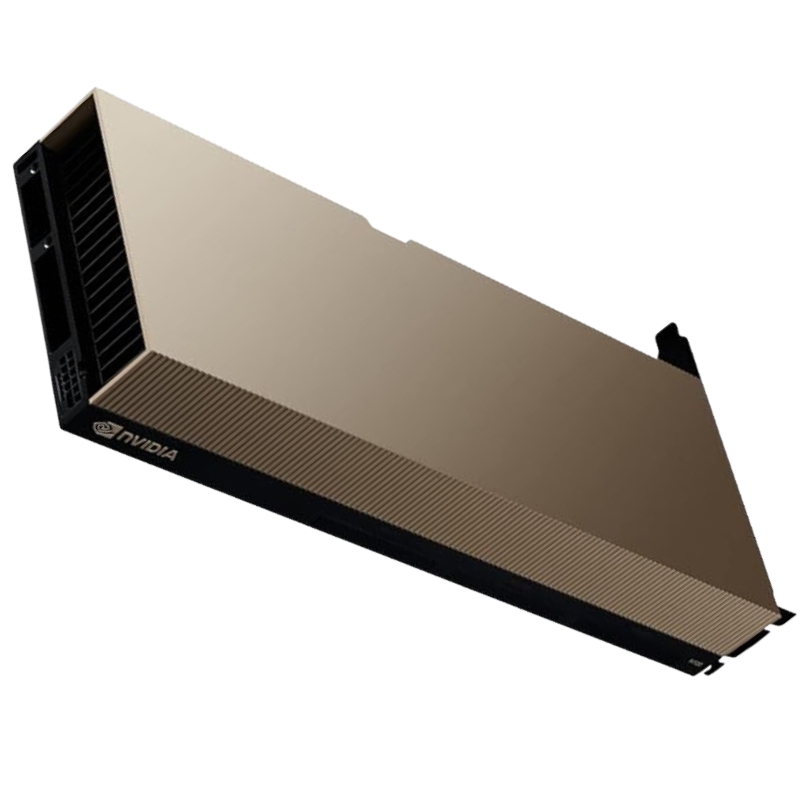
Nvidia 900-2G153-2700-030 RTX Pro 6000 96GB 24064 Cuda Cores Memory 512-Bit GDDR7 Blackwell Bandwidth 1597GB/S PCI-Express 5.0 X16 Graphics Processing Unit. New Sealed in Box (NIB) with 3 Years Warranty. Call (ETA 2-3 Weeks)
The Nvidia 900-2G153-2700-030 RTX Pro 6000 is presented across workstation and server editions as a flagship Blackwell-architecture professional GPU built for massive datasets, uncompromising simulation, and the next generation of AI-accelerated workflows. With 96 gigabytes of GDDR7 ECC memory on a 512-bit bus and a dense compute fabric of 24,064 CUDA cores, this family member targets studios, research labs, simulation clusters, and enterprise render farms that require sustained throughput for training, inference, photorealistic rendering, and high-fidelity visualization. The Blackwell silicon in the RTX Pro 6000 unifies raster, ray tracing, and matrix compute through multi-generational RT and Tensor cores, increasing both the raw TFLOPS available for single precision workloads and the platform efficiency needed to process multi-terabyte datasets in active memory rather than offloading to slower storage tiers.
The memory architecture is a core selling point: 96GB of GDDR7 with ECC across a 512-bit interface delivers an enormous sustained bandwidth figure—advertised around 1,597 GB/s—designed to keep thousands of parallel compute engines fed without memory starvation. For tasks that are memory-bound such as large-scale neural network training, complex scene assembly for film VFX, or dense finite element analysis, the combination of very high capacity and very high throughput reduces the need for distributed memory techniques and complex sharding across multiple devices. Error-correcting code (ECC) ensures numerical integrity for scientific and regulated workflows where silent data corruption is unacceptable. Because GDDR7 offers improved signaling and power characteristics compared with previous generations, system architects can pair these cards with high-performance CPUs and NVLink or PCIe Gen 5 interconnects to build balanced platforms.
Compute capability on the RTX Pro 6000 is described by a staggering 24,064 CUDA cores, fifth-generation Tensor cores, and fourth-generation RT cores. The CUDA core count translates into very high single-precision (FP32) throughput—Nvidia advertises performance in the hundreds of teraflops for FP32—while the Tensor cores unlock mixed-precision and FP4/FP8 AI primitives that accelerate large language models, recommendation systems, and agentic AI workloads. The RT cores handle hardware-accelerated BVH traversal and ray intersection, enabling real-time ray tracing for viewport rendering and fast, physically accurate light transport for batch render jobs. On content creation pipelines, these compute resources can shift costly operations from render farms to local GPU-accelerated workstations, dramatically shortening iteration cycles for artists and engineers.
The RTX Pro 6000 supports logical partitioning through multi-instance GPU (MIG) features that allow a single physical GPU to be divided into multiple isolated instances. Because each instance can be provisioned with a slice of the 96GB memory, enterprises can run multiple concurrent virtual machines or containerized workloads on the same card, increasing utilization in VDI, rendering farms, and cloud-native inference services. MIG makes it practical to allocate deterministic GPU resources to different users, jobs, or tenants without physically installing more hardware, which simplifies logistics and reduces per-task capital expenditure. The ability to create up to four instances at 24GB apiece (or other combinations depending on firmware and driver support) makes the RTX Pro 6000 attractive as both a server component and a high-end workstation solution where multiuser concurrency is valued.
Delivering maximum sustained performance requires careful attention to thermal and power design. The RTX Pro 6000 Server Edition and Workstation Edition are offered in passive and active cooling variants, with configurable power envelopes that can approach 600 watts in top configurations. Passive server variants are designed for airflow-driven chassis in rack systems while active workstation models include factory-tuned cooling that balances acoustics and maximum clocks under load. For integrators and system builders, this means planning around power delivery and chassis airflow: high-current multi-rail PSUs, reinforced PCIe slots, and chassis layouts optimized for front-to-rear airflow allow the GPU to run at higher boost states for longer durations without thermal throttling. Heat pipes, vapor chambers, and high-flow fans may all be part of vendor-specific cards that adapt the public reference platform to particular noise or density constraints.
With PCI-Express 5.0 x16 support, the RTX Pro 6000 integrates into the latest server and desktop platforms with a forward-looking interconnect that doubles theoretical per-lane throughput compared with PCIe Gen 4. This bandwidth is particularly useful for datasets that stream between system memory and GPU memory or for multi-GPU configurations where peer-to-peer traffic is significant. Display connectivity in workstation variants commonly includes multiple DisplayPort 2.1 outputs to support ultra-high resolution, high-refresh displays and professional color pipelines. For server editions, display outputs may be de-emphasized in favor of pass-through and headless operation optimized for headless compute, render farms, and virtualization hosts.
In rendering workloads such as path tracing and hybrid raster-ray pipelines, the RTX Pro 6000 provides faster convergence and shorter frame times by combining raw FP32 throughput with dedicated RT acceleration. Artists working in DCC tools will notice reductions in interactive render latencies, and batch render farms benefit from a higher renders-per-hour metric. In AI workloads, Tensor cores enable higher effective throughput for mixed-precision matrix math which is the backbone of large model training and inference. For simulation—whether computational fluid dynamics, structural analysis, or agent-based modeling—the high memory capacity allows substantially larger meshes and model states to remain resident on the device, which reduces I/O overhead and keeps simulation runtimes predictable. Benchmarks and vendor case studies consistently show that devices in this class move workloads previously reserved for multi-GPU clusters into single-GPU envelopes, simplifying software and hardware stacks.
The GPU’s hardware capabilities are unlocked by Nvidia’s mature software ecosystem: drivers, CUDA toolkit updates, cuDNN, TensorRT, OptiX for ray tracing, and containerized deployments through NGC (Nvidia GPU Cloud) and Docker. Professional drivers for workstation and server editions are tuned for stability, ISV certifications, and deterministic behaviour required by content creation and engineering applications. Developers and DevOps teams will rely on the CUDA toolchain and optimized libraries to port and scale compute kernels, while AI practitioners benefit from prebuilt models and runtime optimizations that target the new Blackwell instruction set. Integration with common orchestration tools and frameworks—Kubernetes, Slurm, PyTorch, TensorFlow—enables enterprise deployment at scale, and vendor ecosystems such as PNY and partner resellers provide tested reference designs for system integrators.
The RTX Pro 6000 is offered in multiple form factors to fit different deployment profiles. Workstation cards emphasize display outputs, chassis compatibility, and acoustics for desktop stations used by content creators and engineers. Server editions are optimized for passive cooling, high-density racks, and headless compute where multiple GPUs are populated in a chassis that provides strict airflow management. Max-Q or Max-Power variants may be offered for OEM systems that balance thermal limits and power budgets while still providing high compute density for thin workstations or OEM-branded systems. These distinct variants make the platform flexible: one SKU can be adapted by system builders to support studio desks, standalone rendering machines, or rack-scale inference nodes.
The RTX Pro 6000 is purpose-built for an array of professional workloads. In animation and VFX, it accelerates look development, final-frame rendering, and complex simulation caches. Architecture and engineering firms use the card to run larger finite element meshes and higher-resolution visualization for design reviews. Scientific computing groups apply the GPU to molecular dynamics, climate modeling, and physics simulations where the combination of memory capacity and compute density shortens experiment cycles. In AI and deep learning, the GPU is capable of training very large models on single devices or serving large models in production for low-latency inference. Enterprise virtualization, remote workstations, and cloud render farms all benefit from the card’s multi-instance capabilities that enable higher utilization and cost-efficient consolidation.
System integrators must consider several compatibility points when adding the RTX Pro 6000 to a build. Power delivery is among the most important: the configurable upper-end power draw requires PSUs and board traces rated for high current, and chassis mechanical design must support the board’s length, slot width, and cooling expectations. Motherboards with PCIe 5.0 x16 slots are preferred to avoid future bottlenecks, although the cards maintain backward compatibility with PCIe 4.0 and earlier slots at reduced link rates. BIOS and firmware updates might be necessary to ensure correct enumeration and performance, and many integrators recommend vendor-approved power cables, bracket reinforcements, and airflow baffles for dense multi-GPU installations. ISV certification matrices and vendor compatibility lists should be consulted to ensure that drivers and application patches deliver expected performance and stability for professional software.
Compared with previous generations and alternative professional lines, the RTX Pro 6000 emphasizes larger VRAM capacity, a higher CUDA core count, and next-generation memory bandwidth. Where prior high-end devices required multi-GPU arrays to reach comparable memory capacity, the RTX Pro 6000’s 96GB of GDDR7 allows many modern workloads to run on a single device. In terms of raw compute, the increased TFLOPS numbers, more advanced Tensor cores, and upgraded RT cores deliver an uplift for mixed workloads that combine AI and graphics. Buyers comparing options should weigh memory footprint, single-GPU throughput, ecosystem features, and integrator support rather than only peak TFLOPS, because real-world application performance often depends on software optimizations and memory behavior.


 Contact Us
 Information
 Catalog
 Solid State Drives (SSD)
 Network Switches
 Hard Disk Drives
 HBA & Controllers
 PC & Servers
 PC & Server Memory
 CPU & Processors
 Network Routers
 Power Supplies
 Tape Drives & Libraries
 Network Devices
 Computer & Network Cables