(7% discount is applied at checkout)
Cart is empty
Your go-to destination for cutting-edge server products
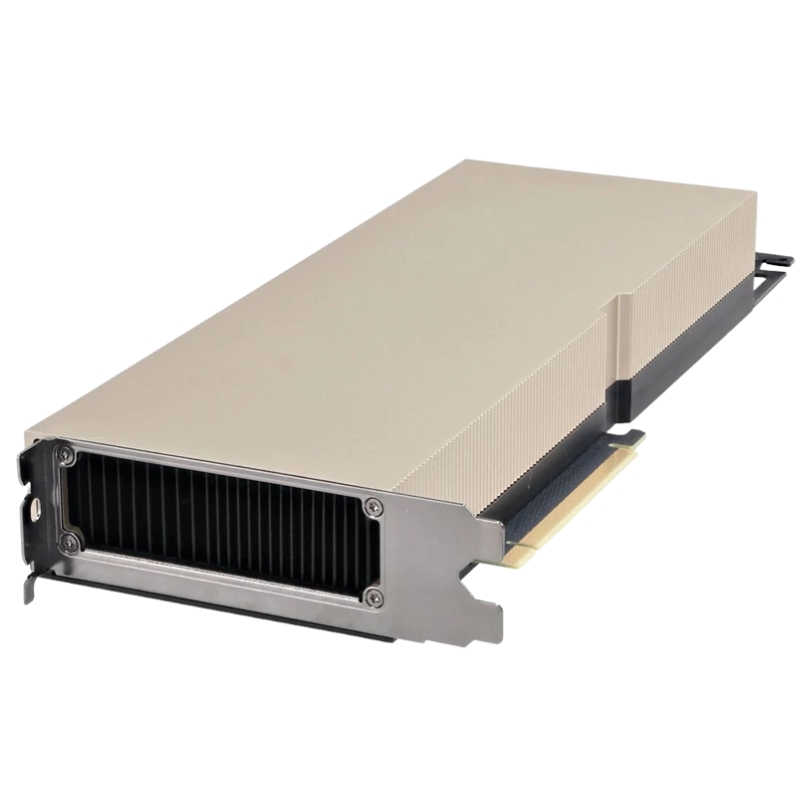


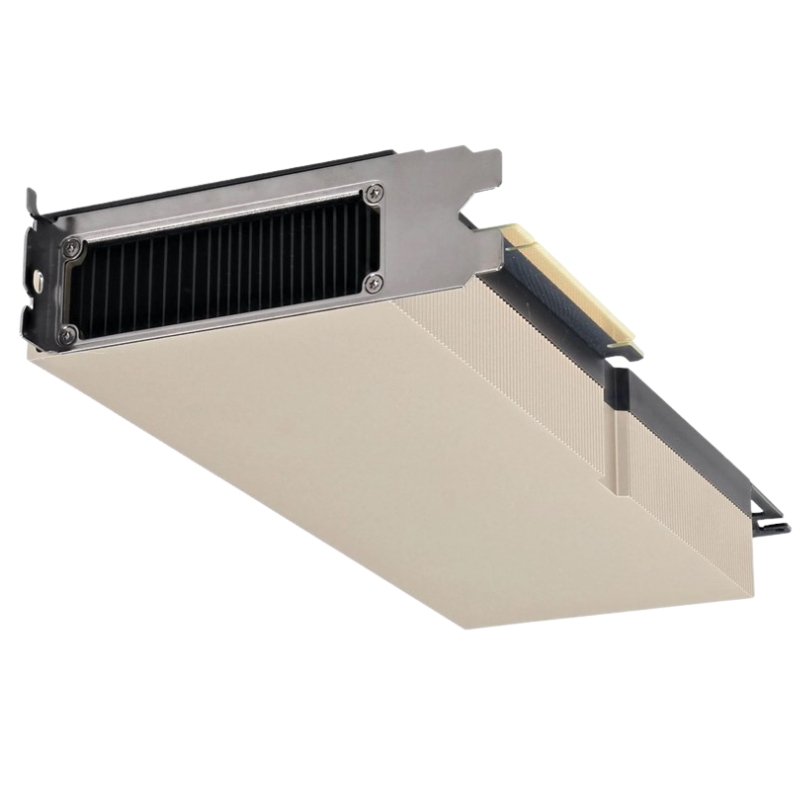
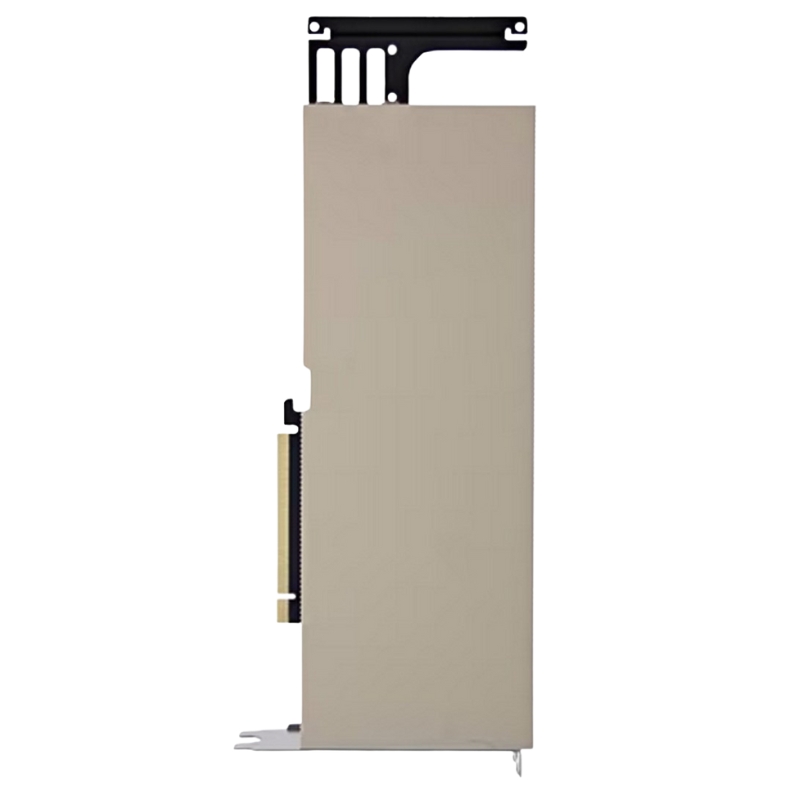
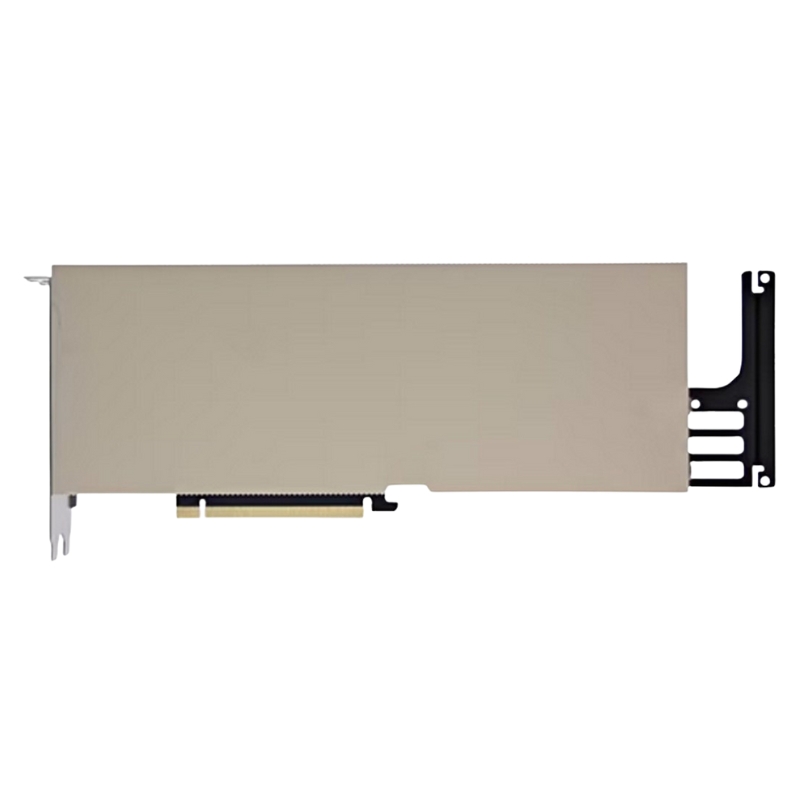
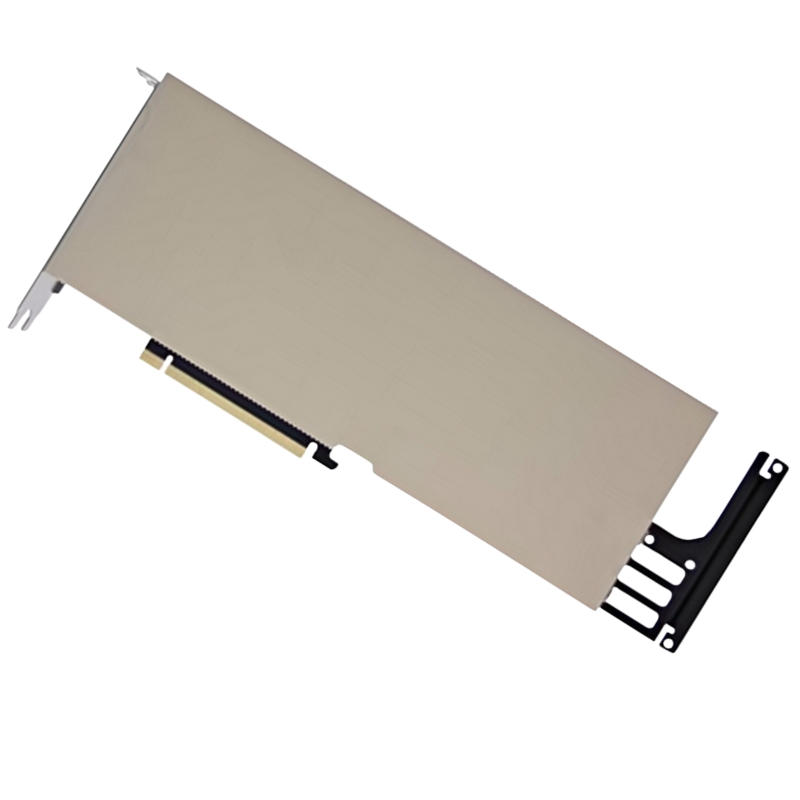
Nvidia 900-2G171-0000-000 Tesla A16 64GB GDDR6 Passive Cooler Cuda PCI-Express 4.0 X16 Graphics Processing Unit. New Sealed in Box (NIB) with 3 Years Warranty. Call (ETA 2-3 Weeks)
Unlock high-performance computing with the Nvidia Tesla A16, engineered for demanding workloads and optimized for data-intensive environments.
The Nvidia Tesla A16 64GB GDDR6 Passive Cooler GPU represents a focused design point for high-density, multi-instance GPU deployments where power efficiency, thermal management, and virtualization-ready architecture are paramount. Engineered for PCI-Express 4.0 x16 compatibility and built around a CUDA-accelerated compute fabric, the Tesla A16 strikes a balance between memory capacity and compute throughput, offering 64 gigabytes of GDDR6 memory in a passive-cooled, low-profile form factor optimized for server racks and blade systems. The A16 is intended for scenarios that require many concurrent graphics or inference sessions per server—virtual desktop infrastructure (VDI), cloud gaming, remote workstations, and inference at scale—delivering a predictable, stable performance envelope when deployed across multi-GPU chassis and high-density cloud nodes.
At the core of the Tesla A16 is an architecture tuned to maximize memory bandwidth utilization for graphics virtualization and inference workloads. The 64GB GDDR6 memory provides ample frame-buffer capacity for hundreds of concurrent user sessions or for large batch sizes in inferencing pipelines, while the memory interface and internal caching strategies are designed to minimize latency under mixed I/O conditions. The passive cooler design signals that the device is intended for installation in well-cooled data center environments where chassis airflow is the primary thermal solution; this allows OEMs to integrate the A16 into dense server nodes without the complexity of active blower fans on each card. Memory reliability features, error-correcting protocols, and attention to thermal throttling thresholds ensure that the A16 maintains consistent performance over sustained operation, a necessity for production-grade virtualization and streaming services.
CUDA cores on the Tesla A16 deliver parallel compute acceleration for a broad range of tasks. Whether the workload is GPU-accelerated rendering for virtual desktops, AI inference, or video encode/decode, the A16 is supported by Nvidia’s mature software stack. CUDA libraries, drivers, and virtualization APIs such as GRID and Multi-Instance GPU (MIG)-style partitioning (as applicable to the architecture) enable administrators and developers to carve physical GPUs into logically isolated resources. Integration with Nvidia's enterprise drivers, SDKs for deep learning inference (TensorRT), media SDKs for accelerated video processing, and virtualization toolsets allow the A16 to slot into existing pipelines with minimal rework. The GPU’s compatibility with standard PCI-Express 4.0 x16 ensures that host systems can provide the required interconnect bandwidth for host-to-device transfers in modern server platforms.
Performance for the Tesla A16 is expressed not only in raw floating-point throughput but also in how effectively it supports many simultaneous lightweight sessions. For VDI and cloud graphics, the critical metrics are memory capacity per user, sustained frame buffer throughput, and the GPU's ability to preserve frame rates while handling multiple encoded streams. For AI inference, the A16’s strengths lie in serving many smaller models or smaller batch sizes concurrently, where memory capacity reduces the need for swapping and maximizes prediction throughput. Video streaming services will value the A16 for its ability to encode multiple 4K or high-definition streams simultaneously while offloading CPU cycles. The passive design and power envelope make the A16 a predictable unit for capacity planning in large clusters, where thermal headroom and airflow design are elements administrators can control precisely.
One of the defining use cases of the Tesla A16 is dense virtualization. Data centers aiming to deliver graphics-accelerated cloud workstations, remote CAD applications, virtual training labs, or edge servers for interactive media can allocate A16 resources across many virtual machines or containers. The GPU’s memory capacity supports larger framebuffers and complex scene textures for each virtual instance, minimizing degradation as user concurrency increases. Tools from system integrators and Nvidia’s management utilities provide granular control over GPU partitioning, ensuring that service level objectives for latency and throughput are met. Administrators can monitor GPU health, memory utilization, and thermal telemetry to make informed scheduling and placement decisions and to automate scaling policies based on actual utilization patterns.
The passive cooler variant of the Tesla A16 removes onboard active cooling components and relies on chassis airflow for heat removal. This choice reduces mechanical failure vectors and simplifies server-level cooling management. Server designers must provision adequate airflow and incorporate best practices for rack-level thermal design to fully realize the A16's potential. The low-profile or full-height passive cards available to OEMs mean that the A16 can be deployed in a variety of chassis types, from short-depth edge servers to full-depth data center racks. It is critical for procurement and infrastructure teams to account for the card’s thermal design power (TDP) when planning redundant cooling and power distribution, but the passive design typically results in quieter operations and fewer moving parts at scale.
When the workload includes heavy media processing—real-time streaming, transcoding, or cloud gaming—the A16’s media engines and dedicated encode/decode blocks are essential. Hardware acceleration for H.264, HEVC, and contemporary codecs enables many concurrent transcode pipelines with low-latency performance. This hardware offload frees CPU cycles for application logic and orchestration, allowing service providers to scale their offerings while minimizing infrastructure cost. Enterprises focusing on virtualized video editing, remote rendering of high-resolution content, or multi-stream delivery can use A16-equipped nodes to consolidate workloads that previously required multiple specialized servers. Integration with Nvidia’s media SDKs and cloud-friendly orchestration frameworks enables streamlined deployment of media pipelines on Kubernetes clusters or traditional virtualization stacks.
Common deployment patterns for the Tesla A16 include dense VDI farms, cloud gaming nodes, multi-tenant inference racks, and edge servers for interactive media. Reference architectures emphasize rack-level cooling, redundant power distribution, and PCIe 4.0-capable motherboards with sufficient slot spacing to sustain airflow. For cloud providers, orchestration patterns typically incorporate GPU-aware schedulers that place GPU workloads in nodes with matching thermal and power headroom. OEMs and system integrators often publish validated configurations that pair the A16 with industry-standard CPUs, high-throughput networking, and NVMe storage to create balanced nodes for mixed workloads. In edge computing scenarios where space and power are constrained, the A16’s capacity to run many lightweight inference tasks concurrently makes it attractive for video analytics and real-time telemetry processing.
Developers targeting the Tesla A16 benefit from Nvidia's broad software ecosystem. Frameworks like TensorFlow, PyTorch, and inference runtimes are optimized to leverage CUDA acceleration, while containerized approaches using Nvidia Container Toolkit streamline deployment across clusters. For graphics-based virtualization, compatibility with common hypervisors and container runtimes ensures that applications requiring GPU acceleration can be deployed without code rewrites. Performance profiling tools and driver-level counters let developers tune workloads, identify memory bottlenecks, and right-size instances. Documentation and community resources reduce time-to-deployment and provide best practices for packaging applications that will run reliably under the A16’s operating constraints.
Compared to more powerful, compute-heavy Nvidia accelerators designed for large-scale model training, the Tesla A16 prioritizes session density and memory capacity for multi-tenant workloads. Where training-oriented GPUs focus on maximum floating-point throughput and large tensor core counts, the A16 is tuned for predictable, per-instance performance and media acceleration. This makes it complementary rather than competitive with Nvidia's top-tier training cards; organizations often mix architectures in their data centers—using heavy compute GPUs for model development and Tesla A16-class cards for model serving and VDI provisioning. System architects should evaluate workload composition to decide how many of each GPU type are required for their operational mix.
In a university remote lab scenario, an array of Tesla A16 cards can provide hundreds of students with GPU-accelerated virtual desktops for coursework in graphics, visualization, and introductory machine learning. In a media company, A16-equipped encoder farms can handle massive batch transcode workloads during off-peak hours and serve live streams during peak events. For a SaaS provider offering browser-based creative tools, the A16 provides the memory capacity and session density needed to deliver smooth interactive experiences without provisioning one-to-one GPU-to-user mappings. Each scenario benefits from the A16's predictable thermal profile, enterprise drivers, and focus on virtualized, multi-instance workloads.


 Contact Us
 Information
 Catalog
 Solid State Drives (SSD)
 Network Switches
 Hard Disk Drives
 HBA & Controllers
 PC & Servers
 PC & Server Memory
 CPU & Processors
 Network Routers
 Power Supplies
 Tape Drives & Libraries
 Network Devices
 Computer & Network Cables