(7% discount is applied at checkout)
Cart is empty
Your go-to destination for cutting-edge server products
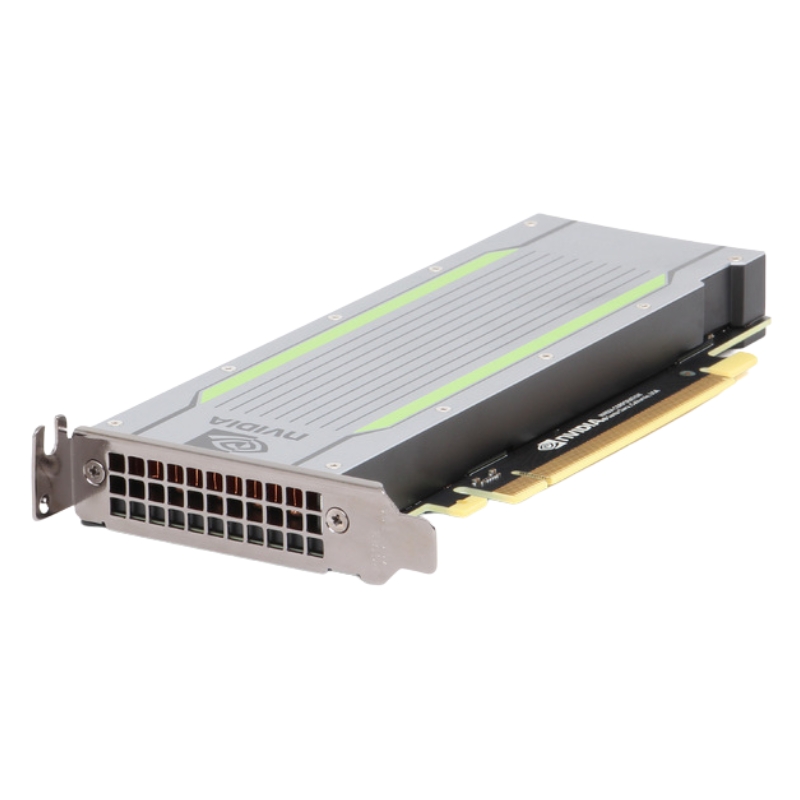


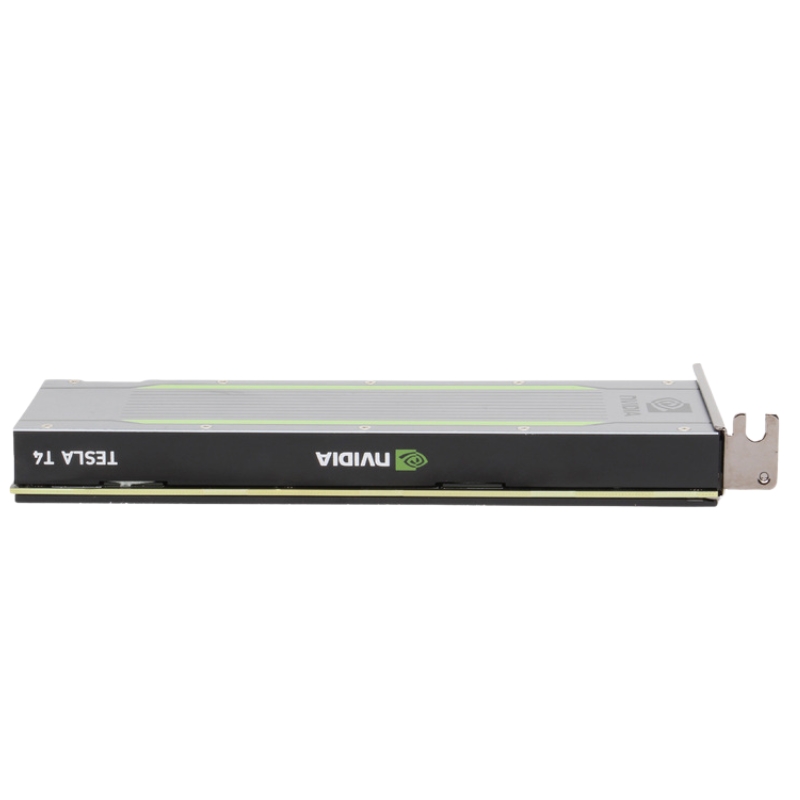
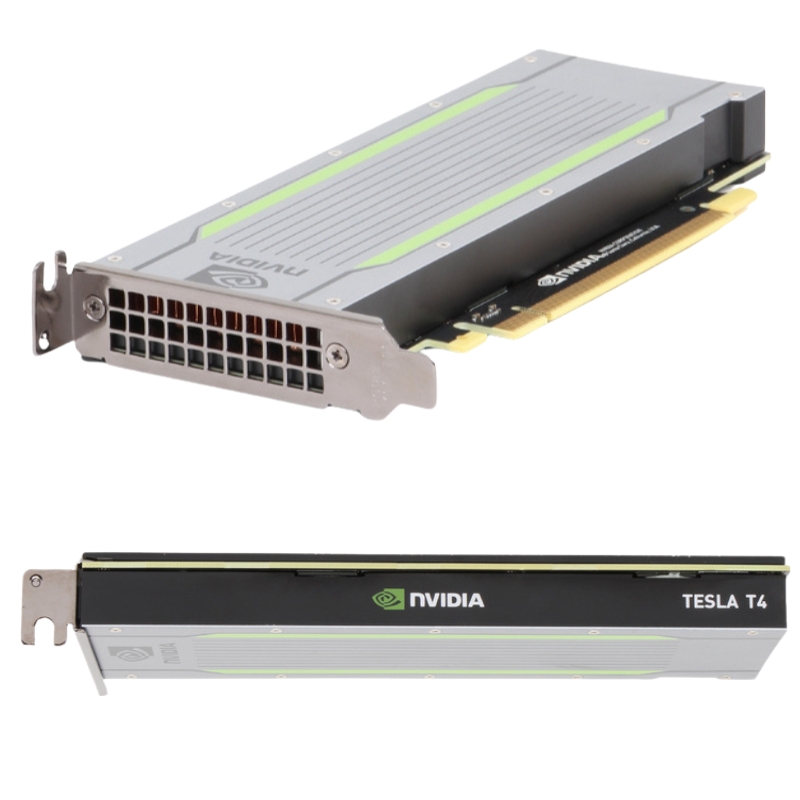
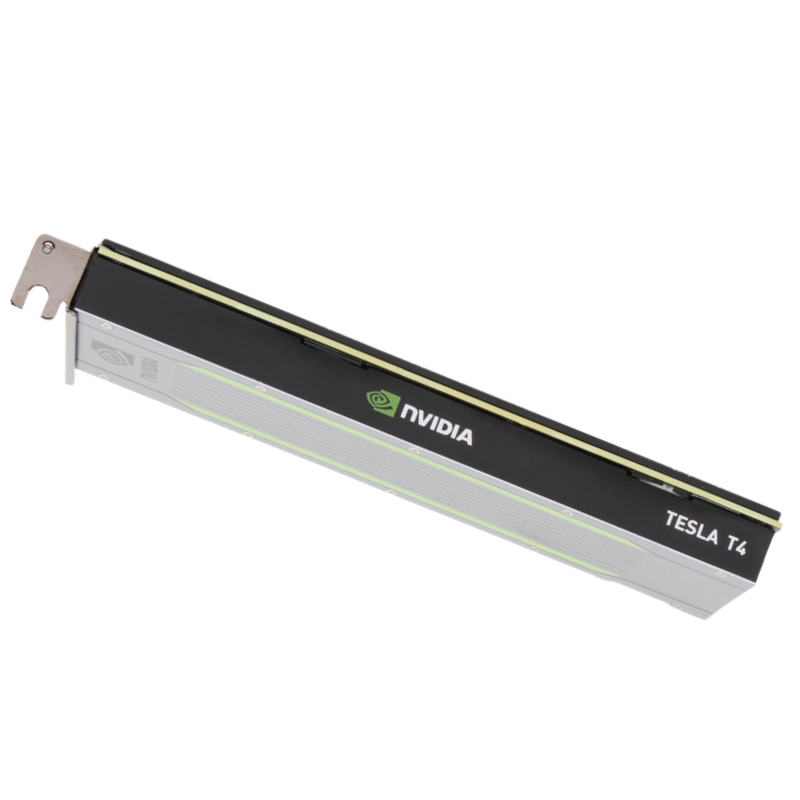
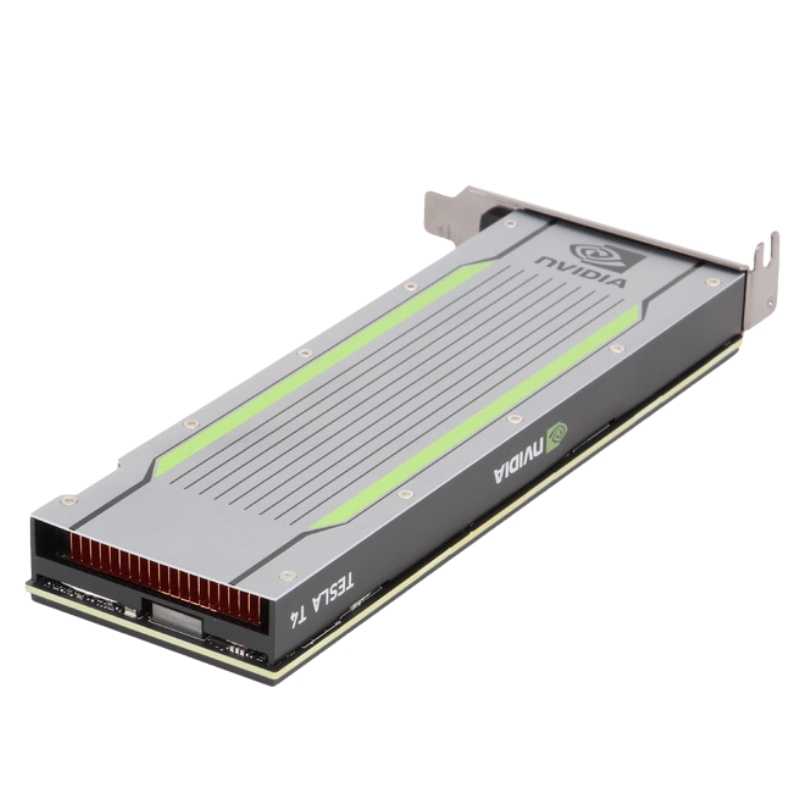
Nvidia 900-2G183-0000-001 16GB GDDR6 PCI-E 3.0 x16 GPU Tesla T4 FH Accelerator Graphics Card. Excellent Refurbished with 1 year replacement warranty
Discover the Nvidia 900-2G183-0000-001 Tesla T4 GPU — a full-height, plug-in accelerator card engineered for enterprise-grade AI workloads and data center deployments.
The Nvidia 900-2G183-0000-001 is a vendor/OEM part-numbered configuration of the Nvidia Tesla T4 GPU: a single-slot, low-profile, data-center accelerator optimized for inference, video processing, and general-purpose GPU compute. Built on the Turing architecture, the Tesla T4 balances high throughput for both FP32 and mixed-precision workloads with extremely low power draw and a passive cooling design intended for dense server racks and cloud deployments.
The Tesla T4 uses the NVIDIA Turing architecture and includes 2,560 CUDA cores and 320 Tensor cores. It delivers strong mixed-precision performance for inference (FP16 / INT8 / INT4) and respectable FP32 throughput for traditional GPU compute tasks.
Typical peak compute figures include roughly 8.1 TFLOPS of single-precision (FP32) and substantially higher mixed-precision TFLOPS when using FP16/Tensor cores — characteristics that make it a popular accelerator for production inference and microservices that require high throughput per watt.
This board ships with 16 GB of GDDR6 on a 256-bit memory interface, offering on the order of 300–320 GB/s memory bandwidth depending on the specific board tuning and vendor BOM. ECC support is present on the board to improve data integrity in server environments. These memory characteristics let the T4 host reasonably sized models for inference and enable batching strategies without exhausting host memory quickly.
The Tesla T4 is a single-slot, low-profile card with passive cooling (relying on chassis airflow) and a default thermal/power envelope around 70 W (often cited as 70–75 W depending on vendor variants / power profiles). Its low power and passive design make it well suited to 1U/2U server deployments and edge/embedded systems where active card fans are undesirable.
The card uses PCI Express 3.0 x16 (electrical x16 or sometimes x8 in certain system implementations) and is broadly compatible with modern server and workstation motherboards that provide a full-height or low-profile slot. PCIe Gen3 x16 enables sufficient host bandwidth for typical inference workloads and model loading tasks.
Built on the Turing GPU family, the T4 combines CUDA cores for parallel floating-point compute with specialized Tensor cores that accelerate matrix operations used heavily in deep-learning inference. Tensor cores are the main reason the T4 excels at INT8/FP16 workloads — they dramatically improve throughput for quantized models and mixed precision pipelines.
The 2,560 CUDA cores handle highly parallel math and graphics workloads while the 320 Tensor cores accelerate dense linear algebra. The typical production strategy uses CUDA cores for general compute and offloads matrix multiplications and convolutions to Tensor cores when a framework or runtime (such as NVIDIA TensorRT, cuDNN, or fused kernels) can exploit mixed precision.
The Tesla T4 is deliberately optimized for inference, providing very high INT8/INT4 TOPS figures. That means for many modern neural networks (especially when quantized) you can expect large gains in throughput per board compared to older FP32-only accelerators. This is particularly valuable for real-time services like recommendation engines, voice assistants, and online vision pipelines.
With 16 GB of GDDR6 memory on a 256-bit bus, the T4 finds a practical sweet spot: enough capacity for many production models and moderate batches, while staying within the thermal and power constraints of dense servers. The board’s GDDR6 bandwidth (approximately 300–320 GB/s) supports high-data-rate model execution and reduces memory stalls for large tensor operations. ECC support further increases reliability for production deployments.
For inference practitioners, batching is the usual route to improve throughput on the T4: moderately sized batches increase GPU utilization without pushing memory beyond the 16 GB limit. For very large models or multi-model hosting, consider multi-GPU server designs, model sharding, or model optimization (pruning/quantization) to fit within memory constraints.
The 900-2G183-0000-001 Tesla T4 is commonly available in full-height (FH) and low-profile (LP) bracket options and is marketed to OEMs and resellers for rack server integration. Its single-slot, passive, low-profile board makes it ideal for dense cloud servers, blade platforms, and some edge appliances that provide forced chassis airflow.
Because the T4 is passive, system integrators must ensure adequate front-to-back airflow within the chassis. Inadequate airflow can lead to thermal throttling or reduced reliability — so check OEM system airflow specifications and consider placement away from hot components when planning large deployments.
Typical published metrics for the T4 show roughly 8.1 TFLOPS FP32 and much higher mixed-precision TFLOPS — numbers that translate to strong inferencing capability when combined with NVIDIA TensorRT optimizations. INT8 and INT4 inference yields especially high TOPS due to the Tensor cores. These characteristics make the T4 an excellent choice for workloads where cost-effective, power-sensitive inference is a priority.
When paired with optimized runtimes and proper batching, the effective throughput can scale to dozens or hundreds of inferences per second per board depending on model size and precision.One of the T4’s primary advantages is performance per watt. The 70 W thermal envelope (default) allows for significantly more compute density in a rack compared to traditional dual-slot, high-TDP accelerators. This means higher concurrency per rack and lower cooling costs for inference farms.
When designing a server cluster, multiply the per-card power (and chassis cooling capacity) by the number of cards to estimate total rack power and cooling needs — the lower per-card wattage of the T4 often simplifies such calculations.
The Tesla T4 integrates with NVIDIA’s data-center software stack: CUDA, cuDNN, TensorRT, and the NVIDIA drivers optimized for server OSs. It also supports containerized deployment using NVIDIA Container Toolkit, enabling consistent inference deployments across cloud and on-prem environments.
Out of the box the T4 is supported (via drivers and runtimes) by mainstream deep learning frameworks: TensorFlow, PyTorch, ONNX Runtime, and MXNet — typically through vendor-provided or NVIDIA-certified builds. For production inference, TensorRT is a common path to squeeze maximum throughput and reduce latency by using platform-specific optimizations and quantized kernels.
Standard monitoring and telemetry tools (NVIDIA-smi, dcgm, Prometheus exporters) work with the T4 to provide utilization, temperature, power draw, and thermal throttling alarms. These signals are important for automated scaling, for detecting under-cooled machines, and for maintaining consistent SLA performance in production fleets.
Verify a full-height PCIe x16 slot (electrical x16 or x8 supported in many systems). Although the board is low-profile mechanically, some OEM variants come with full-height brackets — check the part number (900-2G183-0000-001) and the seller listing to confirm bracket type.
Typical systems that host multiple T4 cards must account for total system power, peak pci slot draw, and airflow. While each card is low power, cumulative power and thermal loads in dense configurations can be significant — ensure chassis fans and power supplies are sized appropriately.
The T4 is commonly used under Linux server OSs (RHEL, Ubuntu, CentOS) and with virtualization/hypervisor stacks that support PCIe passthrough or vGPU-like partitioning (subject to NVIDIA licensing for certain virtualization features). For containerized inference, use NVIDIA Container Toolkit and driver versions compatible with the CUDA runtime expected by your images.
Cloud providers and hyperscalers adopt T4-class accelerators for high-density inference fleets where throughput per watt and total cost of ownership matter. The T4’s mixed-precision strength and compact size are ideal for inference endpoints, autoscaling microservices, and multi-tenant inference infrastructure.
On-prem deployments use the T4 in scale-out clusters for inference, batch scoring, or video analytics. Because of its passive design, it fits many standard server platforms and enables existing data centers to add inference capacity without redesigning cooling for high-TDP cards.
The low power envelope also makes the T4 attractive in edge servers where rack space is limited but local inference is required for latency or bandwidth reasons — smart retail, transportation, and industrial inspection are common examples.
Compared to large, high-TDP accelerators (e.g., A100/V100 class), the T4 provides far less peak FP32 and memory capacity but vastly improved power efficiency and density. If your workload requires multi-terabyte model residency, the T4 may not be sufficient — however, for optimized, batched inference pipelines it often delivers a superior cost / watt / dollar ratio.
Within the Turing family, cards such as the Tesla P4/P40 occupy different tradeoffs in memory type, compute density, and target market. The T4’s GDDR6 memory and Tensor core configuration make it a balanced choice specifically tuned for modern mixed-precision neural networks.


 Contact Us
 Information
 Catalog
 Solid State Drives (SSD)
 Network Switches
 Hard Disk Drives
 HBA & Controllers
 PC & Servers
 PC & Server Memory
 CPU & Processors
 Network Routers
 Power Supplies
 Tape Drives & Libraries
 Network Devices
 Computer & Network Cables