(7% discount is applied at checkout)
Cart is empty
Your go-to destination for cutting-edge server products
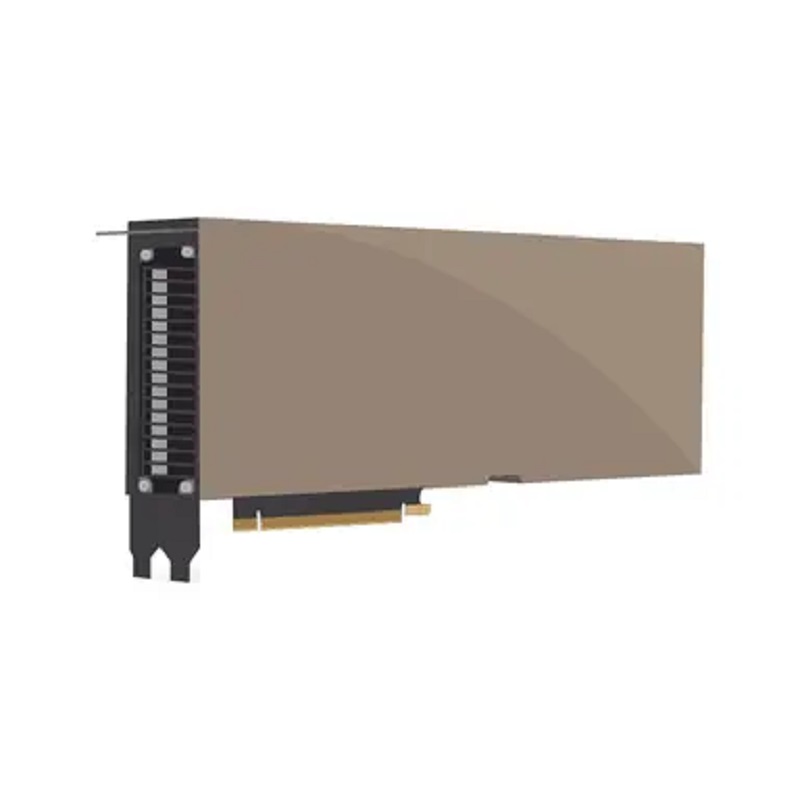


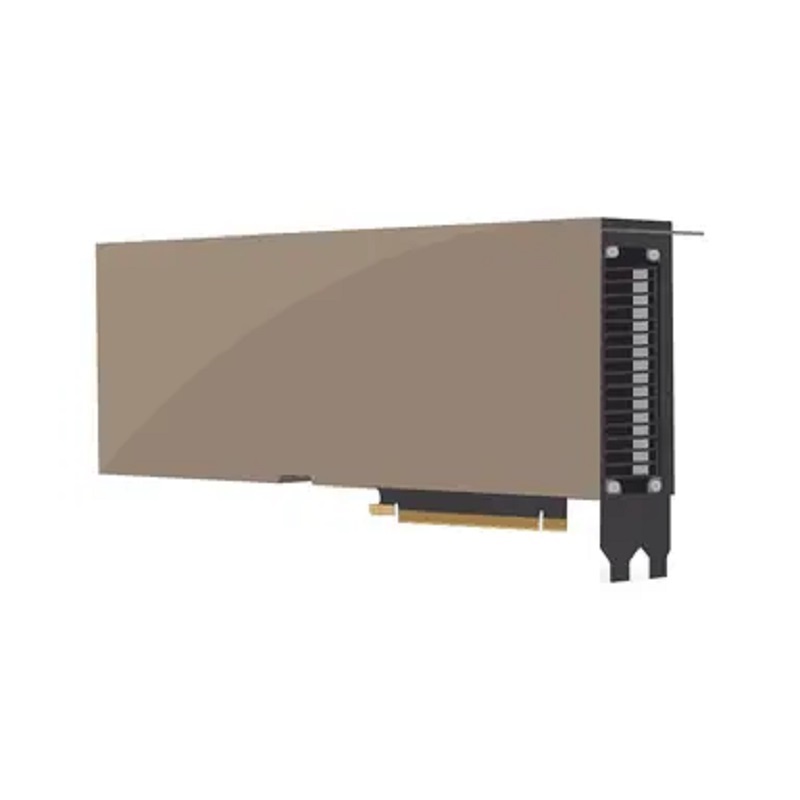
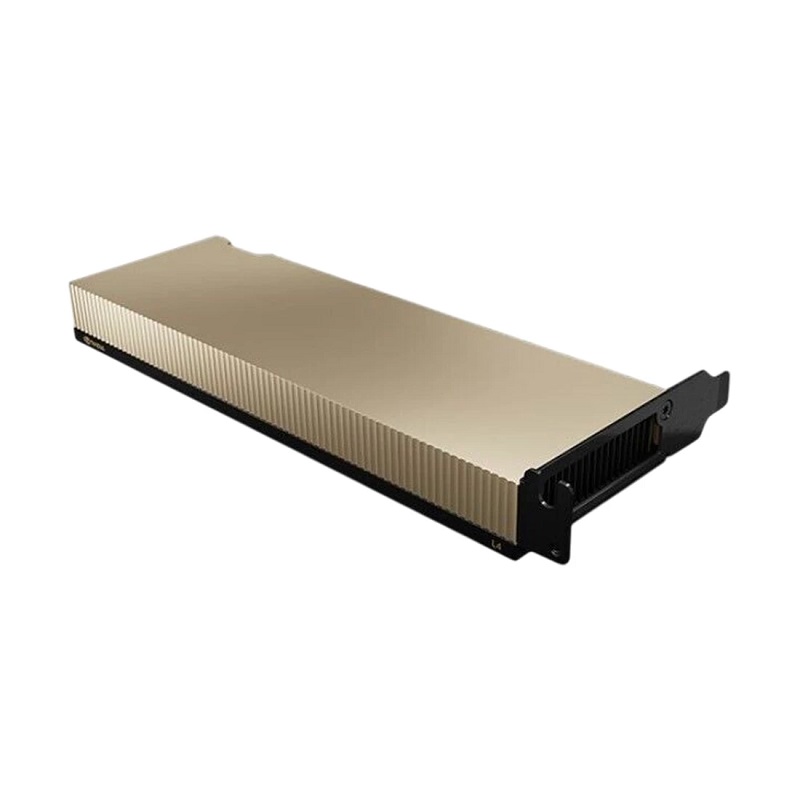
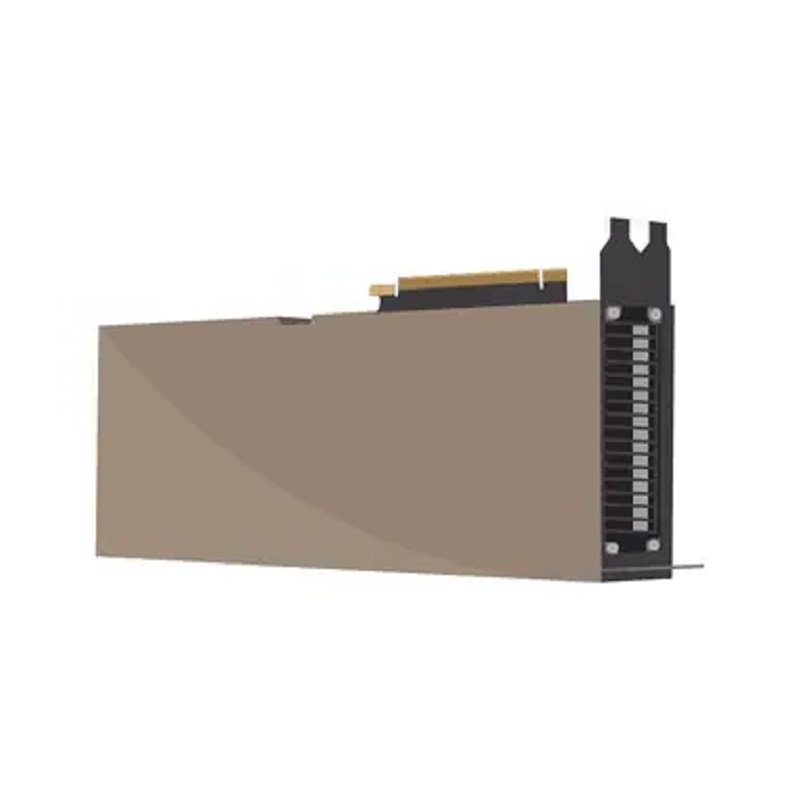
Nvidia 900-2G193-0000-000 L4 24 GB GDDR6 PCI-E Low Profile Fanless Computing Processor GPU. Brand New with 3 year replacement warranty. Eta 2-3 Weeks. No Cancel No Return
The NVIDIA L4 Tensor Core GPU is a breakthrough innovation designed to deliver exceptional efficiency and universal acceleration across AI inference, video analytics, virtualization, and professional visualization. Built upon the NVIDIA Ada Lovelace architecture, this low-profile, fanless GPU combines cutting-edge performance with minimal energy consumption, offering a balanced solution for data centers, cloud infrastructures, and enterprise-level computing environments.
The Nvidia 900-2G193-0000-000 L4 24 GB GDDR6 PCI-E belongs to a focused category of compact, server-grade inference and compute accelerators designed for dense deployments, low-power systems, and fanless environments. This category emphasizes the combination of energy-efficient hardware, high memory capacity, and form-factor flexibility: low-profile, passive-cooled PCB designs that slide into PCI-Express slots while delivering substantial AI inference, edge computing, multimedia acceleration, and virtualization benefits.
Category shoppers are typically systems integrators, AI/ML engineers, edge infrastructure architects, and small-form-factor workstation buyers seeking an economical, space-conscious accelerator with 24 GB of GDDR6 memory and PCI-Express connectivity. This category strikes a balance between memory capacity, thermal design, and deployment versatility, making it ideal for inference at scale, compact servers, and fanless industrial PCs.
For AI inference at the edge — such as real-time recommendation systems, image classification in retail kiosks, or on-device speech recognition — 24 GB enables models that previously required server-class GPUs. It reduces the need to split models across multiple cards and simplifies software stack management.
The PCI-E interface retains backward compatibility with older slots while offering high throughput for modern motherboards. Common configurations include PCI-E 3.0 and PCI-E 4.0. Key benefits:
Plug-and-play upgrade path: installs into standard PCI-E slots without bespoke adapters.
Flexible bandwidth scaling: supports varying lanes (x4, x8, x16) depending on board design and system capabilities.
Ecosystem interoperability: works with existing drivers, resource managers, and orchestration tools (e.g., NVIDIA drivers, container runtimes).
The fanless and low-profile construction is a defining feature of the category. Passive cooling requires smart thermal management at the system level:
Integration with chassis airflow: ensure case airflow is adequate; passive cards depend on system fans and directed airflow channels.
Vibration-resistant mounting: low-profile brackets reduce stress in industrial and mobile environments.
No moving parts: improved reliability in dusty or vibration-prone deployments where fans could fail or introduce contaminants.
Fanless cards excel in reliability and noise-free operation, but they typically operate at lower sustained power envelopes compared with actively cooled variants. This means system architects must balance thermal headroom and performance: for bursty workloads the passive card is excellent; for sustained, maximum-power training tasks, larger actively cooled GPUs remain preferable.
This category is tailored to a range of compute tasks with an emphasis on inference efficiency and multimedia acceleration rather than raw training throughput. Typical workloads include:
In retail, manufacturing, and smart cities, compact fanless GPUs fit into edge servers and ruggedized appliances. Use cases include object detection in cameras, quality inspection, real-time analytics at points of presence, and speech-to-text conversions close to users to reduce cloud dependency.
These accelerators also function as powerful media processors for high-resolution video streams, live transcoding endpoints, and accelerated graphics tasks. Onboard video engines reduce CPU load for encoding and decoding, enabling dense video processing racks with lower total power draw.
GPU virtualization technologies allow multiple users or VMs to share GPU resources. The high memory capacity benefits virtual desktop infrastructure (VDI), AI-as-a-service (AIaaS), and multi-tenant inferencing where each tenant requires a sizeable frame buffer or model footprint.
Compatibility across OSes and software stacks is crucial for category adoption. Systems commonly supported include Linux distributions (Ubuntu, CentOS/RHEL), Windows Server and Windows 10/11, and containerized environments such as Docker and Kubernetes.
NVIDIA provides drivers, CUDA toolkit, TensorRT, and SDKs that optimize inference and multimedia workloads. When choosing a card from this category, ensure:
Driver version alignment: match OS kernel versions with certified NVIDIA drivers to avoid compatibility issues.
Software stack readiness: verify support for inference runtimes like TensorRT, ONNX Runtime, and popular frameworks (PyTorch, TensorFlow) particularly for model optimization and quantization flows.
Container images: use NVIDIA Container Toolkit for GPU access inside containers and Kubernetes for orchestration at scale.
Some fanless, low-profile cards may require system BIOS updates or specific PCIe slot configurations (e.g., bifurcation, lane width) for optimal operation. Check vendor documentation for required BIOS settings, IOMMU passthrough settings for virtualization, and any restrictions on slot occupancy for proper airflow.
This category of GPUs shines in several architectural patterns. Below are reference deployment scenarios and design tips.
Use multiple low-profile, fanless cards in compact chassis to form a cluster of inference nodes at the edge. Advantages include physical density, noise-free operation, and reduced cooling infrastructure. Combine with a lightweight orchestration layer (k3s or microk8s) and NVIDIA device plugin for Kubernetes to schedule inference workloads.
In video streaming or live event pipelines, place fanless accelerators in 1U or 2U chassis with front-to-back airflow. The cards offload encoding/decoding and provide consistent throughput under constrained space and power budgets.
Engineers needing a quiet desktop environment for model development and small-scale testing appreciate the low-noise, low-profile options. These cards provide enough memory and inference performance to iterate on models locally before scaling to larger training clusters.
Understanding relative strengths helps buyers match a card to their needs. Compare the L4-style low-profile, fanless 24 GB category to full-height data center GPUs and consumer GPUs.
Pros: smaller footprint, lower power draw, quieter operation, simpler integration into small form factors.
Cons: lower sustained max power; less raw training throughput for massive distributed training jobs.
Pros: server-oriented firmware and driver support; ECC and virtualization features may be available; better support for multi-instance GPU setups.
Cons: consumer GPUs often have higher thermal headroom and audible fans optimized for burst loads; server-class cards target different reliability and lifecycle requirements.
If your workload is inference-heavy, deploys in space-constrained environments, or requires low acoustic impact, the low-profile 24 GB class is an excellent choice. For large-scale model training or maximum FP32 throughput, prioritize full-height data-center GPUs instead.


 Contact Us
 Information
 Catalog
 Solid State Drives (SSD)
 Network Switches
 Hard Disk Drives
 HBA & Controllers
 PC & Servers
 PC & Server Memory
 CPU & Processors
 Network Routers
 Power Supplies
 Tape Drives & Libraries
 Network Devices
 Computer & Network Cables