(7% discount is applied at checkout)
Cart is empty
Your go-to destination for cutting-edge server products
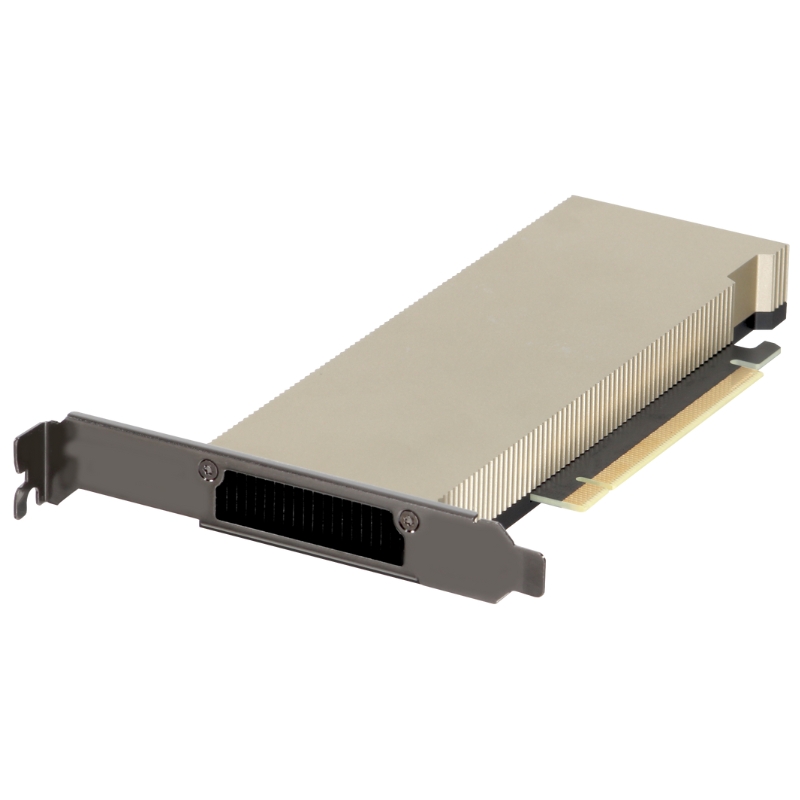


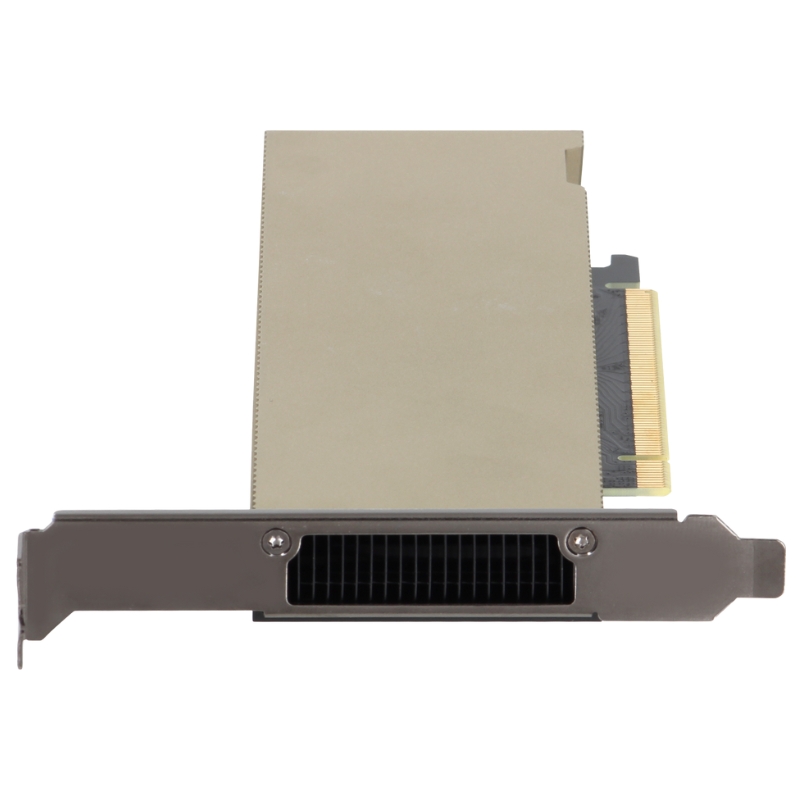
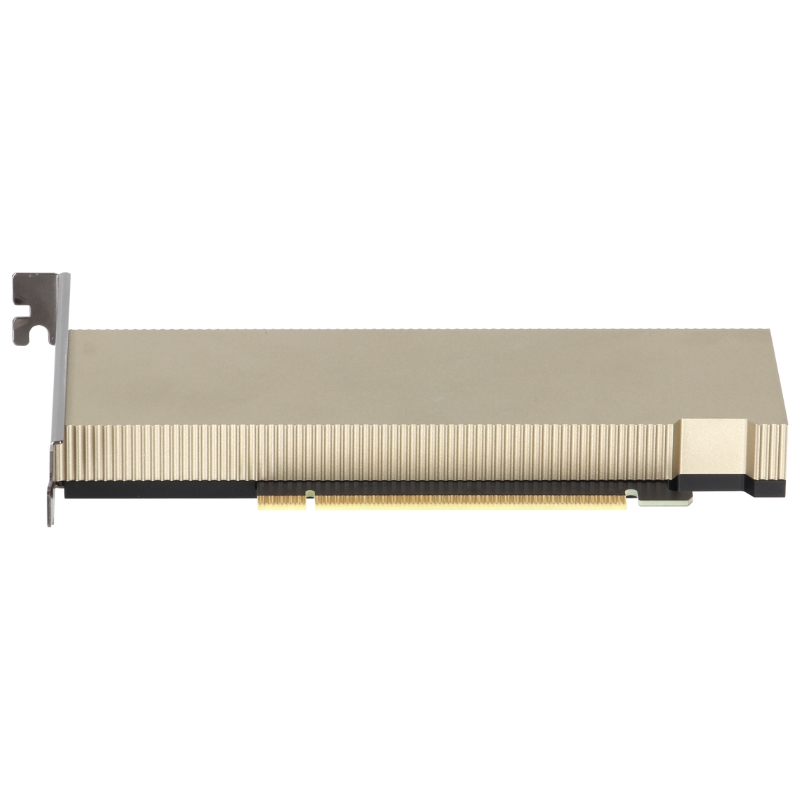
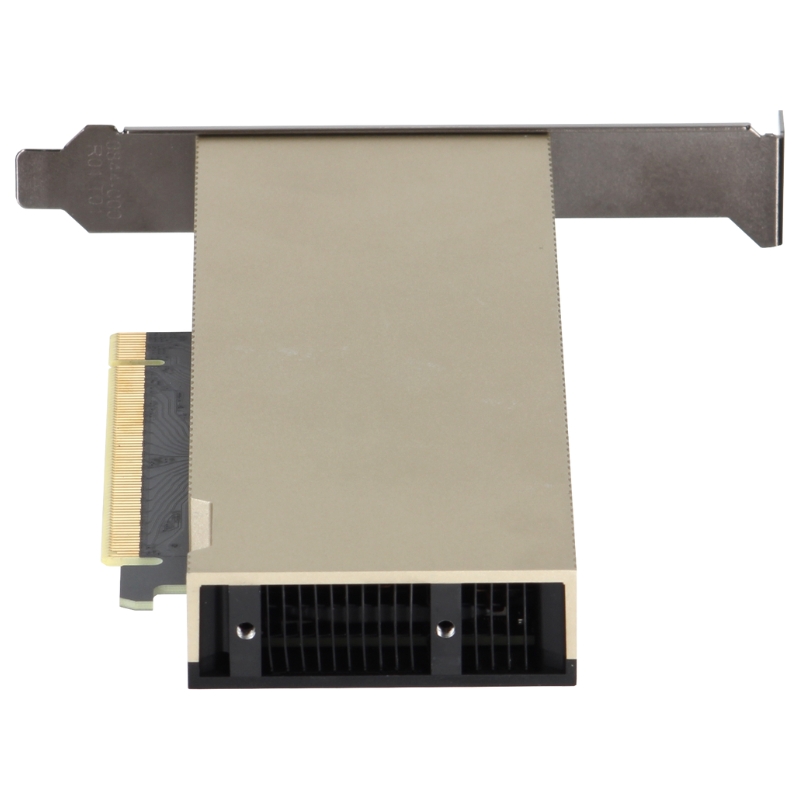
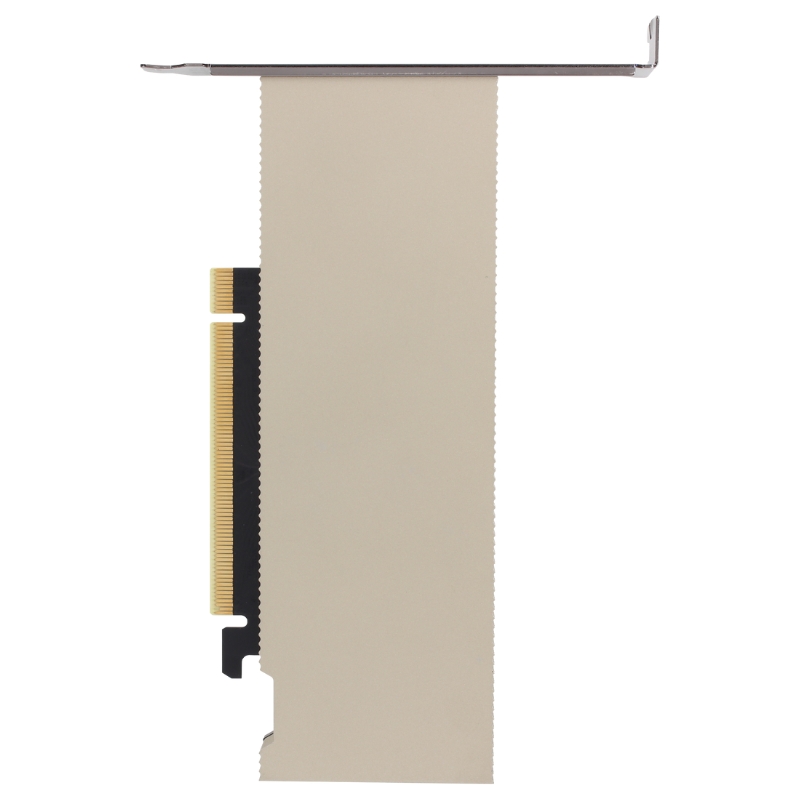
Nvidia 900-2G193-0100-001 24GB GDDR6 L4 PCIe 72 Watt Passive Single Wide Full Height GPU. Dell Version. Excellent Refurbished with 1 year replacement warranty
The Nvidia 900-2G193-0100-001 is a high-performance, energy-efficient PCIe graphics processing unit engineered for advanced computing environments. With 24GB of GDDR6 memory and a passive cooling design, this single-wide, full-height GPU is ideal for enterprise-grade workloads.
Powered by the cutting-edge NVIDIA Ada Lovelace architecture, the L4 Tensor Core GPU delivers versatile acceleration across multiple domains:
Designed for low power draw and high throughput, the L4 GPU ensures minimal latency and maximum performance per watt, making it ideal for dense server deployments.
Its low-profile, single-wide configuration allows seamless integration into:
This category focuses on the Nvidia 900-2G193-0100-001 24GB GDDR6 L4 PCIe 72 Watt Passive Single Wide Full Height GPU — a specialized, energy-efficient accelerator designed for inference, edge servers, and compact systems that require high memory capacity, low power draw, and passive cooling. The content below expands on core specifications, practical deployment scenarios, thermal and power considerations, compatibility and installation notes, software and driver recommendations, performance expectations, comparisons with adjacent product lines, and purchasing guidance tailored to enterprise and prosumer buyers.
One of the defining features of this model is the 24GB GDDR6 memory configuration. For many modern AI inference models, machine learning workloads, and memory-heavy data processing tasks, 24GB provides the capacity to host large embeddings, medium-sized neural networks, or multiple model instances concurrently on a single card. GDDR6 offers high memory bandwidth that benefits models with large parameter sets and data-parallel workloads.
The single-wide, full-height form factor means the card occupies one expansion slot width while adhering to standard server and workstation height. This compact profile is critical in dense server environments, edge appliances, or industrial workstations where space is constrained but high memory capacity and PCIe connectivity are required.
Passive cooling implies the card has no active fan assembly and relies on chassis airflow or external heat dissipation strategies. This is ideal for noise-sensitive environments and chassis with efficient airflow design (e.g., rack servers with front-to-back fans or systems with integrated heat exchangers). Passive cards reduce moving parts, increasing MTBF (mean time between failures) when integrated correctly into appropriate thermal environments.
The 72W power draw positions this GPU in a low-to-mid power class, allowing deployment in environments where PSU capacity is limited or where thermal budgets are tight. The low power consumption works well for 1U and compact edge deployments and permits multiple such cards in a single chassis without requiring specialized power delivery hardware.
PCI Express connectivity ensures broad platform compatibility across modern servers, workstations, and industrial PCs. PCIe provides sufficient bandwidth for many inference and memory-bound tasks; however, system integrators should consider lane allocation and platform PCIe generation to optimize throughput.
This card is optimized for inference workloads where high memory capacity is beneficial but the peak floating-point throughput of larger accelerators is unnecessary. Typical use cases include natural language processing (NLP) inference serving, recommender systems for localized services, image and video inference at the edge, and on-premises analytics for privacy-sensitive applications.
Content personalization, metadata extraction, and low-latency analytics for streaming data can benefit from the card’s memory capacity and low-power design. Passive cooling and single-wide format permit installation in dense CDNs or micro data centers where many small compute nodes run in parallel.
With 24GB of memory, this GPU can host multiple containerized model instances or virtual GPU slices for light to moderate workloads. This is useful for SaaS providers and enterprises that need to consolidate multiple inference tasks on a single physical card while ensuring each tenant has adequate memory headroom.
The combination of passive cooling, full-height compatibility, and low power makes this GPU ideal for industrial PCs, medical imaging systems, and transport-grade hardware where mechanical simplicity and reliability are prioritized.
Passive GPUs require deliberate attention to case airflow. Best practices include:
Ensure front-to-back airflow in rack systems; position the GPU where directed airflow passes the heatsink surface.
Avoid mounting the card directly adjacent to heat-generating components without intervening airflow or baffles.
Use chassis fans with sufficient CFM for dissipating combined thermal load of CPU, storage, and passive GPU(s).
When integrating into 1U/2U servers, confirm that the server’s thermal design supports passive accelerators. In dense racks, consider:
Spacing between cards for improved airflow.
Hot aisle/cold aisle practices to manage ambient temperatures.
Monitoring inlet and outlet temperatures to identify thermal hotspots.
Use system monitoring tools and BMC telemetry to track GPU junction temperature, inlet temperature, and chassis fan speeds. Configure alerts for sustained temperature rise to prevent thermal throttling or long-term degradation.
This GPU is compatible with mainstream server and workstation operating systems that support Nvidia’s driver ecosystem. Ensure you install the correct Nvidia driver series that supports the card’s chipset and firmware revision. For enterprise deployments, use tested driver bundles validated by your system vendor.
For machine learning and acceleration tasks, leverage Nvidia’s software platform — CUDA for general GPU computing, and TensorRT for high-performance inference optimization. The card’s memory profile makes it suitable for running large models in frameworks like PyTorch and TensorFlow when combined with appropriate CUDA and cuDNN versions.
If you plan to use virtualization or vGPU technologies, verify licensing, driver compatibility, and whether the card supports the virtualization features you require. The 24GB memory slice can be partitioned for multiple guests depending on the vGPU capabilities of the platform and software stack.
Unlike high-TDP accelerators primarily optimized for peak floating-point throughput, this single-wide, low-power model excels where memory capacity and bandwidth matter more than absolute TFLOPS. Expect strong performance in:
Large embedding tables for recommendation and search.
Batch and micro-batch inference of medium-sized transformer models.
Concurrent multi-model serving where memory is the limiting factor.
The card’s design favors consistent, low-latency inference in constrained thermal/power envelopes. For ultra-high-throughput or training workloads, higher-power dedicated training GPUs will outperform this card, but at the cost of power, size, and cooling complexity.
Relative to power-hungry workstation and data center GPUs, the 72W passive single-wide card is a compromise: less compute peak but significantly lower power, quieter operation, and higher integration flexibility. If your use case prioritizes memory capacity in constrained environments, this card wins; if raw training performance is needed, consider larger form-factor GPUs.
Within the edge/low-power category, the differentiator is the 24GB GDDR6 memory. Many edge accelerators offer lower memory capacity; this model provides a sweet spot for deploying larger models at the edge or running multiple small models concurrently.
Confirm available PCIe slot (x8/x16) and physical clearance for full-height card.
Verify chassis airflow meets minimum CFM recommendations for passive GPU deployment.
Ensure the system power supply can handle 72W plus other components comfortably, allowing for peak transient power.
Download and stage the correct Nvidia driver and firmware update packages before initial boot.
Power down the host system and disconnect power cables.
Insert the GPU into the appropriate PCIe slot, ensuring the bracket aligns with the full-height mount.
Secure the bracket with screws and confirm the card is seated firmly.
Reconnect power and boot into the OS; verify device presence in system firmware/BIOS.
Install vendor-recommended Nvidia drivers and perform post-installation verification (nvidia-smi or equivalent).
Start by profiling your models and datasets to determine whether 24GB of GPU memory is adequate. For NLP models and transformer variants, memory needs scale quickly with context window and model size — simulate realistic workloads to avoid under- or over-provisioning.
Match the card to chassis or server models that explicitly support passive accelerators. Confirm clearance, bracket form factor, and airflow topology to prevent deployment pitfalls.
Factor the GPU’s 72W draw into your server’s power budget, including headroom for peak usage and redundancy strategies. In multi-card chassis, ensure the combined draw does not exceed PSU ratings under peak scenarios.
Deploying on-premises gives you more control over data residency and privacy, which is critical for regulated industries. This card is particularly attractive for organizations seeking on-prem inference with large model memory but without the power/cooling needs of heavy compute GPUs.
Ensure secure boot and firmware validation are enabled in line with your organization’s security posture. Use signed firmware images from trusted vendors and validate cryptographic signatures where applicable.
Use memory-aware batching, operator fusion, and model quantization techniques to keep working sets within the 24GB boundary while improving throughput and latency. TensorRT and quantized model formats (e.g., INT8 where acceptable) can reduce memory footprint and increase inference speed.
For models exceeding single-card memory, consider model parallelism or sharding across multiple cards. Although this card’s low power makes multi-card setups feasible in dense racks, software-level orchestration is necessary for efficient scaling and minimal cross-card latency.
Regular profiling with tools like Nsight Systems, nvidia-smi, and application-level tracers helps identify bottlenecks and informs optimizations. Monitor memory utilization, PCIe transfer rates, and thermal telemetry to maintain consistent performance.


 Contact Us
 Information
 Catalog
 Solid State Drives (SSD)
 Network Switches
 Hard Disk Drives
 HBA & Controllers
 PC & Servers
 PC & Server Memory
 CPU & Processors
 Network Routers
 Power Supplies
 Tape Drives & Libraries
 Network Devices
 Computer & Network Cables