(7% discount is applied at checkout)
Cart is empty
Your go-to destination for cutting-edge server products
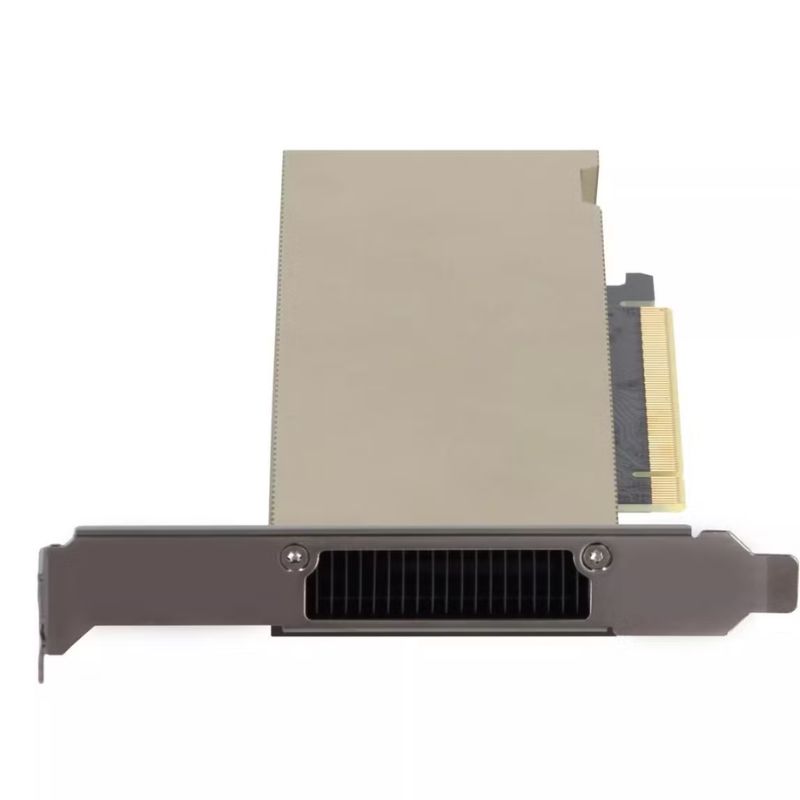


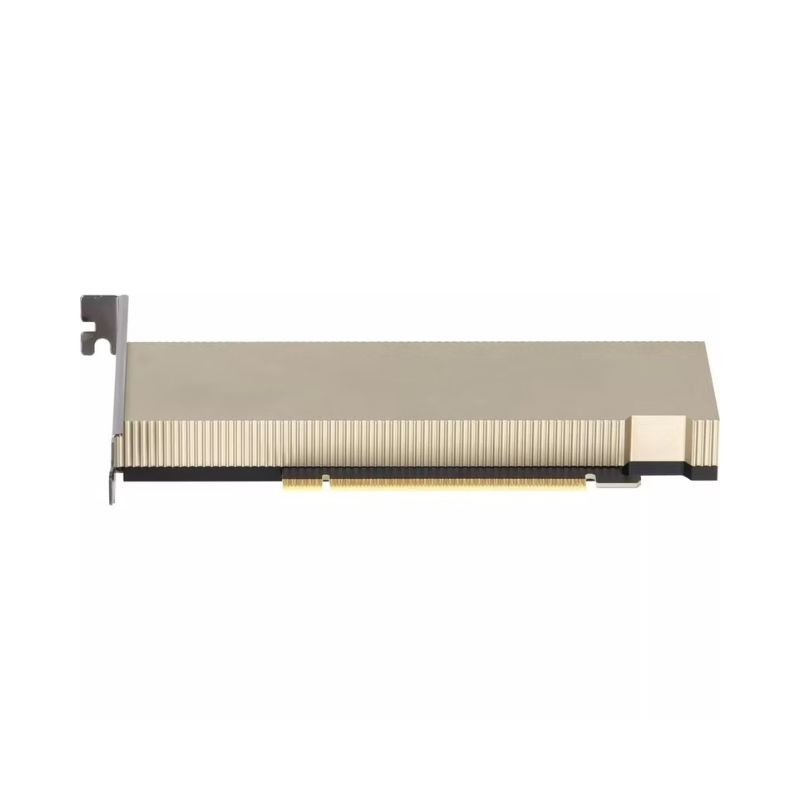
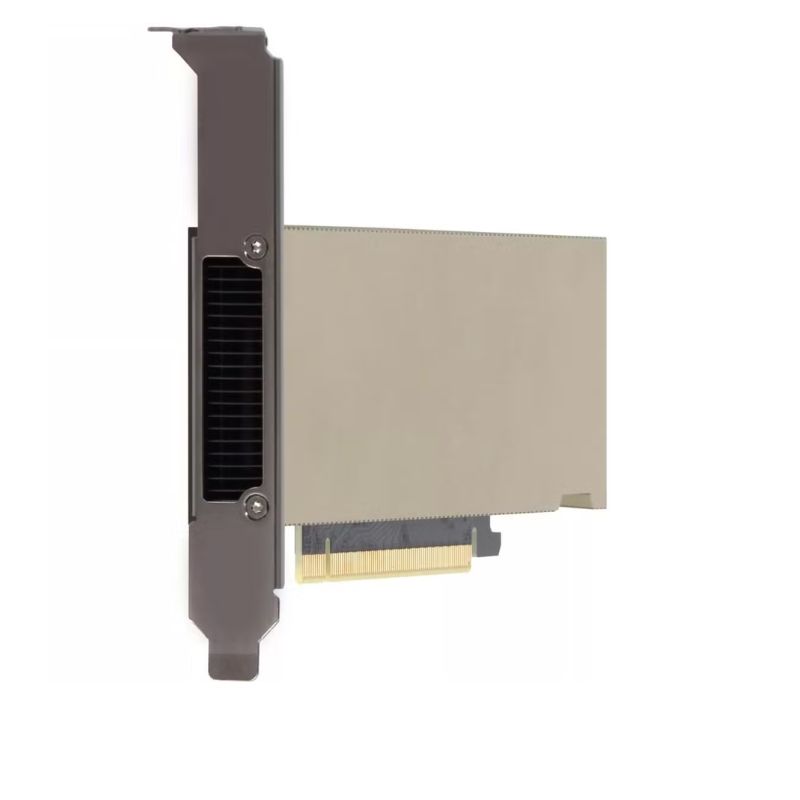
Nvidia 900-2G193-0300-001 L4 GDDR6 24GB PCI-E Accelerator GPU. Excellent Refurbished with 1-Year Replacement Warranty.
The NVIDIA 900-2G193-0300-001 L4 24GB PCIe Accelerator represents a new generation of computing innovation, optimized for AI-driven workloads, deep learning acceleration, and advanced graphics rendering. Designed with efficiency and scalability in mind, this GPU stands out in the realm of cloud computing, virtual workstations, and edge AI applications. With its compact, low-profile design and energy-efficient performance, it’s engineered to fit seamlessly into high-density servers and enterprise environments.
The Nvidia 900-2G193-0300-001 L4 GDDR6 24GB PCI-E Accelerator GPU represents a focused class of accelerator cards built to deliver efficient AI inference, media processing and compact datacenter graphics performance. This category page explores the L4 family and closely related PCI-Express accelerators, highlighting architecture, memory topology, performance characteristics, and practical deployment patterns. Whether you are researching inference servers, edge compute appliances, VDI (virtual desktop infrastructure), or video encoding/transcoding farms, this category description unpacks the technical and commercial attributes buyers and engineers care about.
The defining specifications that place the Nvidia 900-2G193-0300-001 L4 GPU in its niche include a 24GB GDDR6 frame buffer, a full-height PCI-Express form factor, low power envelope relative to full-scale data center GPUs, and optimizations for inferencing and media workloads. These cards strike a balance between memory capacity and thermal/power efficiency, making them well-suited for dense rack deployments and compact servers.
Memory capacity and bandwidth are often the gating factors for deploying large models or high-quality video streams. The L4’s 24GB of GDDR6 memory provides ample space for medium to large neural network models, multi-stream decoding buffers, and texture data for remote workstation graphics. The PCI-Express interface ensures compatibility with a wide range of modern chassis and motherboards while offering the throughput needed for batched inference and real-time media pipelines.
Compared to full-size data center accelerators, L4 style cards emphasize lower power draw and efficient cooling. System integrators can house more units per rack or select smaller PSU configurations, lowering total cost of ownership. The thermal profile typically supports passive or active cooling schemes depending on server airflow; this makes the GPU category attractive in both server and workstation contexts.
The performance characteristic of the Nvidia 900-2G193-0300-001 L4 is tuned toward throughput and latency-sensitive workloads. The GPU excels at:
For inference, the L4 typically performs best with mixed batching strategies: small batches for ultra-low latency interactive services and larger batches for throughput-oriented offline jobs. The card supports popular frameworks and runtimes used in production inference stacks, which allows engineers to optimize batch sizes per model and per deployment target.
Expect tested compatibility with TensorRT, ONNX Runtime, PyTorch and TensorFlow inference engines. These integrations allow model quantization, fusion, and kernel selection that maximize throughput while maintaining acceptable accuracy for production use.
Video streaming and live transcoding pipelines benefit from dedicated NVENC/NVDEC hardware blocks that offload heavy codec operations from CPU. The L4’s media engines are designed to handle multiple simultaneous streams, making it an ideal accelerator for CDN edge nodes, cloud gaming services, and broadcast environments.
The GPU supports modern codecs commonly requested in enterprise and broadcast deployments (H.264, H.265/HEVC, and AV1 in many variants depending on firmware and driver updates). This enables multi-format transcode ladders at scale with reduced CPU utilization.
The Nvidia 900-2G193-0300-001 L4 GDDR6 24GB PCI-E Accelerator GPU category maps to a number of practical applications. Below we detail representative scenarios so site architects, devops teams, and procurement specialists can align product selection to business goals.
Build inference clusters using L4 accelerators when you require a cost-effective, power-sensible alternative to large-scale data center GPUs. Use cases include recommendation engines, conversational AI at the edge, and multimodal transformers that can fit within 24GB of memory or employ model-parallel techniques.
For distributed edge inference—such as retail analytics, autonomous robotics, or localized content personalization—the L4’s thermal and power profile enables deployment in smaller form factors than classic data center GPUs. Edge servers can run multi-model tasks and serve low-latency requests with a reduced energy footprint.
Streaming farms and cloud gaming racks benefit from the L4’s balance of video hardware acceleration and GPU compute. Each L4 can manage multiple simultaneous encode/decode sessions while also delivering graphical compute for remote rendering tasks.
The L4 category integrates into the established NVIDIA software stack; drivers, CUDA toolkit releases, and the NVIDIA Enterprise suite are primary tools for enabling full functionality. Software compatibility should be verified against the OS, container runtime, and orchestration environment chosen for deployment.
Keep drivers and firmware updated to benefit from performance optimizations, codec support, and security fixes. When choosing the Nvidia 900-2G193-0300-001 L4 GPU for production, review the vendor’s release notes for known issues and recommended driver versions that match your OS and hypervisor.
Common cloud and on-prem orchestration frameworks (Kubernetes with NVIDIA device plugin, Docker with NVIDIA Container Toolkit) support running GPU workloads with isolation and resource allocation. If you plan to deploy at scale, ensure your orchestration stack supports GPU sharing models and versioned device drivers.
Understanding how the L4 fits relative to other NVIDIA offerings helps buyers make informed tradeoffs. The L4 is positioned between entry-level workstation GPUs and large, high-power data center accelerators: it has more memory and specialized media/AI optimizations than consumer cards while consuming less power and cost than top-tier A100/H100 accelerators.
While A100 and H100 deliver raw FP32/FP16/TF32/Tensor Core throughput suitable for training the largest models, the L4 is optimized for inference and media workloads where lower power and cost per deployment are critical. L4’s 24GB memory is sufficient for many production models and provides a cost-effective alternative where peak training throughput is not required.
Compared to workstation GPUs, the L4 typically offers enterprise-grade reliability and driver support tailored to server environments. It also includes enhanced media engines and inference-friendly features that are not always present on consumer or prosumer workstation cards.
Security for GPU accelerators includes firmware integrity, secure boot compatibility, and ensuring drivers are from trusted sources. For regulated environments (finance, healthcare), document the software stack and ensure vendor attestation where necessary.
When deploying models that handle sensitive data on L4 accelerators, implement appropriate encryption and endpoint controls. Consider tokenization or differential privacy approaches if models retain or process personally identifiable information.
Future-proofing a GPU purchase involves balancing immediate performance needs with upgrade paths and ecosystem support. The L4’s strong media engines and inference optimizations make it a practical choice for mid-term deployments; nevertheless, match procurement cycles with expected model growth and codec evolution (e.g., AV1 adoption).
This L4 category often sits alongside complementary products: high-density server CPUs, NVMe storage for fast dataset access, and network fabrics (10/25/100GbE) to support low-latency inference requests. Look for validated server platforms that explicitly list compatibility with the L4 part number.


 Contact Us
 Information
 Catalog
 Solid State Drives (SSD)
 Network Switches
 Hard Disk Drives
 HBA & Controllers
 PC & Servers
 PC & Server Memory
 CPU & Processors
 Network Routers
 Power Supplies
 Tape Drives & Libraries
 Network Devices
 Computer & Network Cables