(7% discount is applied at checkout)
Cart is empty
Your go-to destination for cutting-edge server products
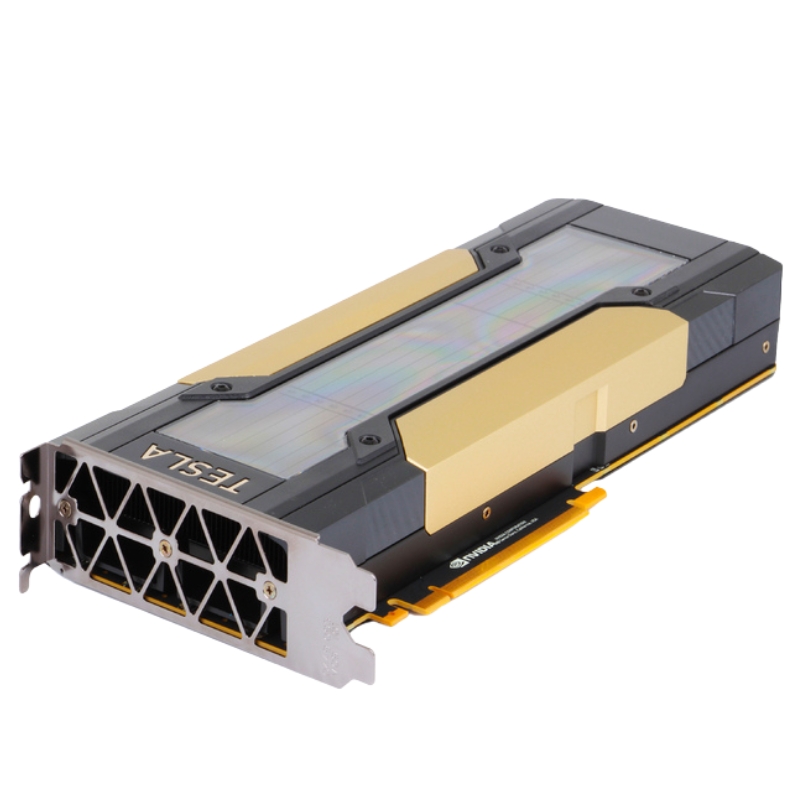


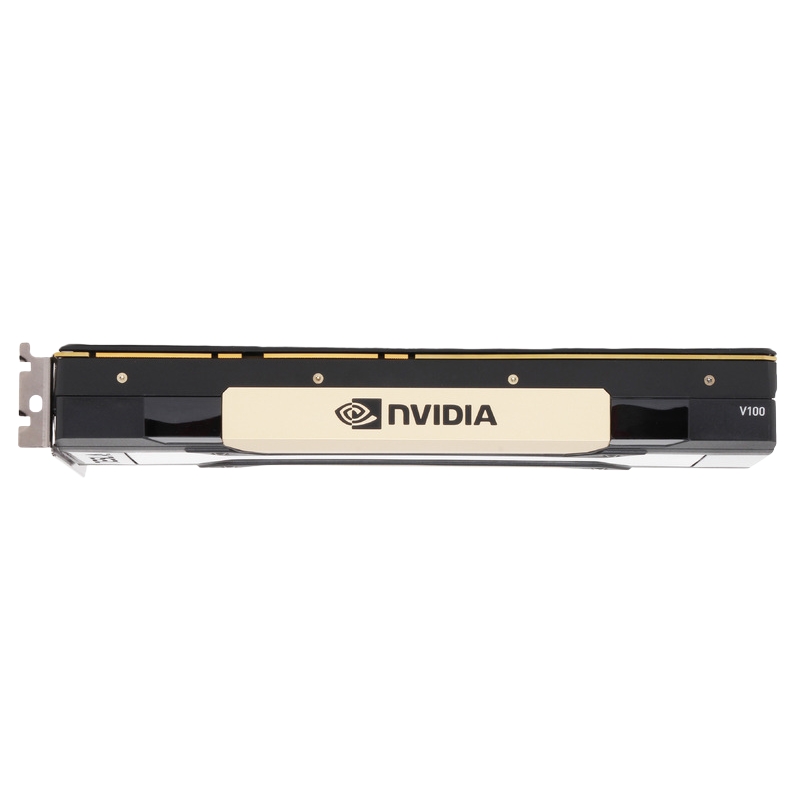
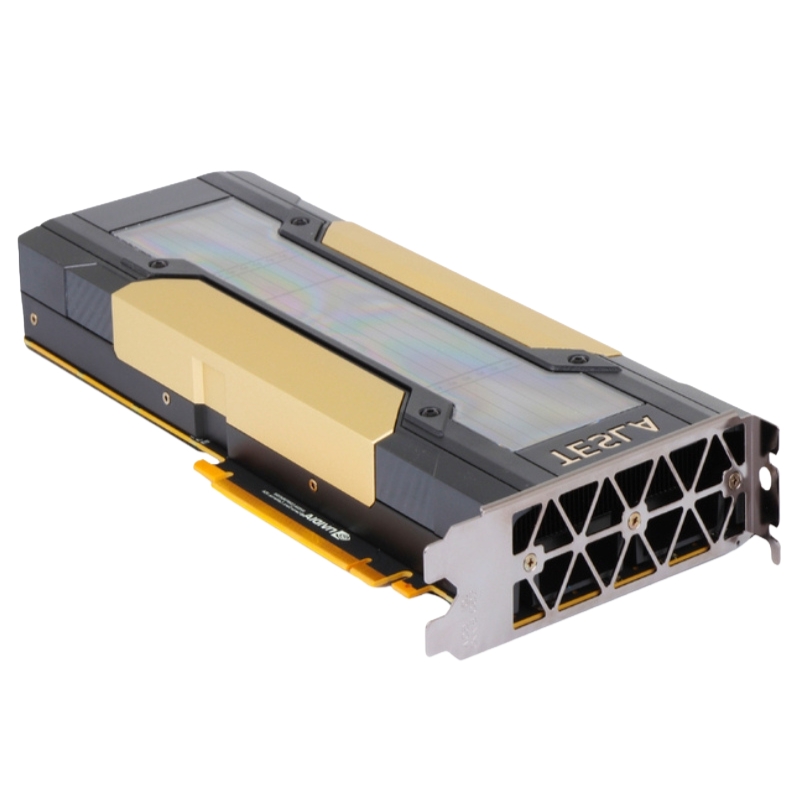
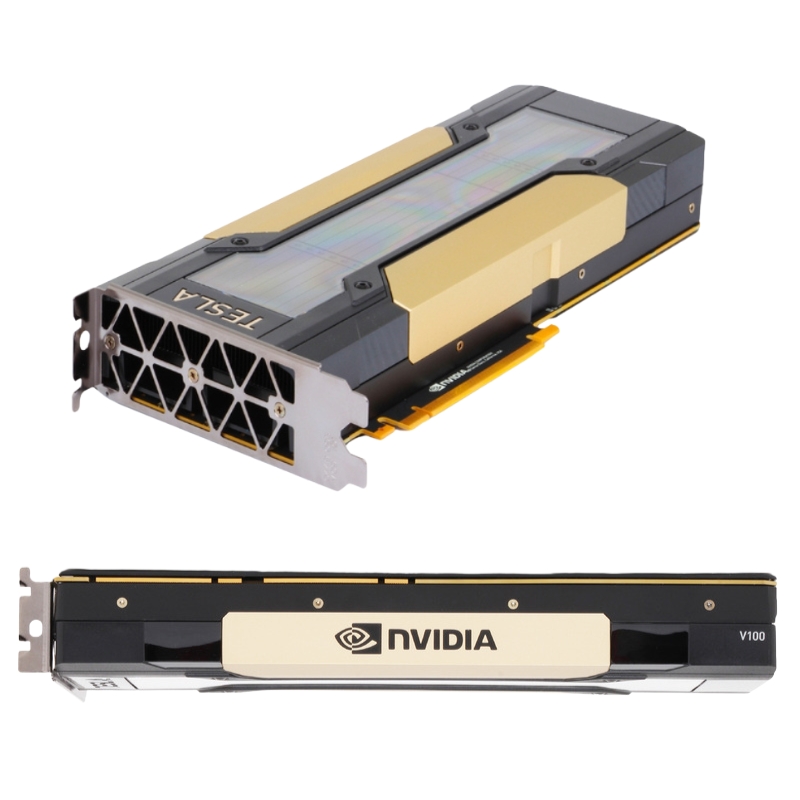
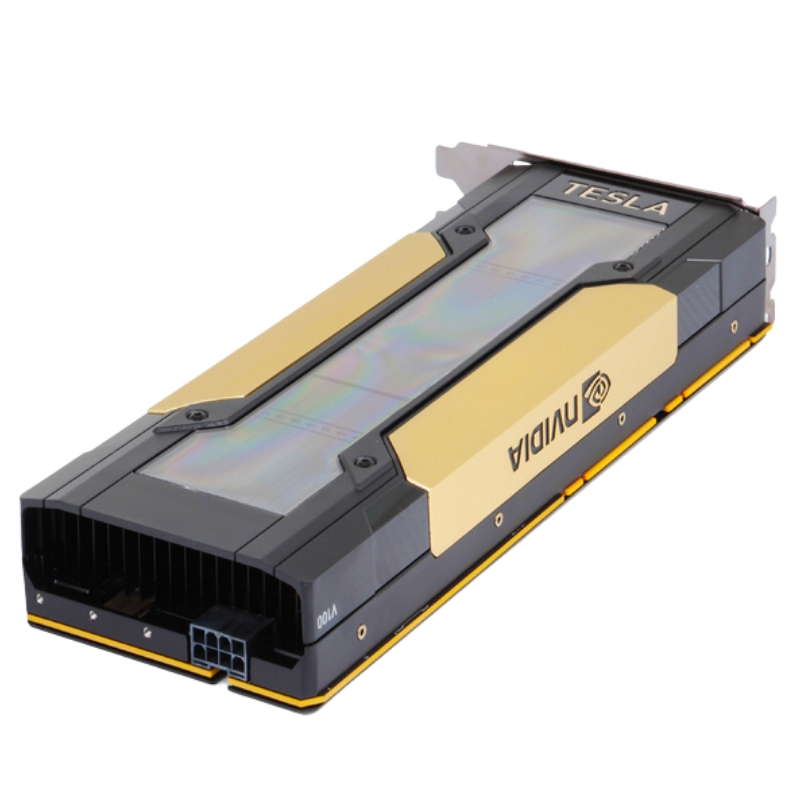
Nvidia 900-2G500-0010-000 Tesla V100 32GB HBM2 CUDA PCI-E Accelerator Card GPU. Excellent Refurbished with 1 year replacement warranty
The Nvidia 900-2G500-0010-000 Tesla V100 GPU is a high-performance accelerator designed for deep learning, artificial intelligence, high-performance computing (HPC), and advanced graphics workloads. Powered by the Nvidia Volta architecture, this GPU delivers unmatched computational power and scalability.
Memory and Bandwidth
Technical Specifications
The Nvidia 900-2G500-0010-000 Tesla V100 32GB HBM2 CUDA PCI-E Accelerator Card is a high-density compute accelerator built on Nvidia’s Volta architecture and engineered for demanding workloads in AI, deep learning training, high performance computing (HPC), scientific simulation, and data analytics. As a PCI-Express form-factor GPU accelerator with 32GB of HBM2 memory, it targets data centers, research labs, and enterprise systems that require sustained throughput, reduced time-to-insight, and efficient mixed-precision math using Tensor Cores.
The Tesla V100 is built on Nvidia’s Volta microarchitecture and includes specialized Tensor Cores that dramatically accelerate matrix operations at mixed precision (FP16/FP32), enabling major speedups for neural network training. Combined with a large 32GB HBM2 frame buffer (high-bandwidth memory), this model supports large batch sizes and memory-intensive models that otherwise would require model parallelism.
The Tesla V100 32GB excels in training throughput for state-of-the-art neural networks. Tensor Cores provide orders-of-magnitude acceleration for matrix multiplications and convolutions when using mixed precision (FP16/FP32). Users will typically see significantly reduced epoch times for image classification, object detection, NLP transformer training, and recommendation systems when compared to earlier GPU generations.
For double-precision (FP64) and single-precision (FP32) workloads common in HPC, the Volta architecture delivers scalable performance across a range of scientific libraries. Large memory capacity and bandwidth reduce time spent in data movement and enable high-fidelity simulations at finer resolutions. For workloads such as molecular dynamics, finite element analysis, and large matrix algebra, the Tesla V100 can be a pivotal component of a compute-dense node.
When deployed in multi-GPU configurations, the V100 supports efficient scaling through high-speed interconnects (NVLink on compatible platforms) and optimized collective communications via NCCL. Properly architected nodes—using NVLink-enabled carriers or systems that expose direct GPU-to-GPU fabrics—can achieve near-linear scaling for distributed training. For PCI-E only host platforms, careful attention to PCI-E lane allocation and CPU/IO topology is required to avoid bottlenecks.
The Tesla V100 32GB is fully supported by the CUDA toolkit and associated libraries: cuBLAS, cuDNN, cuFFT, and NCCL. Major frameworks (TensorFlow, PyTorch, MXNet, JAX) provide tuned builds and best practices for harnessing Tensor Cores and maximizing throughput. Upgrading drivers and CUDA toolkit versions in step with framework releases ensures access to performance improvements and bug fixes.
Maintain system compatibility by using Nvidia’s validated driver stacks for your Linux or Windows server distributions. For production clusters, use Long-Term Support (LTS) kernels and driver bundles that match your CUDA runtime requirements. For virtualized environments, leverage Nvidia vGPU drivers to partition or share the Tesla V100 across multiple guests while preserving hardware acceleration benefits.
Containers (Docker, Podman) combined with Nvidia Container Toolkit and prebuilt Nvidia NGC images are a standard deployment model for AI and HPC pipelines. Containerized workloads isolate environment configurations while delivering consistent access to CUDA, cuDNN, and other GPU libraries—ideal for reproducible experiments and portable production services.
The PCI-E Tesla V100 32GB fits into many modern server platforms, but selection requires evaluation of several factors: available PCI-E slot types (x16/x8), CPU to PCI-E lane mapping, power supply capacity, and cooling infrastructure. Rack servers with balanced I/O and thermal design will yield more consistent performance than chassis with constrained airflow. For multi-GPU nodes, ensure the chassis and motherboard support adequate spacing and thermal isolation to avoid throttling.
High-performance GPUs demand consistent power delivery and aggressive cooling to maintain peak throughput. Implement data center best practices: hot/cold aisle containment, consistent ambient temperatures, increased fan capacity, and validated airflow paths. Monitor GPU temperatures and power draw with telemetry tools to detect anomalies and apply power-limit tuning when needed to balance performance and energy consumption.
When training large models or processing multi-TB datasets, I/O can become the limiting factor. Pair Tesla V100 nodes with fast NVMe storage, parallel filesystems (Lustre, BeeGFS), or object stores with high throughput. For distributed training across nodes, invest in low-latency networks (InfiniBand, RoCE) to reduce communication overhead and accelerate gradient synchronization.
To fully leverage Tensor Cores, adopt mixed-precision training (FP16 with FP32 master weights) and use framework-level automatic mixed precision (AMP) utilities. Tune batch sizes and gradient accumulation to match GPU memory while avoiding out-of-memory errors. Use vendor-recommended kernels and cuDNN autotuning to select optimal convolution algorithms for your model.
The 32GB HBM2 gives headroom for large batch sizes and models, but when memory limits are reached, consider these strategies: gradient checkpointing, activation recomputation, model sharding, and ZeRO-style optimizer partitioning. These techniques reduce peak memory use at the cost of extra compute or communication and are commonly used in large-scale transformer training.
Use Nvidia Nsight Systems, Nsight Compute, and GPU-side telemetry to profile kernel launches, memory throughput, and host-device synchronization. Identify hotspots, stride access patterns, and kernel inefficiencies. Continuous monitoring—using Prometheus exporters and visualization dashboards—helps detect performance regressions and informs capacity planning.
The Tesla V100 32GB sits between mainstream server GPUs and newer generation accelerators. Compared to smaller memory variants, the 32GB model enables bigger models and larger batch sizes without model parallelism. When compared to newer architectures, the V100 remains competitive for many workloads and often provides a cost-effective balance of memory and Tensor Core acceleration. Evaluate tradeoffs: raw throughput, memory capacity, power draw, and software maturity for your workloads.
Purchasing decisions should balance acquisition cost, energy consumption, and developer productivity gains. Faster model training reduces research cycles and time to market, which often justifies investment in higher-tier accelerators. Factor in operational costs (power, cooling), software licensing, and potential savings from reduced cluster hours when performing ROI calculations.


 Contact Us
 Information
 Catalog
 Solid State Drives (SSD)
 Network Switches
 Hard Disk Drives
 HBA & Controllers
 PC & Servers
 PC & Server Memory
 CPU & Processors
 Network Routers
 Power Supplies
 Tape Drives & Libraries
 Network Devices
 Computer & Network Cables