(7% discount is applied at checkout)
Cart is empty
Your go-to destination for cutting-edge server products
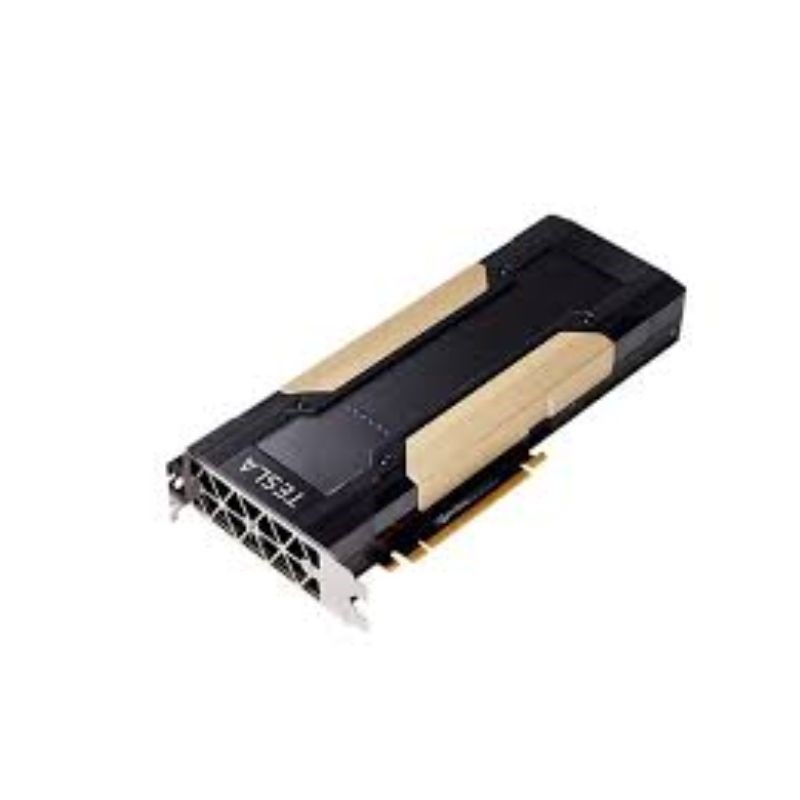


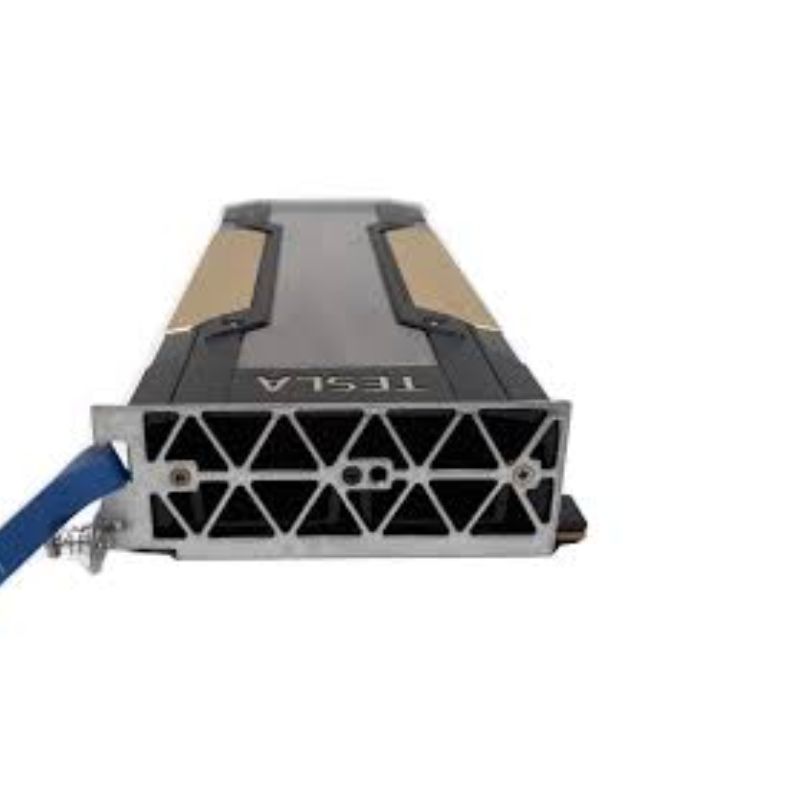
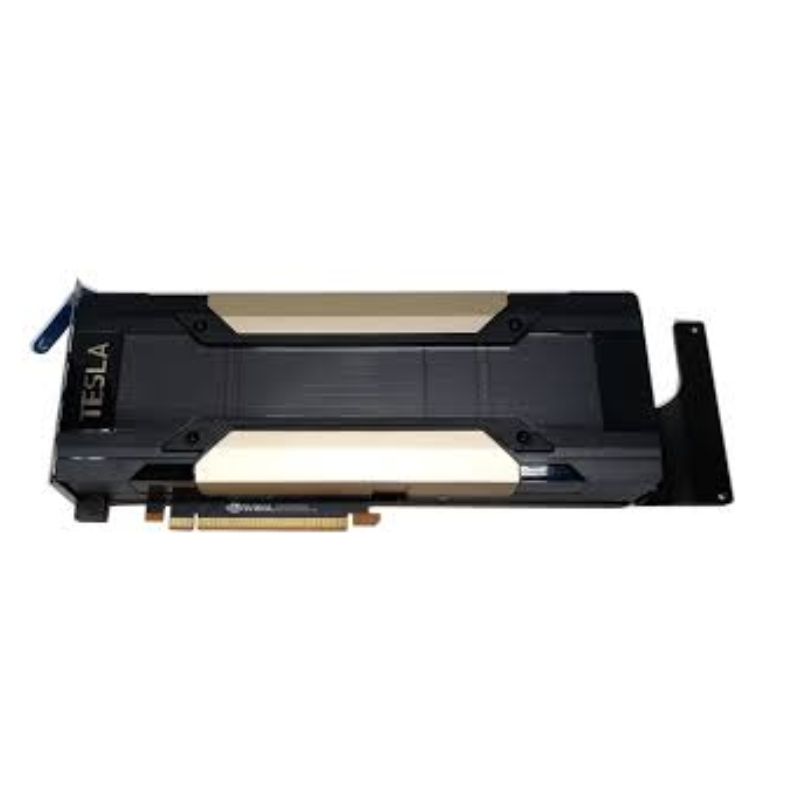
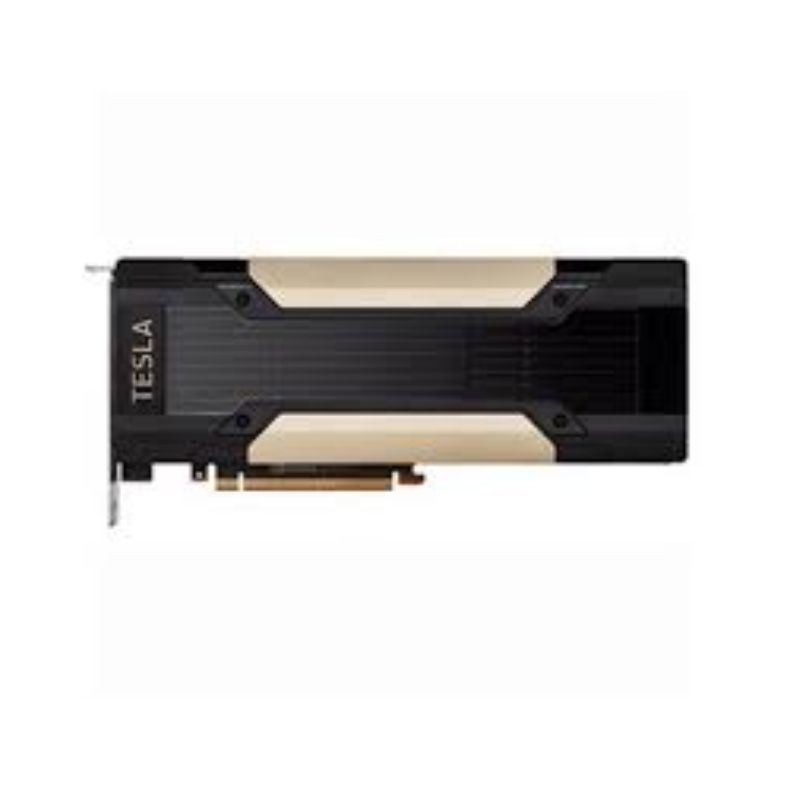
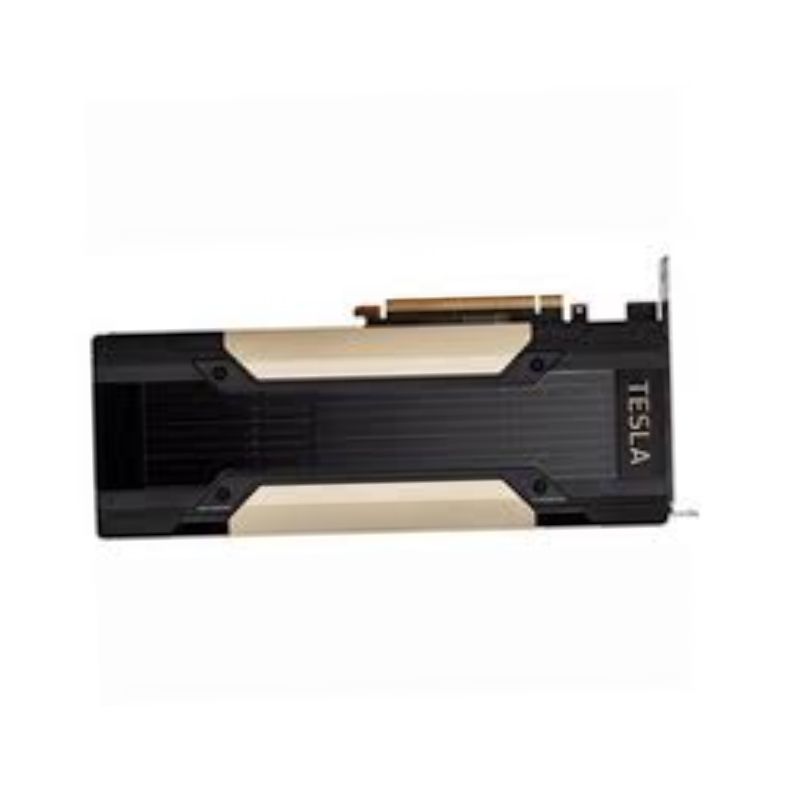
Nvidia 900-2G500-0100-030 Tesla V100 16GB Hbm2 PCI-E Passive Cuda GPU Accelerator. Excellent Refurbished with 1 year warranty. Dell Version.
The NVIDIA Tesla V100 16GB HBM2 GPU Accelerator delivers groundbreaking computational speed and advanced processing efficiency for professionals seeking superior performance in artificial intelligence, scientific modeling, and high-performance computing (HPC). Powered by the revolutionary Volta architecture, this GPU merges exceptional memory bandwidth with efficient core design to support data-intensive workloads, advanced simulations, and AI-driven systems.
This category focuses on the 900-2G500-0100-030 NVIDIA Tesla V100 16GB HBM2 PCIe 3.0 x16 passive CUDA GPU accelerator and closely related SKUs and upgrades. Products in this category are purpose-built compute accelerators designed for high-performance computing (HPC), mixed-precision deep learning, scientific simulation, data analytics, virtualization, and dense server deployments. Shoppers will find PCIe form-factor Tesla V100 cards with 16 GB of HBM2 memory, passive (airflow-dependent) cooling designs intended for optimized rack servers and chassis with directed airflow, and full CUDA compatibility for mainstream AI/ML frameworks. This category page gathers technical descriptions, deployment considerations, compatibility notes, maintenance tips, and buyer guidance to help procurement, systems integrators, cloud operators, and researchers make an informed choice.
The Tesla V100 series is based on NVIDIA’s Volta microarchitecture and focuses on algorithmic flexibility: it provides high double-precision and single-precision throughput plus specialized Tensor Cores for fast mixed-precision matrix math. For customers, this translates into improved training time for modern neural networks and better throughput for mixed FP16/FP32 workloads. The architecture emphasizes parallelism—thousands of CUDA cores working in concert—so software that is optimized for CUDA and tensor operations sees the most benefit.
Tensor Cores are hardware units that perform matrix multiply-and-accumulate operations at very high throughput. They are particularly effective when paired with mixed-precision training techniques that combine lower-precision arithmetic (e.g., FP16) for compute with higher precision for accumulation. This trade-off yields large performance gains for many deep learning models while maintaining model quality with proper loss-scaling and numerical techniques.
The PCIe variant of the V100 comes with a passive cooler that relies on chassis-level airflow provided by the server. This keeps the card compact and simplifies thermal design of dense server racks. Passive designs reduce noise and improve reliability in properly cooled enclosures but require more careful planning during integration—airflow direction, intake capacity, and aisle cooling must be validated to prevent thermal throttling.
16 GB of HBM2 memory provides a compact, very high-bandwidth memory stack. Workloads that are memory-bandwidth-bound—such as dense matrix multiplications, large-batch inferencing, and some CFD/FEA workloads—benefit disproportionately from HBM2 compared to conventional GDDR variants. For model training, larger on-device memory helps reduce host-to-card transfers, enabling larger per-GPU batch sizes and fewer synchronization overheads in multi-step pipelines.
The Tesla V100 16GB PCIe excels in workloads where dense linear algebra, matrix multiplications, and parallel numerical kernels dominate runtime. Typical workloads include:
Deep learning: model training (mixed precision), transfer learning, inferencing for medium-to-large models
HPC: finite-element analysis, computational fluid dynamics, molecular dynamics
Data analytics: GPU-accelerated ETL, query acceleration, graph analytics
Virtualization: GPU passthrough for virtual desktop infrastructure (VDI) and multi-tenant inference
Vendor benchmarks are useful but must be evaluated with context. Look for details such as dataset size, batch sizes, framework version (TensorFlow/PyTorch), CPU pairing, driver and CUDA toolkit versions, and whether mixed-precision training was used. Results can vary widely based on these variables, so prefer benchmarks that mirror your production workload. When possible, run a short pilot test on representative hardware to validate real-world throughput and latency.
The Tesla V100 PCIe is fully designed to be used within NVIDIA’s CUDA ecosystem. This includes:
NVIDIA Driver Packages — install the vendor-driver appropriate for your OS (Linux distributions are most common in HPC and datacenter deployments).
CUDA Toolkit — the CUDA toolkit provides compiler, libraries (cuBLAS, cuFFT), and runtime components needed by scientific and AI frameworks.
cuDNN and TensorRT — for deep learning acceleration and optimized inference pipelines.
Frameworks: TensorFlow, PyTorch, MXNet, JAX and other GPU-accelerated frameworks with CUDA/backends.
Always match driver versions to the CUDA toolkit and framework versions you plan to run. For production stacks, freeze driver-toolkit combinations that have been validated by your integration tests. When upgrading drivers or CUDA, run regression tests with critical workloads and monitor for performance regressions due to driver changes or framework ABI shifts.
GPU pass-through and virtualization technologies (NVIDIA vGPU, GFD, or simple PCI passthrough via VFIO/PCIe SR-IOV alternatives) allow multi-tenant GPU utilization. The PCIe V100 is commonly used in GPU-backed containers (Docker, Kubernetes) leveraging NVIDIA Container Toolkit and device-plugin implementations. For VDI or MLOps platforms, certify that your hypervisor and orchestration stack support the necessary GPU sharing capabilities.


 Contact Us
 Information
 Catalog
 Solid State Drives (SSD)
 Network Switches
 Hard Disk Drives
 HBA & Controllers
 PC & Servers
 PC & Server Memory
 CPU & Processors
 Network Routers
 Power Supplies
 Tape Drives & Libraries
 Network Devices
 Computer & Network Cables