(7% discount is applied at checkout)
Cart is empty
Your go-to destination for cutting-edge server products
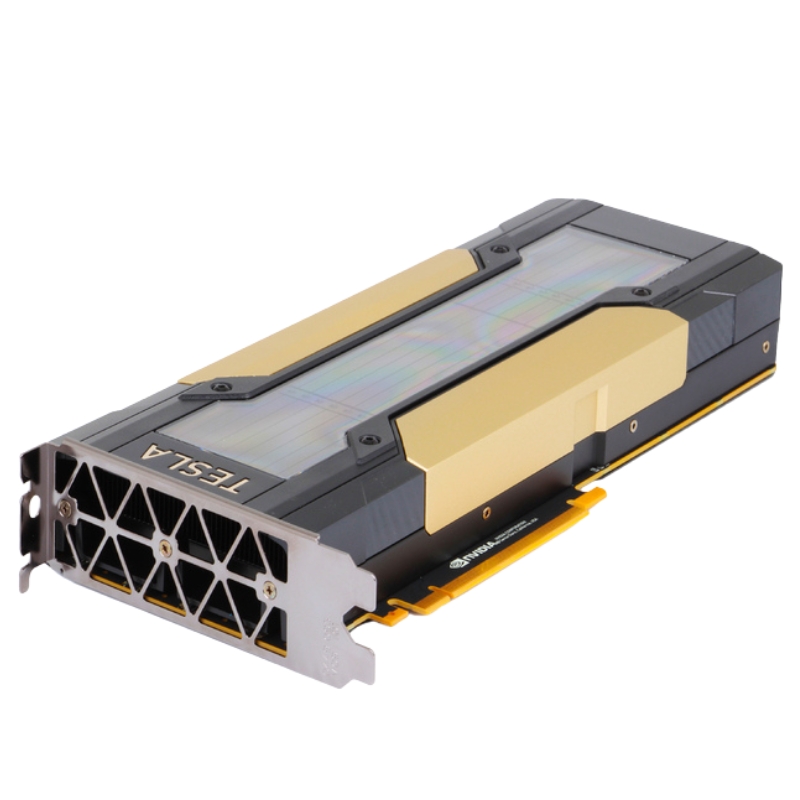


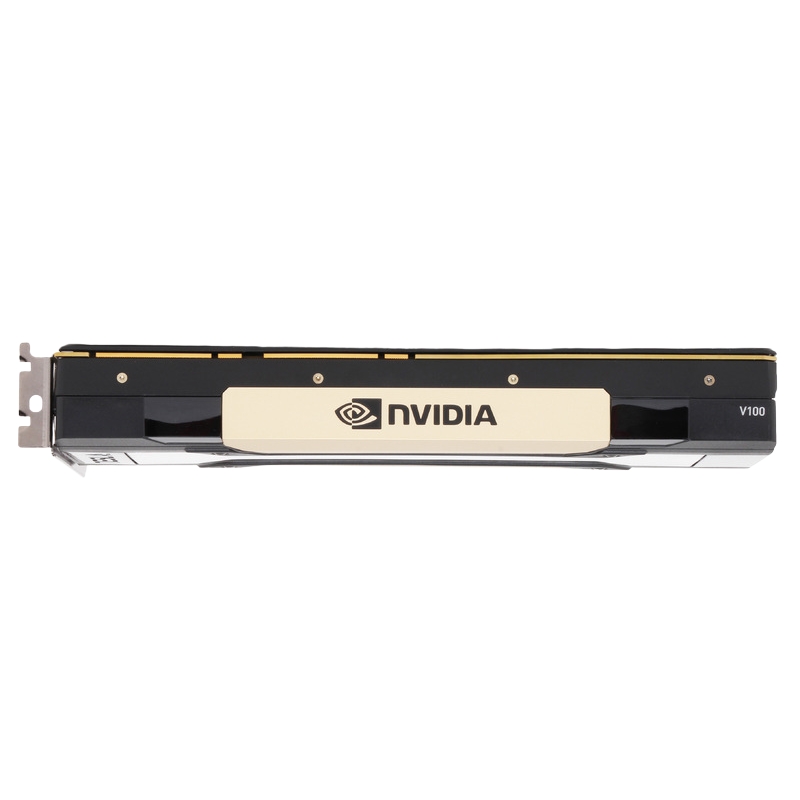
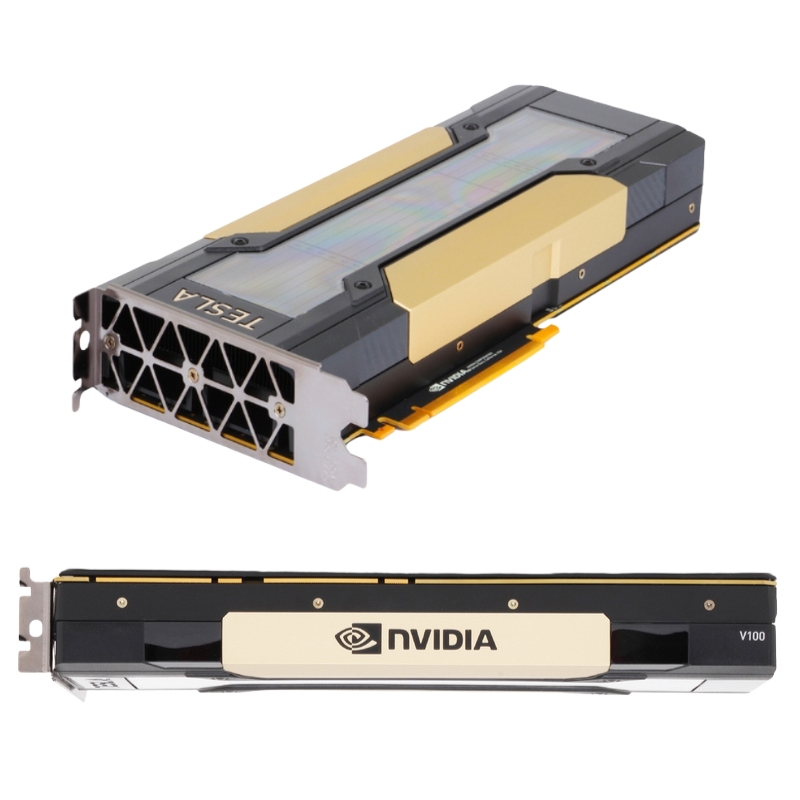
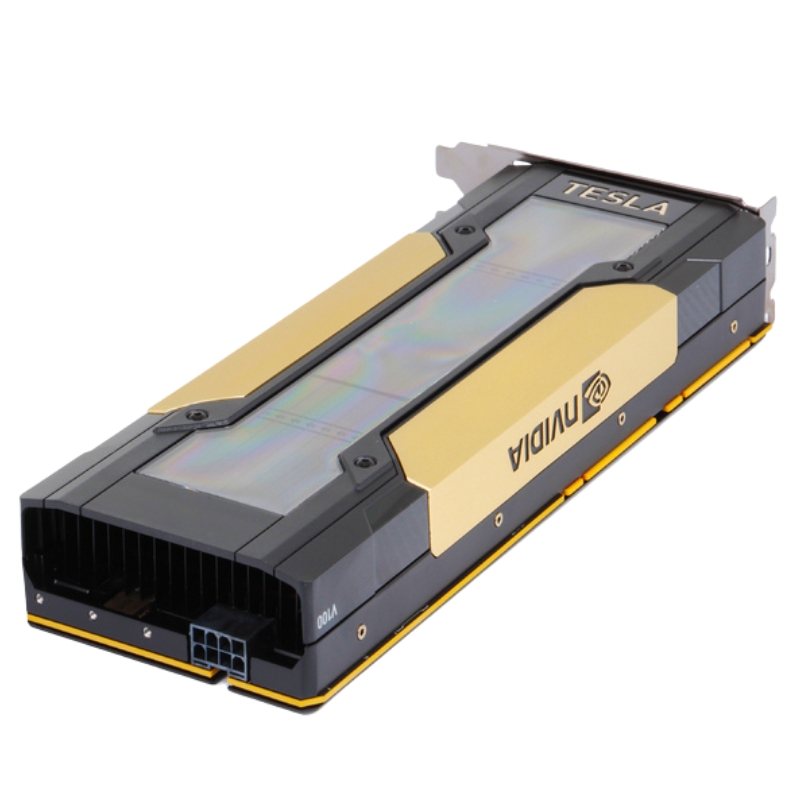
Nvidia 900-2G500-0110-030 Tesla V100 32GB HBM2 CUDA PCI-E Accelerator Card GPU. Excellent Refurbished with 1 year replacement warranty
Elevate AI, data science, and HPC workloads with the Nvidia 900-2G500-0110-030 Tesla V100. This 32GB HBM2 CUDA PCIe accelerator delivers cutting-edge performance with NVIDIA Volta Tensor Cores, enabling rapid training, inference, and computational research at scale.
The V100 Tensor Core GPU is engineered for breakthrough performance across AI and HPC workloads, offering the computational power comparable to dozens of CPUs on complex tasks. Built on NVIDIA Volta, it accelerates training and inference while minimizing time-to-insight for researchers and enterprises.
The NVIDIA Tesla V100 32GB HBM2 CUDA PCI-E Accelerator Card (part number 900-2G500-0110-030) is the PCIe form-factor implementation of NVIDIA’s Volta-based Tesla V100 family — a data-center class accelerator engineered specifically for deep learning training and inference, scientific high-performance computing (HPC), and large-scale data analytics. It pairs the GV100 Volta GPU with 32 GB of HBM2 memory and the Tensor Core technology required for high-throughput mixed-precision training, making it a go-to choice for institutions and companies that need deterministic, repeatable performance in production clusters and workstations.
The Tesla V100 exposes the Volta GV100 die, providing a massive compute surface with thousands of CUDA cores and specialized Tensor Cores for matrix math acceleration. The 32GB PCIe variant ships with the same core counts as other V100 variants — engineered to deliver both floating point and INT/FP16 mixed-precision throughput for modern ML stacks.
The 32GB model uses HBM2 memory on a wide (4,096-bit) memory bus that delivers on the order of ~900 GB/s raw memory bandwidth — critical for large model training where memory throughput is a limiting factor. This high-bandwidth memory keeps large activations and model weights close to the GPU compute fabric for high sustained throughput.
The PCIe card conforms to PCIe 3.0 x16 (typical host connection for the PCIe V100), is generally dual-slot full-height, and has a typical maximum board power around 250 W (system and vendor variations may appear). The PCIe variant is designed for easy drop-in into standard server and workstation expansion slots.
The Tesla V100 32GB is tailored for deep learning training of large models (transformers, CNNs, RNNs, large recommender systems). Its HBM2 capacity mitigates out-of-memory errors during optimizer steps and large batch training, and its Tensor Cores accelerate the matrix multiplications central to backpropagation. For researchers training models in PyTorch or TensorFlow, V100s integrate seamlessly with mixed-precision APIs and distributed training utilities.
Inference workloads that require low latency and support for high concurrency benefit from the V100’s deterministic performance and large on-GPU memory. Tasks such as real-time recommendation scoring, large-context NLP inference, and GPU-accelerated analytics can run housed on V100 nodes without frequent host-device transfers, reducing jitter and improving tail latency.
Researchers running CFD, molecular dynamics, weather forecasting, and other HPC kernels gain from V100’s double precision (FP64) throughput and strong single precision performance. The Volta architecture offers architectural improvements (L1 cache, improved SM design) that translate into higher sustained throughput on real scientific codes.
One of the Tesla V100’s defining features is Tensor Core acceleration for mixed-precision (FP16/FP32) matrix math. Converting eligible layers to use mixed precision and loss-scaling typically yields 2–4× throughput improvements for training while preserving numerical fidelity when done correctly. Use NVIDIA’s AMP (Automatic Mixed Precision) in PyTorch or native Keras mixed-precision utilities to harvest these gains.
For models that approach the 32GB limit, use gradient checkpointing, optimizer offloading (where available), and careful batch sizing to stay within device memory. Because the PCIe variant lacks the very high device-to-device interconnect bandwidth available on SXM NVLink clusters, plan model parallelism and gradient synchronization with NCCL and with the knowledge that PCIe host transfers are a bottleneck compared to NVLink interconnects.
The Tesla V100 is supported by NVIDIA’s enterprise drivers and CUDA toolchain. Match driver and CUDA versions to your deep learning frameworks; many production clusters standardize on tested driver/CUDA combinations (for example, CUDA 10.x / 11.x families depending on framework versions). Also account for OS and kernel versions when integrating multiple GPUs per node.
For multi-GPU PCIe configurations, check your server motherboard’s CPU and chipset lane allocation. Under-provisioned PCIe lanes (sharing x8 bandwidth across multiple GPUs) can reduce per-GPU host bandwidth and impact workloads that do frequent host-device transfers. For tightly-coupled multi-GPU training at scale, SXM2 variants with NVLink provide better device-to-device bandwidth — but PCIe V100 remains a practical and flexible choice for many architectures.
The Tesla V100 benefits from years of software optimization: NVIDIA’s CUDA libraries (cuBLAS, cuFFT, cuDNN) and NCCL for collective communication are mature, stable, and optimized for Volta. That makes porting HPC codes, or production ML pipelines, a lower-risk task compared with earlier, less broadly supported accelerators. Use containerized runtime images (NVIDIA NGC, Docker + NVIDIA Container Toolkit) to simplify dependency management.
Frameworks provide runtime options to exploit V100 characteristics: enable mixed-precision training, tune cuDNN convolution algorithms, and use distributed data-parallel strategies with gradient accumulation to reduce cross-GPU synchronization frequency. Pinned memory transfers, asynchronous data loaders, and data preprocessing pipelines reduce host-side stalls and keep the GPUs fed. Profiling with NVIDIA Nsight Systems and nvprof helps identify bottlenecks.
Functionally both variants share the same Volta GPU core and memory capacity, but SXM2 offers NVLink connectivity and is typically used in dense multi-GPU servers (DGX, Supermicro, etc.), while the PCIe variant fits conventional server slots and is easier to install in mixed hardware fleets. Choose PCIe for flexibility and ease of deployment; choose SXM2 for maximum multi-GPU scalability and interconnect bandwidth.
Newer data center GPUs (Ampere-based A100 and successors) deliver higher memory capacity, improved TFLOPS per watt, and next-generation NVLink/SM architectures. However, V100 still provides strong performance for many established workloads — especially where the procurement budget, existing infrastructure, or software validation favors Volta. When total cost of ownership (TCO) and existing codebase compatibility matter, V100 can be an excellent pragmatic choice. For bleeding-edge model scaling and cutting-edge throughput, consider Ampere/Hopper family alternatives.
In single-node setups, the PCIe V100 is ideal for large batch training where model fits within the 32 GB boundary. Use NVMe for local datasets, a tuned I/O pipeline, and a PCIe slot mapped to full x16 lanes for best host-GPU throughput. Configure the OS to allocate enough hugepages and coordinate driver/kernel versions with the CUDA toolkit.
For inference, pack multiple V100s per server where possible, pin processes to GPUs, and use batching queues to maximize utilization while keeping latencies predictable. Use NVIDIA TensorRT and ONNX Runtime optimized builds to convert and run models efficiently on Volta hardware.


 Contact Us
 Information
 Catalog
 Solid State Drives (SSD)
 Network Switches
 Hard Disk Drives
 HBA & Controllers
 PC & Servers
 PC & Server Memory
 CPU & Processors
 Network Routers
 Power Supplies
 Tape Drives & Libraries
 Network Devices
 Computer & Network Cables