(7% discount is applied at checkout)
Cart is empty
Your go-to destination for cutting-edge server products
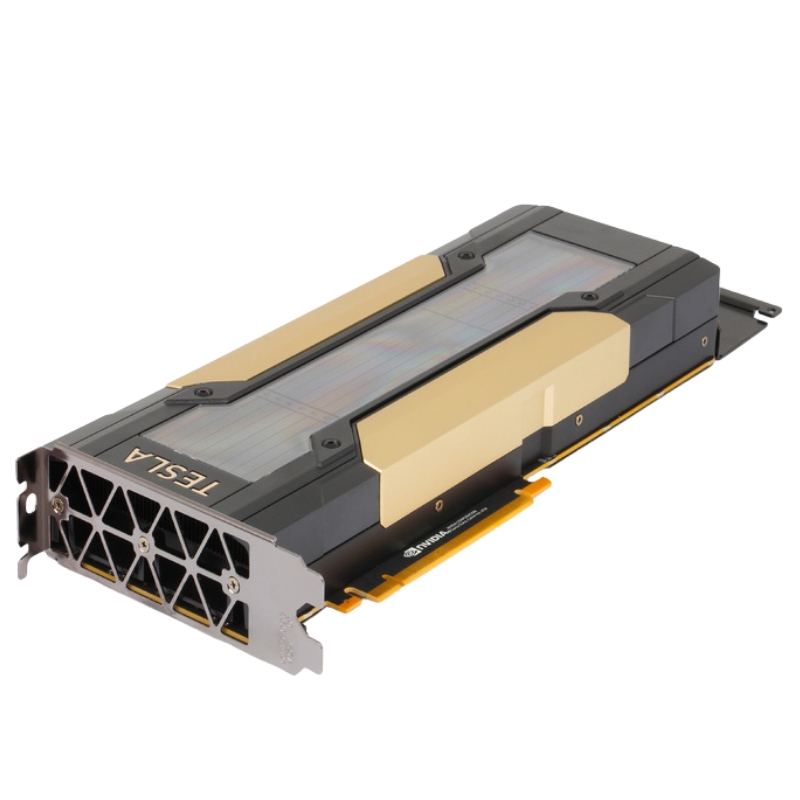


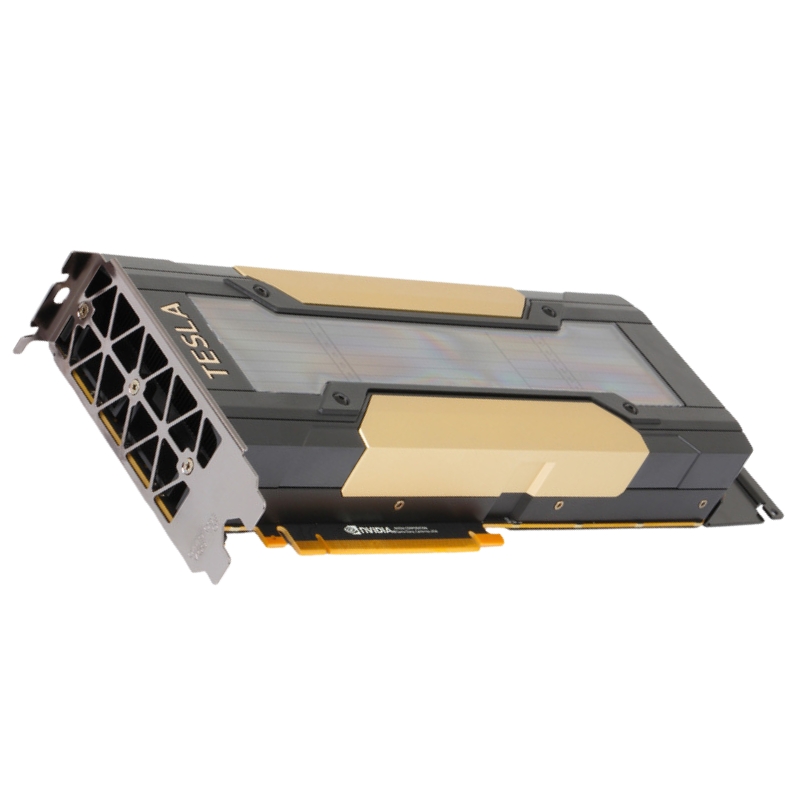
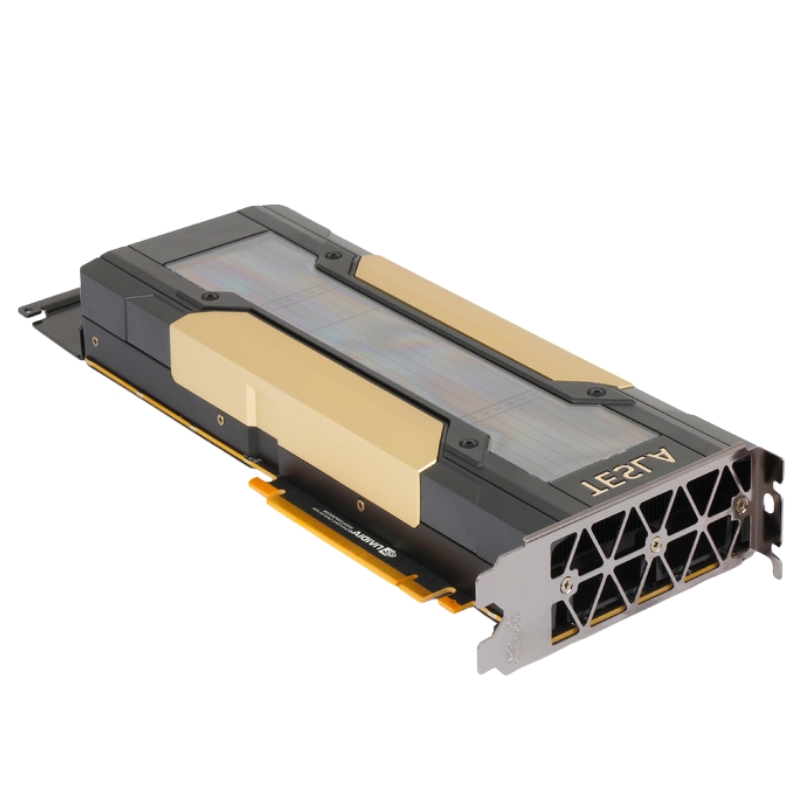
Nvidia 900-2G500-0300-030 Tesla V100 16GB GDDR6 PCI-E Computational Accelerator GPU. Excellent Refurbished with 1 year replacement warranty. HPE Version
The Nvidia 900-2G500-0300-030 Tesla V100 is a high-performance computational accelerator designed for deep learning, HPC workloads, and advanced graphics rendering. Built with cutting-edge GPU architecture, it delivers exceptional speed, scalability, and efficiency for enterprise-grade applications.
As computational models grow increasingly complex, traditional CPUs struggle to keep pace. The Nvidia Tesla V100 integrates seamlessly with HPE ProLiant servers, enabling:
With thousands of CUDA® cores, the Tesla V100 divides massive workloads into smaller tasks that run concurrently, ensuring:
The Nvidia Tesla V100, powered by Volta architecture, is the most advanced data center GPU, offering the performance equivalent of 100 CPUs in a single unit. It is optimized for:
The Nvidia 900-2G500-0300-030 Tesla V100 16GB GDDR6 PCI-E Computational Accelerator GPU category groups high-density, PCI-Express form-factor compute cards engineered for demanding scientific, machine learning, and enterprise workloads. This category description focuses on the key technical attributes, performance characteristics, deployment scenarios, software ecosystem, thermal and power considerations, compatibility with servers and workstations, and the real-world advantages that make cards in this family attractive to HPC clusters, AI researchers, data centers, and edge compute scenarios. Throughout this page we emphasize search-friendly terms—Nvidia Tesla V100, 16GB, GDDR6, PCI-E, computational accelerator GPU, CUDA, and deep learning—to help buyers, resellers, and technical decision-makers find the right hardware for GPU-accelerated compute.
Cards in this category are purpose-built as computational accelerators rather than consumer graphics adapters. They are designed primarily for:
Large-scale machine learning training and inference (modern frameworks such as TensorFlow, PyTorch, and MXNet).
High-performance computing (HPC) workloads including computational fluid dynamics (CFD), molecular dynamics, finite element analysis, and climate modeling.
Data analytics workloads that benefit from GPU parallelism — e.g., big data processing, graph analytics, and accelerated databases.
Enterprise virtualization and multi-tenant GPU acceleration for VDI and containerized workloads.
The category emphasizes compute density and efficiency: 16GB of high-speed GDDR6 memory (as indicated in the product title) paired with a PCI-Express interface gives these cards broad compatibility with standard server and workstation motherboards. Key hardware priorities include high single-precision (FP32) and mixed-precision throughput, robust memory bandwidth to feed parallel compute cores, and support for modern GPU programming models like CUDA and OpenCL. Buyers should look for features such as ECC memory support, board-level thermal management, and firmware supporting enterprise monitoring and management.
Performance in this category is measured across multiple vectors: raw FLOPS for FP32/FP16 operations, memory bandwidth, PCI-E latency/bandwidth behavior, and sustained throughput under long-duration workloads. While published peak FLOPS values are meaningful for comparative marketing, real-world performance depends on software optimization, batch sizes in ML training, memory transfer patterns, and thermal throttling policies. Typical deployment benchmarking focuses on:
Deep learning training: throughput (images/second or tokens/second) across batches and models (ResNet, BERT, GPT-family distillations).
Inference: latency and throughput at production batch sizes and mixed-precision configurations.
HPC kernels: Linpack-style tests, matrix-multiply (GEMM) throughput, and domain-specific kernels.
Memory-intensive workloads: bandwidth-limited applications such as large sparse linear algebra and graph traversals.
In real deployments, the 16GB memory capacity delivers an attractive middle ground: large enough for many mid-scale training and inference workloads and for large batch sizes on common model families, while the GDDR6 memory type favors cost-efficiency and wide compatibility with PCI-E platforms. Systems designed around these cards typically optimize host-to-device transfers, leverage pinned memory and asynchronous copies, and use optimized libraries (cuBLAS, cuDNN, NCCL) for maximum throughput.
For multi-card deployments, consider airflow paths and chassis spacing. Dense GPU racks may require additional ventilation, chilled air, and redundant power distribution. Monitoring thermal telemetry from the card's management interface allows automated fan and temperature control to prevent throttling.
One of the strengths of this category is broad platform compatibility across enterprise-grade motherboards, server platforms, and workstation builds. When integrating these cards, validate the following:
BIOS and PCI-E lane allocation (x16 vs x8 electrical), ensuring the card is not lane-starved.
Driver and kernel compatibility, especially for Linux distributions used in clusters.
Firmware updates and vendor-supplied management tools to ensure long-term stability and security.
A practical checklist helps avoid surprises:
Confirm physical clearance and connector types (8-pin/6-pin PCI-E auxiliary power connectors).
Verify that the server motherboard supports the required PCI-E revision for peak throughput.
Test for driver compatibility with container runtimes and orchestration frameworks in your environment.
Run a short burn-in with representative workloads to detect thermal or power issues early.
This class of Tesla V100-style PCI-E accelerators is versatile. Representative deployment scenarios include:
Small-to-medium sized AI clusters often standardize on 16GB cards for a balance of memory capacity and cost. They serve as dedicated training nodes for teams experimenting with model architectures and for productionizing medium-scale models that don't require extreme memory capacity.
For inference, the low-latency PCI-E interface and 16GB memory permit efficient batching strategies and model caching of medium-sized models—helpful for serving recommendation engines, NLP microservices, and real-time analytics.
Scientific researchers benefit from high FP32 throughput on numerical simulations. With optimized libraries and parallelization, these cards accelerate simulations for genomics, materials science, and physics research where single-node GPU acceleration delivers meaningful time-to-solution improvements.
Create a TCO model that includes hardware acquisition, racks and power, cooling, expected hardware lifetime, and labor for maintenance. Factoring these elements helps determine whether a 16GB PCI-E accelerator card is the most cost-effective choice compared with other cards in the marketplace or cloud GPU alternatives.
Optimize conversions by offering: downloadable benchmark reports, an ROI/TCO calculator tailored to GPU clusters, “compare SKU” interactive tools, and a contact form for technical pre-sales support. These elements reduce friction for technical buyers and help channel leads to your sales engineers.


 Contact Us
 Information
 Catalog
 Solid State Drives (SSD)
 Network Switches
 Hard Disk Drives
 HBA & Controllers
 PC & Servers
 PC & Server Memory
 CPU & Processors
 Network Routers
 Power Supplies
 Tape Drives & Libraries
 Network Devices
 Computer & Network Cables