(7% discount is applied at checkout)
Cart is empty
Your go-to destination for cutting-edge server products


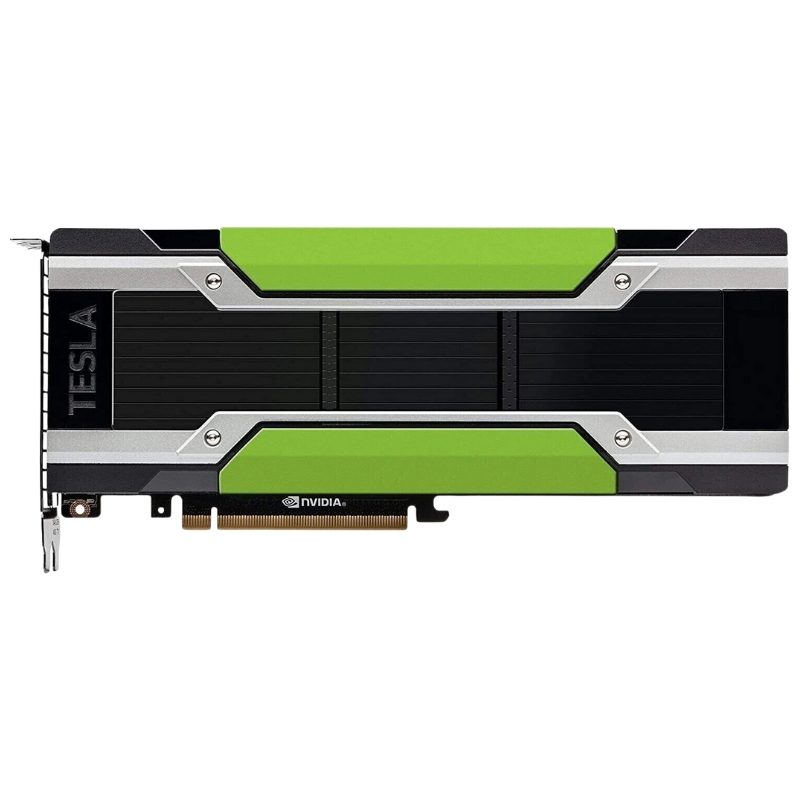
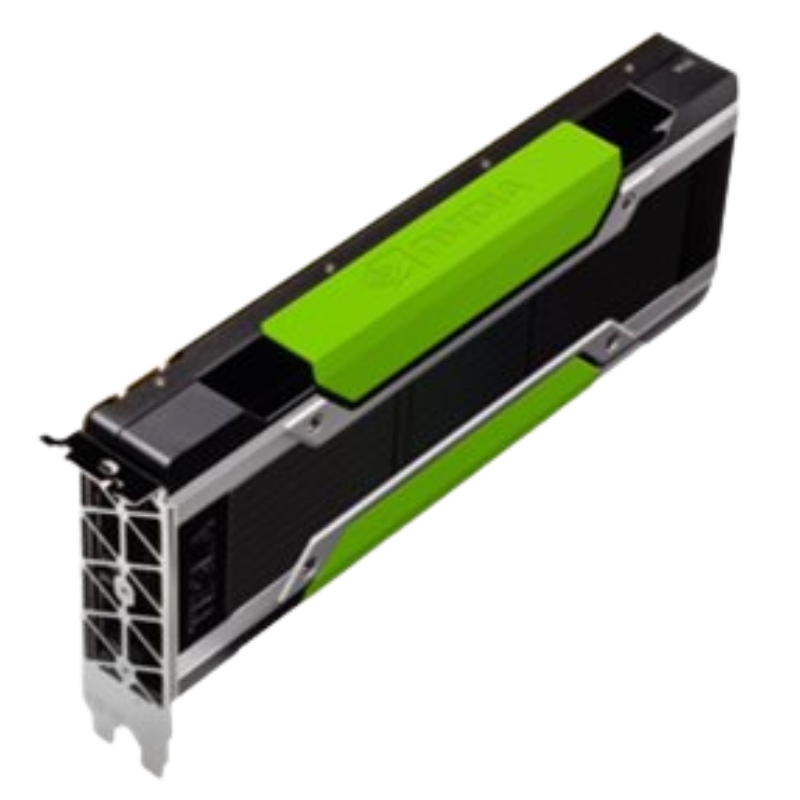
Nvidia 900-2G600-0000-000 12GB GDDR5 Tesla M40 Computing Accelerator GPU. New Sealed in Box (NIB) with 3 years Warranty
The Nvidia 900-2G600-0000-000 Tesla M40 is a high-performance computing accelerator designed for enterprise workloads, deep learning, and advanced data processing. With 12GB GDDR5 memory and optimized architecture, this GPU delivers exceptional speed and reliability for demanding IT infrastructures.
The Nvidia Tesla M40 12GB GPU is engineered for professionals seeking scalable performance, energy efficiency, and robust compatibility with modern APIs. It is a trusted solution for AI training, scientific simulations, and enterprise-grade computing.
The NVIDIA Tesla M40 (part number 900-2G600-0000-000) is a datacenter-class computing accelerator built to accelerate high-throughput single-precision workloads, deep learning training and inference, and general GPGPU compute tasks. This specific SKU ships with 12 GB of GDDR5 memory and a passive cooling solution suitable for rack servers with qualified airflow. The M40 is architected to deliver strong FP32 performance while balancing memory capacity and power for production server environments.
The Tesla M40 is based on NVIDIA's Maxwell-family design tuned for throughput. That design emphasizes energy-efficient single-precision (FP32) performance and robust instruction scheduling suited to neural-network layers, image processing kernels, and many scientific compute patterns. Maxwell's architectural choices improve utilization of on-chip resources for the kinds of dense linear algebra workloads common in training and inference.
The 12 GB of GDDR5 memory on the 900-2G600-0000-000 variant provides a balance of capacity and cost for many production workloads. With a wide 384-bit memory bus and GDDR5 devices tuned for high transfer rates, this card supports large mini-batches, larger model parameter sets, and multi-stage data pipelines. For workloads that require additional memory headroom, an alternative M40 SKU with greater capacity exists, but the 12 GB model often hits the best price/performance balance in mixed-capacity clusters.
Memory bandwidth is a critical metric for deep learning and HPC workloads because it dictates how quickly tensors can be moved between DRAM and the GPU's compute array. The M40's peak bandwidth is engineered to keep the arithmetic pipelines fed during matrix multiply (GEMM) and convolution operations, which are memory-bandwidth sensitive.
This M40 SKU uses a passive thermal solution designed for installation in rack servers and workstations with forced airflow. Passive cards are common in datacenters because they allow system-level cooling designs that are more efficient and easier to service. System integrators should verify that the target chassis provides the required airflow and that the power delivery rails meet the card's maximum power draw.
Because the Tesla M40 is a passive, full-height, double-slot card, it is intended for server environments that support passive GPUs. Confirm chassis compatibility, adequate airflow (front-to-back or as specified by the server vendor), and available PCIe lanes before deploying. Some vendors provide pre-qualified server models that ensure proper thermal behavior and stability at scale.
The Tesla M40 is designed to work with NVIDIA's GPU software stack, including CUDA for general-purpose GPU programming and NVIDIA's deep learning libraries such as cuDNN and optimized BLAS implementations. This enables out-of-the-box performance gains for TensorFlow, PyTorch, MXNet and other major frameworks when compiled against the matching CUDA/cuDNN versions. Software compatibility depends on the installed driver and CUDA toolkit versions — always align driver and toolkit versions per framework recommendations for maximum stability.
Datacenter deployments typically use NVIDIA's production drivers (or vendor-supplied drivers) certified for the server operating system. Use the driver versions that match your CUDA toolkit and target framework versions to reduce the chance of runtime incompatibilities. Many OEMs also provide tested driver bundles for their platforms, which can simplify deployments at scale.
In HPC, the Tesla M40 accelerates workloads that are sensitive to single-precision throughput such as computational fluid dynamics (reduced precision modes), certain signal processing pipelines, and large-scale image analytics. While double-precision performance is not the M40's primary strength, many HPC workflows can be adapted to leverage its single-precision speedups.
Server operators deploying GPU-backed virtual machines or containers may use the M40 in multi-tenant environments. For virtualization, ensure support from the hypervisor and the vendor's GPU partitioning tools or vGPU solutions if needed; otherwise, pass-through PCIe single-device allocations are common.
The M40 delivers high FP32 throughput useful for convolutional and fully connected neural network layers. In real-world tests, this translates to faster epoch times during training and higher batch throughput during inference. The exact speedup depends on the model architecture, batch size, and dataset memory footprint — larger batches often attain better utilization of GPU compute units.
For compute-bound workloads (large matrix multiplications with good data locality), the M40's abundant arithmetic units shine. For memory-bound workloads (where working sets exceed on-chip caches and stress DRAM transfers), achieving peak throughput requires tuning: optimized data pipelines, prefetching, and choosing batch sizes that match memory bandwidth capabilities.
Single-node servers with multiple M40 cards can be used for multi-GPU training using standard multi-process or multi-threaded frameworks (e.g., NCCL, Horovod). For multi-node training, network interconnects (InfiniBand, 10/25/40/100 GbE) and cluster orchestration influence end-to-end performance. The M40 integrates into these ecosystems but benefits from careful topology planning to minimize communication overhead.
The part number 900-2G600-0000-000 typically denotes the 12 GB GDDR5 M40 configuration. OEM vendors sometimes ship rebranded or OEM-labeled variants that share the same silicon and thermal design but carry different vendor part numbers. If you require vendor warranty or server qualification, purchase the card through the appropriate OEM channel.
The M40 family historically included higher-capacity options as well — for example, versions with larger GDDR5 memory capacity intended for larger models. If your workload requires more device memory than 12 GB, consider those variants or modern GPUs with larger HBM/GDDR memory pools. When comparing SKUs, consider memory interface width, bandwidth, and the card's intended thermal envelope.
Confirm your server’s power capacity and cooling strategy. Passive M40 cards rely on chassis airflow; without it, the GPU will thermal-throttle or fail. Verify available PCIe x16 slots and power connectors and ensure the system BIOS and OS/driver stack are updated for GPU support.
Before deploying in production, align firmware (if applicable), server BIOS, and NVIDIA driver versions with your software stack. Some distributions and cloud images provide pre-validated driver packages; using those can reduce integration friction.
In production clusters, continuous monitoring for temperature, power draw, ECC (if applicable), and utilization is critical. Integrate GPU telemetry into your cluster monitoring stack to detect anomalies and schedule preventive maintenance before failures impact SLAs.
Periodically check for firmware and driver updates from NVIDIA and the server OEM as they can include stability fixes and performance improvements. However, apply updates in test environments first and follow change management processes to avoid unexpected compatibility issues in production.
Visitors to this category often have one of three intents: research, comparison, or purchase. Present clear CTAs for each path — downloadable spec sheet, comparison matrix with other GPUs, and direct purchase or request-a-quote options. Include clear warranty, shipping, and return-policy snippets near price or contact elements to reduce friction.


 Contact Us
 Information
 Catalog
 Solid State Drives (SSD)
 Network Switches
 Hard Disk Drives
 HBA & Controllers
 PC & Servers
 PC & Server Memory
 CPU & Processors
 Network Routers
 Power Supplies
 Tape Drives & Libraries
 Network Devices
 Computer & Network Cables