(7% discount is applied at checkout)
Cart is empty
Your go-to destination for cutting-edge server products
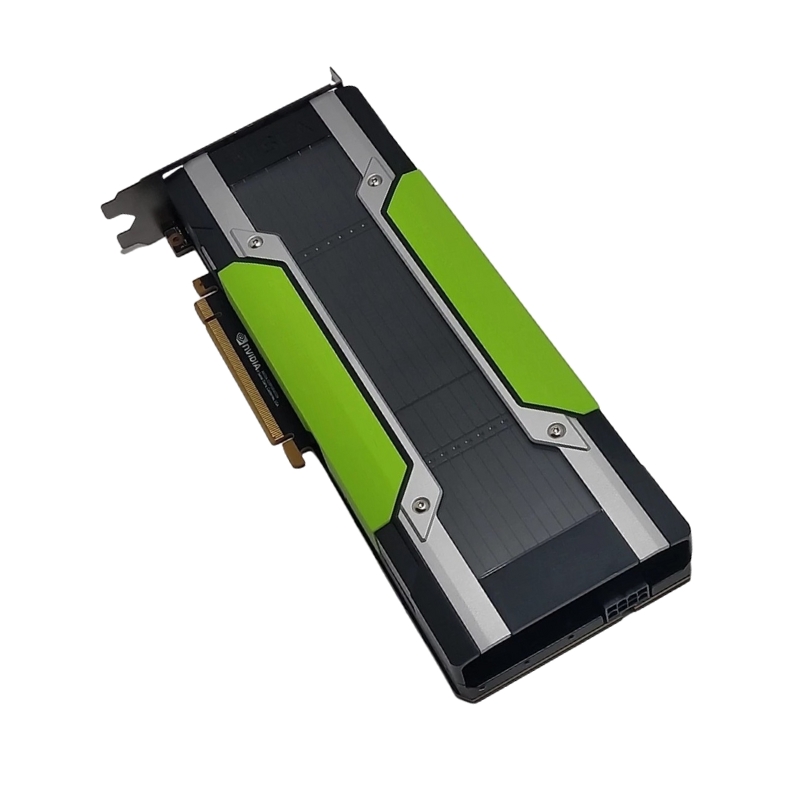


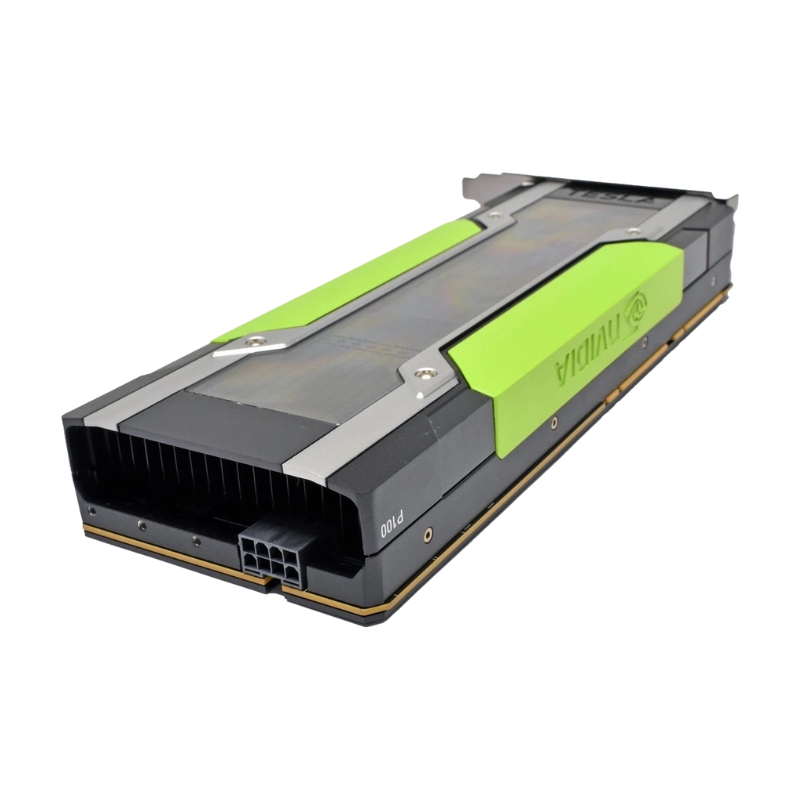
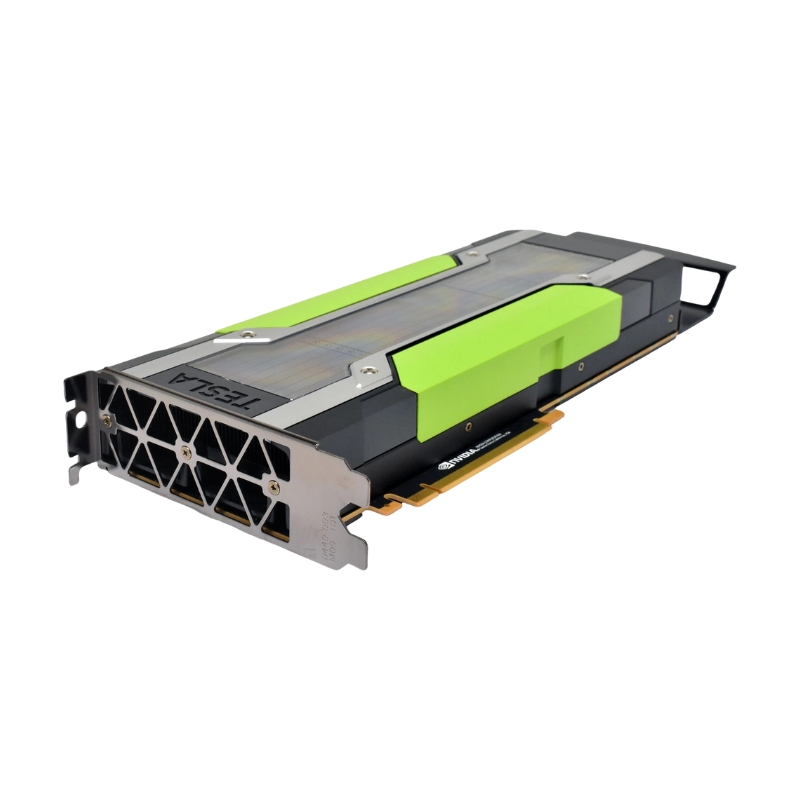
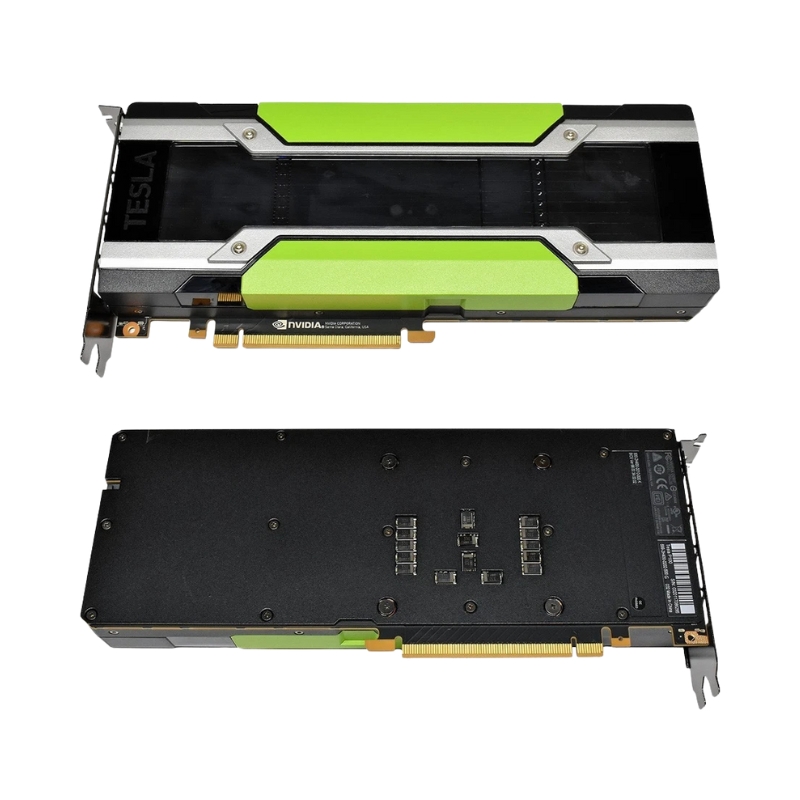
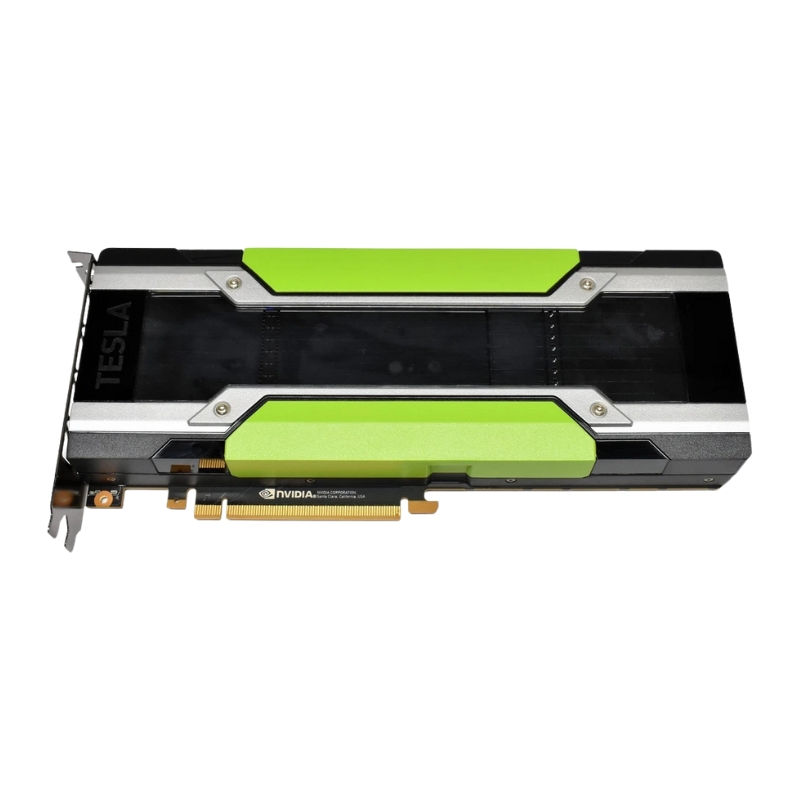
Nvidia 900-2H400-0000-000 16GB HBM2 Tesla P100 4096 Bit PCI-Express X16 Accelerator Graphics Card. Excellent Refurbished with 1-Year Replacement Warranty
The Nvidia 900-2H400-0000-000 Tesla P100 GPU Accelerator is a high-performance graphics card designed for advanced computing workloads. Featuring 16GB HBM2 memory, a 4096-bit interface, and PCI-Express X16 connectivity, this accelerator delivers exceptional speed, efficiency, and reliability for scientific research, AI, and enterprise-grade applications.
The Nvidia 900-2H400-0000-000 16GB HBM2 Tesla P100 PCI-Express x16 Accelerator Graphics Card belongs to a specialized category of professional compute accelerators designed to deliver massive parallel processing capabilities for data centers, research institutions, and enterprise-level high-performance computing environments. This category is fundamentally different from consumer graphics cards, as it is engineered for sustained computational workloads rather than visual rendering or gaming. Accelerator graphics cards in this segment focus on throughput, reliability, and deterministic performance under continuous load, making them essential components in scientific computing, artificial intelligence, deep learning, and large-scale data analytics infrastructures.
Within this category, Nvidia Tesla accelerators are optimized to function as co-processors that offload highly parallel tasks from the CPU. They integrate seamlessly into server architectures, enabling systems to scale performance without proportionally increasing power consumption or physical footprint. The Tesla P100, equipped with advanced GPU architecture and high-bandwidth memory, represents a cornerstone product within this category, setting benchmarks for compute density and memory throughput.
Compute accelerator graphics cards are built around GPU architectures specifically tailored for parallel workloads. The Tesla P100 utilizes a data center–oriented architecture that emphasizes double-precision and single-precision floating-point performance, making it suitable for scientific simulations, financial modeling, and engineering applications. Unlike graphics-oriented GPUs, this category prioritizes compute cores, memory bandwidth, and error resilience over display outputs and consumer-oriented features.
The internal design of accelerator GPUs enables thousands of cores to operate concurrently, executing complex mathematical operations across large datasets. This parallelism dramatically reduces processing time for workloads that would otherwise take days or weeks on traditional CPU-based systems. The category’s design philosophy centers on maximizing throughput while maintaining predictable performance, which is critical for time-sensitive and mission-critical applications.
The Tesla P100 accelerator exemplifies the massively parallel nature of this category through its ability to execute tens of thousands of concurrent threads. This capability is essential for workloads such as molecular dynamics simulations, weather modeling, seismic analysis, and machine learning training, where computations can be divided into smaller tasks processed simultaneously. The GPU’s architecture ensures that these tasks are efficiently scheduled and executed, minimizing idle cycles and maximizing utilization.
Parallel processing within this category is further enhanced by advanced scheduling mechanisms and optimized instruction pipelines. These features allow accelerator graphics cards to maintain high throughput even when workloads vary in complexity, ensuring consistent performance across diverse application domains.
A defining characteristic of the Tesla P100 accelerator category is the integration of High Bandwidth Memory 2 technology. The 16GB HBM2 memory configuration provides an exceptionally wide 4096-bit memory interface, enabling data transfer rates far beyond those achievable with traditional GDDR memory. This level of bandwidth is crucial for compute-intensive applications that require rapid access to large datasets.
HBM2 memory is stacked vertically and placed in close proximity to the GPU die, reducing signal distances and improving energy efficiency. This architectural approach allows accelerator graphics cards to deliver sustained memory throughput while operating within data center power and thermal constraints. The category benefits from reduced latency and improved memory access patterns, which directly translate into faster computation times and improved scalability.
Data-intensive workloads such as deep neural network training, graph analytics, and real-time data processing place enormous demands on memory subsystems. The HBM2-equipped Tesla P100 is designed to handle these demands by providing continuous high-speed access to memory, minimizing bottlenecks that could otherwise limit GPU performance. This capability is particularly important in applications where datasets exceed cache sizes and require frequent memory transactions.
In large-scale deployments, memory bandwidth often becomes a limiting factor before compute capacity is fully utilized. Accelerator graphics cards in this category address this challenge by aligning memory throughput with compute performance, ensuring balanced system behavior and optimal resource utilization.
Reliability is a core requirement in professional accelerator categories, and memory integrity plays a crucial role in maintaining accurate computational results. Tesla-class accelerators incorporate error detection and correction mechanisms within their memory subsystems to protect against data corruption. This is especially critical in long-running simulations and AI training processes, where undetected errors could invalidate results or require costly recomputation.
By integrating robust memory reliability features, accelerator graphics cards ensure consistent output quality and system stability, reinforcing their suitability for mission-critical environments.
The Tesla P100 accelerator utilizes a PCI-Express x16 interface, enabling high-speed communication between the GPU and host system. This interface is a standard in enterprise servers, allowing accelerator cards to be deployed across a wide range of platforms without specialized connectors. The PCIe interface facilitates efficient data transfer for workloads that involve frequent CPU-GPU interaction, such as hybrid computing models and data preprocessing pipelines.
Within this category, PCIe-based accelerators offer flexibility and scalability, allowing organizations to incrementally expand compute capacity by adding additional cards. This modular approach supports diverse deployment scenarios, from single-node workstations to multi-GPU servers and clustered computing environments.
One of the key advantages of accelerator graphics cards in this category is their ability to scale across multiple GPUs within a single system or across distributed clusters. The Tesla P100 supports high-speed interconnect technologies that enable efficient communication between GPUs, reducing latency and improving synchronization in parallel workloads. This scalability is essential for large AI models, complex simulations, and data analytics tasks that exceed the capacity of a single accelerator.
Multi-GPU scalability allows organizations to tailor system configurations to specific workload requirements, optimizing performance while managing costs and power consumption.
Accelerator graphics cards are designed to integrate seamlessly with enterprise-grade server hardware. The Tesla P100 adheres to industry standards for mechanical dimensions, power delivery, and thermal management, ensuring compatibility with a wide range of server chassis and motherboard designs. This compatibility simplifies deployment and reduces the need for custom hardware solutions.
Enterprise server compatibility also enables centralized management and monitoring, allowing IT teams to oversee accelerator performance and health alongside other system components.
In AI inference scenarios, accelerator graphics cards provide low-latency processing for real-time decision-making applications such as image recognition, natural language processing, and recommendation systems. The Tesla P100 delivers consistent inference performance, enabling deployment in latency-sensitive environments such as healthcare diagnostics and autonomous systems.
For training workloads, the accelerator’s compute throughput and memory capacity support large batch sizes and complex models. This capability allows researchers and engineers to experiment with deeper networks and more sophisticated architectures, driving innovation across AI disciplines.
The value of accelerator graphics cards extends beyond hardware capabilities to include a comprehensive software ecosystem. Tesla accelerators are supported by a wide range of compute libraries, drivers, and frameworks optimized for GPU acceleration. This ecosystem enables developers to harness the full potential of the hardware without extensive low-level programming.
Optimized libraries for linear algebra, signal processing, and machine learning ensure that applications achieve peak performance while maintaining code portability and maintainability.
Scientific computing applications demand extreme computational power and numerical accuracy. Accelerator graphics cards in the Tesla P100 category are designed to excel in these environments, offering high double-precision performance and robust error handling. Fields such as physics, chemistry, climatology, and bioinformatics rely on GPU acceleration to simulate complex systems and analyze massive datasets.
The ability to perform large-scale simulations in reduced timeframes enables researchers to explore more scenarios, refine models, and achieve higher resolution results. This acceleration directly contributes to scientific advancement and innovation.
Numerical accuracy is a critical requirement in scientific workloads, where small errors can propagate and significantly impact outcomes. Accelerator graphics cards prioritize deterministic execution and precision, ensuring consistent results across runs. The Tesla P100 supports a range of precision modes, allowing applications to balance performance and accuracy according to their specific requirements.
This flexibility makes the category suitable for both exploratory research and production-level simulations where repeatability and reliability are essential.
Enterprise accelerator graphics cards are built to meet stringent reliability standards. The Tesla P100 category emphasizes consistent performance, controlled power consumption, and efficient heat dissipation. These factors are crucial in data center environments, where power density and thermal constraints directly impact operational costs and system longevity.
Advanced power management features allow accelerator cards to dynamically adjust power usage based on workload demands, optimizing efficiency without sacrificing performance. This adaptability supports diverse application profiles and contributes to overall infrastructure sustainability.
Thermal management is a key consideration in accelerator graphics card design. The Tesla P100 employs a cooling solution optimized for server airflow patterns, ensuring effective heat removal in dense rack configurations. Proper thermal design prevents performance throttling and extends component lifespan, supporting reliable long-term operation.
Efficient cooling also enables higher compute density within data centers, allowing organizations to maximize performance per rack while maintaining safe operating temperatures.
Power efficiency is increasingly important as data centers scale to meet growing computational demands. Accelerator graphics cards in this category are designed to deliver high performance per watt, reducing overall energy consumption. This efficiency translates into lower operational costs and reduced environmental impact.
Stable power delivery systems ensure consistent operation even under fluctuating workloads, reinforcing the reliability of accelerator-based infrastructures.


 Contact Us
 Information
 Catalog
 Solid State Drives (SSD)
 Network Switches
 Hard Disk Drives
 HBA & Controllers
 PC & Servers
 PC & Server Memory
 CPU & Processors
 Network Routers
 Power Supplies
 Tape Drives & Libraries
 Network Devices
 Computer & Network Cables