(7% discount is applied at checkout)
Cart is empty
Your go-to destination for cutting-edge server products
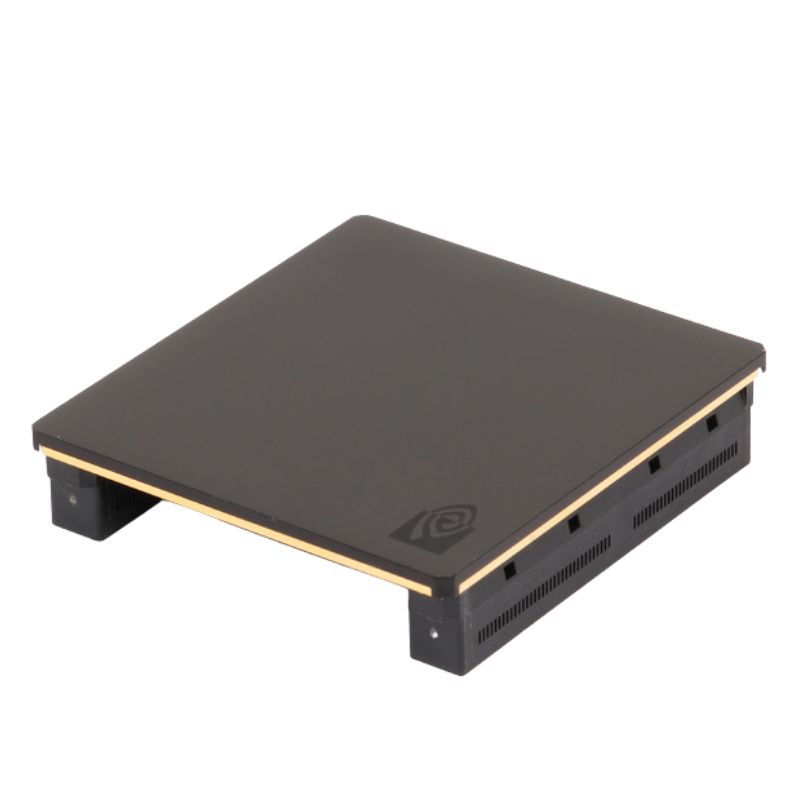


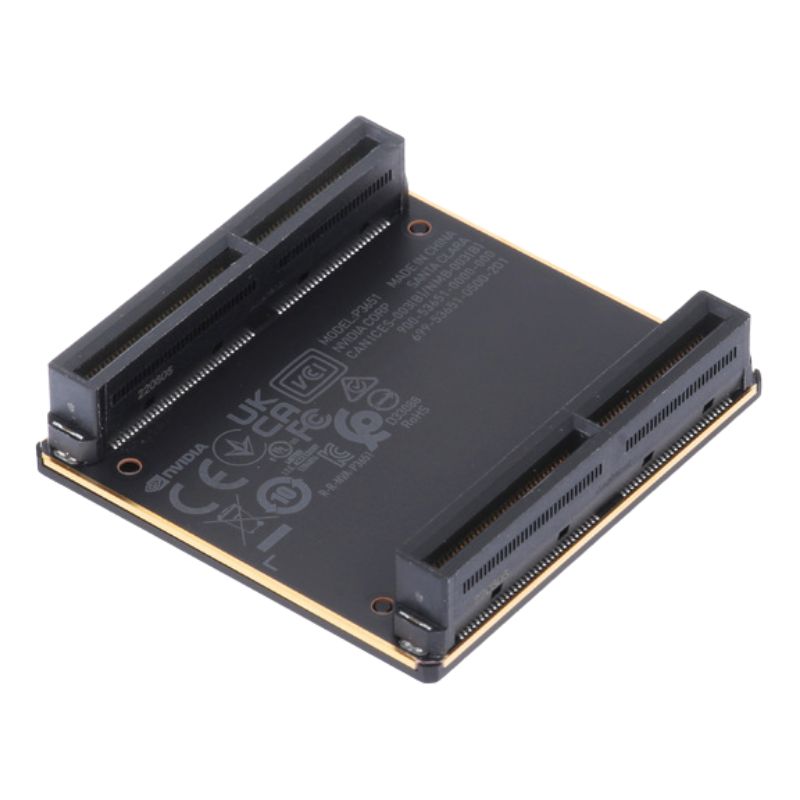
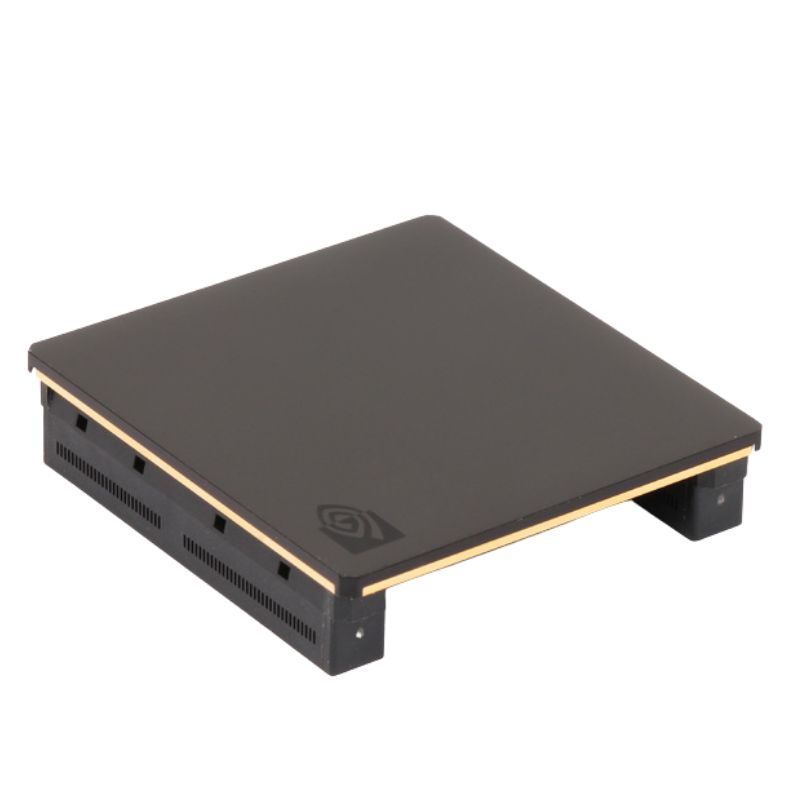
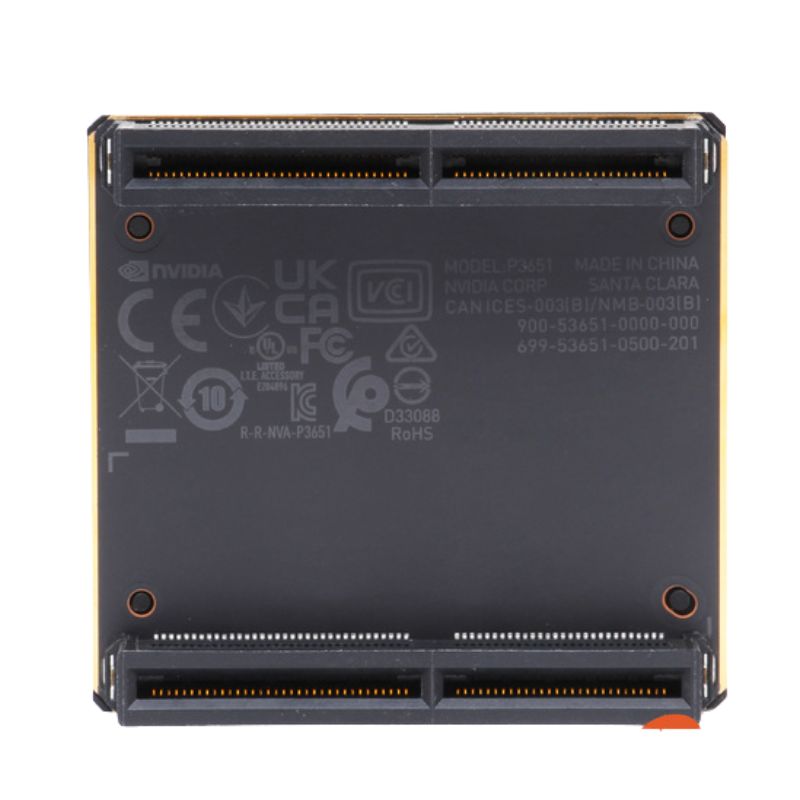
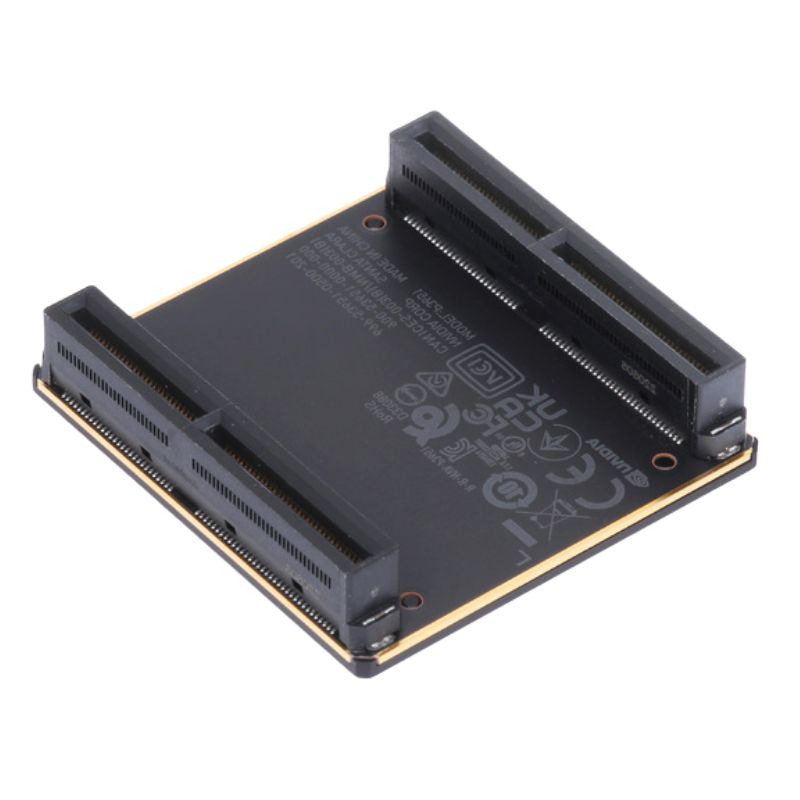
Nvidia 900-53651-0000-000 2 Slot NVLINK Bridge Adapter 2 Way Card. New Sealed in Box (NIB) with 1 year Replacement Warranty.
The Nvidia 900-53651-0000-000 NVLINK Bridge Adapter delivers seamless high-speed connectivity between compatible GPUs, enabling enhanced data transfer and optimized multi-GPU performance. Designed for professional users, this dual-slot 2-way bridge maximizes bandwidth and minimizes latency for intensive workloads.
The Nvidia NVLINK 2-Way Bridge allows two graphics cards to work in full synchronization, offering a significant performance leap in rendering, simulation, AI computing, and machine learning tasks. Its robust connection ensures uninterrupted signal stability and faster parallel processing power.
Engineered with precision, this 2-slot NVLINK adapter is crafted from high-quality materials to ensure stability under intensive operations. It supports consistent GPU interconnection while maintaining excellent heat dissipation and efficient energy usage.
The Nvidia 900-53651-0000-000 2 Slot NVLINK Bridge Adapter 2 Way Card is a high-bandwidth, low-latency interconnect designed to unify the memory space and accelerate communication between two compatible NVIDIA GPUs. Built for systems where peak throughput between GPUs matters — including machine learning training rigs, professional rendering workstations, and high-performance compute nodes — this NVLINK bridge replaces traditional PCIe peer-to-peer transfers with a far faster, direct GPU-to-GPU channel. The product name is intentionally precise because compatibility and physical form factor are critical: it is a two-slot NVLINK bridge intended for use with specific NVIDIA Ampere, Turing, and certain Volta generation GPUs that expose matching NVLINK connectors. The adapter's purpose is not just to link GPUs physically; it enables software to more efficiently aggregate GPU memory, reduce inter-GPU synchronization overhead, and deliver smoother multi-GPU scaling for demanding parallel workloads.
The NVLINK bridge adapter features a two-slot width and a fixed connector spacing that aligns with the card-edge ports on supported NVIDIA GPUs. Its electrical and mechanical design prioritizes signal integrity at multi-gigabit transfer rates while maintaining compatibility with the thermal and mechanical constraints of dual-slot GPU configurations. Unlike passive ribbon cables or simple connectors, this adapter integrates shielding and impedance-matched traces to preserve high-frequency signals across the bridge. The result is a direct, reliable link that supports the full NVLINK bandwidth published for the corresponding GPU families. For system builders and integrators, this means that the Nvidia 900-53651-0000-000 adapter can unlock inter-GPU topologies that would otherwise be limited by PCIe lane allocation or motherboard layout.
One of the most important reasons to choose an NVLINK bridge like the Nvidia 900-53651-0000-000 is the raw increase in interconnect bandwidth relative to PCIe. NVLINK provides multiple high-speed lanes that combine to offer several times the peer-to-peer throughput of contemporary PCIe generations. This higher bandwidth dramatically reduces the time required for large tensor synchronizations, dataset transfers, and multi-GPU collective operations. Latency improvements are equally impactful: reduced round-trip times between GPUs accelerate small message exchanges and barrier synchronizations. From a programming standpoint, NVLINK can enable near-unified memory access patterns where GPUs can access each other’s memory more efficiently, simplifying data management and improving effective memory capacity for large models or big datasets.
Before purchasing the Nvidia 900-53651-0000-000 2 Slot NVLINK Bridge Adapter 2 Way Card, confirm the exact GPU models, their physical spacing, and the NVLINK connector type in your system. NVLINK bridges are not universally interchangeable across all NVIDIA product families; connector pitch, mounting bracket alignment, and electrical pin assignments can vary. The phrase "2 slot" in the product title is crucial: it indicates that the bridge is sized for GPUs that occupy two adjacent expansion slots and provide NVLINK ports aligned to that spacing. Compatibility typically spans specific professional and datacenter models as well as consumer high-end cards within the same architecture generation. System integrators should consult motherboard and chassis clearances to ensure the two-slot adapter and the paired GPUs fit without obstructing airflow or adjacent cards. When in doubt, cross-reference the GPU part numbers with the NVLINK accessory documentation or with vendor compatibility charts to avoid mismatches.
Physical installation of the NVLINK bridge adapter requires careful handling and attention to orientation. The adapter seats directly into the NVLINK connector on the top edge of each GPU; the locking mechanism or retention clip — if present — must be engaged to secure the connection. Since this is a two-slot adapter, it spans the gap of two adjacent expansion slots and may interfere with neighboring components if the chassis is compact. Ensure the workstation or server chassis provides adequate clearance and consider cable management for any nearby power or signal cables. Additionally, because the adapter establishes a high-speed signal path between two devices, avoid flexing the card or applying lateral stress once installed. A secure mechanical fit helps preserve signal integrity and long-term reliability.
Adding a 2-slot NVLINK bridge between GPUs alters local airflow patterns. Although the adapter itself does not draw significant power or generate meaningful heat, it reduces the open space between GPUs and may change how hot exhaust from the rear of one card affects the neighbor. For systems where both GPUs are installed and under sustained load, monitor GPU temperatures after installation and, if necessary, adjust fan curves, rearrange intake/exhaust airflow, or add supplemental case ventilation. In rack or blade environments, pay special attention to chassis airflow channels and the mounting orientation; some server layouts pair GPUs vertically or use custom airflow shrouds that could require alternate NVLINK bridge configurations.
The Nvidia 900-53651-0000-000 2 Slot NVLINK Bridge Adapter 2 Way Card is most valuable where inter-GPU communication is a performance bottleneck. In AI training scenarios, large models are often sharded across GPUs and require frequent parameter synchronization. NVLINK’s higher bandwidth reduces the time spent in all-reduce and parameter-exchange operations, enabling better scaling when moving from single-GPU to multi-GPU training. For inference serving that parallelizes model shards across GPUs, NVLINK reduces latency when requests require cross-GPU communication.
Professional rendering engines, especially those that support multi-GPU rendering, see tangible improvements when NVLINK is present. Texture streaming, large scene datasets, and distributed ray-tracing workloads benefit from the unified data access enabled by an NVLINK bridge. Rather than duplicating large datasets in each GPU’s local memory, workloads can dynamically access remote GPU memory across NVLINK, reducing memory waste and enabling higher fidelity scenes without excessive data replication. Content creators using GPU-accelerated timelines, compositing, and simulation tools also benefit from reduced frame stalls and faster bake times when NVLINK reduces transfer times for shared assets.
High-performance computing applications that require fast neighbor communication — such as fluid dynamics, molecular dynamics, and finite element analysis — map well to NVLINK's strengths. Many MPI and GPU-aware libraries exploit the low-latency, high-bandwidth channel to implement efficient peer exchanges. For clusters where nodes contain multiple GPUs, NVLINK can be combined with NVSwitch or other topologies to build dense, low-latency GPU fabrics, enabling tighter coupling between computation units and improved parallel efficiency for large-scale simulations.
Installing the Nvidia 900-53651-0000-000 2 Slot NVLINK Bridge Adapter 2 Way Card is only one part of the equation; software support is essential to realize NVLINK’s advantages. NVIDIA drivers and the CUDA runtime expose NVLINK capabilities to the operating system and application layers. Modern deep learning frameworks like PyTorch and TensorFlow include optimizations to leverage NVLINK-enabled memory access patterns and collective operations. It is important to keep GPU drivers and firmware up to date so the operating system recognizes the bridge and the GPUs expose the correct topology to user-space libraries. For professional applications and OS-level tuning, consult the GPU vendor’s release notes and the framework-specific documentation to ensure that any recommended environment variables or runtime parameters are set for optimal multi-GPU performance.
NVLINK introduces a topology layer that software can query so that job schedulers, runtime libraries, and user applications can plan communication paths intelligently. System administrators and application developers should use NVML, CUDA device query tools, and framework-level debugging utilities to inspect the GPU interconnect topology. Understanding which GPUs are directly NVLINKed helps optimize data placement and minimize unnecessary transfers across slower links. API-level hooks enable advanced scheduling where memory allocations and compute kernels are placed with interconnect speed in mind, improving both throughput and utilization.
Because NVLINK behavior and support can evolve between GPU microarchitectures and driver releases, plan for driver testing when upgrading system components. Firmware updates for GPUs and sometimes for the bridge itself can enhance stability or compatibility; however, these updates should be applied cautiously in production environments. Vendor release notes commonly list supported NVLINK topologies and any known issues, so verify the driver version against the GPUs in your system before deploying into critical workloads. In many cases, maintaining a certified software stack from the GPU vendor or workstation manufacturer reduces risk and ensures validated behavior when using the NVLINK bridge.


 Contact Us
 Information
 Catalog
 Solid State Drives (SSD)
 Network Switches
 Hard Disk Drives
 HBA & Controllers
 PC & Servers
 PC & Server Memory
 CPU & Processors
 Network Routers
 Power Supplies
 Tape Drives & Libraries
 Network Devices
 Computer & Network Cables