(7% discount is applied at checkout)
Cart is empty
Your go-to destination for cutting-edge server products


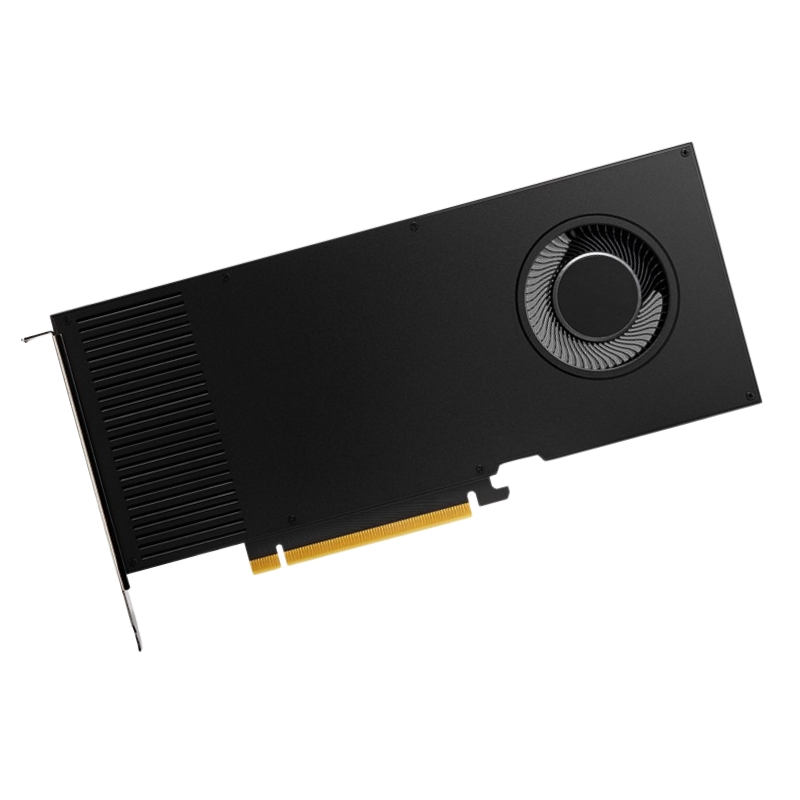
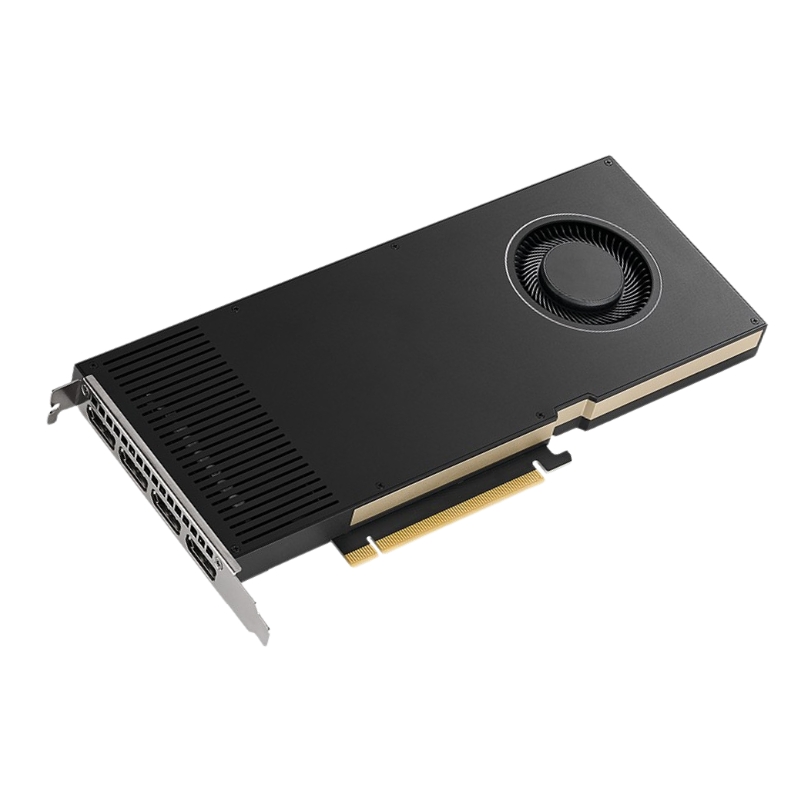
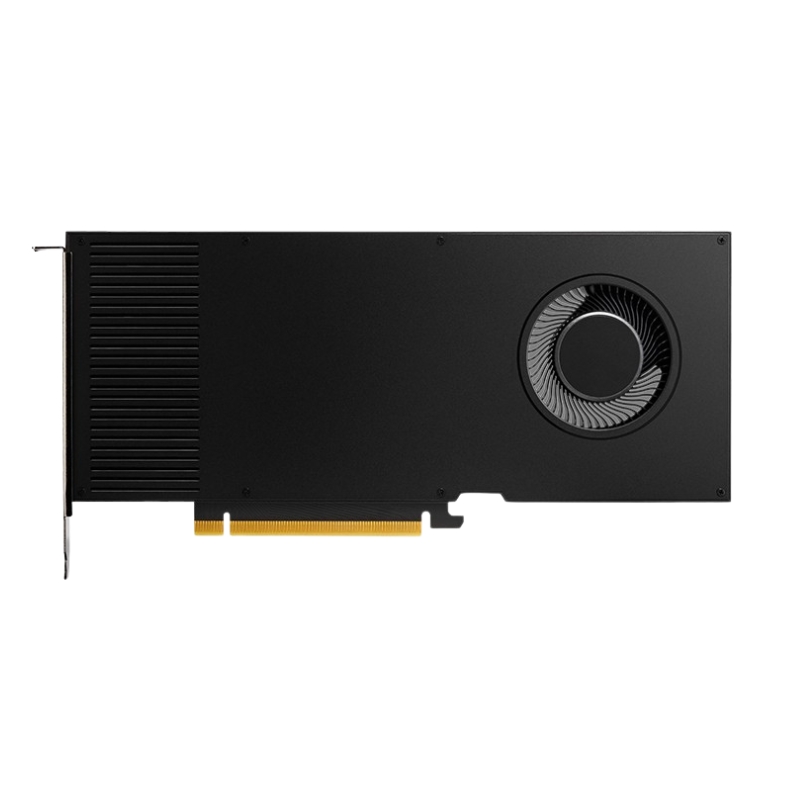
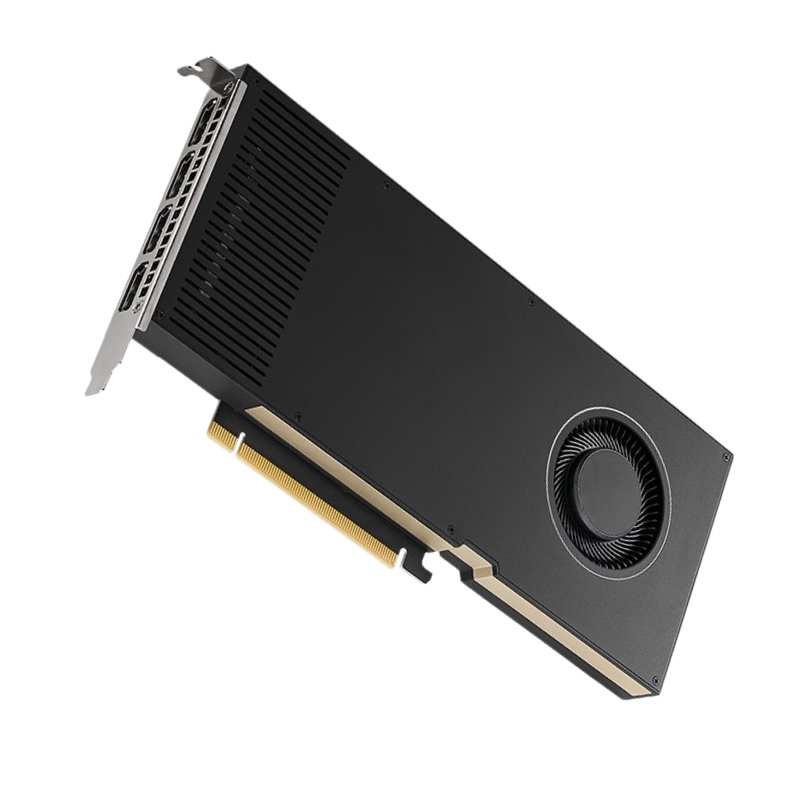
Nvidia 900-5G132-1770-000 24GB 384-bit PCI-E 4.0 GDDR6 ECC Graphics Card. Excellent Refurbished with 1-Year Replacement Warranty.
Experience cutting-edge professional graphics performance with the NVIDIA RTX A5500 (900-5G132-1770-000), designed to deliver exceptional speed, precision, and stability for data-intensive workloads. Built on the powerful Ampere architecture, this GPU empowers creators, engineers, and AI developers to achieve seamless productivity and unparalleled rendering quality.
The NVIDIA RTX A5500 is a purpose-built workstation GPU engineered to accelerate professional workflows across CAD, 3D rendering, VFX, architectural visualization, scientific computing, and AI-assisted design. With a high-capacity 24GB of GDDR6 memory (with ECC), a wide 384-bit memory bus, and PCIe 4.0 bandwidth, the A5500 is positioned to manage very large datasets, complex scenes, and multi-application pipelines where both precision and sustained throughput matter.
The A5500 pairs an Ampere-family GPU architecture with large framebuffer capacity and ECC protection to reduce silent data corruption during long compute or rendering jobs. Notable specifications include 24GB GDDR6 ECC memory, a 384-bit memory interface delivering (manufacturer-rated) high bandwidth, PCIe 4.0 x16 interface for modern motherboards, and an architecture optimized for both raster and ray-traced workloads. These core hardware elements make the A5500 a compelling choice where large texture sets, massive datasets, or multi-layered simulations are commonplace.
Built on NVIDIA’s Ampere architecture for professional GPUs, the RTX A5500 integrates CUDA cores for general-purpose compute, second-generation RT cores for hardware-accelerated ray tracing, and third-generation Tensor cores for AI and mixed-precision acceleration. This blend of cores provides balanced throughput for visualization, simulation, AI-backed denoising, and real-time ray-traced previews in popular DCC (digital content creation) tools. The card’s design focuses on sustained compute and real-time graphics performance, which is essential for interactive scene manipulation and iterative creative workflows.
One of the most important selling points of the A5500 is its 24GB of GDDR6 memory with ECC. For professionals, memory capacity directly translates to how large a project you can open and manipulate without resorting to slower system swapping. ECC (Error Correcting Code) memory guards against bit flips and memory corruption over long runs — a critical feature for scientific visualization, medical imaging, and batch render farms where results must be reproducible and free from hidden data errors. Combined with a 384-bit memory bus and manufacturer-rated memory bandwidth, the A5500 sustains high-throughput transfers for texture streaming, large-framebuffers, and neural compute workloads.
ECC memory plus professional driver stacks (NVIDIA RTX Enterprise / Studio drivers where applicable) mean the A5500 is intended for systems that require validated software stacks and ISV certifications. Many studio and enterprise environments opt for workstation-class GPUs rather than consumer cards precisely because of these validation programs, long-term driver support, and the hardware-level protections included in the product. When uptime and correctness are essential—think long render jobs or unattended batch simulations—the extra reliability features pay dividends in reduced rework and higher confidence in final outputs.
In production tests and comparative analyses, the RTX A5500 sits in the high-performance tier of workstation GPUs. Its large CUDA core count and Tensor/RT core complement accelerate tasks such as GPU rendering, interactive viewport performance in tools like Autodesk Maya or 3ds Max, complex shader compilation, multi-layer compositing, and AI-inference workloads where large VRAM and tensor throughput matter. While performance varies by application and driver optimization, users can expect sustained high throughput for both single-precision (FP32) rendering and mixed-precision AI acceleration. Benchmarks and comparative reviews typically show the A5500 delivering strong raster and ray-trace performance relative to its generation peers.
The dedicated RT cores speed up hardware ray tracing for photorealistic rendering and real-time previewing, making features like denoising, global illumination approximations, and interactive ray-traced viewport rendering much more accessible. Tensor cores accelerate AI-powered features—denoisers, AI-based upscalers, and neural rendering tools—letting artists iterate faster. For studios integrating AI into content pipelines (for example, AI-driven material generation or automated cleanup passes), the A5500 provides a balance of memory capacity and tensor throughput that facilitates larger batch sizes and higher-fidelity models.
The A5500 uses a PCIe 4.0 x16 host interface, ensuring compatibility with modern workstation motherboards and delivering higher effective bus bandwidth compared with PCIe 3.0 systems. Physically, it’s designed for dual-slot workstation enclosures, and typical server or tower systems must provide adequate cooling and power delivery. Power requirements for the A5500 are engineered to fit professional workstation power envelopes, but integrators should confirm available headers, PSU capacity, and airflow. Many workstation builders provide pre-certified chassis configurations that include validated cooling and power profiles for the A5500.
For workflows that scale across multiple GPUs—distributed rendering, large-scale simulations, or multi-GPU training—NVLink (or other NVLink-like bridging technologies provided on specific A-series models) can be an important factor. While not all models and vendor SKUs support every multi-GPU bridging feature, where available NVLink provides high-bandwidth peer-to-peer memory sharing that reduces host overhead and improves scaling efficiency for memory-bound workloads. If you plan a multi-GPU workstation or render node, consult vendor documentation for NVLink compatibility and effective aggregated memory strategies.
The professional GPU ecosystem is more than just silicon — certified drivers, SDKs (CUDA, OptiX, RTX), and ISV validations form the backbone of a production workflow. NVIDIA provides professional drivers and enterprise support channels for workstation GPUs, which are optimized for stability and compatibility with leading creative and engineering software packages. Commonly used toolchains (renderers like Redshift, V-Ray, Arnold; DCC apps like Maya and Blender; CAD/CAM suites like SolidWorks and Siemens NX) often publish certification matrices indicating performance and validated driver versions for GPUs like the A5500. For studios and engineering teams that require formal validation, checking the ISV certification list is essential before deployment.
Effective thermal design is crucial for consistent GPU performance. The RTX A5500 is designed to fit professional thermal envelopes, but chassis selection, airflow pathways, and case fan arrangement can significantly influence sustained clocks and noise profiles. Workstation integrators frequently choose blow-through or flow-through chassis designs for rack-mounted and desktop workstations to maintain stable GPU temperatures under continuous load. Confirm thermal headroom, PSU wattage, and physical clearance before purchasing—especially in compact workstations where airflow can be limited. Vendor product pages and datasheets list recommended power profiles and connector types; always follow those guidelines for stable operation.
Some A5500 vendor implementations optimize for lower acoustic output (using larger heatsinks and low-RPM fans), while higher-density or rack configurations favor higher airflow and may be louder. If workstation noise is a concern in studio environments, choose a vendor SKU or chassis designed for quiet operation. For server or rendering farm deployments, prioritize chassis airflow and density rather than acoustics. The right balance depends on your workspace and whether single-node interactivity or high-density batch rendering is the priority.
When selecting a GPU, balance raw benchmark numbers with real-world compatibility and memory needs. The A5500 is optimized for larger dataset workloads due to its 24GB ECC buffer and strong compute throughput. In some cases, other workstation cards (older A5000 models or newer/professional-tier cards) may offer different trade-offs in clock speeds, power draw, or certified driver support. Buyers should evaluate whether their workloads are memory-bound (favoring the A5500’s large VM capacity) or compute-bound (where a different SKU may offer higher TFLOPS per dollar). Comparative reviews and vendor product pages are useful for side-by-side feature checks and pricing trends.
Beyond the sticker price, consider the total cost of ownership: power consumption over time, rack density for render farms, potential downtime from driver or firmware issues, and the productivity gains from faster iterations. In many professional setups, the cost of hardware is quickly offset by reduced render times, faster simulation iterations, and fewer manual reworks thanks to larger VRAM capacity. For procurement teams, factoring in maintenance contracts, extended warranties, and enterprise driver support can be decisive—particularly for mission-critical deployments. Vendor partners often provide procurement bundles and support contracts that should be considered during purchase planning.


 Contact Us
 Information
 Catalog
 Solid State Drives (SSD)
 Network Switches
 Hard Disk Drives
 HBA & Controllers
 PC & Servers
 PC & Server Memory
 CPU & Processors
 Network Routers
 Power Supplies
 Tape Drives & Libraries
 Network Devices
 Computer & Network Cables