(7% discount is applied at checkout)
Cart is empty
Your go-to destination for cutting-edge server products
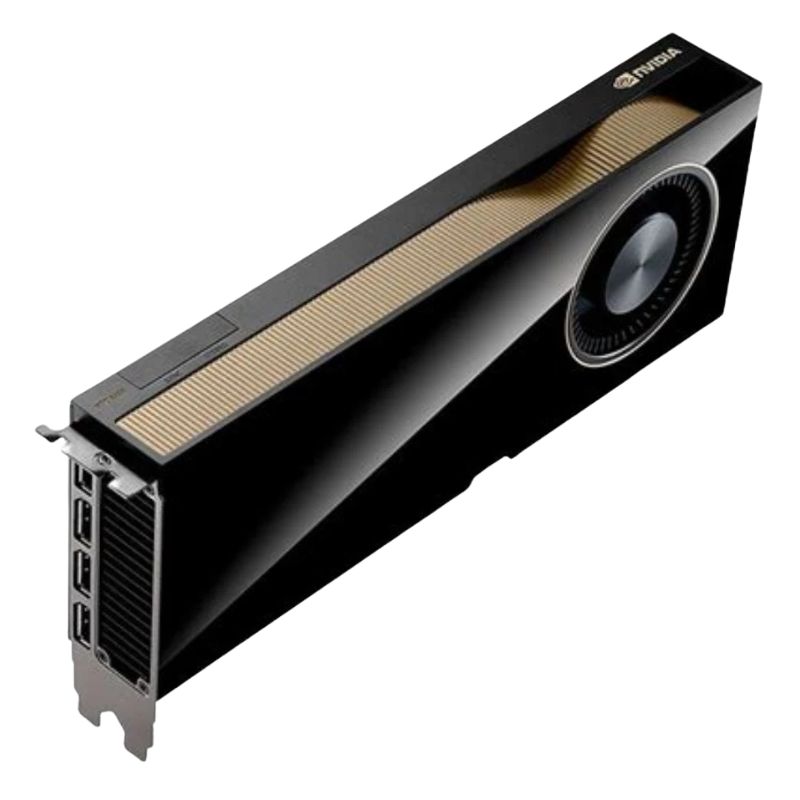


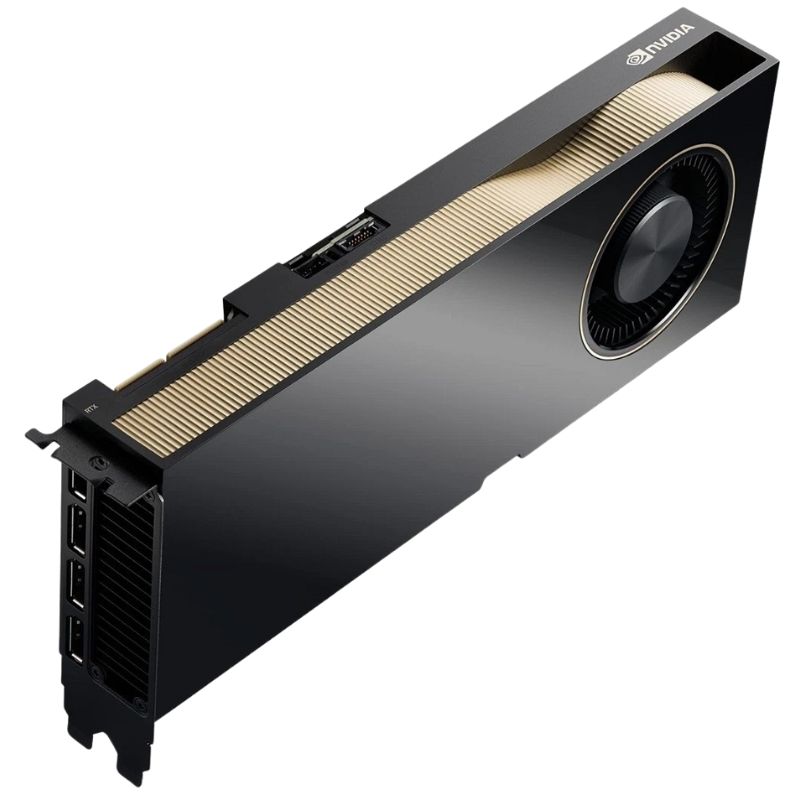
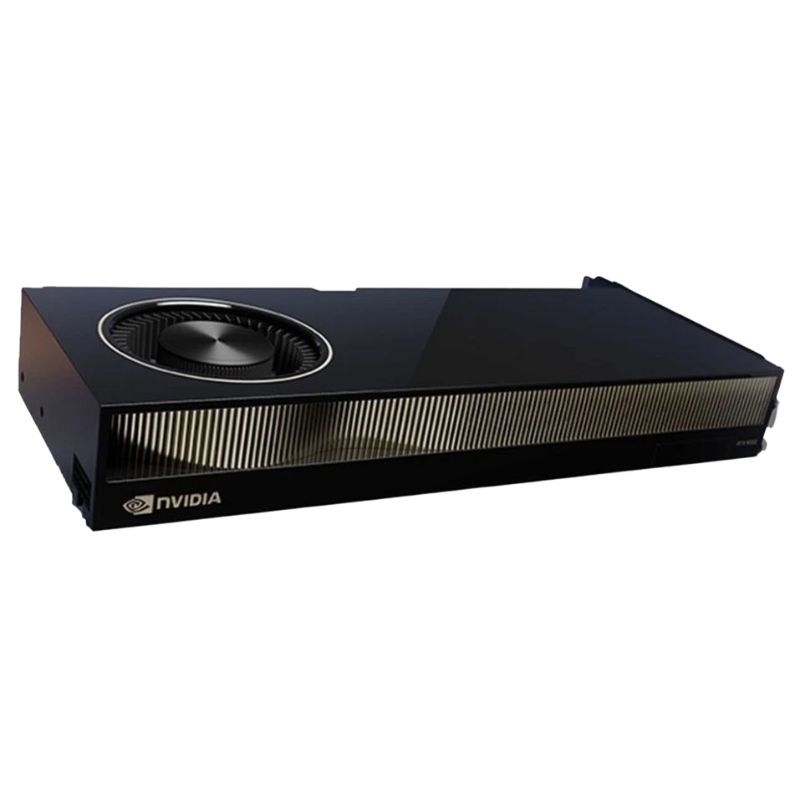
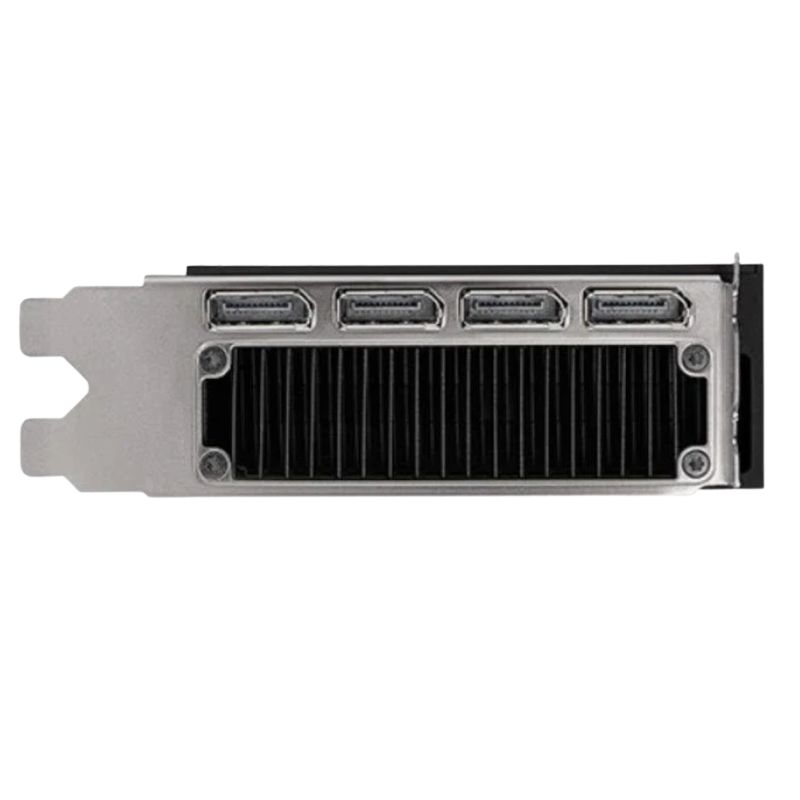
Nvidia 900-5G133-2200-000 RTX A6000 48GB GDDR6 ECC 2x Slot PCI-E 4.0 x16 Graphic Card. New Sealed in Box (NIB) with 3 Years Warranty. Call (Eta 2-3 Weeks)
Designed For professionals who demand uncompromising performance, the NVIDIA 900-5G133-2200-000 RTX A6000 48GB GDDR6 ECC represents a pinnacle of workstation graphics. Engineered on NVIDIA's Ampere architecture and built to accelerate creative workflows, simulations, deep learning, and high‑fidelity rendering, this two‑slot, PCIe 4.0 x16 card brings a rare combination of vast memory capacity, error‑correcting memory, and robust compute throughput. The following pages expand on the technical strengths, practical benefits, and real‑world use cases that define this category and its subcategory of professional‑grade GPUs.
What Distinguishes the RTX A6000 category most immediately is the 48GB of GDDR6 with ECC (Error Correcting Code). This memory configuration provides the headroom needed for massive datasets and complex scene assemblies without memory thrashing or off‑loading to slower host storage. ECC adds a layer of data integrity by detecting and correcting single‑bit memory errors, which is critical in long runs of scientific computation, numerical simulations, and large‑scale model training where silent data corruption can lead to incorrect results or reproducibility issues. For teams focused on deterministic output and high reliability, this is a nonnegotiable feature.
The 900-5G133-2200-000 48GB capacity enables multi‑large‑scene visualization, memory‑resident datasets for AI inferencing, and higher effective batch sizes during model training. When paired with PCI Express 4.0 x16 connectivity, the card supports higher data transfer rates to the host system compared to PCIe 3.0 designs, reducing bottlenecks for workloads that shuttle sizable amounts of data between CPU and GPU. This architecture is particularly beneficial in distributed workstation setups, remote rendering farms, and high‑performance compute nodes where maximizing throughput reduces wall‑time for complex tasks.
The 900-5G133-2200-000 RTX A6000 category leverages the Ampere GPU microarchitecture, which introduced second‑generation RT (Ray Tracing) cores and third‑generation Tensor cores. Those advancements produce substantial gains in real‑time ray tracing performance and mixed precision compute acceleration. Professionals using physically based rendering engines, interactive visualization, or AI‑assisted creative tools will find tangible speedups. Tensor cores also accelerate matrix math critical to training neural networks and to AI‑driven denoising, upscaling, and animation tools, making the A6000 a versatile choice for hybrid workloads.
With dedicated RT cores, the card performs ray/triangle intersection and BVH traversal more efficiently than general compute units. This means interactive viewport ray tracing in content creation applications, improved photorealistic previews, and faster final frame rendering in production pipelines. For workflows that mix rasterization and ray tracing, the A6000 category brings the performance balance needed to iterate quickly while preserving fidelity for final outputs.
For data scientists and machine learning engineers, the 900-5G133-2200-000 RTX A6000 category is attractive because of its large memory footprint and advanced Tensor core functionality. The card supports mixed‑precision formats, including FP16 and BFLOAT16, which increase effective throughput for many neural network architectures. Large model fine‑tuning, transformer‑style models, and complex computer vision workloads benefit from the ability to fit more parameters on‑chip or to raise the per‑GPU batch size for improved training efficiency.
When used for inference, the RTX A6000's memory headroom allows whole models, embeddings, or feature tables to remain resident on the GPU, reducing latency. This is useful for real‑time inference in interactive applications such as design tools, simulation visualizers, and live‑assistance systems. Moreover, its compute density translates into lower total‑cost‑of‑ownership in server racks by reducing the number of GPUs required to meet a given throughput target.
Two‑slot thermal designs in this category balance cooling performance with chassis compatibility. The A6000 class cards typically employ efficient blower or axial fans, heat pipes, and large fin stacks to manage thermal loads during sustained compute. Power delivery is engineered for stable voltage rails under maximum throughput, and system integrators should consider chassis airflow, power supply headroom, and auxiliary connector availability when selecting a compatible workstation platform. Proper cooling not only sustains peak performance but also prolongs component life and reduces thermal throttling during long renders or training epochs.
Because the 900-5G133-2200-000 RTX A6000 occupies two expansion slots, planners must account for neighboring slot availability and PCIe lane allocation, especially in multi‑GPU setups. Many professional workstations also include support for full‑height, full‑length cards; in compact or SFF systems, careful measurement and selection of airflow profile are essential. Power supplies should be rated to support the peak card consumption plus headroom for CPU and other peripherals to avoid unstable behavior under load.
For developers, the CUDA toolkit, cuDNN, TensorRT, and numerous SDKs create a full stack for building, optimizing, and deploying GPU-accelerated applications. Deep learning frameworks such as PyTorch and TensorFlow provide native support for CUDA and cuDNN to exploit the A6000's Tensor cores. Profiling tools like Nsight systems and Nsight compute allow teams to identify bottlenecks and tune kernels for higher utilization, lower latency, and better memory efficiency.
Benchmarks For the 900-5G133-2200-000 RTX A6000 category vary by workload, but common patterns emerge: ray tracing workloads show large throughput gains compared to prior generations, AI training sees increased effective throughput due to mixed precision acceleration, and memory‑bound tasks benefit from the 48GB frame buffer. In practical testing across rendering, simulation, and ML tasks, users observe faster iterations, reduced swap usage, and shorter time‑to‑result—advantages that compound in production environments where time is equivalent to cost.
Placed Against other professional offerings, the 900-5G133-2200-000 RTX A6000 sits at the high end of workstation solutions. It is both a successor to previous Quadro designs and a rival to accelerated compute cards designed primarily for data centers. Buyers who require both graphics fidelity and compute density often choose an A6000 class GPU because it bridges visualization and compute without sacrificing memory size or ISV certification.
The RTX A6000 category excels in content creation pipelines, including film VFX, architectural visualization, and product design. Artists can interactively manipulate scenes with high polygon counts and complex shading networks. Engineers can visualize large CAD assemblies and run GPU‑accelerated simulations with higher fidelity in shorter times. In broadcast and media production, real‑time compositing, color grading, and live previewing become more fluid, enabling faster creative decision making.
When deployed in multi‑GPU workstations or server nodes, RTX A6000 cards scale compute and memory resources for parallel rendering or distributed training. NVLink support in some professional variants allows high‑bandwidth, low‑latency GPU‑to‑GPU communication, enabling large models and data sets to be sharded across GPUs with higher efficiency. Integrators planning multi‑GPU systems should account for physical spacing, thermal coupling between cards, and software frameworks that support distributed execution.
This category is well suited for both on‑premise render farms and hybrid cloud workflows. Studios can keep latency‑sensitive tasks local on A6000 workstations while offloading burst rendering or large training jobs to cloud instances configured with comparable GPUs. Containerization and orchestration technologies make it straightforward to reproduce environments and to move workloads between on‑site GPUs and cloud providers without extensive reconfiguration.
Selecting the right workstation to pair with an RTX A6000 involves more than slot compatibility. CPU selection, PCIe lane allocation, memory capacity, and storage throughput must all match the intended workload. High core‑count CPUs assist in data preprocessing and in feeding multiple GPUs, while fast NVMe storage reduces I/O bottlenecks for dataset loading and swap scenarios. Network throughput and power delivery are additional considerations when integrating the card into professional environments.
Architects should verify mechanical clearance, power supply connectors and capacity, operating system and driver compatibility, and cooling pathways. For multi‑GPU configurations, ensure adequate spacing or active cooling between adjacent cards. Also consider software licensing models: some professional applications enable GPU‑accelerated features based on detected hardware, and licensing costs can influence the choice of a single high‑memory GPU versus multiple smaller GPUs.


 Contact Us
 Information
 Catalog
 Solid State Drives (SSD)
 Network Switches
 Hard Disk Drives
 HBA & Controllers
 PC & Servers
 PC & Server Memory
 CPU & Processors
 Network Routers
 Power Supplies
 Tape Drives & Libraries
 Network Devices
 Computer & Network Cables