(7% discount is applied at checkout)
Cart is empty
Your go-to destination for cutting-edge server products
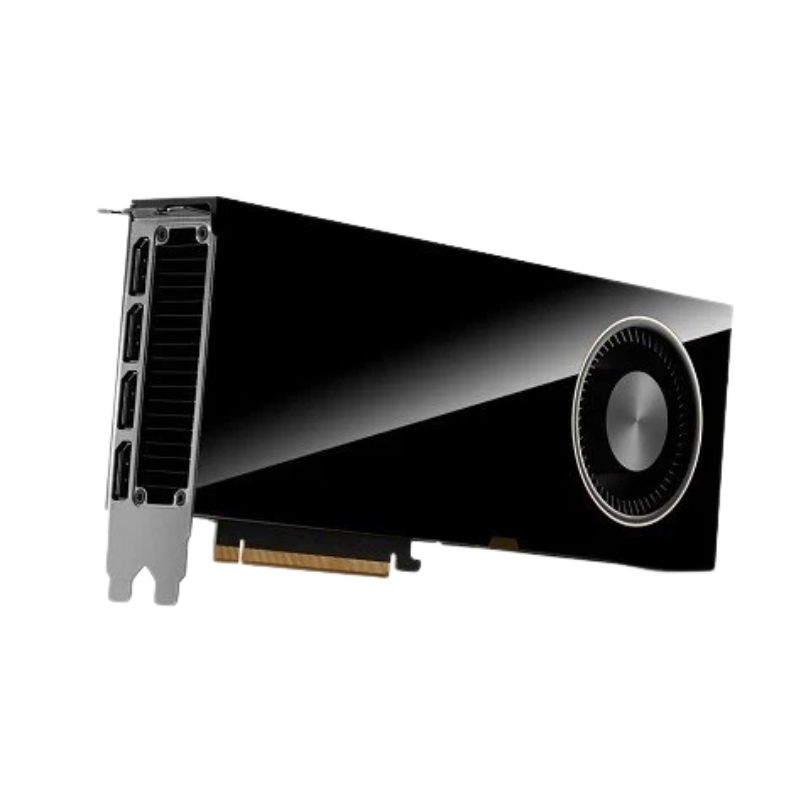


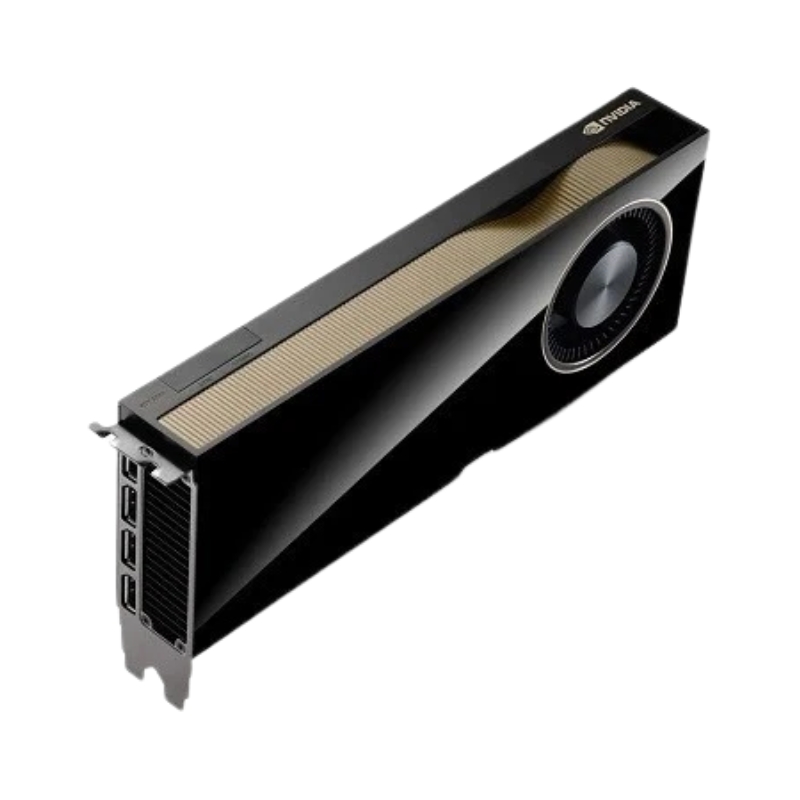
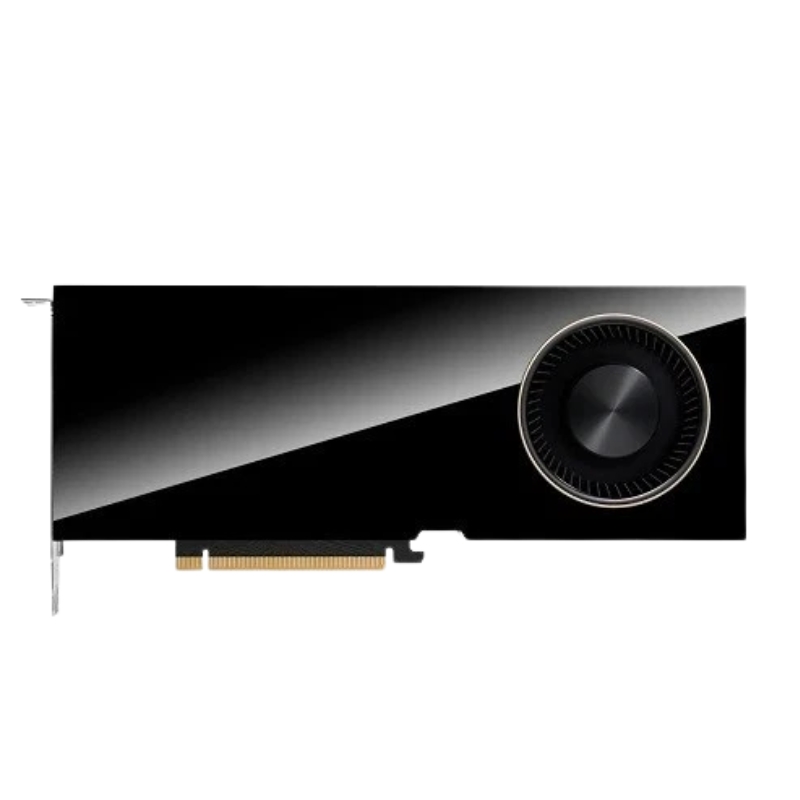
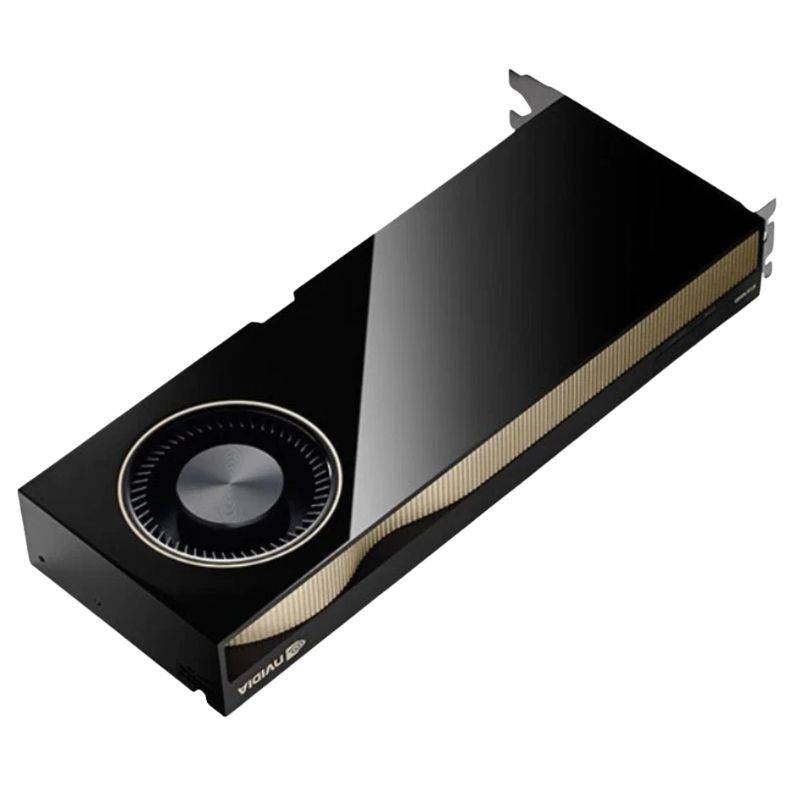
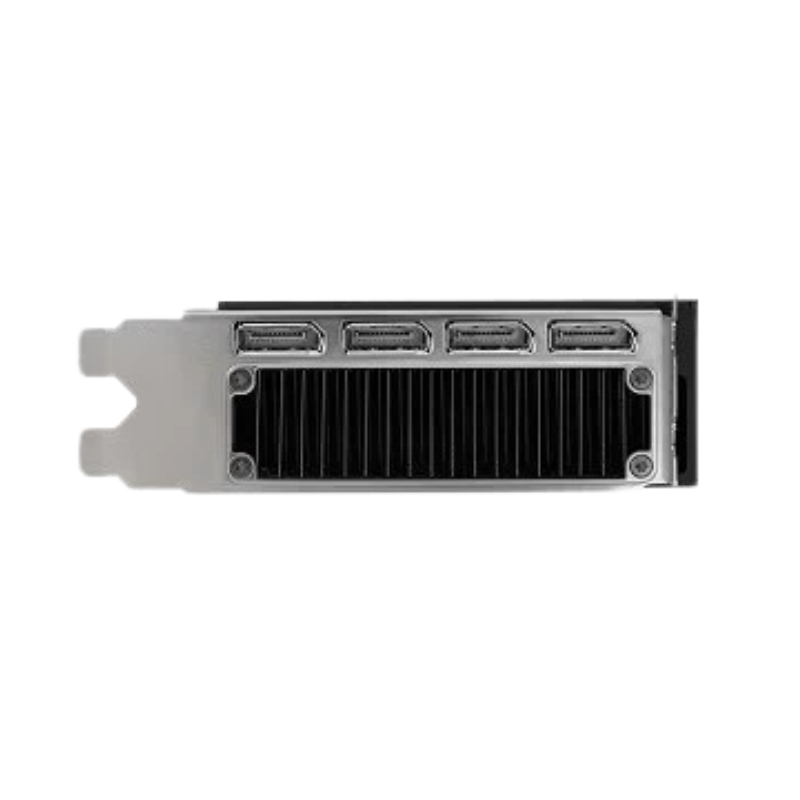
Nvidia 900-5G133-2250-000 Quadro RTX 6000 ADA FH 48GB GDDR6 PCI-E 4.0 x16 Dual Slot Graphic Card. New Sealed in Box (NIB) with 3 Years Warranty. Eta 2-3 Weeks. No Cancel No Return
The Nvidia 900-5G133-2250-000 Quadro RTX 6000 ADA FH 48GB GDDR6 is a category-defining professional graphics card class engineered for high-end content creation, real-time rendering, AI-accelerated workflows, simulation, and complex visualization. This continuous category description dives deep into the technical architecture, performance characteristics, compatibility, thermal and power considerations, software ecosystem, and the typical professional use cases where a Quadro RTX 6000 ADA FH shines.
Nvidia’s Quadro RTX series, with the 900-5G133-2250-000 RTX 6000 ADA FH variant, occupies a premium tier within the professional GPU market. Designed for full-height, dual-slot workstations and servers that require PCI-E 4.0 x16 bandwidth and enterprise-grade reliability, this category targets professionals who demand deterministic performance, long lifecycle support, and certification with major industry applications. The Quadro RTX 6000 ADA FH is positioned above mainstream consumer GPUs because it blends optimized drivers, extended memory capacity, advanced RT cores for hardware ray tracing, and Tensor cores for AI workloads, thereby catering to industries where stability, accuracy, and vendor-supported validation matter.
The architectural foundation of this category centers on Nvidia’s Ada Lovelace-class enhancements and a robust GDDR6 memory subsystem. With 48GB of GDDR6 memory, the card addresses memory-intensive tasks such as large-model neural network training, massive scene ray tracing, and multi-layer compositing without frequent out-of-core swapping. The dual-slot form factor supports improved cooling and allows the GPU to sustain heavy workloads for extended durations. PCI-E 4.0 x16 ensures maximal bandwidth for data movement between the CPU, storage, and GPU—critical for real-time visual analytics and interactive design sessions that access large datasets.
Memory bandwidth and capacity are decisive attributes for buyers evaluating workstation GPUs. The Quadro RTX 6000 ADA FH’s large memory pool enables complex 3D scenes, volumetric datasets, and large texture libraries to be resident in GPU memory, minimizing CPU–GPU data transfers and reducing latency. For professionals working with 8K textures, dense point clouds, or multi-channel simulation outputs, the 48GB GDDR6 allocation means fewer compromises on quality, faster iteration cycles, and better utilization of GPU-accelerated libraries.
Hardware RT cores and Tensor cores are integral to this product category. The 900-5G133-2250-000 RTX 6000 ADA FH leverages dedicated RT cores to accelerate real-time ray-traced reflections, global illumination, and shadows, enabling interactive visualization with photorealistic lighting. Tensor cores deliver matrix-multiply acceleration for AI-driven denoising, upscaling, and inference tasks. This combination empowers compositors, VFX artists, and architects to run production-quality renders interactively and execute AI-augmented operations—like intelligent denoising or super-resolution—on large inputs efficiently.
When evaluating cards in this category, buyers should consider synthetic benchmarks alongside real-world application tests. Synthetic measures such as FP32 throughput and memory bandwidth provide a generalized perspective, but industry-relevant performance is best judged using application-specific benchmarks in software like Autodesk Maya, 3ds Max, Blender, Adobe After Effects, and Dassault Systèmes applications. Workstation-class drivers and ISV certifications frequently improve performance and reliability for those applications compared to consumer counterparts, making certified benchmarks a trustworthy reference point for procurement decisions.
One of the defining characteristics of the Quadro category is Independent Software Vendor (ISV) certification. These certifications confirm that the GPU and its driver stack have been tested with professional software, guaranteeing predictable performance and compatibility. For enterprises deploying standardized workstations across teams, ISV certification reduces integration risk and supports SLA-driven operations. Prospective buyers should check the certification matrix for specific versions of CAD, DCC, and simulation software to ensure compatibility with the RTX 6000 ADA FH.
Thermal engineering is a central element of dual-slot, full-height cards. The 900-5G133-2250-000 Quadro RTX 6000 ADA FH typically employs a sophisticated cooler design—heat pipes, vapor chambers, and high-capacity fans—to dissipate heat generated by high GPU clocks and dense compute loads. Thermal headroom enables consistent sustained performance under heavy computational loads, preventing thermal throttling and ensuring predictable output for long rendering passes. Power delivery design is equally important; robust VRMs and multi-pin power connectors support the higher wattages demanded by this class of GPU, and system integrators must ensure adequate PSU headroom and chassis ventilation when specifying systems.
Form-factor compatibility is non-negotiable for professional deployments. The dual-slot profile fits into most standard workstation and server chassis that support full-height PCI-E cards, but integrators should confirm slot spacing and clearance with multi-GPU setups. Rack-mount servers used for rendering farms or GPU-accelerated compute clusters may require specialized airflow channels or blower-style variants to maintain chassis-level cooling efficiency. When planning dense GPU deployments, thermal modeling and power distribution analysis are recommended to ensure sustained performance across all nodes.
Virtual GPU (vGPU) technologies allow the Quadro class to be partitioned and allocated to virtual machines, enabling remote creative workflows and secure remote desktop environments where users access workstation-class performance from thin clients. For organizations adopting hybrid cloud strategies, this category’s GPUs can be integrated into on-premises render farms or used to accelerate edge inference workloads. Support for Nvidia virtualization stacks and compatibility with popular hypervisors improves flexibility for distributed teams and research groups requiring centralized compute resources.
The 900-5G133-2250-000 Quadro RTX 6000 ADA FH category serves an extensive range of use cases that span creative industries, scientific research, industrial design, and enterprise analytics. In creative production, VFX studios rely on the GPU’s ray tracing and AI features to accelerate rendering and compositing pipelines. Architects and visualization professionals use large memory capacity to hold complex BIM models and high-fidelity textures for client presentations. In scientific domains, researchers leverage GPU acceleration for visualizing volumetric datasets, accelerating finite element analysis post-processing, and running ML inference on high-resolution inputs. Industrial simulation and digital twin deployments use the GPU’s compute and memory resources to model physical systems in near real-time.
While not a data-center-only accelerator, this Quadro-class GPU offers meaningful advantages for ML practitioners who require local, workstation-level training and inference capabilities. Large VRAM supports training medium-to-large models on-device without relying on distributed training, while Tensor cores accelerate mixed-precision computations. Data scientists can experiment with large batch sizes and higher-resolution inputs, streamlining the transition from prototyping to production-ready models.
Purchasing and deploying GPUs in the Quadro class involves lifecycle planning to maximize ROI. Organizations should consider warranty terms, extended support options, and driver maintenance cycles. Lifecycle planning also includes spare parts availability, firmware update policies, and compatibility matrices for future OS and application updates. For teams standardizing on an enterprise GPU, creating a validated hardware profile and a repeatable build process ensures consistency across machines and reduces time spent troubleshooting environment-specific issues.
Environmental compliance and regulatory considerations are increasingly important. Organizations should verify the GPU and its components meet regional regulatory requirements, such as RoHS and WEEE directives, and confirm declarations for electromagnetic compatibility where applicable. Additionally, consider the environmental impact of cooling and power consumption—deploying more efficient systems and consolidating workloads into GPU-dense servers can reduce overall energy use and carbon footprint for large-scale operations.


 Contact Us
 Information
 Catalog
 Solid State Drives (SSD)
 Network Switches
 Hard Disk Drives
 HBA & Controllers
 PC & Servers
 PC & Server Memory
 CPU & Processors
 Network Routers
 Power Supplies
 Tape Drives & Libraries
 Network Devices
 Computer & Network Cables