(7% discount is applied at checkout)
Cart is empty
Your go-to destination for cutting-edge server products
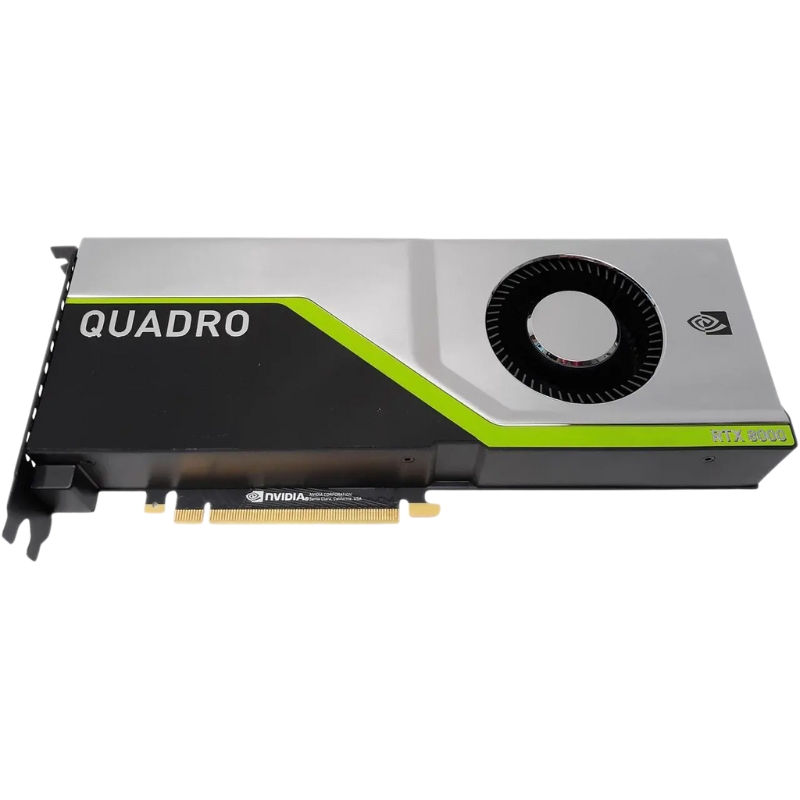


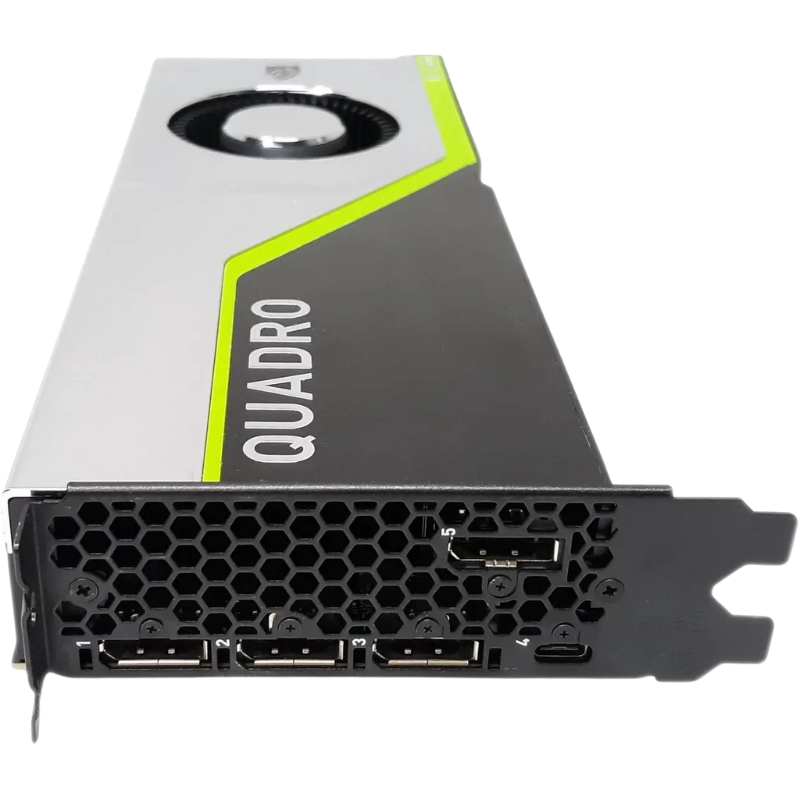
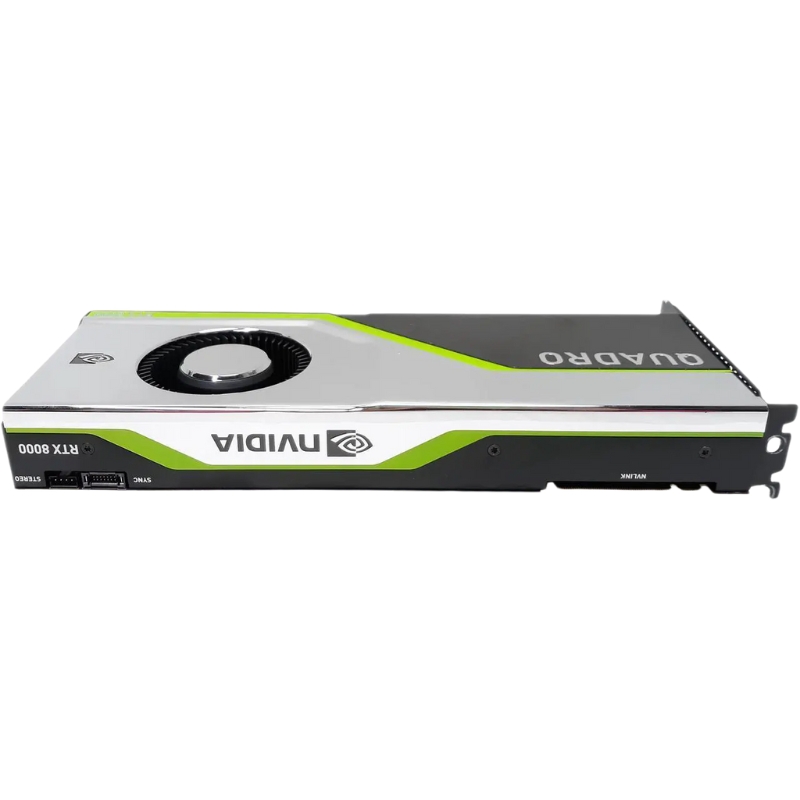
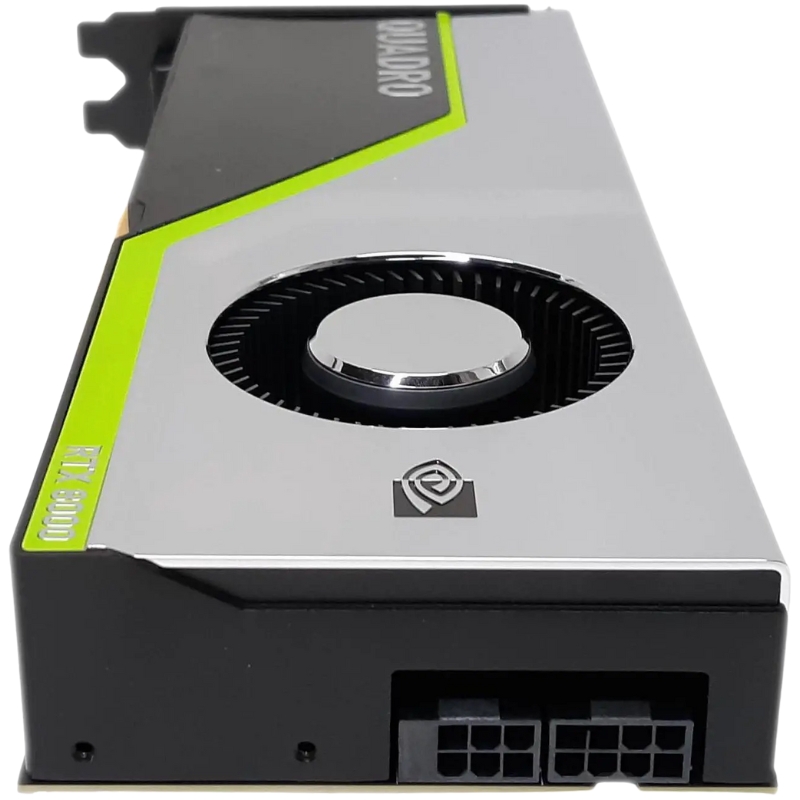
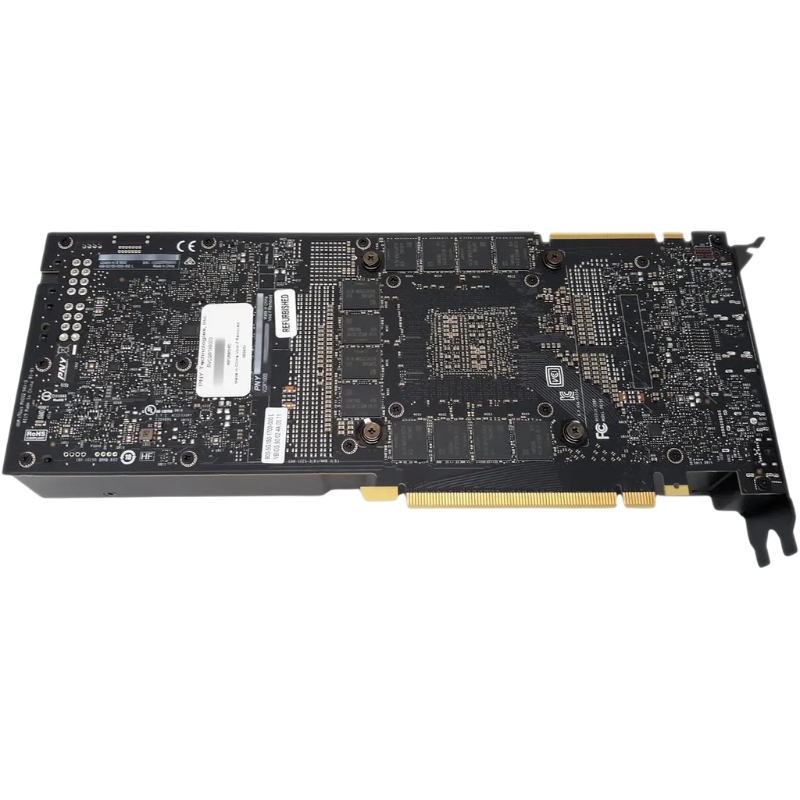
Nvidia 900-5G150-1700-000 Quadro RTX 8000 Turing 48GB GDDR6 ECC PCI-E 3.0 x16 Dual Slot Graphics Card. Excellent Refurbished with 1 year replacement warranty
The Nvidia 900-5G150-1700-000 Quadro RTX 8000 Turing 48GB GDDR6 ECC PCI-E 3.0 x16 Dual Slot Graphics Card represents a class-leading professional GPU engineered for creative studios, engineering firms, research labs, and enterprise workstations that demand uncompromising memory, precision, and compute throughput. Designed around Nvidia's Turing architecture and built for professional visualization, the Quadro RTX 8000 is purpose-built to accelerate ray-traced rendering, AI-augmented workflows, large-scale simulation, and complex 3D scenes that simply cannot fit on lesser cards. This category focuses on the Quadro RTX 8000 as a workstation-class product and on the broader subcategory of ultra-high-memory professional GPUs used for advanced rendering, scientific modeling, and data-intensive visualization.
Engineered to deliver sustained throughput for professional applications, the Quadro 900-5G150-1700-000 RTX 8000 leverages hardware-accelerated ray tracing, dedicated AI acceleration, and large ECC-protected memory to enable workloads that span digital content creation, architecture, manufacturing, and scientific visualization. The Turing architecture brings dedicated RT cores to handle bounding volume hierarchy traversal and ray intersection calculations, dramatically reducing the CPU burden and enabling real-time or near-real-time ray-traced previews that accelerate creative iteration. Tensor cores provide matrix-acceleration that speeds denoising, AI-based upscaling, and inference tasks, letting artists and engineers incorporate machine learning techniques into their pipelines without sacrificing interactivity.
One of the defining attributes of this category is the enormous 48GB of GDDR6 memory with ECC support. The large frame buffer lets users handle massive scenes, multi-layer compositing, and extremely high-resolution datasets—ranging from multi-scan medical imagery and geological models to multi-gigapixel textures and complex architectural assemblies. ECC (Error Correcting Code) memory adds another layer of reliability by detecting and correcting memory errors on the fly, which is critical for long-running render farms, simulation jobs, and scientific calculations where bit-for-bit accuracy and reproducibility matter. For enterprises where data integrity and repeatable results are non-negotiable, ECC-equipped GPUs in this category provide measurable risk reduction.
Dual slot form factor designs balance cooling efficiency and compatibility. The Quadro 900-5G150-1700-000 RTX 8000 category emphasizes robust thermal solutions that sustain peak performance over extended render passes. Workstation chassis, engineered to accept dual-slot cards, typically pair the GPU with targeted airflow patterns and chassis-level thermal controls to maintain acoustics suitable for studio and office environments. The overall thermal profile is tuned to prioritize consistent clocking under prolonged load, avoiding thermal throttling and preserving predictable frame-rate and time-to-solution characteristics for professional users.
Developers and studios in this category benefit from Nvidia's broad software stack: SDKs for real-time ray tracing, AI acceleration, and visualization allow deep integration into custom tools and pipelines. APIs such as Vulkan, DirectX, OpenGL, and CUDA are commonly used across the industry to build high-performance rendering engines and scientific compute kernels. Nvidia's software tooling, including Nsight for debugging and profiling and OptiX for programmable ray tracing, enables teams to squeeze maximum performance and reliability from hardware while validating code paths across heterogeneous compute resources.
The Quadro 900-5G150-1700-000 RTX 8000 category is aimed at professionals whose daily work requires exceptional memory capacity combined with predictable, high-end compute. Primary use cases include offline and interactive ray-traced rendering for feature film VFX and animation, GPU-accelerated simulation and machine learning model training for small-to-medium research groups, and complex CAD assemblies that must be visualized and manipulated in real time. The card is also favored by scientific researchers who visualize large volumetric datasets, by medical imaging teams that process multi-series scans, and by architectural visualization professionals rendering ultra-high-resolution panoramas and VR-ready experiences.
For creative studios, the Quadro 900-5G150-1700-000 RTX 8000 enables designers to work with larger assets and iterate faster. Artists can load more geometry, textures, and displacement maps without constantly swapping data to slower storage tiers, which reduces interruptions and maintains creative flow. When rendering high-fidelity sequences, the card's GPU acceleration shortens frame render times for both offline and interactive pipelines. Integrated AI denoising and super-resolution tools let teams use fewer passes while achieving final-frame quality, reducing time-to-delivery on tight production schedules.
Engineers using finite-element analysis, computational fluid dynamics, or multi-physics simulations often need to visualize results across large meshes and time steps. The Quadro RTX 8000 supports these workflows by hosting larger datasets on the GPU and enabling rapid exploration of simulation outputs. In product design, assembly-level visualization benefits from the card’s capacity to handle tens of millions of polygons with fewer performance compromises, which is essential for complex mechanical systems or intricate architectural models.
Although not positioned as a pure data-center accelerator, the Quadro 900-5G150-1700-000 RTX 8000 is a compelling option for development, prototyping, and inference. Researchers and data scientists can experiment with medium-scale models, leveraging tensor cores to accelerate matrix operations and mixed-precision training. The GPU’s large memory lets teams iterate on models that require substantial parameter storage or host datasets in-GPU for faster I/O during training or inference cycles. This makes the category attractive to small AI labs and studios integrating AI into creative tools. For production-scale training, organizations typically combine workstation GPUs with larger dedicated server-class clusters, but Quadro-level cards provide a flexible bridge between development and deployment.
Integrating a Quadro RTX 8000 requires planning around system power delivery, slot availability, and chassis size. Power budgets must account for peak draw under full GPU utilization, and PSUs should include appropriate connectors with headroom for stable operation. Because these cards occupy two PCIe slots, system builders must ensure adjacent slots for expansion cards are considered in the layout. The PCI-E 3.0 x16 interface provides broad compatibility with many workstation motherboards; however, users should verify BIOS and chipset support for professional GPU configurations, especially in multi-GPU or NVLink-enabled setups.
For workflows that benefit from pooled memory or aggregate compute, NVLink-compatible variants in this category enable high-bandwidth interconnects between multiple GPUs. NVLink allows memory address spaces to be shared and data to move between GPUs faster than traditional PCIe peer-to-peer transfers, which is valuable for distributed rendering, multi-GPU simulation, and large-scale model inference. Systems configured for multi-GPU must consider cooling, power, and driver-level optimizations to ensure scalable performance across cards.
Professional pipelines built around the Quadro 900-5G150-1700-000 RTX 8000 typically pair GPUs with high-performance storage to avoid I/O bottlenecks. Fast NVMe devices and RAID configurations are common in studios to stream multi-layer EXR sequences and high-resolution textures without stalls. Network-attached storage with 10GbE or faster connectivity is frequently used for team environments, enabling multiple artists to access shared project assets while each workstation uses the GPU to manipulate local copies or cached subsets for responsiveness.
To extract maximum value from the Quadro 900-5G150-1700-000 RTX 8000 category, organizations should adopt a holistic optimization approach: match driver versions to ISV certifications, tune system BIOS for workstation workloads, and adopt application-specific rendering settings that balance quality and iteration speed. Asset management policies that use streaming, LOD (level of detail) techniques, and texture compression reduce memory pressure while maintaining visual fidelity. For studios with render farms, hybrid strategies that offload final-frame rendering to dedicated GPU render nodes while using Quadro workstations for authoring and look development can optimize throughput and cost-effectiveness.
Working closely with ISV documentation is critical. Many professional applications expose GPU- and memory-related settings that can be tuned to improve performance. Adjusting tile sizes, enabling GPU caching, or leveraging application-level distributed rendering support will increase GPU utilization and reduce render times. Profiling tools can reveal bottlenecks in shader complexity, memory bandwidth, or CPU-GPU synchronization, enabling teams to address specific performance hotspots.
Maintaining a stable thermal environment is essential for predictable performance. Inverse relationships between temperature and sustained clock rates mean that good chassis airflow and adequate intake/exhaust balance translate into lower render times and fewer thermal-induced slowdowns. Many workstation environments adopt sound-dampening enclosures and controlled ambient temperatures to keep noise levels acceptable while preserving thermal headroom for high-power GPUs during long jobs.


 Contact Us
 Information
 Catalog
 Solid State Drives (SSD)
 Network Switches
 Hard Disk Drives
 HBA & Controllers
 PC & Servers
 PC & Server Memory
 CPU & Processors
 Network Routers
 Power Supplies
 Tape Drives & Libraries
 Network Devices
 Computer & Network Cables