(7% discount is applied at checkout)
Cart is empty
Your go-to destination for cutting-edge server products
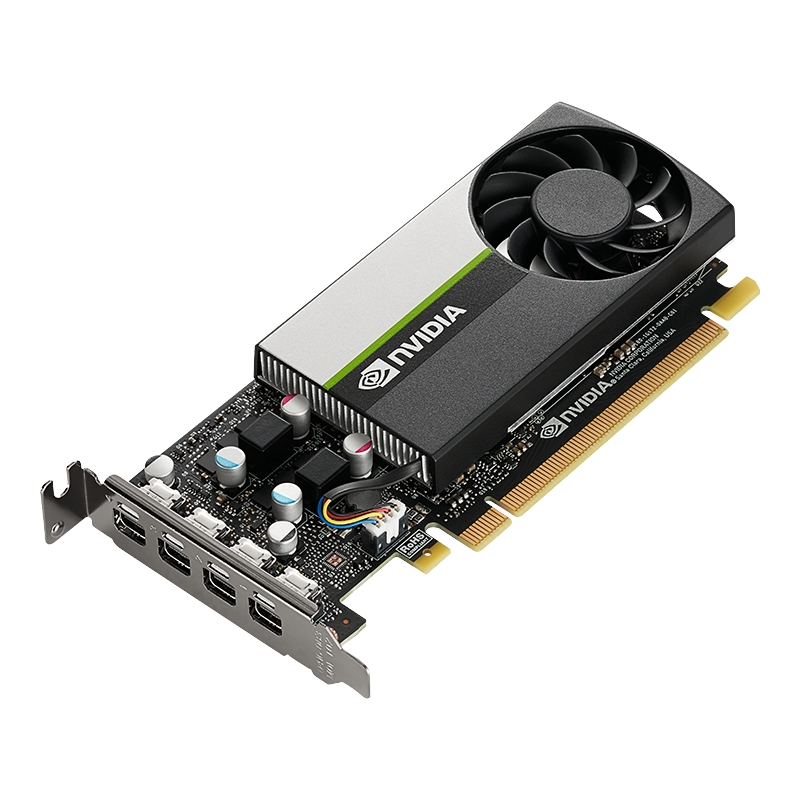


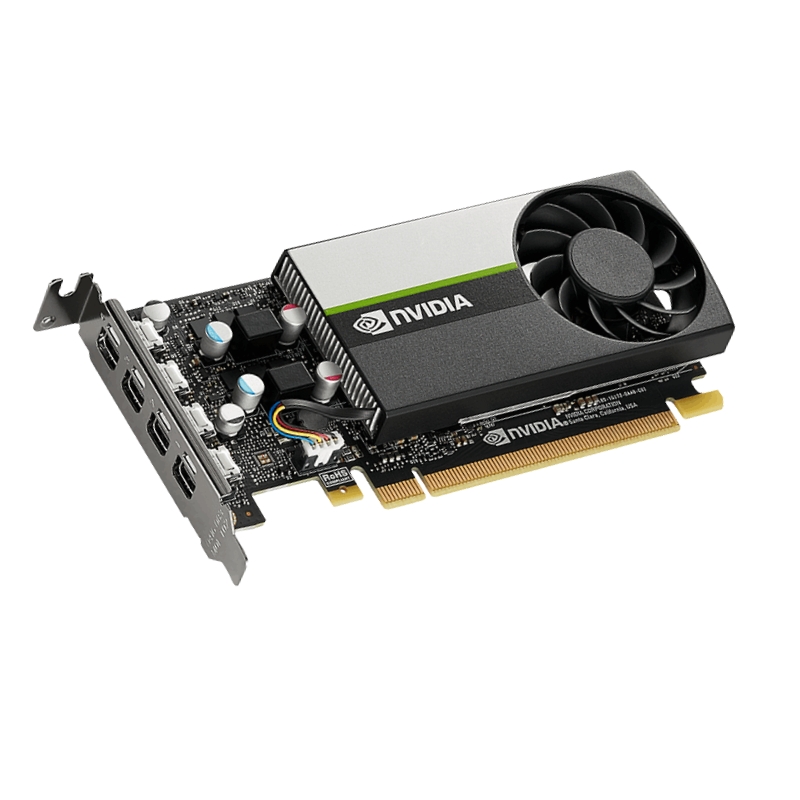
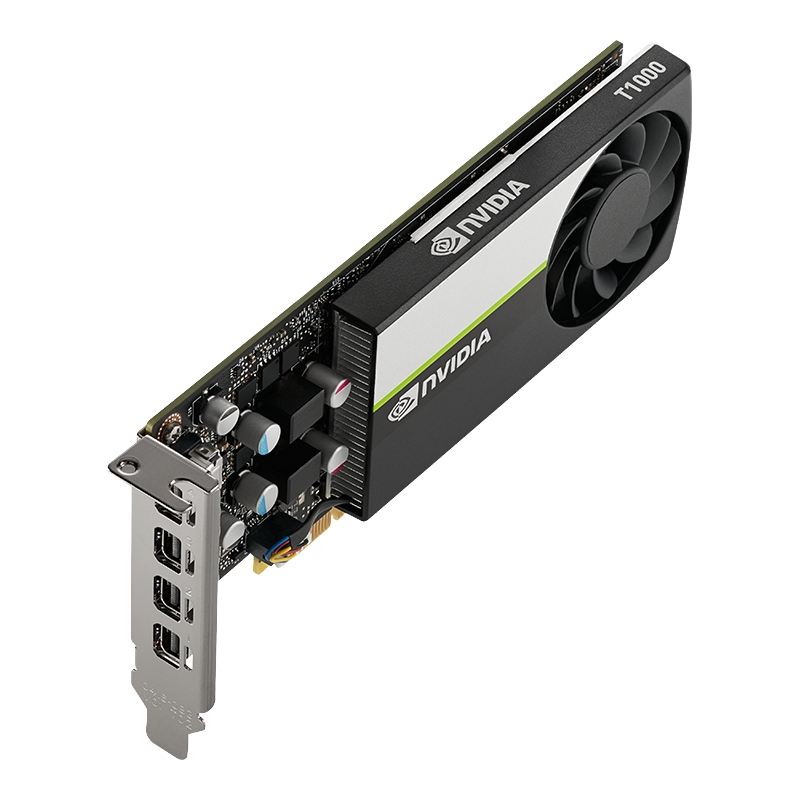
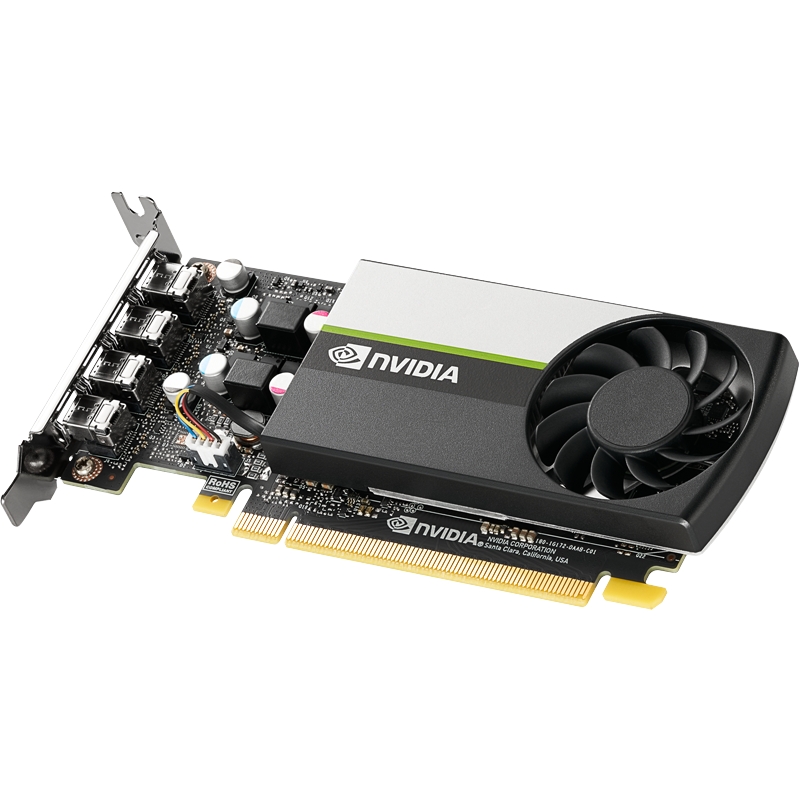
Nvidia 900-5G172-070-000 T1000 8GB 4MDP 4 MB L2 PCI-E 3.0 x16 Graphics Card. New Sealed in Box (NIB) with 3 Years Warranty - HPE Version
The Nvidia 900-5G172-070-000 T1000 8GB is a professional-class, compact workstation graphics card designed for users who need reliable 3D performance, multi-display support, and power-efficient operation in small form-factor workstations and enterprise desktops. This category covers the T1000 family and its immediate subcategories — single-slot and low-profile workstation GPUs, mini DisplayPort-equipped models (4mDP), and variants optimized for PCI-Express 3.0 x16 compatibility. The T1000 8GB sits between mainstream consumer GPUs and high-end enterprise accelerators, making it a top choice for CAD, DCC (digital content creation), video editing, and multi-monitor productivity environments where certified drivers and ISV support matter.
Equipped with 8GB of GDDR6 frame buffer memory, the 900-5G172-070-000 T1000 8GB provides ample capacity for medium-complexity 3D models, extensive timelined video editing projects, and large multi-layered compositions in professional applications. The 8GB buffer reduces texture streaming stalls and enables higher viewport fidelity in CAD and BIM software. For visual workloads that require both precision and responsiveness, GDDR6’s higher bandwidth contributes to smoother manipulation of dense scenes compared with older GDDR5-based solutions.
The 900-5G172-070-000 reference to 4 MB L2 indicates the on-die cache capacity that helps accelerate memory access patterns and reduce latency for frequently used data, which is especially beneficial in GPU-accelerated viewport rendering and shader-heavy workloads. Combined with the Turing-based architecture's CUDA cores optimized for single-precision operations, this configuration balances compute and bandwidth to deliver predictable, low-latency performance in professional applications while keeping power consumption modest.
Built for a PCI-Express 3.0 x16 slot, the T1000 8GB offers plug-and-play compatibility with a vast range of workstations and enterprise desktops. Although PCI-Express 4.0 is available on newer platforms, the T1000’s PCI-Express 3.0 interface still provides more than enough bandwidth for the card’s intended professional use cases. The compact single-slot or low-profile design of many T1000 variants ensures installation in small chassis without sacrificing cooling or display output functionality.
The 900-5G172-070-000 4mDP configuration enables simultaneous connection of up to four high-resolution displays, making this card ideal for traders, software developers, GIS professionals, and designers who require extensive screen real estate. Mini DisplayPort outputs support high refresh rates and resolutions (including 4K and beyond depending on the output version and cable/adaptor used), and they are well suited for daisy-chaining with DisplayPort MST-capable monitors.
For mechanical CAD, architecture, and engineering applications, the T1000 8GB hits a sweet spot by providing certified driver support from Nvidia and ISV application vendors. This ensures reliability in viewport rendering, selection and manipulation of assemblies, and accurate display of shading and textures. Users working with medium-sized assemblies will appreciate the balance of memory and interactive performance, while those with extremely large models may consider higher-tier professional GPUs — but the T1000 often delivers the best cost-to-performance ratio for departmental workstations.
Video editors and digital artists working in Premiere Pro, DaVinci Resolve, After Effects, or similar applications will find the T1000 8GB effective for timeline scrubbing, GPU-accelerated effects, and color grading tasks. The multiple mini DisplayPort outputs allow for flexible monitoring setups — for example, a color-accurate reference monitor combined with preview and asset management screens. For heavy multi-stream 8K editing or hardware-accelerated transcoding at the highest professional levels, more powerful cards exist, but for 4K workflows and mixed HD/4K timelines the T1000 provides reliable performance.
Traders and control room operators need stable multi-monitor solutions capable of driving many high-resolution panels simultaneously. The T1000 8GB’s 4mDP outputs and compact form factor make it an efficient option to maximize display count within dense rack-mounted or compact desktop environments while keeping power draw and heat generation under control.
While not a compute powerhouse compared with larger Nvidia Quadro or Data Center GPUs, the T1000 can accelerate light CUDA workloads, small model training, and GPU-accelerated preprocessing tasks. Researchers and developers performing prototyping, inferencing, or GPU-backed simulation on a budget may use the T1000 as a capable development card, taking care to match expectations around double-precision performance and large-scale training workloads.
Compared to higher-tier workstation cards, the T1000 is more power- and cost-efficient but lacks the deep memory capacities, tensor core counts, and engineering features found on top-of-line models. For teams or individuals who need certified performance for everyday professional workflows, the T1000 is an economical option. For large-scale simulation, real-time ray tracing at production resolutions, or extremely large dataset handling, stepping up to the next generation of professional GPUs will yield noticeable gains.
One of the cardinal design goals for the T1000 family is to operate within constrained thermal envelopes. The single-slot, blower-optimized or low-profile fans are tuned to provide sufficient airflow in small chassis while minimizing noise — a critical consideration for office environments and audio/video studios. Power draw remains modest compared with higher-end workstation cards, reducing PSU upgrade requirements and maintaining cooler system temperatures under sustained workloads.
Choose between full-height single-slot, low-profile, and blower-style variants depending on chassis constraints and airflow architecture. Low-profile cards are suitable for small form factor desktops, while blower-style coolers can be beneficial in rack-mounted or compact systems where exhaust routing is critical.
Confirm that the 4mDP configuration meets your monitor array needs and that you have the necessary adapters for DVI, HDMI, or legacy displays if required. If you plan on driving multiple 4K monitors, verify the card’s firmware and monitor EDID compatibility to avoid handshake issues.
Optimize system memory, storage I/O, and CPU configuration — the T1000 excels when it is not starved for data. Fast NVMe storage for large project files, adequate system RAM to avoid swapping, and balanced CPU cores help the GPU sustain high utilization during rendering and viewport navigation.
Monitor case temperatures and ensure unobstructed airflow for multi-card deployments. In rack environments, consider directed airflow chassis and ensure that intake and exhaust airflow paths are not compromised by other components. Periodic dust inspection and cleaning will extend the life and consistency of the card in production environments.
ISV certification is a major selling point for enterprise customers. The T1000 8GB is validated for many professional applications, ensuring that the card’s drivers and firmware are tuned for stable performance and deterministic behavior—critical for engineering teams and production studios.
Workstation deployments benefit from predictable lifecycles; the T1000’s combination of driver long-term support and modest power/thermal behavior makes it easier for IT teams to plan upgrades and refresh cycles without major infrastructure changes. Consider procurement strategies that factor in spares, warranty overlap, and driver rollback plans for critical systems.


 Contact Us
 Information
 Catalog
 Solid State Drives (SSD)
 Network Switches
 Hard Disk Drives
 HBA & Controllers
 PC & Servers
 PC & Server Memory
 CPU & Processors
 Network Routers
 Power Supplies
 Tape Drives & Libraries
 Network Devices
 Computer & Network Cables