(7% discount is applied at checkout)
Cart is empty
Your go-to destination for cutting-edge server products
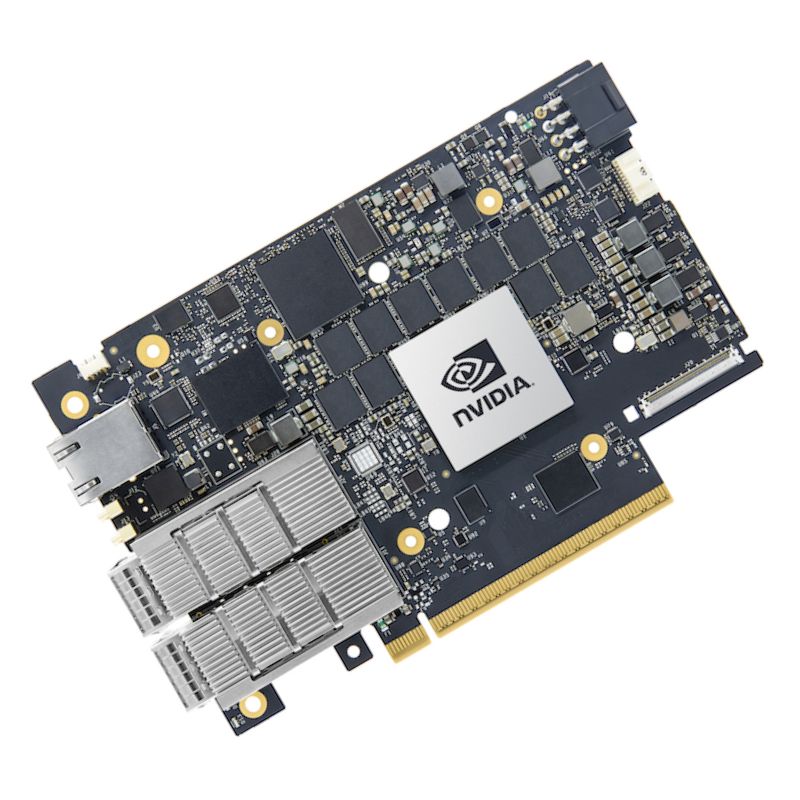


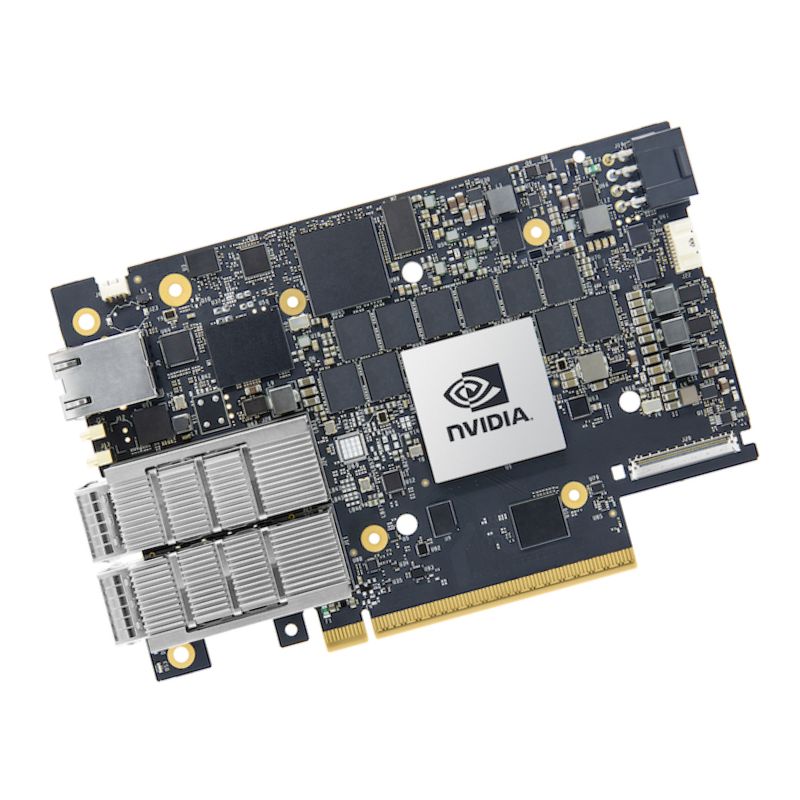
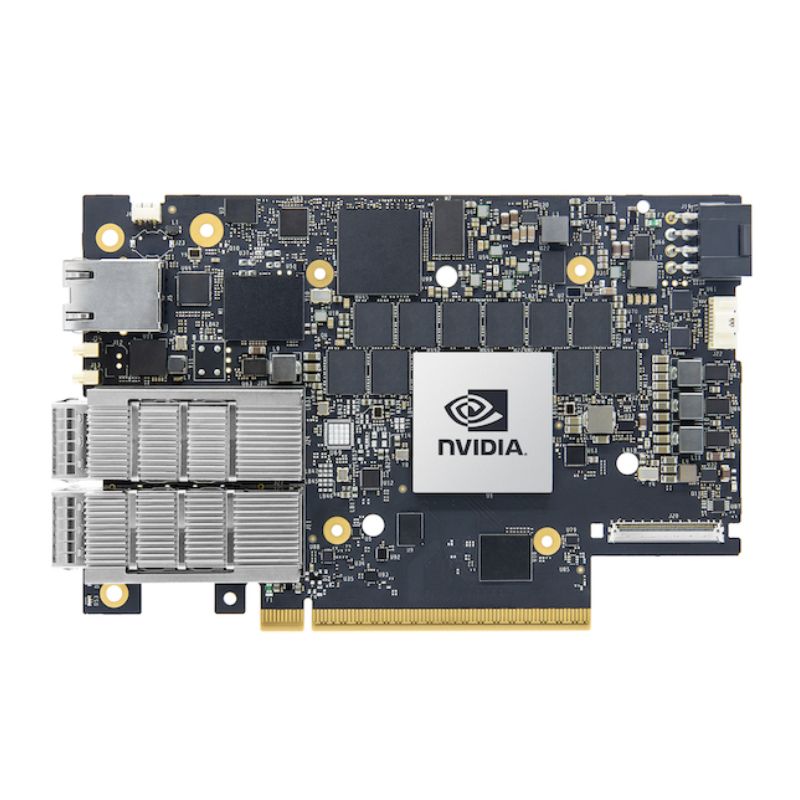
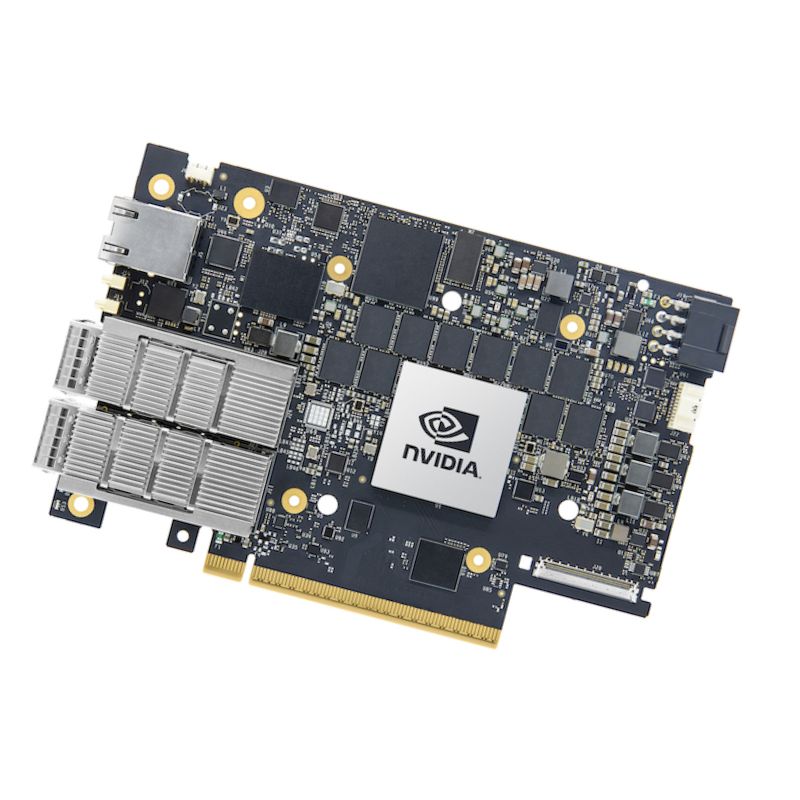
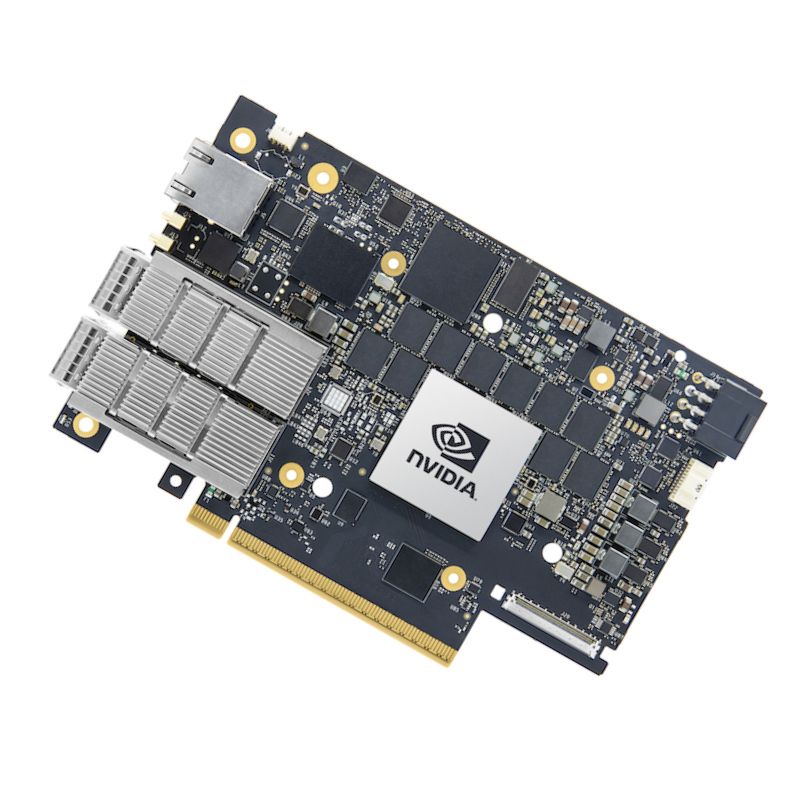
Nvidia 900-9D3B6-00CV-AA0 Bluefield-3 P-Series B3220 6 Arm-Cores PCIE 5.0 X16 200 Gigabit QSFP112 X 2 Network Adapter. Excellent Refurbished with 1 Year Replacement Warranty
The Nvidia BlueField-3 P-Series B3220 SmartNIC is engineered for next-generation data centers that demand extreme throughput, low latency, and advanced offload capabilities. Built on the BlueField-3 SoC architecture, this network adapter delivers accelerated networking, security, and storage workloads while reducing CPU overhead.
The Nvidia 900-9D3B6-00CV-AA0 Bluefield-3 P-Series B3220 Network Adapter represents a specialized category of high-performance infrastructure acceleration hardware designed for modern data centers, cloud service providers, hyperscale environments, and enterprise networking backbones. This category focuses on intelligent network interface controllers (SmartNICs) and data processing units (DPUs) that offload, accelerate, and isolate networking, storage, and security workloads directly at the edge of the server. BlueField-3 P-Series adapters are positioned at the intersection of compute, networking, and security, enabling organizations to redefine server architecture by shifting infrastructure services away from host CPUs.
Within this category, products are designed not merely to move packets but to act as programmable, autonomous processing engines. The BlueField-3 P-Series B3220, powered by six ARM cores, belongs to a class of DPUs engineered to handle line-rate packet processing, encryption, telemetry, virtualization, and storage acceleration at extreme throughput levels. The use of PCI Express 5.0 x16 ensures that the adapter can sustain massive bidirectional bandwidth between the host system and the network, making it suitable for next-generation server platforms that demand deterministic performance and low latency under heavy load.
A defining characteristic of this category is full adoption of PCI Express 5.0 x16 connectivity. PCIe 5.0 doubles the per-lane throughput of PCIe 4.0, enabling up to 128 GT/s of aggregate bandwidth in a x16 configuration. This level of host interconnect performance is essential for advanced DPUs such as the BlueField-3 P-Series, which must simultaneously manage networking, cryptographic processing, virtualization, and storage services without becoming a bottleneck.
In practical deployments, PCIe 5.0 enables the adapter to operate as a true peer to CPUs and GPUs rather than a subordinate peripheral. This category of adapters is frequently deployed in GPU-accelerated clusters, AI training systems, and NVMe-over-Fabrics environments where massive data movement occurs between compute nodes. The PCIe 5.0 interface ensures that packet processing, RDMA operations, and storage I/O can be sustained at line rate even when both QSFP112 ports are operating at full 200 Gigabit speeds.
System designers selecting products in this category benefit from reduced contention on host CPU resources. By offloading network and storage processing to the adapter, PCIe bandwidth is utilized more efficiently, and host CPUs are freed to focus on application-level workloads. This architectural shift is a central theme of the BlueField-3 P-Series category and a key differentiator compared to traditional NICs.
The inclusion of dual 200 Gigabit QSFP112 ports places this adapter squarely within the ultra-high-speed networking category. QSFP112 is engineered to support 200G Ethernet per port using advanced modulation techniques and high-density cabling, making it ideal for spine-leaf architectures, high-performance computing clusters, and data center interconnects. This category emphasizes extreme throughput combined with low latency and high signal integrity.
Products in this segment are designed to support flexible networking topologies, including single-port 200G, dual-port 200G, or aggregated configurations depending on deployment needs. The BlueField-3 P-Series B3220 supports simultaneous operation of both QSFP112 ports, enabling up to 400 Gigabits per second of total network bandwidth per adapter. This capability is critical for east-west traffic patterns common in microservices-based applications and distributed storage systems.
The category also supports advanced features such as RDMA over Converged Ethernet (RoCE), NVMe-over-Fabrics, and high-speed overlay networks. These technologies rely on consistent, predictable latency and lossless transport, which are facilitated by the hardware offloads and intelligent packet processing engines integrated into BlueField-3 adapters. As a result, this category is widely adopted in environments where network performance directly impacts application scalability and user experience.
At the core of this category is the use of embedded ARM processing cores, with the BlueField-3 P-Series B3220 featuring six dedicated ARM cores. These cores are responsible for executing infrastructure software independently of the host CPU, enabling true separation between tenant workloads and infrastructure services. This architectural model aligns with modern zero-trust and confidential computing strategies.
ARM-based DPUs in this category handle a wide range of tasks, including virtual switching, routing, firewall enforcement, load balancing, encryption, and telemetry. By executing these functions on the adapter, organizations can achieve consistent performance regardless of host CPU utilization. This is especially important in multi-tenant cloud environments where noisy neighbors can otherwise degrade network performance.
The programmability of ARM cores allows for continuous innovation within this category. Operators can deploy custom agents, monitoring tools, and security services directly on the adapter, creating a self-contained infrastructure layer. This flexibility makes the BlueField-3 P-Series category suitable for both standardized enterprise deployments and highly customized hyperscale architectures.
Security is a foundational pillar of the BlueField-3 P-Series category. By relocating critical security functions to the DPU, organizations can enforce isolation at the hardware level. This category supports inline encryption, secure boot, hardware root of trust, and isolated execution environments that are independent of the host operating system.
The adapter’s processing capabilities enable full inspection and enforcement of security policies at line rate. Firewalls, intrusion detection, and microsegmentation policies can be applied without impacting application performance. This approach significantly reduces the attack surface by minimizing reliance on host-based agents and software-only controls.
In zero-trust architectures, every packet is authenticated and authorized regardless of its origin. The BlueField-3 P-Series category excels in these environments by providing deterministic, hardware-enforced security controls. This makes it particularly attractive for regulated industries such as finance, healthcare, and government, where data integrity and confidentiality are paramount.
Another defining aspect of this category is deep integration with virtualization and container orchestration platforms. BlueField-3 P-Series adapters are designed to accelerate virtual switches, virtual routers, and overlay networks used in cloud-native environments. By offloading these functions, the adapter reduces CPU overhead and improves overall cluster efficiency.
In containerized environments, network performance and isolation are critical for scalability. This category supports hardware-accelerated Kubernetes networking, service mesh offloads, and multi-tenant isolation. The ARM cores can run containerized services directly on the adapter, enabling innovative deployment models where infrastructure services are decoupled from application nodes.
This approach enhances observability and control while simplifying host configuration. Administrators can manage networking and security policies centrally on the adapter layer, ensuring consistent behavior across thousands of nodes. As a result, the BlueField-3 P-Series category is increasingly viewed as a cornerstone of next-generation cloud architectures.
Storage acceleration is a major use case for this category. BlueField-3 P-Series adapters are designed to handle NVMe-over-Fabrics, iSCSI, and other high-performance storage protocols at line rate. By offloading storage processing to the adapter, latency is reduced and throughput is increased, even under heavy I/O workloads.
In disaggregated storage architectures, network performance directly impacts storage efficiency. The dual 200 Gigabit QSFP112 ports provide ample bandwidth for large-scale storage clusters, while the ARM cores handle protocol translation, encryption, and metadata processing. This enables scalable, software-defined storage solutions without overburdening host CPUs.
The category is particularly well-suited for composable infrastructure, where compute, storage, and networking resources are dynamically allocated. BlueField-3 P-Series adapters act as intelligent intermediaries, ensuring that storage traffic is prioritized, secure, and optimized for performance.
High-performance computing and artificial intelligence workloads place extreme demands on networking infrastructure. This category addresses those demands by combining ultra-high-speed connectivity with intelligent offloads. In GPU clusters, BlueField-3 P-Series adapters enable efficient GPU-to-GPU communication using RDMA and GPUDirect technologies.
The PCIe 5.0 interface ensures that data flows efficiently between GPUs, CPUs, and the network fabric. By offloading collective communication operations and managing congestion, the adapter helps maintain consistent training performance in large-scale AI deployments. This makes the category a natural fit for research institutions, AI labs, and enterprises deploying machine learning at scale.
In HPC environments, deterministic latency and reliability are critical. The hardware-based processing and isolation provided by BlueField-3 P-Series adapters reduce jitter and variability, resulting in more predictable application performance. This reliability is a key reason why this category is increasingly adopted in mission-critical compute environments.
Beyond raw performance, this category delivers significant operational benefits. By consolidating networking, security, and storage processing onto a single adapter, data centers can reduce the number of discrete appliances and software agents required. This simplification leads to lower power consumption, reduced cooling requirements, and easier management.
BlueField-3 P-Series adapters enable infrastructure teams to standardize on a common acceleration platform across diverse workloads. This consistency simplifies deployment, troubleshooting, and lifecycle management. Firmware and software updates can be applied centrally, reducing operational overhead and minimizing downtime.
The category also supports advanced telemetry and monitoring features, providing deep visibility into network and storage behavior. This data enables proactive optimization and faster issue resolution, contributing to higher overall service reliability and improved user satisfaction.
The BlueField-3 P-Series category is designed with future scalability in mind. Support for PCIe 5.0, QSFP112, and programmable ARM cores ensures compatibility with emerging server platforms and networking standards. This forward-looking design protects investments by enabling gradual upgrades rather than disruptive overhauls.
Ecosystem compatibility is another key attribute. Products in this category integrate seamlessly with leading operating systems, hypervisors, container platforms, and orchestration tools. This broad compatibility allows organizations to adopt BlueField-3 P-Series adapters without significant changes to existing workflows.
As data center architectures continue to evolve toward greater disaggregation and automation, the role of intelligent network adapters will only grow. The Nvidia 900-9D3B6-00CV-AA0 Bluefield-3 P-Series B3220 exemplifies this category’s focus on performance, security, and programmability, making it a foundational component for next-generation digital infrastructure.


 Contact Us
 Information
 Catalog
 Solid State Drives (SSD)
 Network Switches
 Hard Disk Drives
 HBA & Controllers
 PC & Servers
 PC & Server Memory
 CPU & Processors
 Network Routers
 Power Supplies
 Tape Drives & Libraries
 Network Devices
 Computer & Network Cables