(7% discount is applied at checkout)
Cart is empty
Your go-to destination for cutting-edge server products
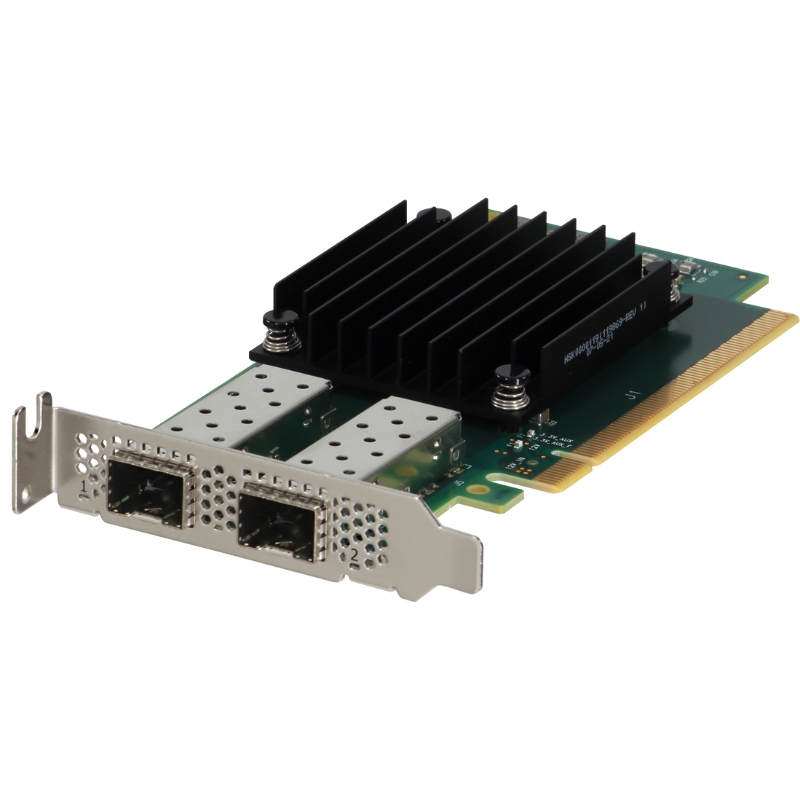


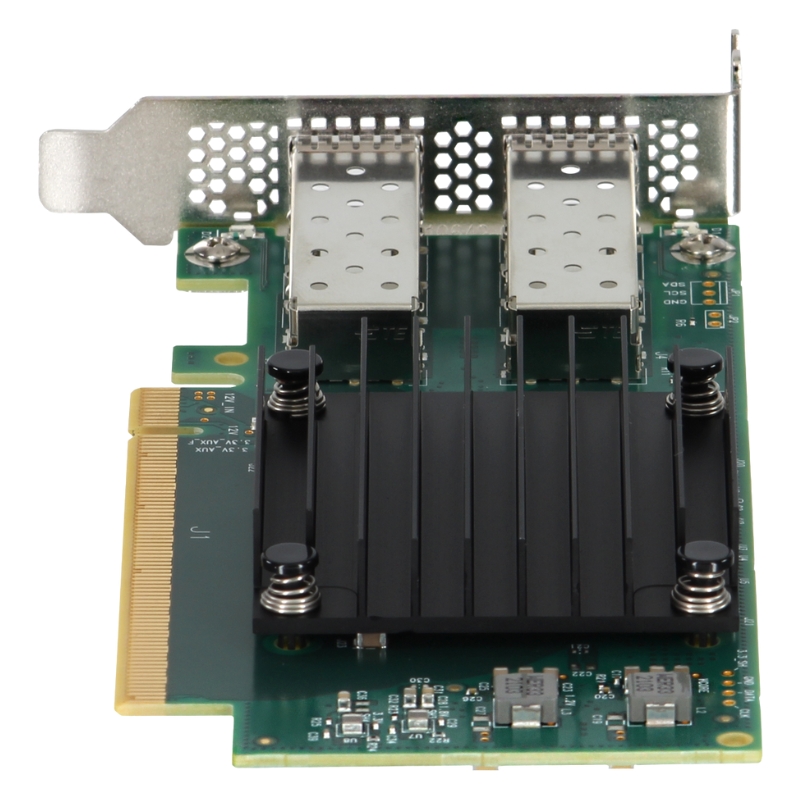
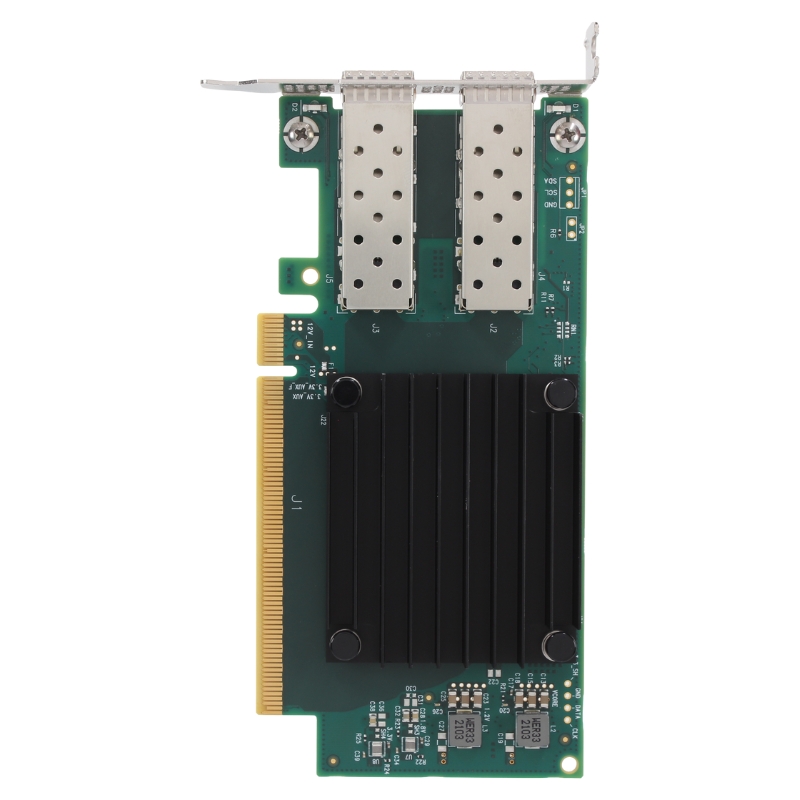
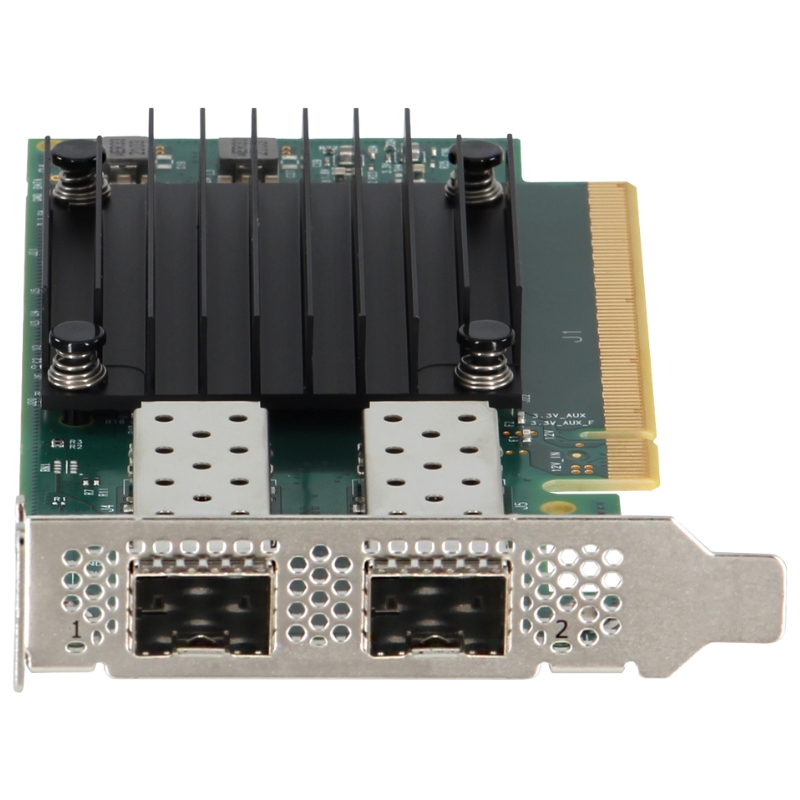
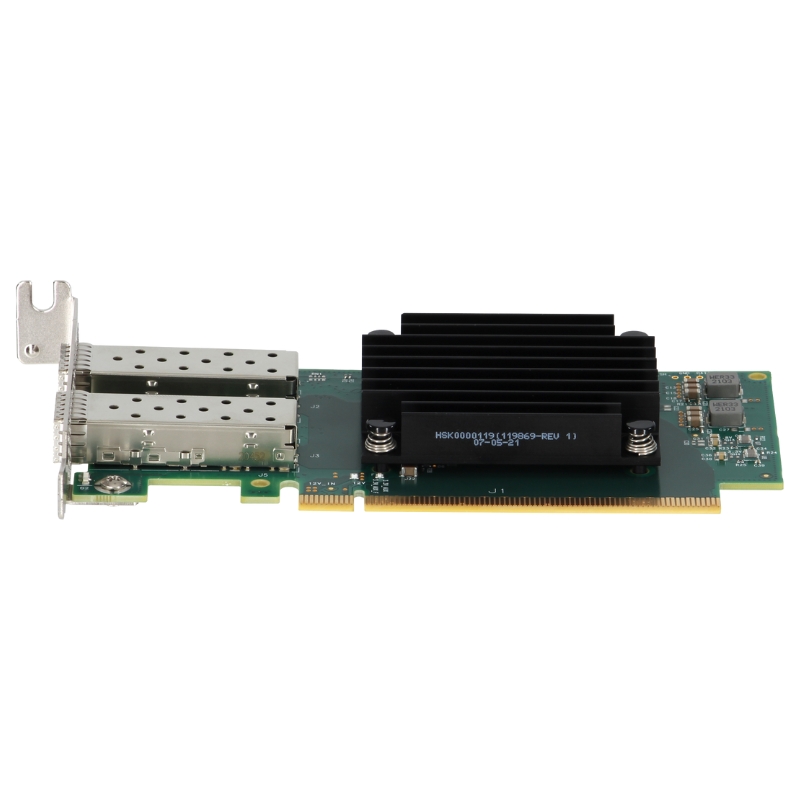
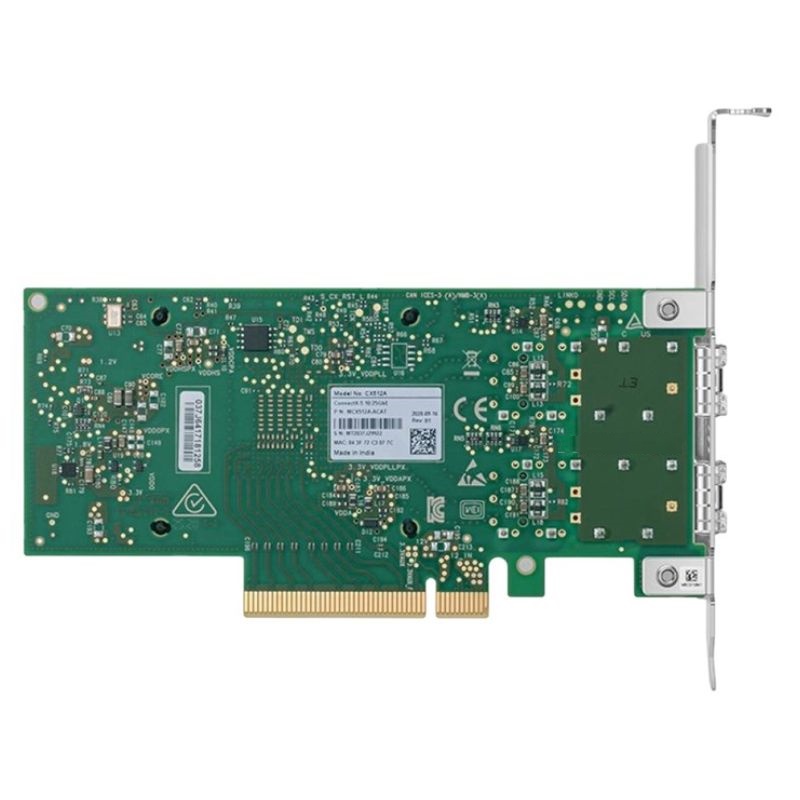
Nvidia 900-9X5AZ-0053-ST5 Connectx-5 Ex En 25GBE Dual-port SFP 28 PCIE 3.0/4.0 X8 Tall Bracket Network Interface Card. Excellent Refurbished with 1-Year Replacement Warranty
The Nvidia 900-9X5AZ-0053-ST5 ConnectX-5 EX EN 25GBE Dual-port SFP28 PCIe 3.0/4.0 x8 Tall Bracket Network Interface Card is engineered for high-speed connectivity and reliable performance in modern data centers.
The category of advanced Ethernet network interface cards represents a crucial foundation for today’s enterprise networking environments, cloud infrastructures, and high-performance computing platforms. Products such as the Nvidia ConnectX-5 Ex EN 25GbE dual-port SFP28 PCIe network interface card exemplify the evolution of networking hardware toward higher throughput, ultra-low latency, and intelligent offloading capabilities. These adapters are designed to deliver consistent, scalable, and secure connectivity across a wide range of workloads, including virtualization, software-defined networking, storage networking, artificial intelligence processing, and big data analytics.
Within enterprise environments, high-speed NICs enable efficient data flow between servers, storage arrays, and networking switches. As applications grow more demanding and data volumes continue to expand, legacy network adapters struggle to meet performance requirements. This category addresses these challenges by integrating faster Ethernet standards such as 25GbE, support for PCI Express 3.0 and 4.0 interfaces, and hardware-based acceleration technologies that offload processing tasks from CPUs. The result is a more responsive, power-efficient, and scalable networking infrastructure.
25GbE has rapidly become a preferred networking standard for modern data centers due to its optimal balance of performance, cost efficiency, and scalability. Compared to traditional 10GbE connections, 25GbE offers significantly higher bandwidth while maintaining similar cabling and power consumption characteristics. This allows organizations to upgrade network performance without a complete overhaul of existing infrastructure.
Network interface cards in this category leverage 25GbE technology to support high-throughput data transfers, enabling faster application response times and smoother workload execution. Dual-port configurations further enhance network redundancy and load balancing, ensuring consistent performance even in high-availability environments. By supporting SFP28 transceivers, these adapters provide flexibility in fiber or copper connectivity, making them adaptable to diverse networking architectures.
Dual-port network interface cards are engineered to deliver improved reliability and performance by offering two independent network connections on a single card. This architecture allows servers to connect to multiple switches or network paths, enhancing fault tolerance and minimizing downtime. In environments where uptime is mission-critical, dual-port NICs play a key role in maintaining continuous operations.
In addition to redundancy, dual-port configurations enable traffic segmentation and load distribution across network paths. This ensures optimal utilization of network resources and prevents congestion bottlenecks. For virtualization platforms and containerized applications, dual ports allow separate networks for management, storage, and application traffic, improving overall system efficiency and security.
High-density server deployments benefit significantly from dual-port 25GbE adapters, as they reduce the number of required expansion cards while maintaining high bandwidth capacity. This not only saves physical space within server chassis but also lowers power consumption and simplifies cabling. As data centers continue to adopt compact and energy-efficient designs, these optimized NIC solutions become increasingly valuable.
Modern network interface cards are designed to operate across multiple generations of PCI Express standards, ensuring broad compatibility with existing and future server platforms. Support for PCIe 3.0 and PCIe 4.0 x8 interfaces allows these adapters to deliver sufficient bandwidth to handle high-speed Ethernet traffic without creating internal bottlenecks.
PCIe 4.0, in particular, doubles the throughput of PCIe 3.0, making it ideal for next-generation servers that demand higher I/O performance. Network adapters in this category can seamlessly integrate into both legacy systems and cutting-edge infrastructures, providing organizations with flexibility in hardware upgrades and long-term investment protection.
One of the defining characteristics of enterprise-grade NICs is their ability to deliver ultra-low latency while maintaining high data transfer rates. This synergy is critical for applications such as financial trading platforms, real-time analytics, machine learning training, and distributed storage systems. By leveraging advanced PCIe interfaces and optimized networking protocols, these adapters minimize transmission delays and maximize throughput.
Hardware acceleration features, including packet processing offload and intelligent traffic management, further enhance performance by reducing the computational burden on host CPUs. This allows servers to allocate more processing power to application workloads rather than networking tasks.
Advanced network interface cards incorporate specialized hardware engines that offload tasks such as checksum calculations, encryption, virtualization switching, and flow steering. These offloading features significantly improve overall system efficiency by handling repetitive networking operations at the hardware level.
For cloud service providers and large enterprises, offloading capabilities translate into lower CPU utilization, reduced power consumption, and improved application performance. This makes high-performance NICs a strategic component in optimizing total cost of ownership within large-scale data centers.
Virtualized infrastructures rely heavily on network performance and reliability to support multiple virtual machines and containers operating simultaneously. Network interface cards in this category are specifically designed to integrate with popular hypervisors and cloud platforms, offering features such as single root I/O virtualization and virtual switching acceleration.
These capabilities allow multiple virtual instances to share network resources efficiently while maintaining isolation and security. By providing direct access to network hardware for virtual machines, SR-IOV reduces latency and improves throughput compared to traditional software-based networking solutions.
Security remains a top priority in modern networking environments, particularly within multi-tenant cloud infrastructures. High-performance NICs support advanced traffic filtering, VLAN tagging, and secure data transmission protocols to ensure that network traffic is properly segmented and protected.
By enforcing network policies at the hardware level, these adapters help prevent unauthorized access and reduce the risk of data breaches. This hardware-based security approach complements software security measures, creating a comprehensive defense strategy.
Software-defined networking architectures depend on flexible, programmable network hardware to deliver dynamic traffic management and rapid scalability. Network interface cards in this category are optimized to support SDN frameworks by providing high-speed connectivity and hardware-assisted packet processing.
This enables real-time network reconfiguration, improved traffic visibility, and automated workload orchestration. As organizations increasingly adopt SDN solutions to streamline network operations, high-performance NICs become a vital component in achieving efficient and responsive infrastructures.
High-speed Ethernet adapters play a critical role in modern storage architectures, particularly in environments that utilize network-based storage protocols such as iSCSI, NFS, and NVMe over Fabrics. The high bandwidth and low latency provided by 25GbE NICs ensure rapid data access and smooth storage operations.
By supporting storage offload features and optimized data paths, these network adapters reduce latency in storage transactions and improve overall system responsiveness. This is especially important for applications that require real-time data processing and high IOPS performance.
NVMe over Fabrics has emerged as a powerful storage networking solution that leverages high-speed Ethernet to deliver near-local storage performance across networked environments. Network interface cards in this category are engineered to support NVMe-oF protocols, enabling fast and efficient data transfers between servers and storage arrays.
This capability allows organizations to build scalable, high-performance storage networks without the complexity and cost of traditional Fibre Channel infrastructures. The result is improved storage flexibility and reduced operational overhead.
Advanced NIC architectures streamline the data path between network and storage subsystems, minimizing delays and maximizing throughput. By handling protocol processing at the hardware level, these adapters ensure consistent performance even under heavy workloads.
This optimization is essential for data-intensive applications such as database management systems, real-time analytics platforms, and content delivery networks.
Network interface cards designed for data center environments are built with enterprise-grade components to ensure long-term reliability and consistent performance. Robust thermal designs, including efficient heat sinks and airflow optimization, help maintain stable operation under continuous high loads.
These adapters undergo rigorous testing to meet industry standards for durability, compatibility, and performance. This ensures they can operate reliably in demanding environments where downtime is not an option.
Many enterprise servers utilize full-height expansion slots to accommodate high-performance hardware. Network adapters with tall bracket designs are engineered to fit seamlessly into these server configurations, providing secure installation and optimal airflow.
This form factor compatibility ensures easy integration into existing server infrastructures, minimizing deployment time and simplifying hardware upgrades.
Data centers often operate under strict thermal conditions to maximize energy efficiency. Enterprise NICs are designed to maintain stable performance even in elevated temperatures, ensuring uninterrupted connectivity across varying environmental conditions.
Advanced thermal management features prevent overheating and extend the lifespan of critical networking components.
Network adapters in this category are suitable for a wide range of applications, including enterprise servers, cloud platforms, high-performance computing clusters, and storage networks. Their versatility allows organizations to standardize on a single high-performance NIC solution across different infrastructure components.
This standardization simplifies network management, reduces inventory complexity, and improves overall operational efficiency.
Modern network interface cards incorporate sophisticated traffic management capabilities to optimize data flow and maintain consistent performance across complex network environments. Features such as quality of service prioritization, flow steering, and adaptive routing allow networks to handle diverse workloads efficiently.
These intelligent features ensure that critical applications receive priority bandwidth while less time-sensitive traffic is managed appropriately. This results in improved application responsiveness and overall network stability.
By processing packets directly on the NIC hardware, these adapters reduce latency and CPU overhead associated with software-based networking. This approach enhances throughput and allows servers to focus on core application processing.
Hardware packet processing is particularly beneficial in environments with high packet rates, such as financial trading systems, real-time communication platforms, and large-scale data processing clusters.
Enterprise NICs are designed to support a wide range of networking protocols and standards, ensuring compatibility with diverse network architectures. This includes support for virtualization protocols, storage networking standards, and secure communication frameworks.
Such comprehensive protocol support enables seamless integration into existing infrastructures and simplifies network design.


 Contact Us
 Information
 Catalog
 Solid State Drives (SSD)
 Network Switches
 Hard Disk Drives
 HBA & Controllers
 PC & Servers
 PC & Server Memory
 CPU & Processors
 Network Routers
 Power Supplies
 Tape Drives & Libraries
 Network Devices
 Computer & Network Cables