(7% discount is applied at checkout)
Cart is empty
Your go-to destination for cutting-edge server products
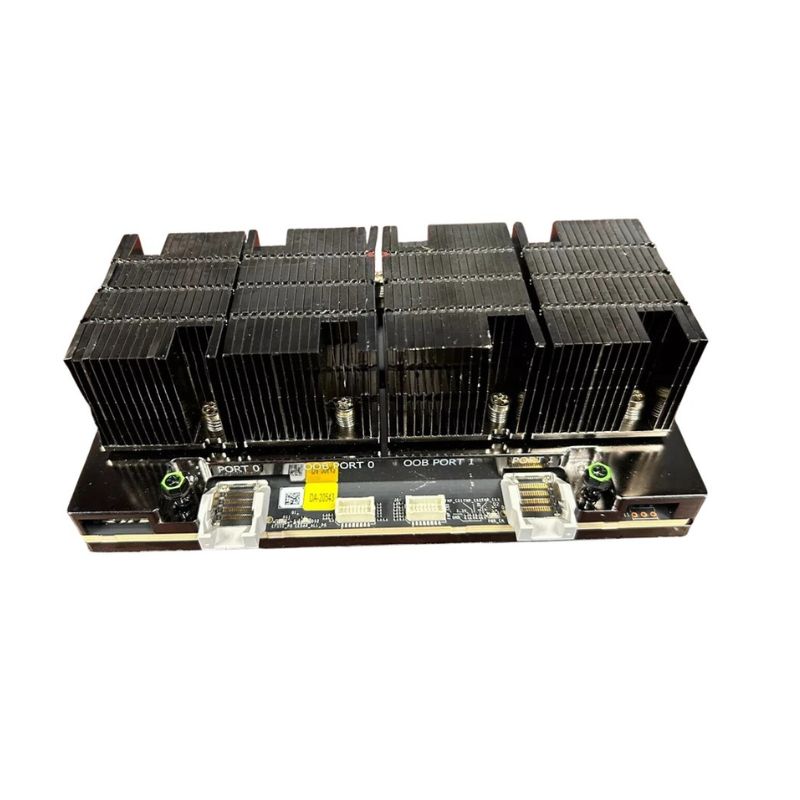


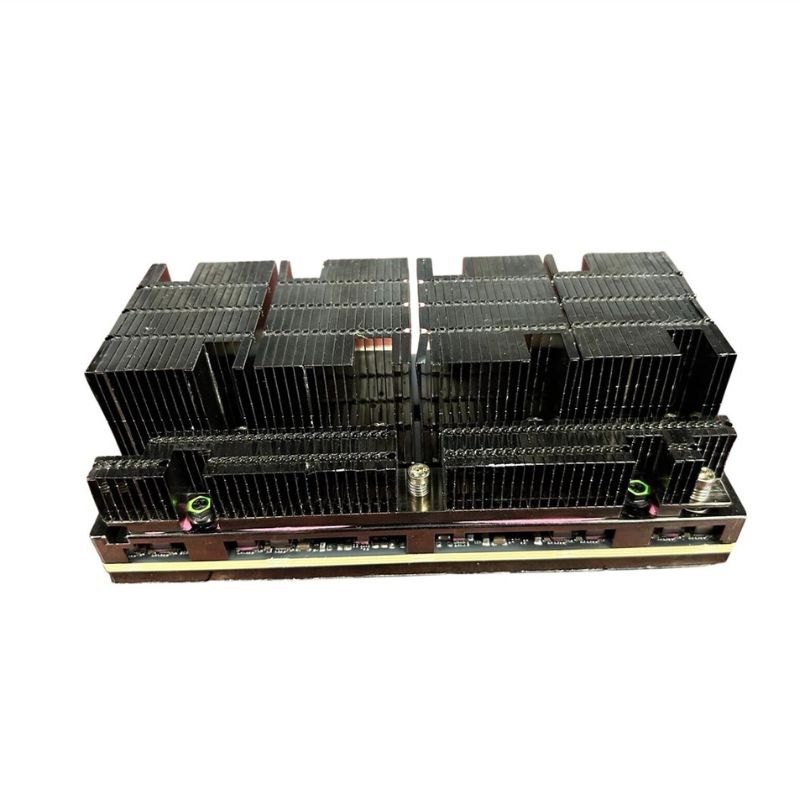
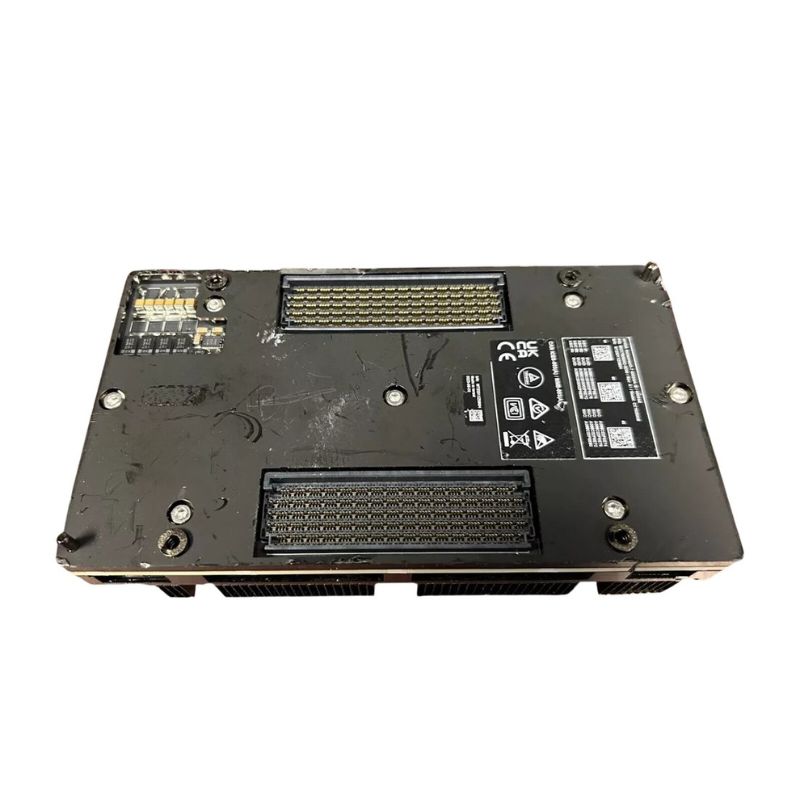
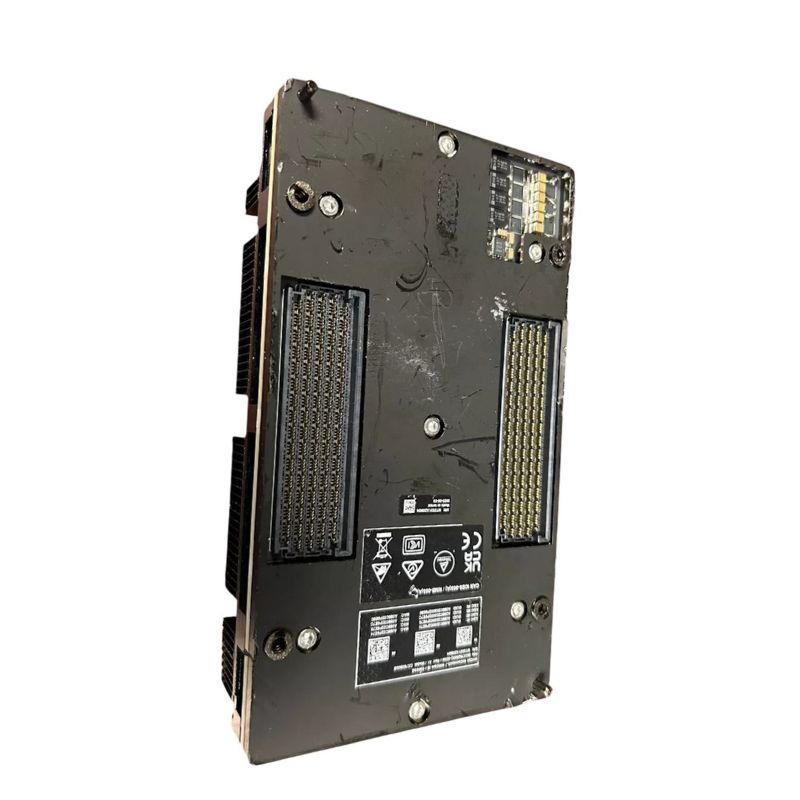
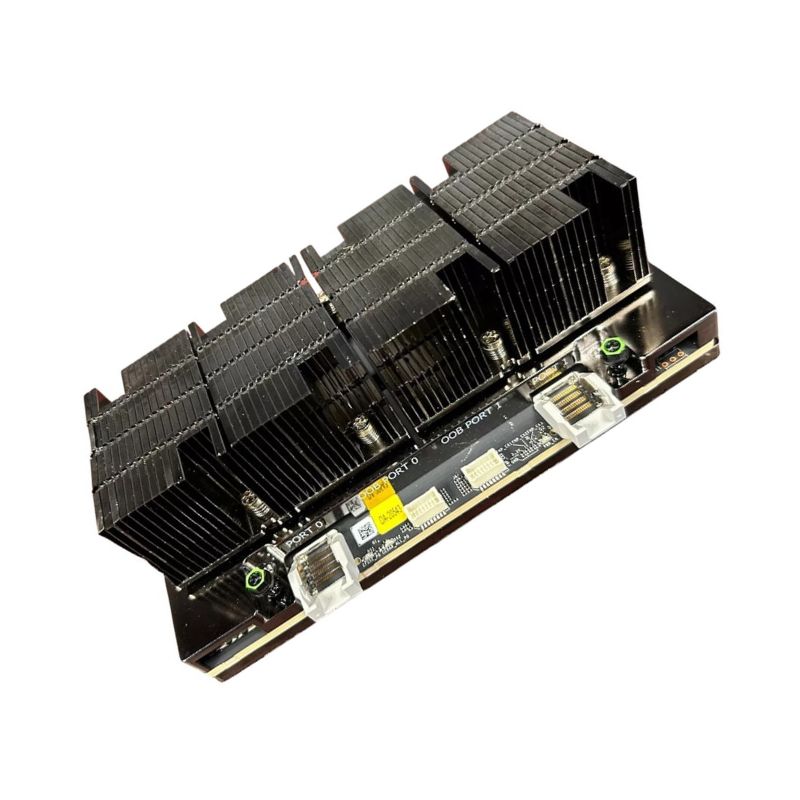
Nvidia 900-9X720-007N-SN0 Dual Ports 400GBPS Ethernet 4 Connectx-7 PCI-E 5 Standard Adapter Card. Excellent Refurbished with 1 year replacement warranty
Overview of NVIDIA ConnectX-7 2 Ports Adapter Card
The NVIDIA 900-9X720-007N-SN0 adapter card is engineered for data-intensive workloads, delivering ultra-fast networking through next-generation PCIe and multi-port architecture. Designed for modern enterprise, AI, and HPC environments, this adapter ensures low latency, massive throughput, and rock-solid reliability.
The Nvidia 900-9X720-007N-SN0 adapter card represents a cutting-edge category of ultra-high-bandwidth networking hardware designed for modern data centers, hyperscale computing environments, and advanced AI-driven infrastructures. This category focuses on multi-port, PCIe 5.0–enabled adapter cards that integrate multiple ConnectX-7 network controllers into a single unified platform. By combining four independent ConnectX-7 interfaces, each capable of operating at up to 400Gb/s, this class of adapter cards delivers unprecedented aggregate throughput, ultra-low latency, and deterministic performance under extreme workloads.
Adapter cards in this category are engineered to support InfiniBand as the default operational mode while also enabling seamless configuration for Ethernet-based environments up to 400GbE. The architectural design emphasizes scalability, resilience, and security, making these adapter cards suitable for high-density compute clusters, accelerated cloud services, and mission-critical enterprise deployments. The inclusion of a PCIe switch within the card enables optimal lane distribution and high-efficiency data routing across the PCIe 5.0 x32 interface.
This category is defined by the integration of four ConnectX-7 network controllers on a single adapter card. Each controller functions independently while sharing access to the PCIe switch fabric, ensuring balanced throughput and minimal contention. The quad-controller architecture enables simultaneous multi-network operations, advanced traffic isolation, and workload-specific network segmentation without requiring multiple physical adapter cards.
The synergy between the ConnectX-7 controllers allows for consistent performance across all ports, even under asymmetric traffic patterns. This is particularly valuable in AI training clusters, where east-west traffic, parameter synchronization, and storage access must occur concurrently without bottlenecks. By consolidating four high-speed interfaces into one adapter card, this category reduces slot usage, lowers power consumption per port, and simplifies system-level network topology.
ConnectX-7 controllers are designed to support a wide range of networking protocols, including InfiniBand and Ethernet, with full hardware offload capabilities. Within this category, the default configuration emphasizes InfiniBand, enabling low-latency, lossless communication essential for high-performance computing and AI workloads. Hardware-level congestion control, adaptive routing, and remote direct memory access are core features that define the performance profile of these adapter cards.
In Ethernet mode, the controllers provide full 400GbE support with advanced features such as RoCE, precision time protocol, and hardware-accelerated packet processing. This dual-mode flexibility allows organizations to standardize on a single adapter card category while supporting diverse network architectures across different clusters or deployment phases.
The PCIe 5.0 x32 interface is a defining characteristic of this adapter card category. By leveraging the increased bandwidth and reduced latency of PCIe 5.0, the adapter card can sustain the combined throughput of four 400Gb/s network ports without oversubscription. The integrated PCIe switch dynamically manages traffic between the host system and the ConnectX-7 controllers, ensuring efficient utilization of available lanes.
This level of PCIe integration is particularly important for GPU-accelerated servers, where data movement between GPUs, CPUs, and network interfaces must be tightly synchronized. Adapter cards in this category are optimized to minimize host CPU involvement, freeing compute resources for application-level processing.
The default InfiniBand mode defines this category’s primary use case in high-performance computing and AI training environments. InfiniBand provides deterministic latency, high message rates, and robust congestion management, all of which are essential for large-scale distributed workloads. Adapter cards in this category are optimized for seamless integration into InfiniBand fabrics, supporting advanced features such as adaptive routing, in-network computing, and hardware-based collective operations.
By operating in InfiniBand mode out of the box, these adapter cards simplify deployment in environments where InfiniBand is the preferred fabric. Configuration overhead is minimized, and performance tuning can be applied at the fabric level rather than on individual nodes. This approach aligns with the needs of large clusters that require consistent, predictable behavior across thousands of nodes.
Remote direct memory access is a cornerstone feature of this adapter card category. RDMA enables direct memory-to-memory data transfers between nodes without involving the host CPU, significantly reducing latency and CPU overhead. The ConnectX-7 controllers implement RDMA acceleration in hardware, allowing applications to achieve near wire-speed performance even under heavy load.
This capability is critical for distributed machine learning frameworks, real-time analytics platforms, and tightly coupled simulation workloads. By eliminating unnecessary software layers, RDMA acceleration ensures that network performance scales linearly with cluster size.
In-network computing features further differentiate this category of adapter cards. By offloading certain collective operations, such as reductions and broadcasts, to the network hardware, overall application performance can be significantly improved. The ConnectX-7 controllers support programmable in-network operations that reduce data movement and synchronization overhead.
This approach is especially beneficial in AI training scenarios, where gradient aggregation and parameter synchronization can become bottlenecks. Adapter cards in this category enable more efficient scaling by leveraging the network fabric as an active participant in computation.
While InfiniBand is the default mode, this adapter card category also supports 400GbE, enabling integration into Ethernet-based data center networks. This flexibility allows organizations to deploy the same hardware across different environments, reducing procurement complexity and standardizing on a single high-performance adapter platform.
In Ethernet mode, the ConnectX-7 controllers provide full support for advanced Ethernet features, including RoCE, hardware-based flow steering, and deep packet inspection offloads. These capabilities ensure that Ethernet deployments can achieve performance characteristics traditionally associated with InfiniBand, while maintaining compatibility with existing network infrastructure.
RDMA over Converged Ethernet is a key feature for Ethernet-based deployments. Adapter cards in this category implement RoCE in hardware, enabling low-latency, high-throughput communication over Ethernet fabrics. Support for priority flow control and explicit congestion notification ensures lossless behavior, which is essential for RDMA workloads.
This makes the category suitable for hybrid environments where some clusters operate on InfiniBand while others rely on Ethernet. The ability to switch modes without changing hardware provides long-term flexibility and investment protection.
Security is a defining aspect of this adapter card category. With crypto functionality disabled and secure boot enabled, these adapter cards are designed for environments with strict security and compliance requirements. Secure boot ensures that only authenticated firmware can be executed on the adapter card, protecting against unauthorized modifications and supply chain attacks.
The decision to disable crypto acceleration in this configuration reflects a focus on performance determinism and regulatory compliance. In environments where encryption is handled at other layers of the stack, disabling on-card crypto reduces complexity and potential attack surfaces.
The inclusion of an onboard PCIe switch is a defining feature of this adapter card category. The switch enables efficient distribution of PCIe lanes among the four ConnectX-7 controllers, ensuring balanced performance and reducing latency. This architecture allows the adapter card to function as a self-contained high-speed networking subsystem within the host server.
System designers benefit from simplified motherboard layouts and reduced slot requirements, as a single PCIe 5.0 x32 slot can support multiple high-speed network connections. This is particularly valuable in dense server configurations where expansion slots are limited.
Adapter cards in this category are optimized for scalability, enabling high-density compute nodes to achieve maximum network throughput without compromising performance. The PCIe switch architecture ensures that each ConnectX-7 controller has sufficient bandwidth, even under peak load conditions.
This scalability supports emerging workloads such as large language model training, real-time inference at scale, and complex scientific simulations that require consistent high-speed communication across thousands of nodes.
This category of adapter cards is designed for a wide range of high-performance deployment scenarios. In AI and machine learning environments, the combination of quad 400Gb/s ports and InfiniBand default mode enables rapid scaling of training clusters. In high-performance computing, the low-latency and RDMA capabilities support tightly coupled parallel applications.
Cloud service providers benefit from the flexibility to deploy these adapter cards in both InfiniBand and Ethernet modes, allowing them to offer differentiated networking services to customers. Enterprise data centers can leverage the security features and performance characteristics to support mission-critical applications with strict uptime and compliance requirements.
By supporting PCIe 5.0, 400Gb/s networking, and advanced offload capabilities, this adapter card category is positioned as a future-proof solution for evolving data center demands. As workloads continue to grow in complexity and scale, the ability to consolidate multiple high-speed interfaces into a single secure, high-performance adapter becomes increasingly valuable.
This category represents a strategic investment in next-generation networking infrastructure, enabling organizations to meet current performance requirements while preparing for future advancements in compute and network technologies.


 Contact Us
 Information
 Catalog
 Solid State Drives (SSD)
 Network Switches
 Hard Disk Drives
 HBA & Controllers
 PC & Servers
 PC & Server Memory
 CPU & Processors
 Network Routers
 Power Supplies
 Tape Drives & Libraries
 Network Devices
 Computer & Network Cables