(7% discount is applied at checkout)
Cart is empty
Your go-to destination for cutting-edge server products
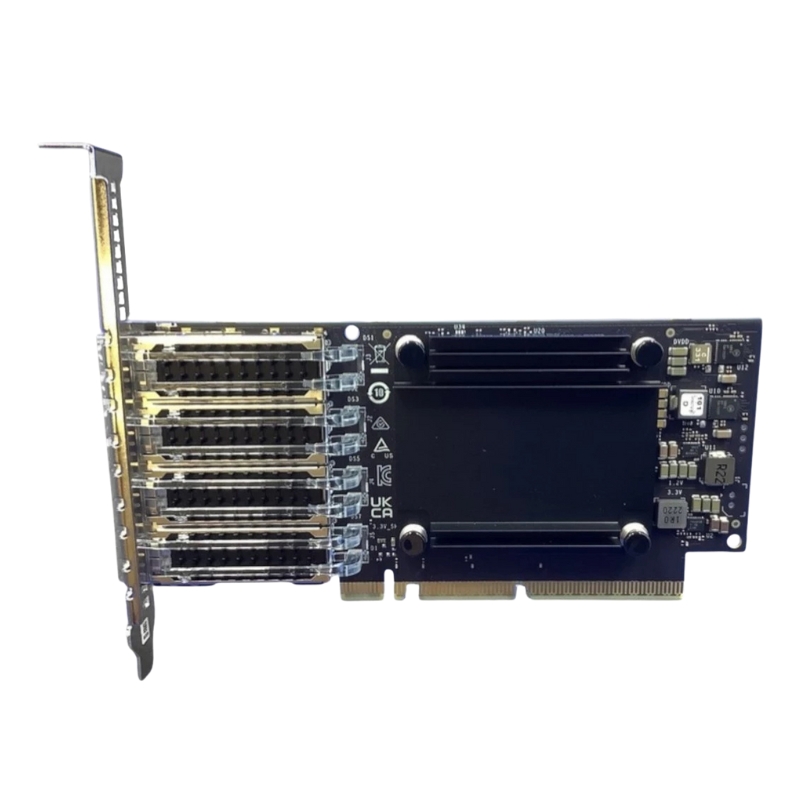


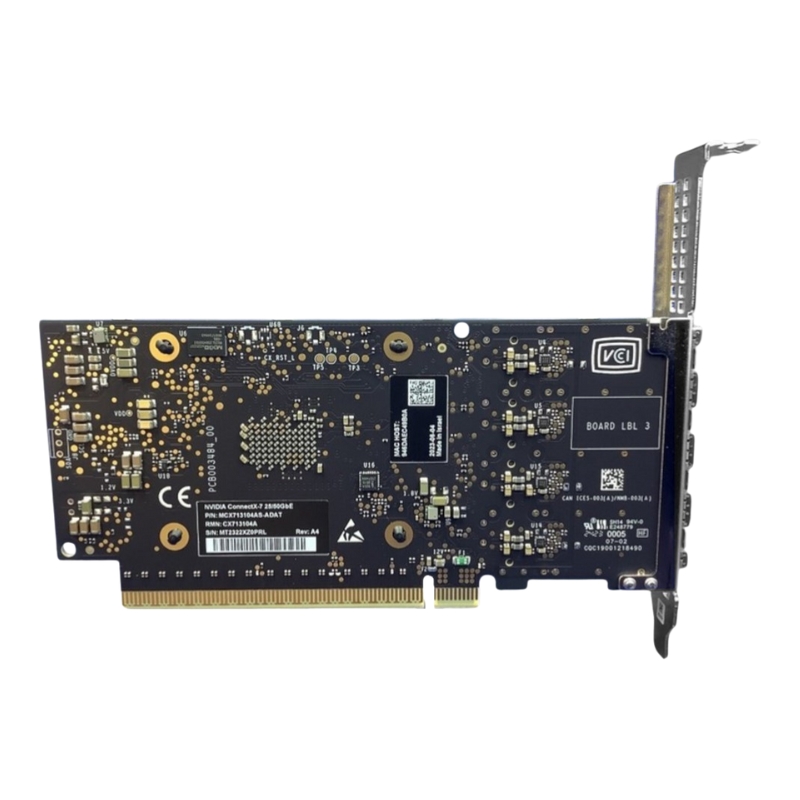
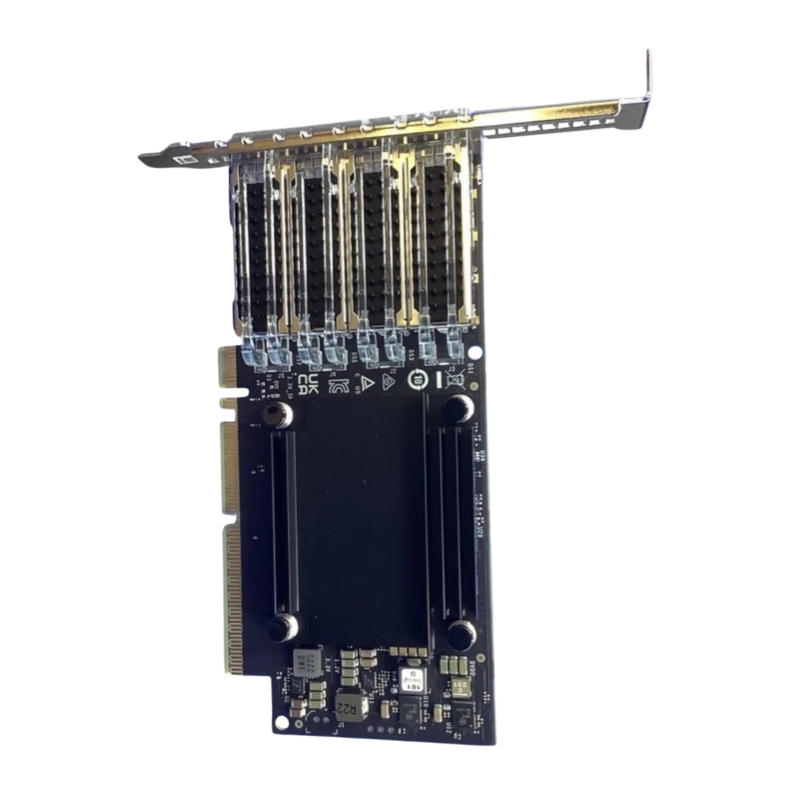
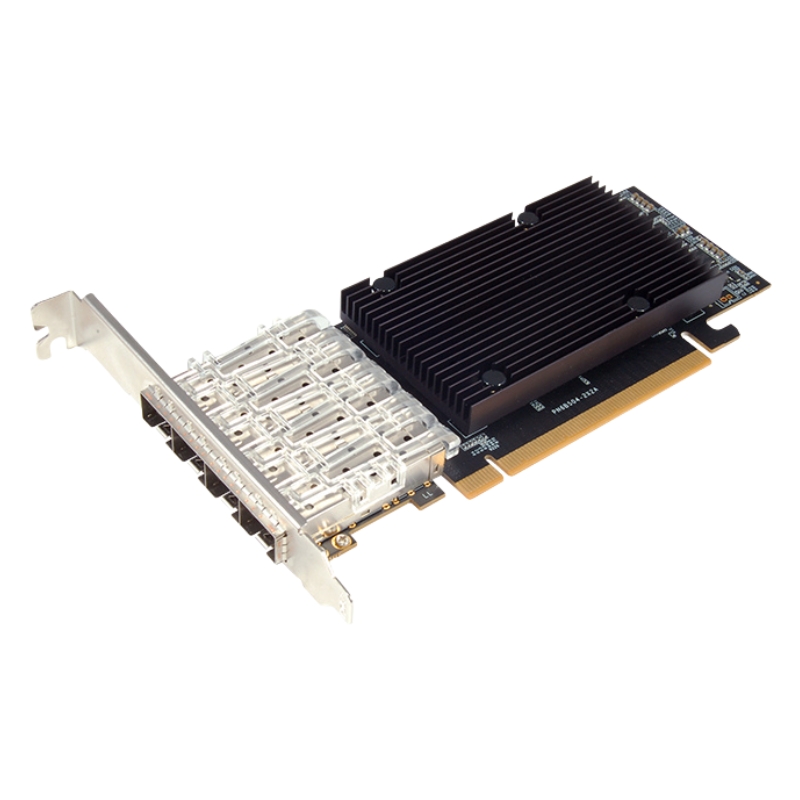
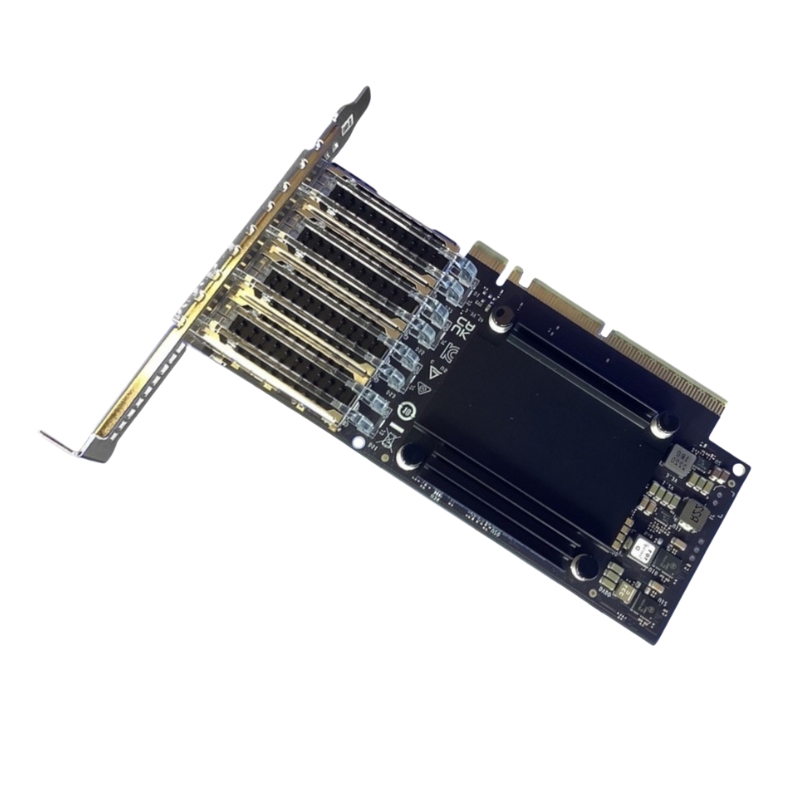
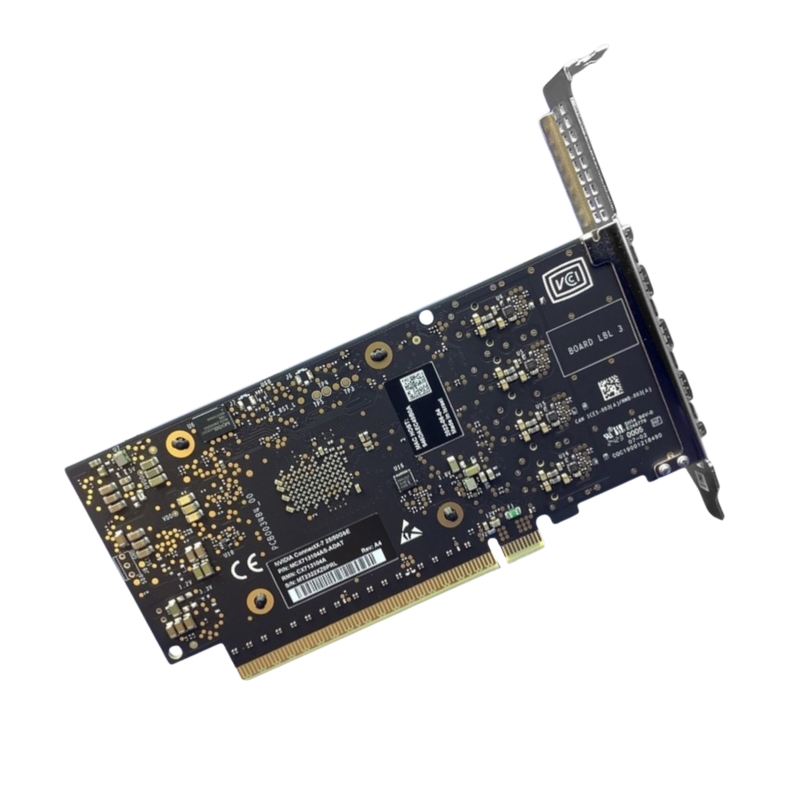
Nvidia 900-9X7AO-0003-ST0 50GbE SFP56 PCI E 4.0 x16 ConnectX-7 HHHL 25 Quad Port Crypto Disabled Secure Boot Enabled Adapter Card. New Sealed in Box (NIB) with 3 years Warranty
The category of advanced PCI Express network interface adapters represented by the Nvidia 900-9X7AO-0003-ST0 50GbE SFP56 PCIe 4.0 x16 ConnectX-7 HHHL 25 Quad Port Crypto Disabled Secure Boot Enabled Adapter Card is focused on delivering ultra-low latency, high-throughput, and highly secure networking capabilities for modern data centers, cloud infrastructures, and enterprise computing environments. This category encompasses next-generation Ethernet adapters designed to support bandwidth-intensive workloads, including virtualization, artificial intelligence, high-performance computing, distributed storage, and software-defined networking. Products within this category are engineered to meet the increasing demands of east-west traffic, real-time data processing, and scalable network architectures.
PCIe 4.0 x16 connectivity forms the backbone of this adapter category, enabling significantly higher data transfer rates between the network interface and the host system compared to earlier PCIe generations. The expanded bandwidth provided by PCIe 4.0 ensures that multi-port 50GbE configurations can operate at full capacity without bottlenecks, making these adapters suitable for dense compute nodes and network-intensive servers. This architectural advancement allows organizations to maximize throughput while maintaining low latency, which is essential for workloads such as real-time analytics, machine learning inference, and high-frequency transactional systems.
Adapters in this category are designed for broad compatibility across x86 and ARM-based server platforms, supporting modern operating systems and hypervisors. The half-height half-length form factor ensures integration into a wide range of server chassis, including space-constrained environments commonly found in hyperscale data centers. This form factor allows for flexible deployment without sacrificing performance or port density, ensuring that organizations can scale their infrastructure efficiently.
Advanced memory access technologies such as RDMA and GPUDirect enable direct data movement between memory and network interfaces, reducing CPU overhead and latency. While specific configurations may disable cryptographic offloads, the overall architecture remains optimized for high-throughput and deterministic performance. These features are particularly valuable in clustered computing environments where minimizing CPU utilization for networking tasks can free resources for application-level processing.
The inclusion of 50GbE SFP56 interfaces defines this category as a high-bandwidth networking solution capable of supporting next-generation Ethernet standards. Quad-port designs provide exceptional flexibility, allowing a single adapter to handle multiple network connections simultaneously. This configuration supports network segmentation, redundancy, and aggregation strategies that are critical for resilient and scalable infrastructures.
Multiple 50GbE ports enable administrators to aggregate bandwidth for high-throughput applications or distribute traffic across different networks for improved fault tolerance. This capability is essential for virtualized environments where multiple virtual machines or containers share network resources. The ability to dynamically allocate bandwidth across ports enhances overall system efficiency and performance.
SFP56 connectivity supports both optical and direct-attach copper cables, providing deployment flexibility across short- and long-distance network links. This versatility allows organizations to optimize cabling strategies based on distance, cost, and performance requirements. The category emphasizes compatibility with industry-standard transceivers, ensuring interoperability within heterogeneous network environments.
The ConnectX-7 controller represents a significant evolution in network interface technology, integrating advanced packet processing, congestion control, and telemetry features. Adapters in this category leverage the controller’s ability to handle high packet rates with minimal latency, making them ideal for demanding workloads that require consistent and predictable network performance.
High-performance packet processing capabilities enable efficient handling of small and large packets alike. This is particularly important for microservices architectures and distributed applications where packet sizes and traffic patterns can vary significantly. The controller’s intelligent processing reduces jitter and improves overall quality of service across the network.
Enhanced telemetry features provide real-time visibility into network performance metrics such as latency, packet loss, and throughput. This level of insight allows network administrators to proactively identify and resolve performance issues, optimize traffic flows, and ensure service-level objectives are met. The category prioritizes observability as a core component of modern network management.
The crypto disabled configuration within this category caters to specific deployment scenarios where hardware-based cryptographic acceleration is not required or managed at other layers of the infrastructure. By disabling crypto features, these adapters focus resources on raw networking performance, offering deterministic latency and simplified compliance management.
In environments where encryption is handled by dedicated appliances or software layers, disabling on-adapter cryptography can reduce complexity and ensure consistent performance. This approach is common in controlled data center networks where traffic is already secured through other means.
Crypto disabled configurations can simplify regulatory compliance and export considerations in certain regions. By offering variants without cryptographic acceleration, this category provides flexibility for global deployments with diverse legal and compliance requirements.
Adapters within this category are optimized for virtualized and cloud-native environments, supporting features such as SR-IOV, virtual switching, and container networking acceleration. These capabilities enable efficient sharing of network resources among multiple tenants while maintaining isolation and performance.
Single Root I/O Virtualization allows a single physical adapter to present multiple virtual interfaces to virtual machines or containers. This enhances scalability and reduces overhead compared to software-based networking solutions. The category emphasizes high virtual function density to support large-scale virtualization deployments.
Support for modern orchestration platforms and cloud networking frameworks ensures seamless integration into private and hybrid cloud environments. Adapters in this category are designed to work with container networking interfaces and software-defined networking controllers, enabling agile and programmable network architectures.
High-bandwidth Ethernet connectivity enhances the performance of network-attached storage and software-defined storage solutions. Adapters in this category facilitate fast data replication, backup, and recovery operations, contributing to overall data center efficiency.
Quad-port configurations allow for redundant paths and load balancing within storage networks. This ensures high availability and resilience, which are essential for mission-critical data management systems.
The category represented by advanced 50GbE PCIe 4.0 adapters is designed with future scalability in mind. As network demands continue to grow, these adapters provide a foundation that can accommodate evolving workloads and infrastructure designs.


 Contact Us
 Information
 Catalog
 Solid State Drives (SSD)
 Network Switches
 Hard Disk Drives
 HBA & Controllers
 PC & Servers
 PC & Server Memory
 CPU & Processors
 Network Routers
 Power Supplies
 Tape Drives & Libraries
 Network Devices
 Computer & Network Cables