(7% discount is applied at checkout)
Cart is empty
Your go-to destination for cutting-edge server products
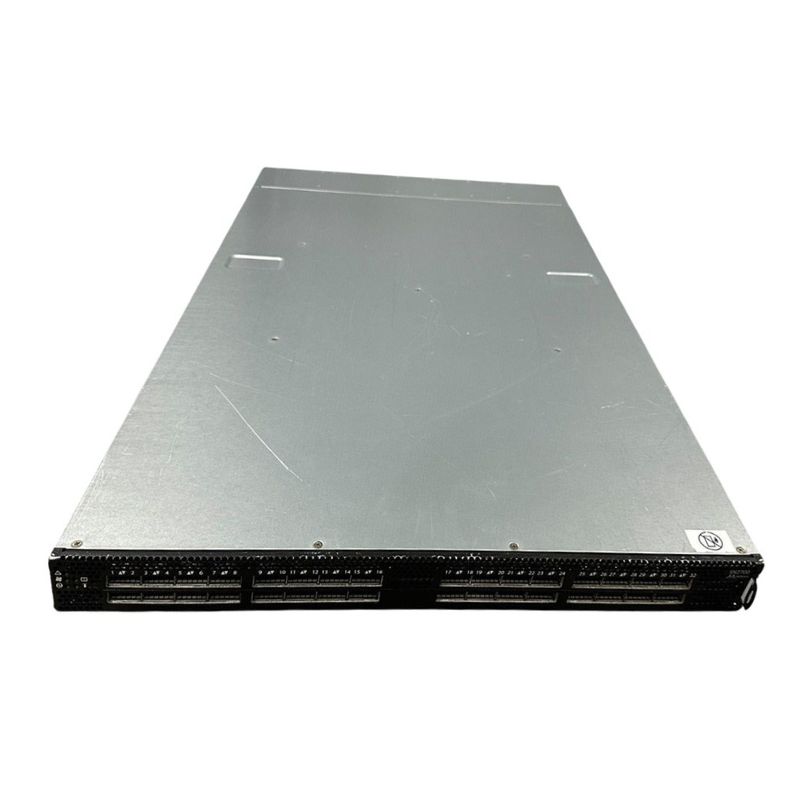


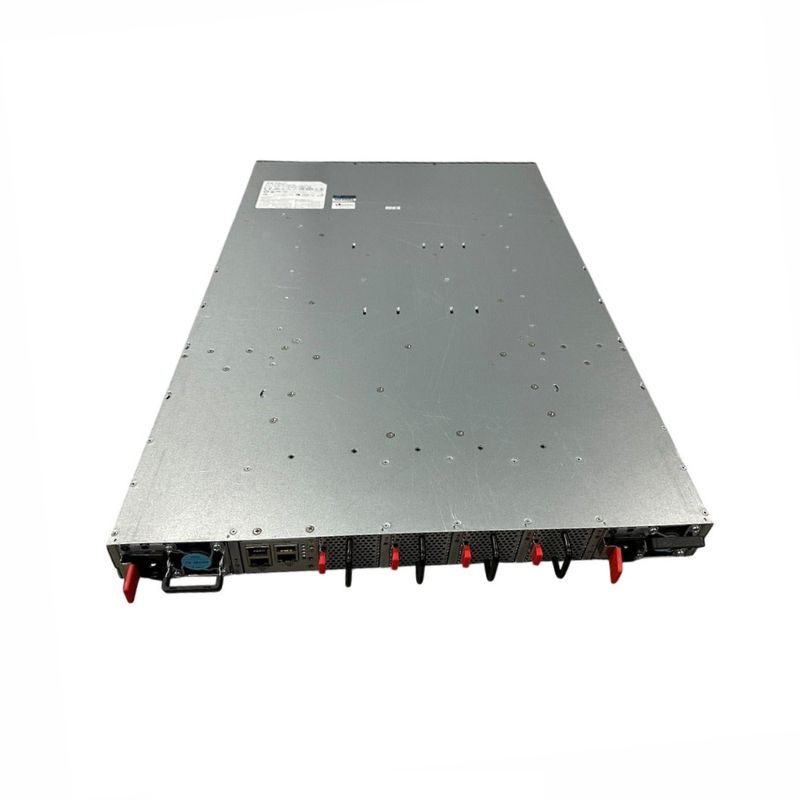
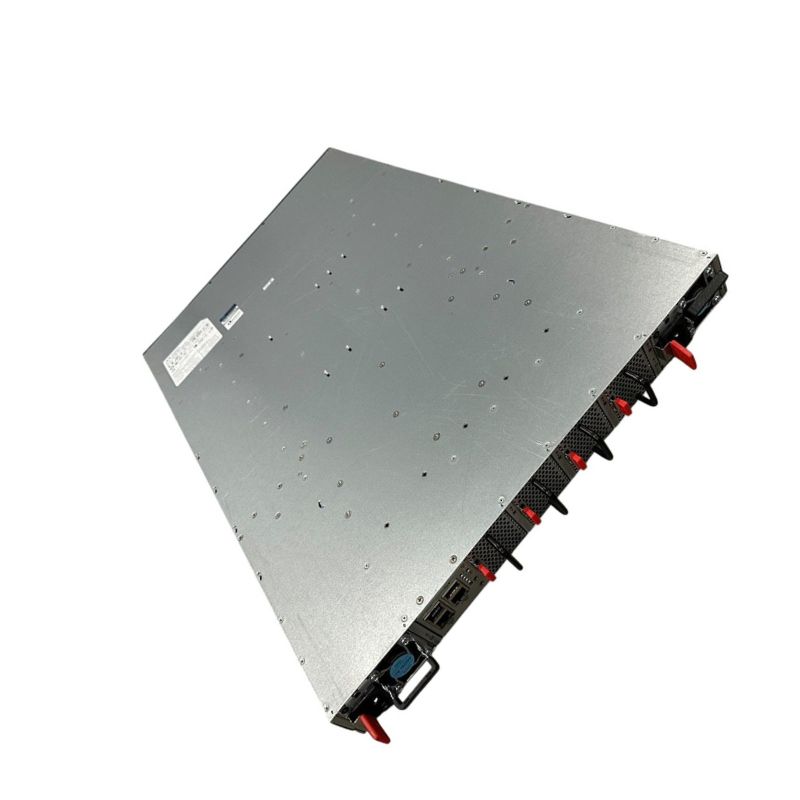
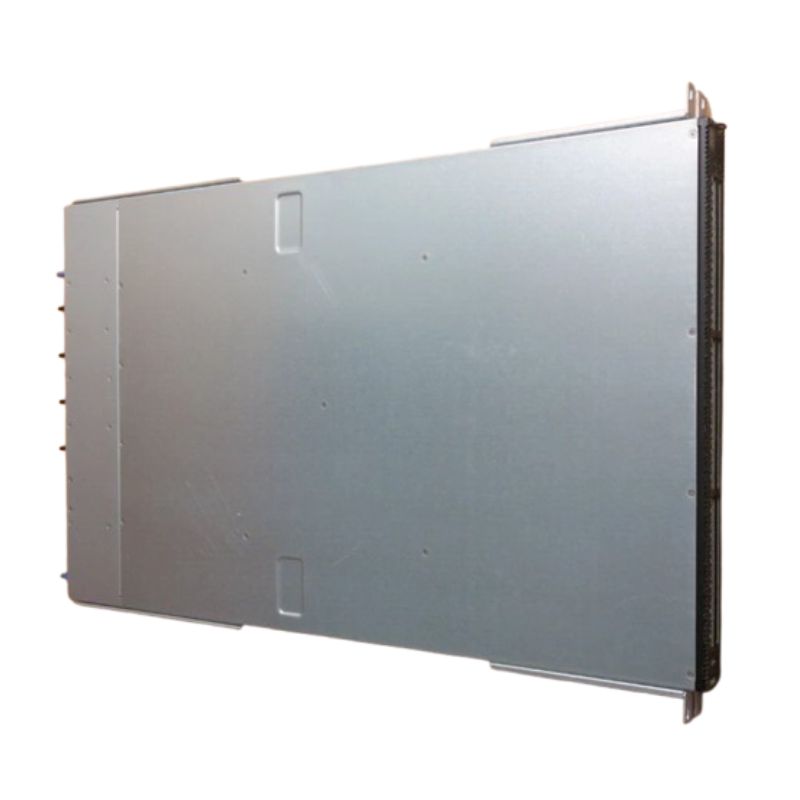
NVIDIA 920-9N101-09R7-0S0 32 Ports 100 GbE Optical Fiber 1U Rail-Rack-mountable Managed Ethernet Switch. Excellent Refurbished with 1 year replacement warranty
Outline of High-Density Open Ethernet Switching Platform
The NVIDIA SN2700 Open Ethernet Switch is engineered for modern data centers that demand extreme bandwidth density, low latency, and flexible network architectures. Built around an open networking philosophy, this manageable Ethernet switch supports advanced Layer 3 capabilities, enabling scalable routing, traffic segmentation, and intelligent packet forwarding across high-performance environments.
The balanced physical design allows for efficient airflow and cable management, supporting long-term reliability and simplified maintenance in high-density installations.
The NVIDIA SN2700 Open Ethernet Switch category represents a high-performance class of data center networking platforms engineered for modern, software-defined infrastructures. This category focuses on fully manageable, open networking switches designed to support 100 Gigabit Ethernet environments while enabling advanced Layer 3 capabilities, modular optical connectivity, and deep integration with contemporary network operating systems. Devices in this category are built to address the evolving requirements of cloud service providers, enterprise data centers, research institutions, and high-performance computing environments where predictable latency, massive throughput, and operational flexibility are mandatory.
Open Ethernet switches in this category are designed around disaggregated networking principles. Hardware and software are decoupled, allowing organizations to deploy the network operating system that best matches their operational model. The NVIDIA SN2700 class of switches supports open standards and multiple NOS options, enabling consistent automation, orchestration, and lifecycle management across heterogeneous network environments. This openness reduces vendor lock-in while increasing the ability to customize routing policies, telemetry, and security controls at scale.
At the core of this category is native 100 Gigabit Ethernet support, delivering high-density bandwidth suitable for spine, leaf, aggregation, and high-capacity edge roles. The SN2700 series is engineered to sustain line-rate forwarding across all ports with minimal packet loss and deterministic latency characteristics. This level of performance is essential for east-west traffic patterns in modern data centers, where distributed applications, microservices, and storage systems rely on consistent throughput.
Switches in this category are architected with non-blocking switching fabrics that ensure full utilization of available port capacity. Internal forwarding engines and packet buffers are optimized to handle bursty traffic patterns common in virtualization, containerized workloads, and parallel computing environments. The result is predictable performance even under peak load conditions.
Low and consistent latency is a defining attribute of this category. The hardware design prioritizes fast packet processing pipelines that reduce serialization delay and minimize jitter. This makes the SN2700 class well suited for financial services platforms, real-time analytics, AI workloads, and distributed storage systems that are sensitive to network delays.
Layer 3 support is a cornerstone of this category, enabling sophisticated routing and segmentation strategies within the data center and across campus or metro networks. The NVIDIA SN2700 Open Ethernet Switch class supports dynamic routing protocols, large routing tables, and advanced forwarding features that allow it to function as a core or aggregation router as well as a high-speed switch.
The category is designed to handle large numbers of IPv4 and IPv6 routes, making it suitable for environments with complex network topologies. This scalability supports multi-tenant architectures, large virtual networks, and integration with external routing domains without compromising performance.
Switches in this category are compatible with widely used routing protocols, enabling seamless integration into existing network designs. These protocols allow for rapid convergence, resilient path selection, and efficient traffic engineering across the infrastructure. The open nature of the platform allows operators to fine-tune routing behavior through software.
Equal-Cost Multi-Path routing is fully supported, allowing traffic to be distributed across multiple available paths. This improves link utilization and enhances fault tolerance, which is critical in large-scale data center fabrics where redundancy is a fundamental design principle.
The category enables advanced segmentation techniques that isolate traffic between applications, tenants, or organizational units. Virtual routing and forwarding instances can be implemented to maintain strict separation while sharing the same physical infrastructure, improving security and operational efficiency.
Modular optical fiber support defines the physical flexibility of this category. The NVIDIA SN2700 class is designed to work with a wide range of pluggable optical transceivers, enabling organizations to tailor link distances and media types according to deployment needs.
Ports can be populated with different optical modules to support short-reach, long-reach, or direct-attach connectivity. This flexibility allows the same switch platform to be used in multiple roles within the network, from top-of-rack deployments to inter-rack or inter-building links.
High port density is a key characteristic, enabling consolidation of network layers and reduction of overall hardware footprint. The ability to deploy numerous 100 Gigabit Ethernet links within a single 1U chassis supports scalable network expansion without excessive rack consumption.
The hardware design ensures reliable signal transmission across supported optical modules. This contributes to stable link performance, reduced error rates, and predictable network behavior even at high data rates.
By supporting standardized optical interfaces, this category allows organizations to adopt newer transceiver technologies as they become available, extending the usable lifespan of the switching platform.
The category is defined by a compact 1U form factor that is suitable for standard rack installations. Rail-mountable and rack-mountable designs enable straightforward integration into existing data center layouts.
The slim profile allows high-density deployment, making it possible to scale network capacity without consuming excessive rack space. This is particularly valuable in colocation facilities and dense enterprise data centers.
Efficient cooling designs ensure reliable operation under sustained high loads. Airflow patterns are optimized to maintain component temperatures within safe operating ranges, contributing to long-term hardware reliability.
Power supplies and fans are designed for serviceability, allowing maintenance or replacement without disrupting network operations. This supports high availability requirements and reduces mean time to repair.
Power consumption is optimized through efficient components and intelligent power management features, helping organizations reduce operational costs and meet sustainability goals.
The NVIDIA SN2700 Open Ethernet Switch category addresses a broad range of deployment scenarios. Its combination of performance, flexibility, and manageability makes it suitable for diverse industries and applications.
In cloud environments, these switches support massive east-west traffic and rapid scaling. Open networking compatibility allows cloud operators to integrate custom software stacks and automation frameworks.
Enterprises can deploy this category as a core or aggregation layer, benefiting from high throughput and advanced routing capabilities that support campus and data center interconnects.
HPC clusters and AI training environments require predictable latency and high bandwidth. The SN2700 class meets these requirements, enabling efficient communication between compute nodes and storage systems.
Service providers can leverage the modular optical support and Layer 3 scalability to build resilient, high-capacity networks that support a wide range of services.
Reliability is a defining attribute of this category. Hardware and software features are designed to ensure continuous operation and graceful handling of faults.
Redundancy in critical components minimizes the risk of downtime. Combined with fast convergence protocols, this ensures that traffic can be rerouted quickly in the event of a failure.
The category supports incremental expansion, allowing organizations to add capacity as demand grows. High port density and modular optics make it possible to scale without disruptive hardware changes.
Performance characteristics remain stable as the network grows, ensuring that additional nodes or links do not introduce bottlenecks.
Open standards, modular design, and software flexibility help protect investments by extending the relevance of the hardware across multiple technology cycles.
Security is integrated into the design of this category, supporting secure operation in multi-tenant and mission-critical environments.
Advanced forwarding and segmentation features allow administrators to define and enforce traffic policies that protect sensitive data and applications.
Management access can be protected through authentication, encryption, and auditing mechanisms, reducing the risk of unauthorized changes.
Open APIs and telemetry streams allow integration with external security platforms, enabling coordinated threat detection and response.


 Contact Us
 Information
 Catalog
 Solid State Drives (SSD)
 Network Switches
 Hard Disk Drives
 HBA & Controllers
 PC & Servers
 PC & Server Memory
 CPU & Processors
 Network Routers
 Power Supplies
 Tape Drives & Libraries
 Network Devices
 Computer & Network Cables