(7% discount is applied at checkout)
Cart is empty
Your go-to destination for cutting-edge server products
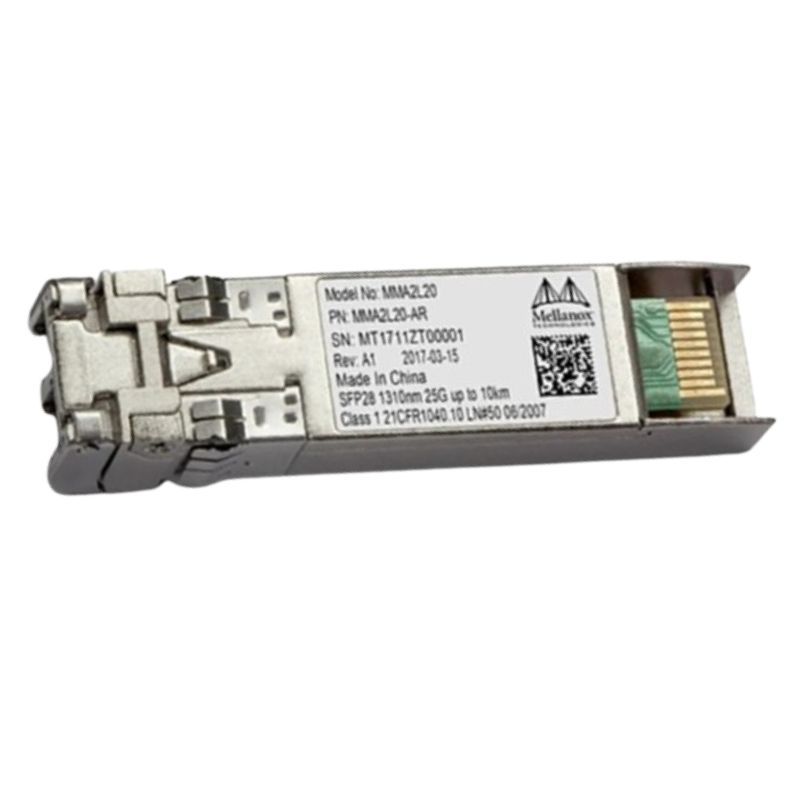


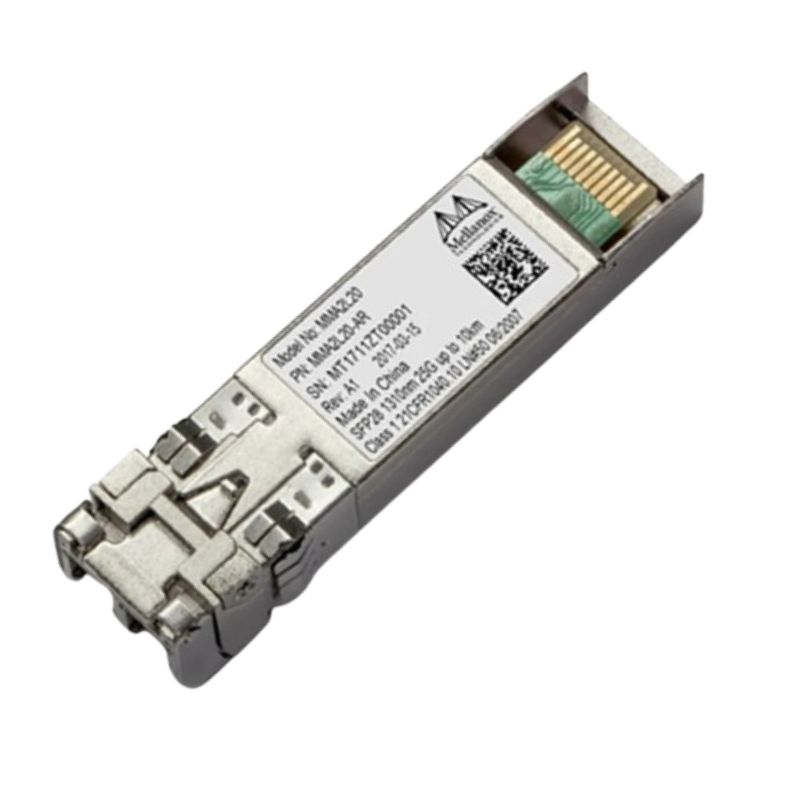
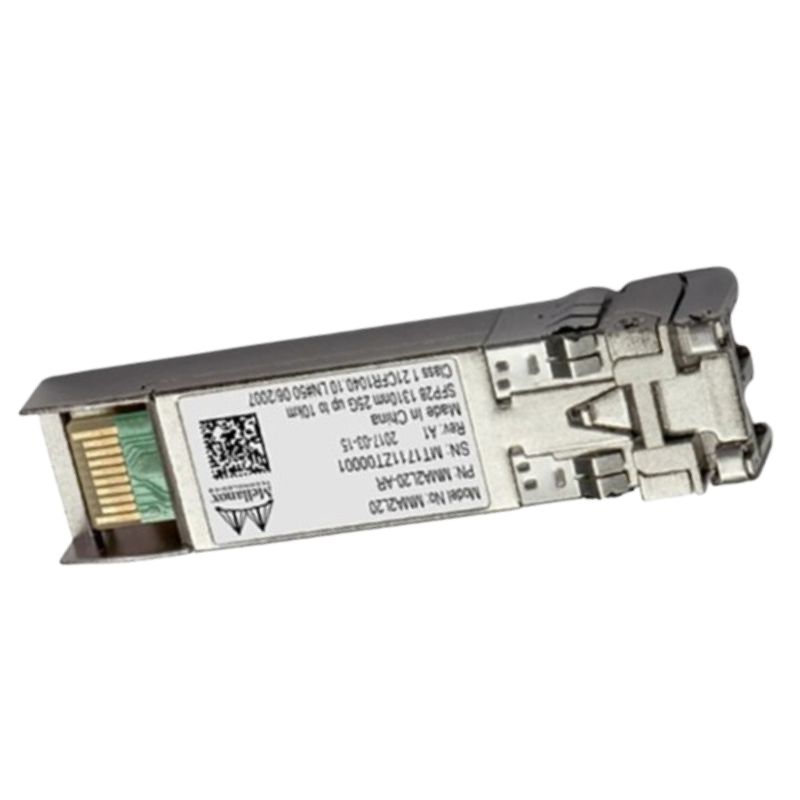
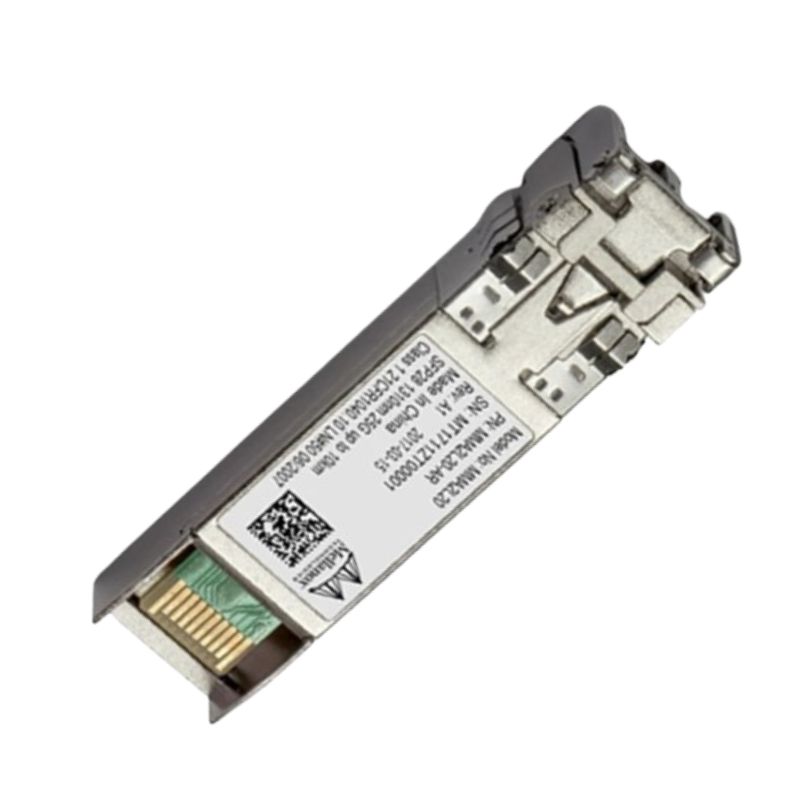
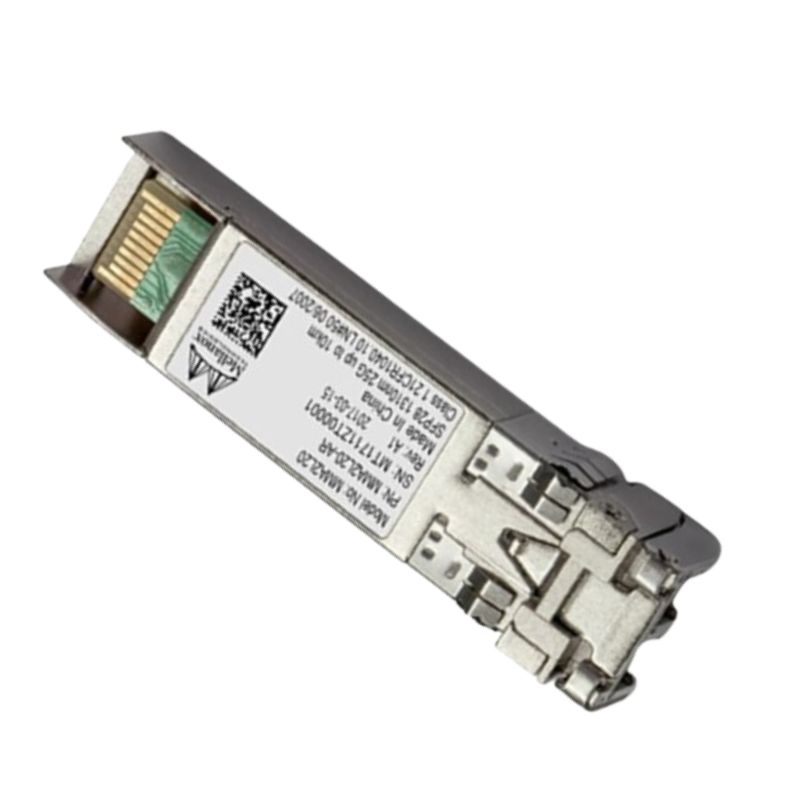
NVIDIA 980-9I094-00AR00 25GbE SFP28 LC-LC 1310nm LR Optical Transceiver Up to 10km. Excellent Refurbished with 1 year replacement warranty
Overview of NVIDIA 25GbE SFP28 Optical Transceiver
The NVIDIA 980-9I094-00AR00 SFP28 optical transceiver is engineered to support high-speed 25 Gigabit Ethernet links over single-mode fiber. Built for modern data center, enterprise, and telecom infrastructures, this module delivers stable long-reach optical performance while maintaining low power consumption and compact density. Operating at a central wavelength of 1310nm, it enables reliable signal transmission across extended distances with precision and consistency.
The NVIDIA 980-9I094-00AR00 25 Gigabits SFP28 LC-LC 1310nm LR Optical Transceiver belongs to a specialized category of high-speed optical networking components designed to support the growing demand for bandwidth-intensive applications. This category focuses on SFP28-based transceivers that deliver reliable 25GbE connectivity over single-mode fiber, enabling efficient data transmission across distances of up to 10 kilometers. These transceivers are widely adopted in enterprise networks, hyperscale data centers, cloud infrastructures, and carrier-grade environments where low latency, stability, and scalability are essential.
SFP28 optical transceivers represent a significant evolution over earlier SFP+ modules, offering higher throughput while maintaining a compact form factor. The category emphasizes compatibility with modern switching and routing platforms, ensuring seamless integration into existing and next-generation network architectures. By operating at a wavelength of 1310nm and supporting long-reach LR specifications, these transceivers are engineered to balance performance and cost efficiency for medium-distance optical links.
The core technology behind this category is the SFP28 interface, which supports data rates of 25 gigabits per second over a single lane. This design reduces complexity compared to multi-lane solutions while achieving high throughput suitable for demanding workloads. The NVIDIA 980-9I094-00AR00 transceiver adheres to industry standards that define electrical, optical, and mechanical characteristics, ensuring interoperability across compliant network devices.
Operating at 1310nm, these LR transceivers utilize laser technology optimized for long-reach performance on single-mode fiber. The optical budget is carefully engineered to maintain signal integrity over distances up to 10 kilometers, making this category suitable for inter-building links, campus networks, and data center interconnects. The LC-LC connector interface further enhances compatibility with common fiber cabling systems used in structured cabling environments.
At 25Gbps, maintaining signal integrity is a critical requirement addressed by this category. Advanced modulation techniques and precise optical components help minimize dispersion and attenuation over long distances. The transceivers are designed to operate within strict tolerances, ensuring consistent performance even in environments with temperature fluctuations and varying fiber quality.
Error performance is another defining aspect of this category. These transceivers support low bit error rates, contributing to reliable data transmission for mission-critical applications such as financial systems, real-time analytics, and large-scale virtualization platforms. Network architects rely on this category to deliver predictable performance under sustained high traffic loads.
The 1310nm wavelength is a key characteristic of the SFP28 LR category. This wavelength offers favorable dispersion properties on single-mode fiber, allowing data to travel longer distances without significant degradation. As a result, the NVIDIA 980-9I094-00AR00 transceiver is well suited for links that exceed the reach of short-range multimode solutions.
Long-reach capability up to 10 kilometers positions this category as a versatile option for organizations that require connectivity beyond the confines of a single data hall. It supports network designs that span multiple buildings or remote facilities while maintaining a unified high-speed infrastructure.
One of the defining strengths of this category is its focus on broad compatibility. The NVIDIA 980-9I094-00AR00 transceiver is designed to integrate seamlessly with NVIDIA networking platforms and other standards-compliant switches and routers. This ensures flexibility in multi-vendor environments where interoperability is a critical requirement.
The SFP28 form factor allows network administrators to deploy these transceivers in high-density configurations, maximizing port utilization on modern switches. Hot-pluggable functionality simplifies installation and maintenance, enabling upgrades or replacements without network downtime.
This category is commonly used with 25GbE network interface cards and top-of-rack switches that support SFP28 ports. The transceivers enable direct optical connections that reduce latency compared to copper-based alternatives, making them ideal for latency-sensitive applications such as high-frequency trading and distributed computing.
In data center environments, the ability to standardize on a single transceiver category simplifies inventory management and reduces operational complexity. Network teams can deploy consistent optical modules across multiple layers of the infrastructure, from access to aggregation.
Standards compliance is a cornerstone of this category. By adhering to IEEE and MSA specifications, these transceivers ensure predictable behavior across compliant hardware. This compliance minimizes the risk of compatibility issues and supports long-term infrastructure planning.
Multi-vendor support allows organizations to adopt best-of-breed networking solutions without being locked into proprietary optical components. The category’s emphasis on open standards aligns with modern networking strategies that prioritize flexibility and cost control.
The NVIDIA 980-9I094-00AR00 transceiver category is engineered to support workloads that demand high bandwidth and low latency. These include cloud computing, big data analytics, artificial intelligence training, and high-performance computing clusters. By delivering 25Gbps per port, the category enables scalable architectures that can grow with increasing data demands.
Low latency is achieved through efficient optical-electrical conversion and minimal processing overhead within the transceiver. This ensures that data packets traverse the network with minimal delay, supporting real-time applications and synchronized systems.
Reliability is a critical factor for optical transceivers deployed in continuous-operation environments. This category emphasizes robust design and rigorous testing to ensure long-term stability. Components are selected to withstand extended operation at varying temperatures, maintaining consistent performance throughout the product lifecycle.
Thermal management is also a key consideration. Efficient power consumption and heat dissipation help prevent thermal stress on both the transceiver and the host device. This contributes to overall system reliability and reduces the risk of performance degradation.
Error detection and correction mechanisms supported by this category enhance network resilience. By maintaining low error rates, these transceivers reduce the need for retransmissions, improving effective throughput and application performance.
In large-scale deployments, network resilience is further enhanced by the predictability of performance across all transceivers in the category. This consistency simplifies troubleshooting and supports proactive network management strategies.
The versatility of the SFP28 LR transceiver category makes it suitable for a wide range of industry verticals. Enterprises use these transceivers to modernize campus networks and connect distributed offices. Data centers rely on them for high-speed interconnects between racks, rows, or facilities.
Service providers adopt this category to deliver reliable 25GbE services to customers, leveraging the long-reach capabilities to span metropolitan areas or connect remote sites. The balance of performance and reach supports diverse deployment scenarios without excessive cost.
In cloud environments, the ability to move large volumes of data quickly and reliably is essential. This category supports data center interconnect applications by providing high-speed optical links that maintain performance over extended distances.
Cloud service providers benefit from the scalability of 25GbE, using these transceivers to build flexible architectures that can adapt to changing workloads and customer demands.
Enterprise campus networks often require connectivity between buildings or campuses separated by several kilometers. The 10km reach supported by this category enables organizations to deploy a unified high-speed network without relying on intermediate equipment.
Metropolitan networks also leverage this category to connect points of presence and aggregation sites, ensuring consistent performance across urban deployments.
When deploying transceivers from this category, network designers consider factors such as fiber quality, connector cleanliness, and optical budget. Proper planning ensures that the full performance potential of the NVIDIA 980-9I094-00AR00 transceiver is realized.
Attention to cable management and labeling further enhances maintainability, particularly in dense installations where multiple optical links coexist. These practices contribute to long-term operational efficiency.
This category is optimized for single-mode fiber, which offers lower attenuation and higher bandwidth over long distances compared to multimode fiber. Deployments should ensure that fiber specifications align with the transceiver’s requirements to achieve optimal performance.
Connector quality and alignment are also critical. LC-LC connectors provide a compact and reliable interface, but proper handling and cleaning are essential to minimize insertion loss.
Power efficiency is an important consideration in large-scale deployments. This category emphasizes low power consumption per port, helping organizations reduce overall energy usage and operational costs.
Environmental factors such as temperature and humidity are accounted for in the design, allowing these transceivers to operate reliably in controlled data center environments as well as less predictable enterprise settings.
The SFP28 LR transceiver category plays a strategic role in future-proof networking. By supporting 25GbE, these transceivers provide a stepping stone between legacy 10GbE deployments and higher-speed 40GbE or 100GbE architectures.
This scalability allows organizations to incrementally upgrade their networks, protecting existing investments while enabling gradual performance improvements. The compact form factor and standards compliance ensure that these transceivers remain relevant as network technologies evolve.


 Contact Us
 Information
 Catalog
 Solid State Drives (SSD)
 Network Switches
 Hard Disk Drives
 HBA & Controllers
 PC & Servers
 PC & Server Memory
 CPU & Processors
 Network Routers
 Power Supplies
 Tape Drives & Libraries
 Network Devices
 Computer & Network Cables