(7% discount is applied at checkout)
Cart is empty
Your go-to destination for cutting-edge server products
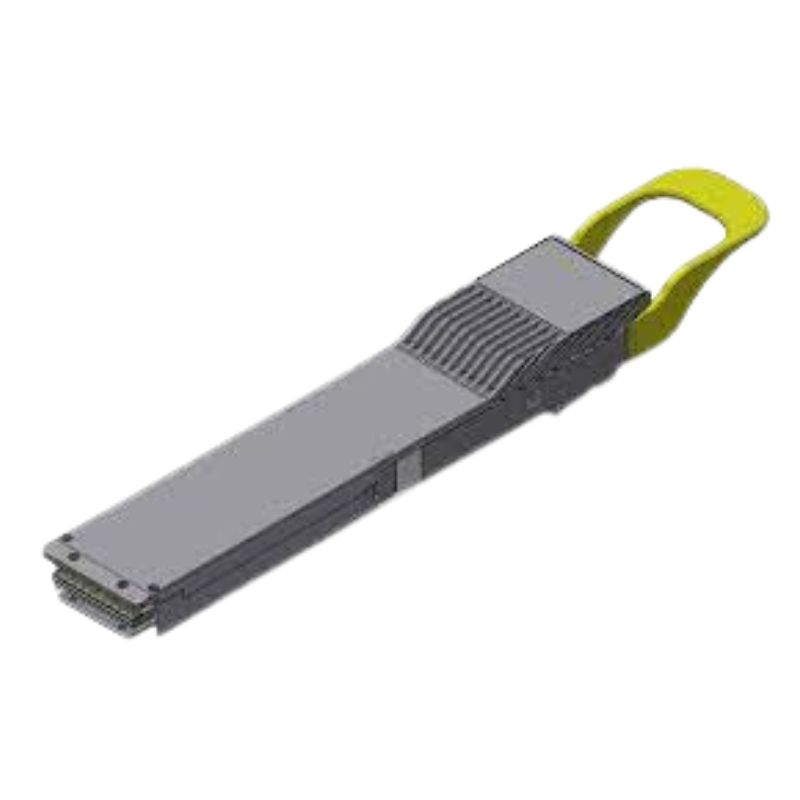


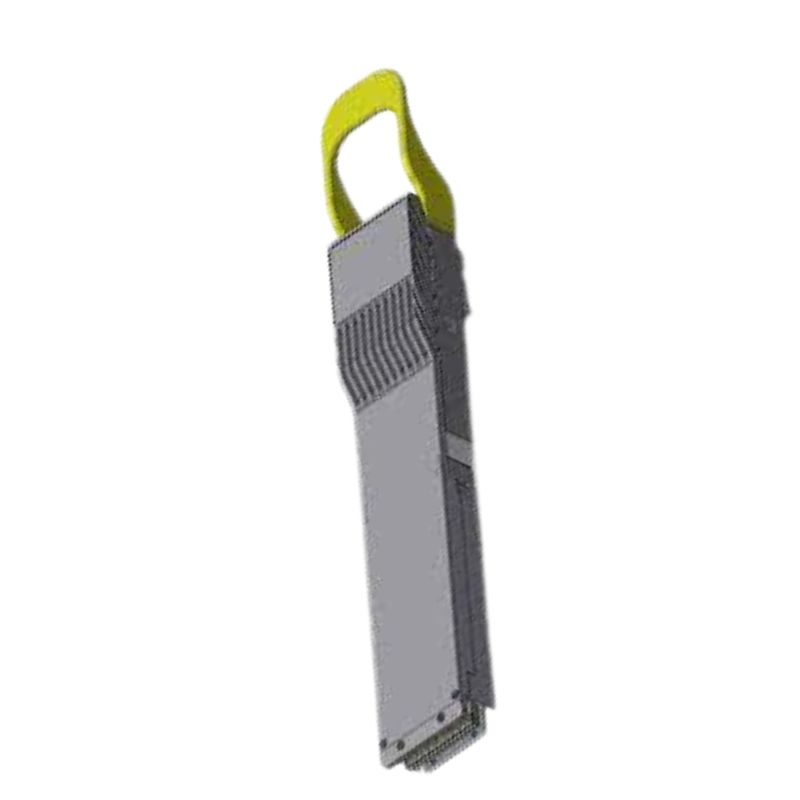
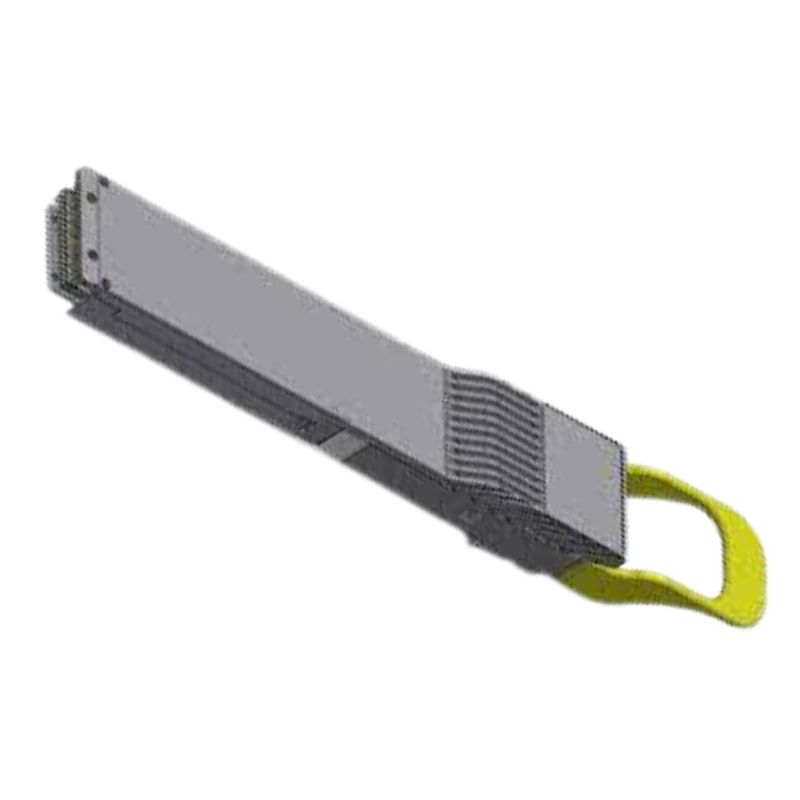
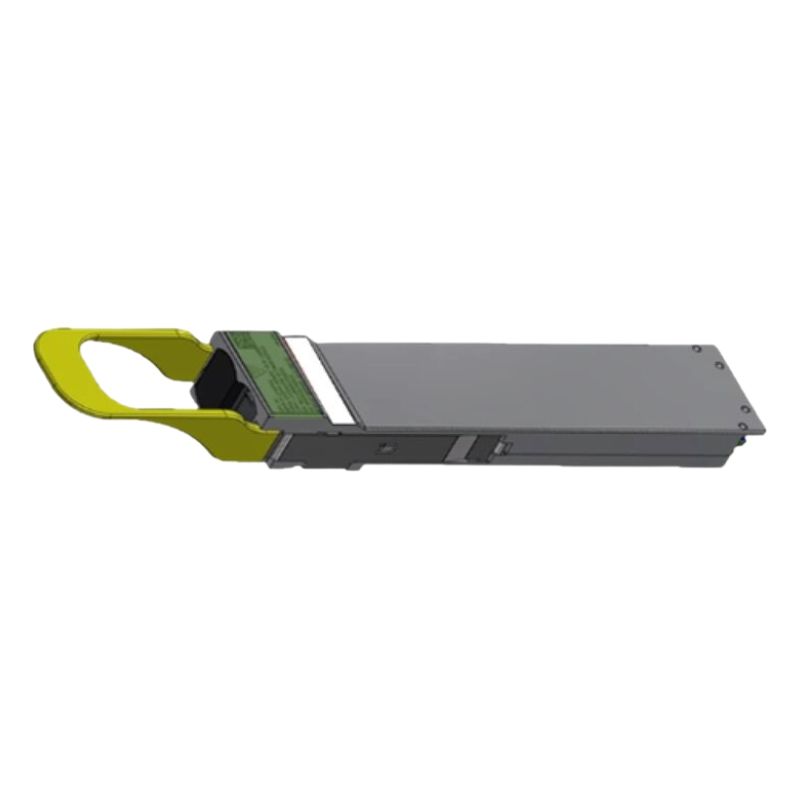
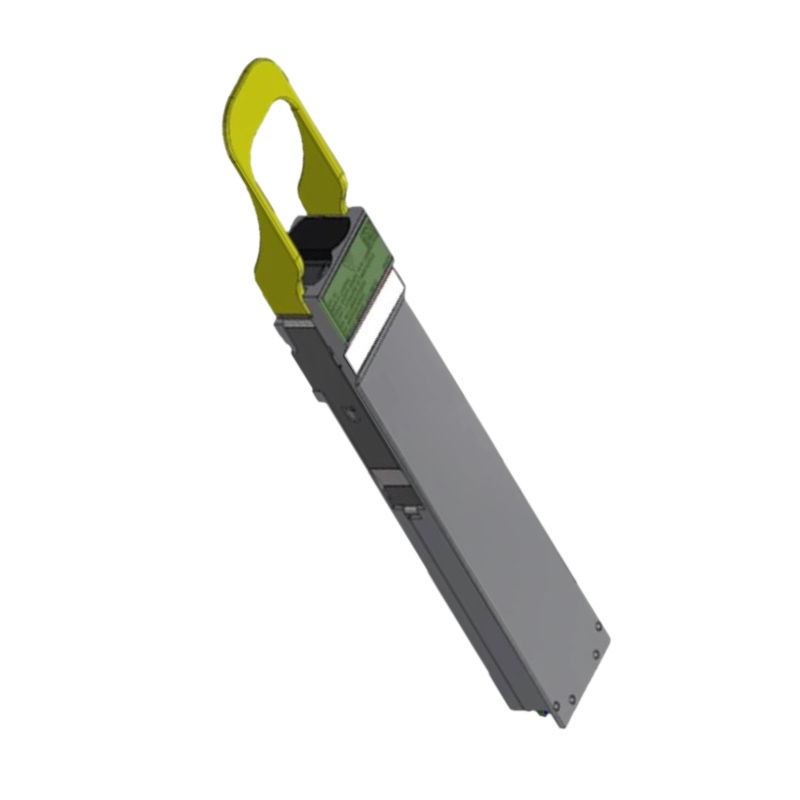
Nvidia 980-9I51S-F4NS00 400GBE OSFP MPO12 APC 850nm MMF Up to 50m Flat Top Single Port Transceiver. Factory-Sealed New in Original Box (FSB) with 3 Years Warranty
The Nvidia 980-9I51S-F4NS00 is a marvel of optical engineering, built to meet the rigorous demands of modern data centers. Understanding the product code and its specifications is essential for seamless integration into your network fabric.
The module utilizes the OSFP form factor, which is hot-pluggable, allowing for easy installation and replacement without powering down the host system. The electrical interface on the host side is compliant with the IEEE 802.3bs and OSFP MSA standards, ensuring broad compatibility with OSFP-capable switches and NICs from Nvidia Spectrum series and other qualified vendors.
On the optical side, it features a single MPO-12/APC (Angled Physical Contact) connector. This is a 12-fiber connector, essential for its parallel optic operation. The APC polish, characterized by its green connector boot, provides a superior reflectance performance compared to UPC (Ultra Physical Contact) polish. This results in lower optical return loss, minimizing signal reflections back into the transmitter laser, which enhances signal stability and reduces bit-error rates, especially critical at 400G speeds.
This transceiver operates on an 850nm wavelength and is designed for use with multimode fiber (MMF), specifically OM3, OM4, and OM5 grades. It employs a parallel optics architecture where data is transmitted and received simultaneously over multiple fibers within the same MPO cable.
The 400GbE signal is achieved through 8 lanes of 50G PAM4 (Pulse Amplitude Modulation, 4-level) modulation. In the transmit direction, these 8 electrical lanes are converted into 8 optical lanes. They are transmitted over 8 of the 12 fibers in the MPO cable. On the receive side, another 8 fibers carry the signal back, completing the full-duplex 400G link. This 8x50G architecture is a common and efficient approach for 400GBASE-SR type modules.
Power and Thermal Design
High-speed optics require careful power management. The Nvidia 980-9I51S-F4NS00 is engineered for optimal power efficiency, typically consuming less than 10 watts. The OSFP form factor's enhanced thermal envelope allows the module to dissipate this heat effectively, ensuring consistent performance and reliability even in elevated ambient temperatures common in data center aisles.
In modern leaf-spine architectures, the spine layer requires ultra-high-bandwidth connections to aggregate traffic from numerous leaf switches. 400GbE links using these transceivers are perfect for interconnecting spine switches, creating a non-blocking, low-latency fabric capable of handling east-west traffic generated by distributed applications, microservices, and storage clusters.
As servers increasingly feature 25GbE, 100GbE, and even 400GbE network interfaces, the top-of-rack (ToR) or leaf switches need corresponding high-speed uplinks. A single 400GbE uplink from a leaf switch to the spine, enabled by this transceiver, can aggregate traffic from dozens of high-speed servers, simplifying cabling and reducing cost per gigabit.
AI training and HPC workloads involve massive parallel communication between GPUs and compute nodes. Nvidia own InfiniBand and Ethernet solutions for AI rely on high-bandwidth, low-latency networks. This 400GbE transceiver is a key component in building the Ethernet-based backend fabrics (often using Nvidia Spectrum switches) that connect GPU servers, ensuring that data can flow between computational resources without becoming a bottleneck.
Modern all-flash storage arrays deliver incredible IOPS and throughput, often saturating multiple 100GbE links. 400GbE provides a consolidated, high-bandwidth pipeline for connecting these storage systems to the core network, facilitating fast data access for transactional databases, virtualized environments, and large-scale analytics platforms.
The most straightforward application is a point-to-point link between two 400GbE OSFP ports. This requires a male-to-male MPO-12 APC trunk cable with a "flat top" or "flat surface" MPO ferrule. The "Flat Top" designation is critical for APC connectors to ensure proper physical contact and alignment. The cable's internal fiber arrangement must be a straight-through (position 1 to position 1, etc.) to align the transmit fibers on one end with the receive fibers on the other.
As outlined in the reach specifications, the choice of multimode fiber is paramount. For new installations, OM5 (WBMMF) is strongly recommended. While it supports the longest reach (150m) with this transceiver, its primary benefit is future-proofing. OM5 is designed to support multiple wavelengths (SWDM) for future 400G and 800G standards over a single fiber pair, protecting your cabling investment. Existing installations using OM4 (up to 100m) are perfectly suitable, while OM3 (up to 50m) may be sufficient for very short links within a single rack or adjacent racks.
Ensure that the switch or router chassis has adequate airflow as per the manufacturer's specifications. While the OSFP form factor aids thermal dissipation, proper systemic cooling is necessary to prevent thermal throttling or premature module failure, particularly in high-ambient-temperature environments. This transceiver is extensively tested and validated for use in Nvidia Spectrum-based Ethernet switches, such as the Spectrum-2, Spectrum-3, and Spectrum-4 series. Using Nvidia qualified optics ensures: Like all modern pluggables, this module supports DDM functions as defined by the SFF-8472 MSA. This allows network operators to proactively monitor the health and performance of the optical link, predict potential failures (e.g., by detecting gradually decreasing RX power), and troubleshoot issues remotely, thereby reducing mean time to repair (MTTR)..
The adoption of 400GbE, facilitated by transceivers like the Nvidia 980-9I51S-F4NS00, represents more than just an incremental speed upgrade. It is the foundational layer upon which next-generation applications are built. As AI models grow exponentially and datasets become larger, the network fabric must be a facilitator, not a hindrance. This 400G SR8 transceiver, with its focus on high-density, power-efficient, and reliable short-reach connectivity, is a critical enabler for the data centers of today and the AI-driven innovations of tomorrow. By understanding its technical nuances, applications, and deployment requirements, network architects can effectively harness its power to build agile, scalable, and high-performance infrastructure.


 Contact Us
 Information
 Catalog
 Solid State Drives (SSD)
 Network Switches
 Hard Disk Drives
 HBA & Controllers
 PC & Servers
 PC & Server Memory
 CPU & Processors
 Network Routers
 Power Supplies
 Tape Drives & Libraries
 Network Devices
 Computer & Network Cables