(7% discount is applied at checkout)
Cart is empty
Your go-to destination for cutting-edge server products
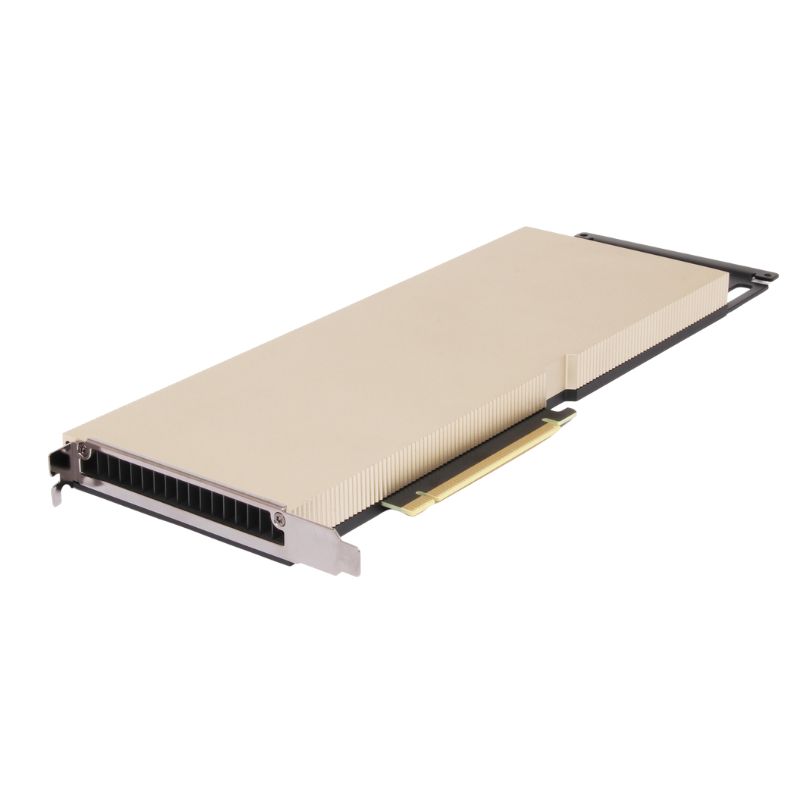


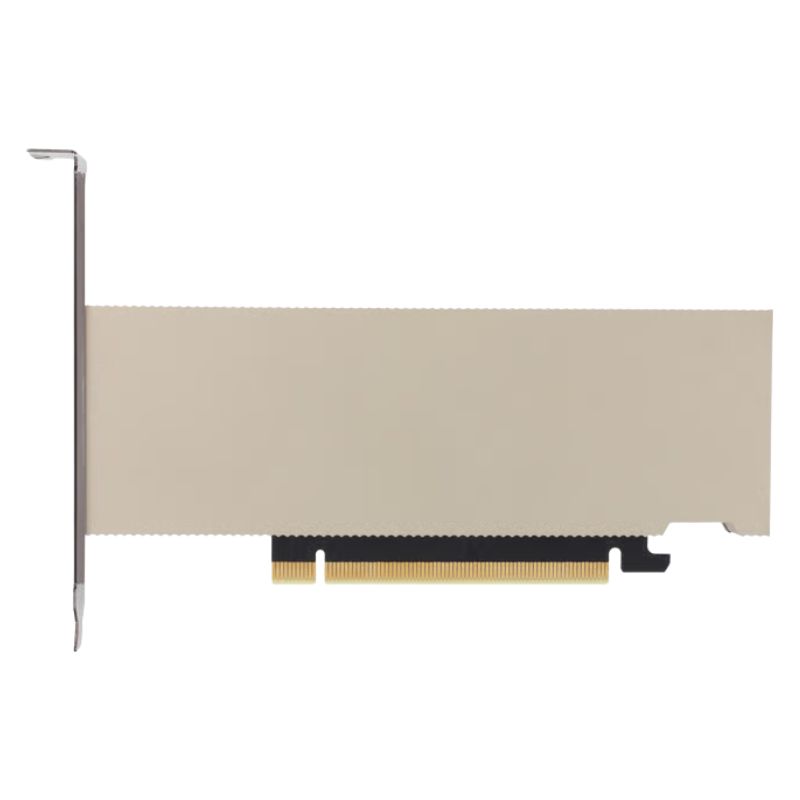
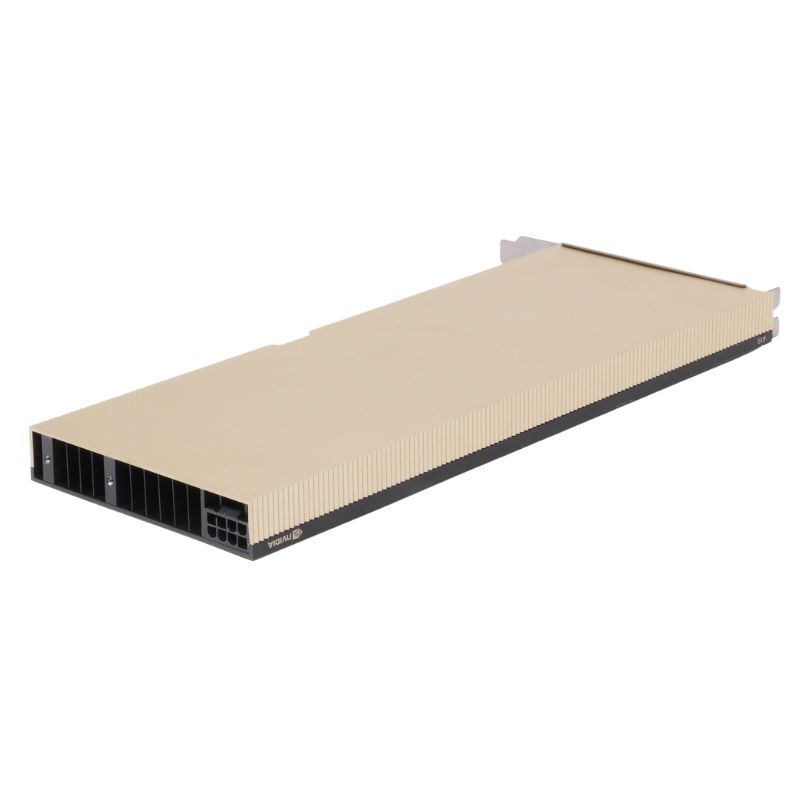
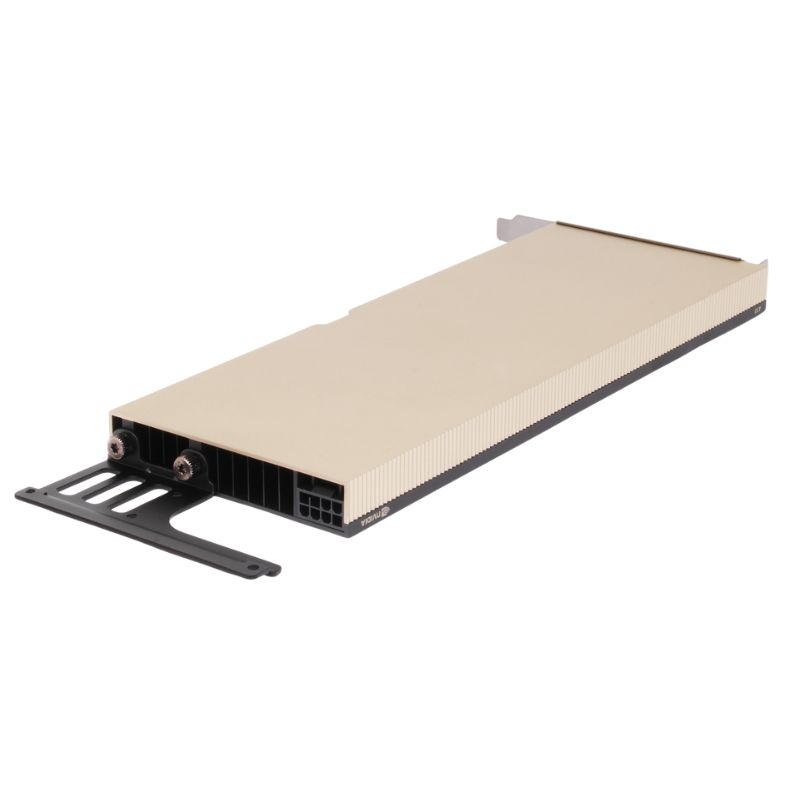
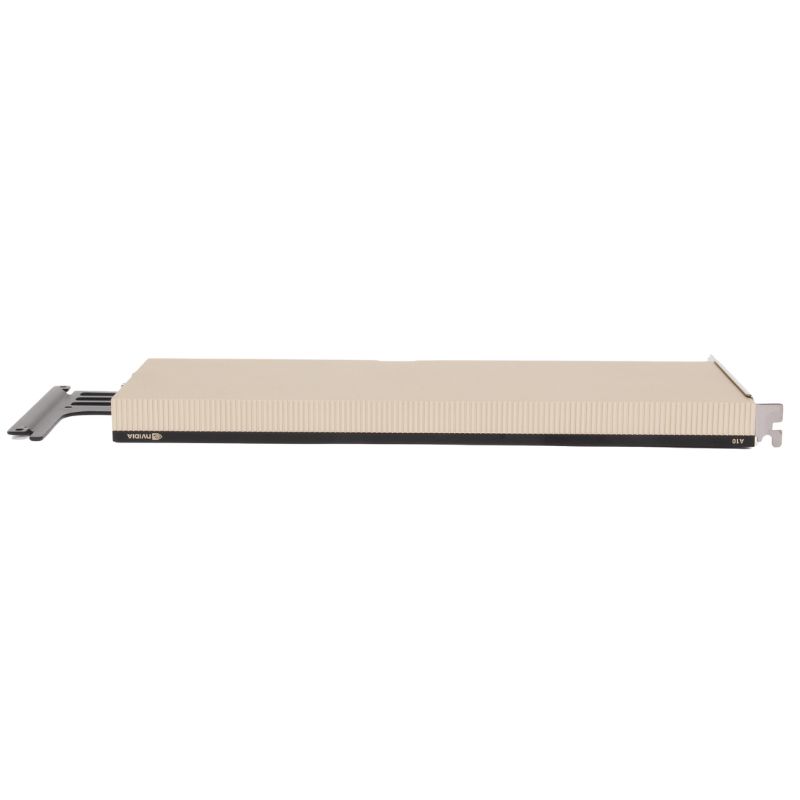
Nvidia A10 384-Bit 24GB GDDR6 PCI-Express 4.0 x16 1x 8-Pin Graphics Card. New Sealed in Box (NIB) With 3 Years Warranty - Call - ETA 2-3 Weeks. No Cancel No Return
The NVIDIA A10 graphics card is a powerful, enterprise-grade GPU designed for high-performance computing, AI workloads, and professional visualization tasks. Engineered with NVIDIA's Ampere architecture, it combines efficiency, speed, and cutting-edge memory capabilities to deliver unmatched performance for demanding applications.
Key Features and Specifications
The Ampere architecture brings numerous enhancements over previous generations, such as:
The heart of the A10 is the GA102 graphics processor, fabricated on Samsung's 8 nm process node. This large chip comprises 28.3 billion transistors and features a comprehensive array of processing units designed for modern workloads.
At its core, the A10 is equipped with 72 Streaming Multiprocessors (SMs) that house a total of 9,216 CUDA. These FP32 CUDA cores are the primary workhorses for parallel processing tasks, handling everything from graphics rendering to general-purpose computation. This massive core count provides the raw computational power needed for demanding professional applications.
Moving beyond traditional compute, the Ampere architecture integrates specialized cores for next-generation workloads. The A10 features 288 third-generation Tensor Cores, which are pivotal for accelerating AI and deep learning inference. These cores dramatically speed up operations involving various data formats, including INT4, INT8, FP16, and the new Tensor Float 32 (TF32). Furthermore, the card includes 72 second-generation RT Cores dedicated to real-time ray tracing, enabling photorealistic lighting, shadows, and reflections in rendering and visualization applications.
A standout feature of the NVIDIA A10 is its robust memory configuration, engineered to handle large datasets and complex models with ease.
The GPU is paired with a substantial 24 GB of GDDR6 memory. This large frame buffer is essential for workloads that involve high-resolution assets, such as complex 3D models, large AI datasets, and multi-stream video encoding. It also allows for the provisioning of ample memory to multiple virtual machines in a vGPU (virtual GPU) environment.
This memory is connected via a wide 384-bit memory interface, which, when combined with a memory clock speed of 1563 MHz (12.5 Gbps effective), delivers a peak memory bandwidth of 600 GB. This high bandwidth ensures that the GPU cores are consistently fed with data, preventing bottlenecks and maintaining peak performance across all its cores.
The NVIDIA A10 is designed with data center efficiency in mind. It is a single-slot, full-height, full-length (FHFL) card, measuring 267 mm in length and 111 mm in height. This single-slot design is critical for maximizing the number of GPUs that can be installed in a single server chassis, thereby increasing computational density. The card utilizes a passive cooling solution, meaning it has no onboard fans. Instead, it relies on consistent, high-flow system airflow provided by the server's own fans to dissipate heat. This design leads to higher reliability by eliminating a potential point of failure (the fan motor) and reduces acoustic noise, making it suitable for office-adjacent data centers.
The NVIDIA A10 is a versatile GPU that accelerates a wide range of professional workloads in the data center.
The A10 is purpose-built for graphics-rich VDI. When combined with NVIDIA virtual GPU software like NVIDIA RTX Virtual Workstation (WS) and NVIDIA Virtual PC (PC), it enables multiple users to access high-performance virtual desktops and workstations from anywhere. It supports up to 64 concurrent users per board and provides a user experience that is indistinguishable from a native PC or workstation. This is ideal for computer-aided design (CAD), engineering, and architectural visualization.
With its third-generation Tensor Cores, the A10 delivers exceptional performance for AI inference. It achieves up to 1000 TOPS of peak AI performance with INT4 precision (with sparsity):cite[3]:cite[6]. This makes it a cost-effective solution for deploying trained AI models in production environments for tasks like natural language processing, recommendation systems, and computer vision.
The combination of 9,216 CUDA cores and 72 RT Cores allows the A10 to accelerate both traditional and interactive rendering workflows. Professionals can achieve photorealistic visualization and faster render times in applications supporting ray tracing, making it a powerful solution for media and entertainment, product design, and visual effects.
Equipped with a 7th generation NVENC encoder and 5th generation NVDEC ration, supporting the latest codecs like H.265 (HEVC), VP9, and AV1 decode. This is perfect for video streaming platforms, broadcasters, and multimedia applications that require multi-stream, high-resolution video processing.
The theoretical computational power of the NVIDIA A10 is a key indicator of its capabilities across different. This performance profile demonstrates the A10's strength in both single-precision compute (FP32), common in graphics and simulation, and lower-precision operations (FP16, INT8, INT4) that are central to AI inference.
The A10 is supported by a mature and extensive software ecosystem. It benefits from NVIDIA's enterprise-class drivers, which are certified for stability and performance across a broad range of professional applications from over 100 independent software vendors (ISVs):cite[6]. Key software ncludes.


 Contact Us
 Information
 Catalog
 Solid State Drives (SSD)
 Network Switches
 Hard Disk Drives
 HBA & Controllers
 PC & Servers
 PC & Server Memory
 CPU & Processors
 Network Routers
 Power Supplies
 Tape Drives & Libraries
 Network Devices
 Computer & Network Cables