(7% discount is applied at checkout)
Cart is empty
Your go-to destination for cutting-edge server products
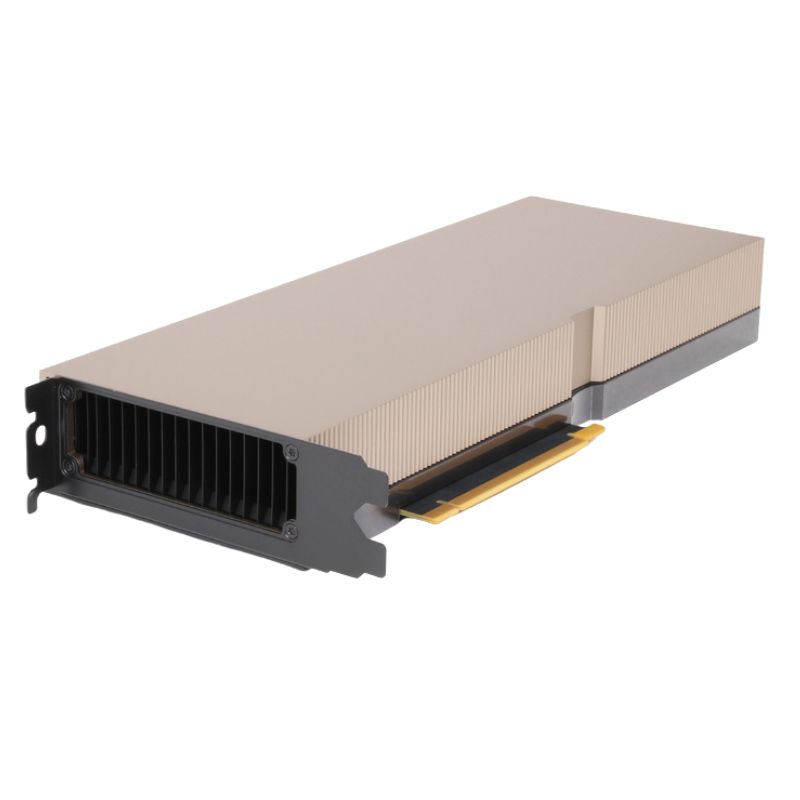


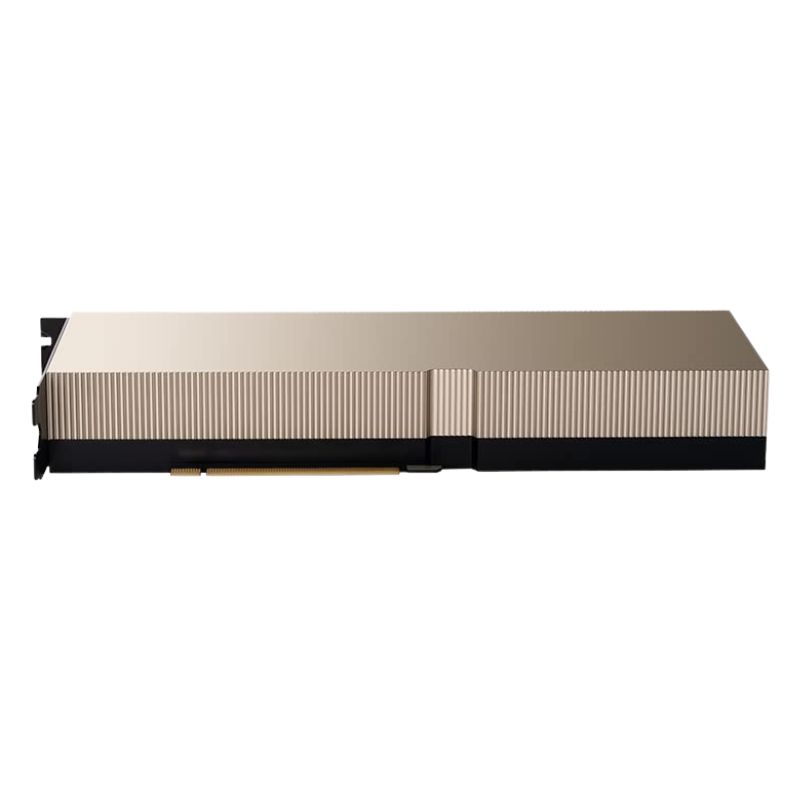
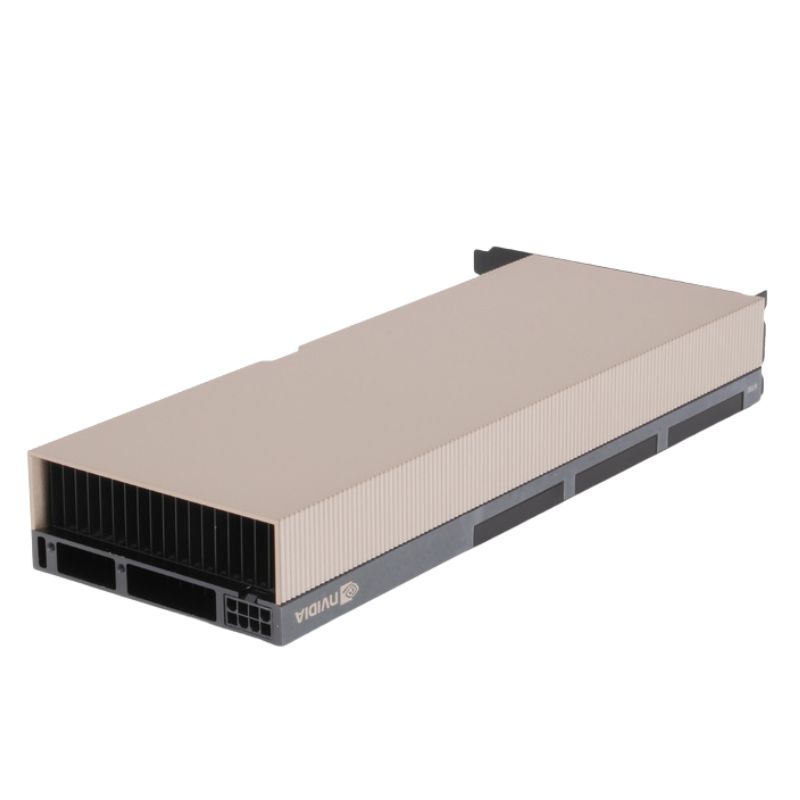
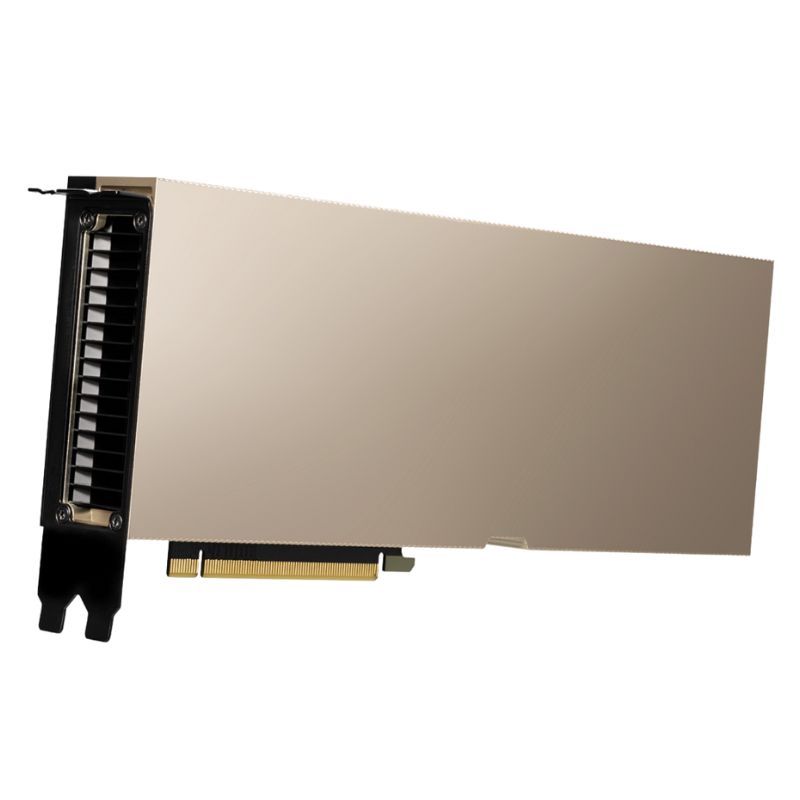
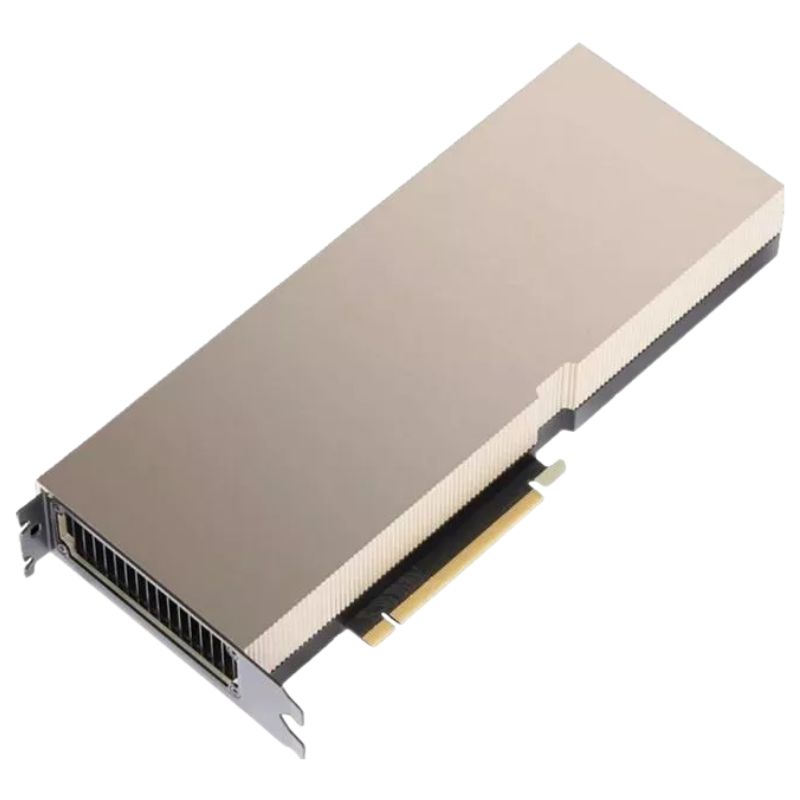
Nvidia A100 80GB HBM2 PCI-E Tensor Core Ampere Computing Accelerator GPU Card. New Sealed in Box (NIB) With 3 Years Warranty - Call. Eta 2-3 Weeks. No Cancel No Return
The Nvidia A100 80GB accelerator is built on the groundbreaking Ampere computing architecture, delivering unprecedented performance for demanding AI, data analytics, and high-performance computing (HPC) workloads.
Processing Core Specifications
Architectural Foundation Nvidia Ampere Innovation
Built upon the groundbreaking Nvidia Ampere architecture, the A100 80GB GPU represents a monumental leap in computational design for data center environments. The GA100 processor, fabricated using TSMC's 7nm process, integrates 54.2 billion transistors into an 826 mm² die, making it one of the most complex GPU designs ever produced. This architectural marvel delivers unprecedented performance across AI training, inference, and high-performance computing workloads, establishing new standards for data center acceleration.
The heart of the A100's revolutionary performance lies in its third-generation Tensor Cores, which significantly expand capabilities beyond previous generations. These specialized processing units introduce support for the TensorFloat-32 (TF32) precision format, which operates like FP32 while providing 20x higher AI performance without requiring code changes. The Tensor Cores also deliver groundbreaking double-precision (FP64) performance for HPC applications and comprehensive support for BF16, INT8, and INT4 precisions, making the A100 an exceptionally versatile accelerator for both AI training and inference workloads.
A100 introduces revolutionary Multi-Instance GPU technology that enables a single physical GPU to be partitioned into as many as seven secure, isolated GPU instances. Each MIG instance operates with dedicated high-bandwidth memory, cache, and compute cores, providing guaranteed quality of service and fault isolation. This innovation dramatically improves GPU utilization by allowing infrastructure managers to offer right-sized acceleration for varying workload demands, from small inference jobs to massive training tasks.
The Nvidia A100 80GB PCI-E Tensor Core GPU delivers exceptional computational capabilities across all precision types, making it uniquely suited for diverse workloads from scientific computing to AI inference. With 6,912 CUDA cores and 432 third-generation Tensor Cores, the A100 establishes new benchmarks for data center acceleration.
At its computational heart, the A100 80GB PCIe variant delivers 9.7 TFLOPS of FP64 performance and 19.5 TFLOPS of FP32 performance. Its Tensor Cores achieve staggering throughput with 312 TFLOPS for TF32, 624 TFLOPS for FP16 and BF16, and 1,248 TOPS for INT8 operations when leveraging sparsity. The GPU operates at a base clock of 1,065 MHz with a boost clock of up to 1,410 MHz, balancing performance with power efficiency.
The A100 80GB features groundbreaking HBM2e memory with a 5,120-bit interface delivering up to 1,935 GB/s of memory bandwidth in the PCIe variant. The 80GB of high-bandwidth memory enables researchers and data scientists to work with massive datasets and models that were previously impractical. Error Correction Code (ECC) protection is enabled by default, ensuring data integrity for mission-critical applications and long-running simulations.
The Nvidia A100 80GB has become the cornerstone of modern artificial intelligence infrastructure, enabling breakthroughs in both research and production environments. Its massive memory capacity and exceptional computational throughput significantly reduce training time for large models while enabling more complex architectures and larger batch sizes.
For AI training workloads, the A100 80GB delivers up to 3x higher performance on largest models compared to the A100 40GB. The additional memory capacity enables training of enormous models like deep learning recommendation systems (DLRM) with massive embedding tables, reaching up to 1.3TB of unified memory per node. The A100's Tensor Cores with TF32 precision provide up to 20x higher performance over Nvidia Volta with zero code changes, with an additional 2x boost available through automatic mixed precision and FP16.
Meta utilized 16,000 Nvidia A100 GPUs to train its groundbreaking Llama and Llama 2 open-source AI models. The A100's computational efficiency enabled processing terabytes of data across multiple tasks to generate human-like responses. The pretraining of Llama 2 required 3.3 million GPU hours on Nvidia A100 80GB GPUs, demonstrating the scale made possible by this technology. The A100's energy efficiency also contributed to Meta's sustainability initiatives, with carbon emissions fully offset despite the massive computational requirements.
For inference workloads, the A100 80GB introduces groundbreaking features that optimize throughput and latency across a full range of precisions. The GPU accelerates INT8 and INT4 operations with structural sparsity support delivering up to 2x more performance. On state-of-the-art conversational AI models like BERT, A100 accelerates inference throughput up to 249X over CPUs. For complex models constrained by batch size like automatic speech recognition (RNN-T), the A100 80GB's increased memory capacity doubles the size of each MIG instance and delivers up to 1.25x higher throughput compared to the A100 40GB.
Stability AI trained its revolutionary Stable Diffusion V2 model on 256 Nvidia A100 GPUs for 200,000 compute hours. The A100's exceptional tensor core performance and memory bandwidth were instrumental in training this generative AI model to produce high-quality images from text prompts. The scalability of the A100 platform allowed Stability AI to bring state-of-the-art generative AI tools to a global audience, demonstrating the real-world impact of this technology on creative applications.
Beyond artificial intelligence, the Nvidia A100 80GB delivers transformative performance for scientific computing, engineering simulations, and large-scale data analytics. The introduction of double-precision Tensor Cores represents the most significant advancement in HPC performance since the introduction of FP64 GPU computing.
The A100 80GB brings Tensor Core power to HPC applications, providing up to 2.5x the FP64 performance of the previous generation V100. Researchers can now reduce a 10-hour, double-precision simulation to under four hours using the A100. For applications with the largest datasets, such as materials simulation with Quantum Espresso, the A100 80GB's additional memory delivers up to 1.8x higher throughput compared to the 40GB variant. This massive memory capacity and unprecedented memory bandwidth make the A100 80GB the ideal platform for next-generation scientific workloads.
Shell, an international energy company, implemented Nvidia A100 GPUs for high-performance computing applications in oil and gas exploration. The A100s enabled processing and analysis of vast amounts of data, significantly improving computational efficiency across various applications including seismic imaging and reservoir simulation. By adopting A100 technology, Shell reduced the time required for simulations and data processing, enabling faster decision-making and enhancing operational efficiency in complex energy exploration workflows.
For data analytics workloads, the A100 80GB demonstrated 2x faster performance than the A100 40GB on big data analytics benchmarks. When combined with the RAPIDS suite of open-source libraries and Nvidia Magnum IO, the A100 platform accelerates enormous data processing workloads at unprecedented levels of performance and efficiency. The massive memory capacity allows data scientists to analyze, visualize, and turn massive datasets into insights without the bottlenecks typically associated with scale-out solutions scattered across multiple servers.
The Nvidia A100 80GB incorporates sophisticated technologies that optimize resource utilization, enhance security, and simplify integration into existing data center infrastructure.
The A100's revolutionary MIG technology can partition a single GPU into as many as seven secure instances, each with 10GB of dedicated HBM2e memory. This capability maximizes utilization of GPU-accelerated infrastructure by giving multiple users access to appropriately sized GPU resources. MIG works seamlessly with Kubernetes, containers, and hypervisor-based server virtualization, supporting all major runtimes including LXC, Docker, CRI-O, Containerd, Podman, and Singularity. Each MIG instance is recognized as a new GPU type in Kubernetes and is available across all major Kubernetes distributions.
For enterprise environments, the A100 80GB supports Nvidia Virtual Compute Server (vCS) for accelerating virtualized workloads. The PCIe form factor makes the A100 an ideal upgrade path for existing V100/V100S Tensor Core GPU infrastructure. Single Root Input/Output Virtualization (SR-IOV) support allows sharing and virtualizing a single PCIe connection for multiple processes or virtual machines, enhancing flexibility in multi-tenant environments.
The A100 80GB PCIe variant supports third-generation NVLink technology, enabling two PCIe cards to be connected with a high-speed bridge providing 600 GB/s of bidirectional bandwidth. This doubles the effective memory footprint and scales application performance by enabling extremely fast GPU-to-GPU data transfers. Multiple pairs of NVLink-connected boards can reside in a single server, with the exact number varying based on server enclosure, thermal management, and power supply capacity.
The A100 80GB PCIe GPU supports PCI Express Gen 4, which doubles the bandwidth of PCIe Gen 3 by providing 31.5 GB/s compared to 15.75 GB/s for x16 connections. This enhanced bandwidth is particularly beneficial for A100 GPUs connecting to PCIe 4.0-capable CPUs and for supporting fast network interfaces such as 200 Gb/sec InfiniBand, ensuring that data transfer never becomes a bottleneck for computational workloads.
The versatility of the Nvidia A100 80GB GPU enables transformative applications across numerous industries, accelerating innovation and providing tangible business value.
During the COVID-19 pandemic, Caption Health utilized Nvidia A100 capabilities to develop AI models for echocardiography, enabling rapid and accurate assessment of cardiac function in patients with suspected or confirmed COVID-19 infections. The A100's computational power accelerated model development and inference, helping medical professionals make faster diagnostic decisions during a critical healthcare crisis.
LILT, a company specializing in AI-powered language translation, used Nvidia A100 GPUs alongside the NeMo framework to create AI models capable of processing high volumes of multilingual content. When a European law enforcement agency required fast translation of large volumes of content in low-resource languages under tight deadlines, LILT's solution achieved translation speeds exceeding 150,000 words per minute – delivering up to 30 times higher character throughput in inference performance compared to equivalent models running on CPUs.
Perplexity AI leveraged Nvidia A100 GPUs with Tensor RT-LLM to significantly enhance the efficiency of its inference API, achieving remarkable reductions in latency and operational costs. Deployed on Amazon EC2 P4d instances, the A100 GPUs enabled Perplexity to manage substantial inference workloads while ensuring consistent performance for large language models at scale, demonstrating the cost-effectiveness and high performance of A100 in large-scale generative AI deployments.


 Contact Us
 Information
 Catalog
 Solid State Drives (SSD)
 Network Switches
 Hard Disk Drives
 HBA & Controllers
 PC & Servers
 PC & Server Memory
 CPU & Processors
 Network Routers
 Power Supplies
 Tape Drives & Libraries
 Network Devices
 Computer & Network Cables