(7% discount is applied at checkout)
Cart is empty
Your go-to destination for cutting-edge server products


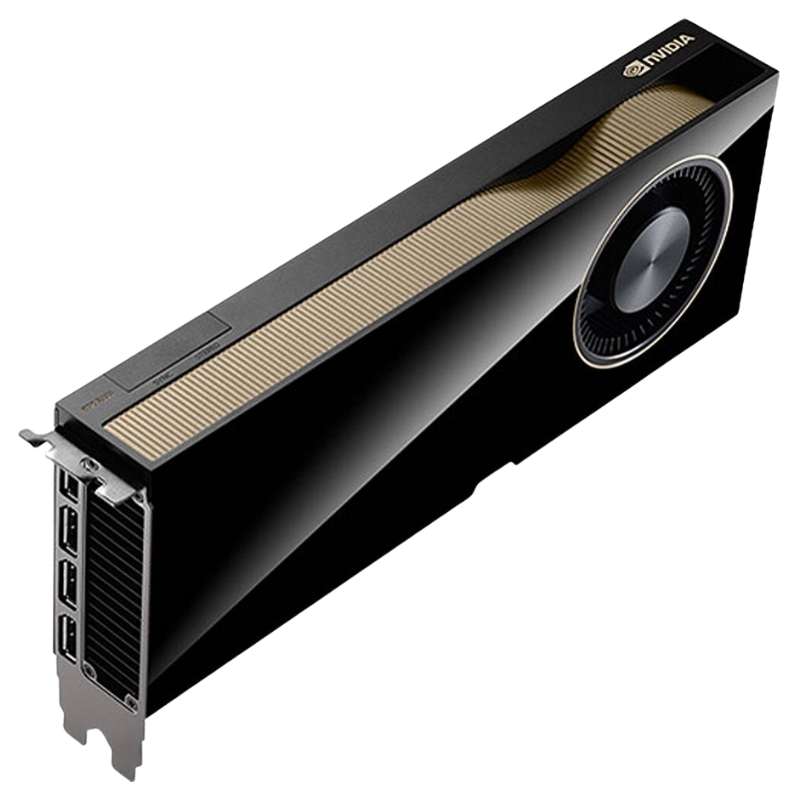
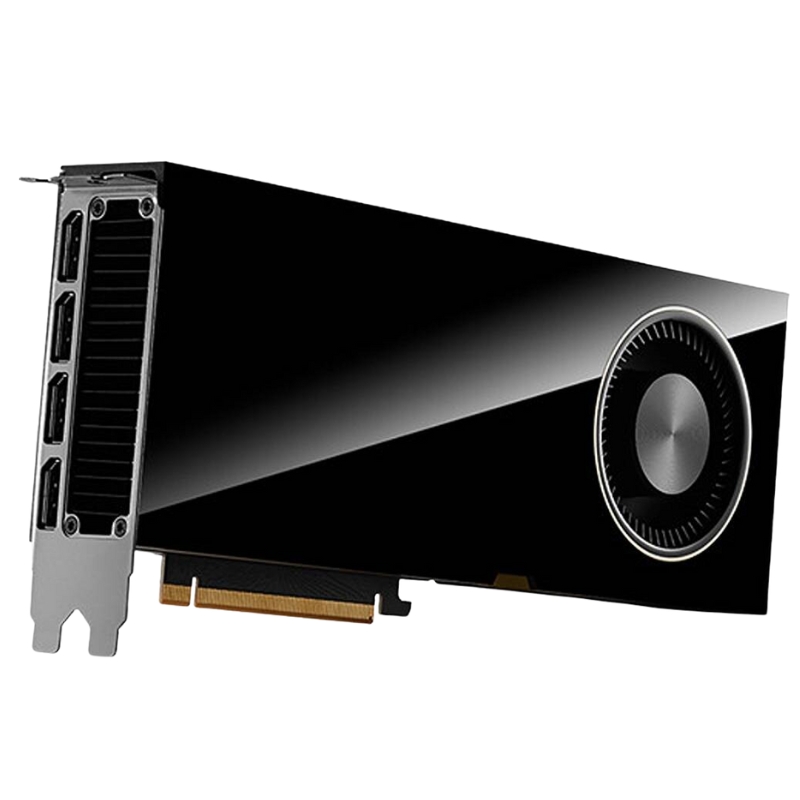
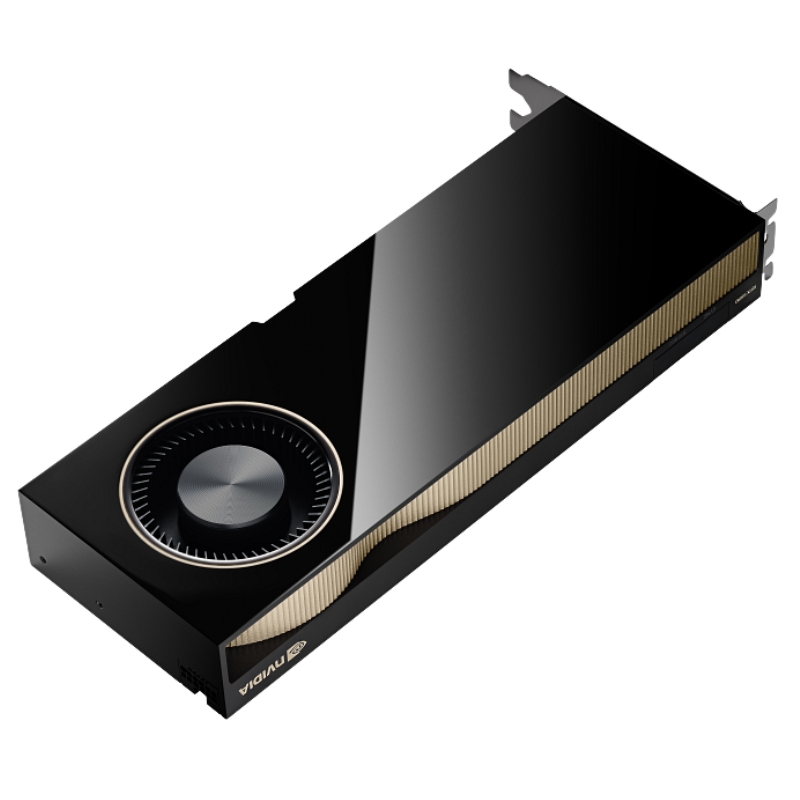
Nvidia RTX5880ADA RTX 5880 Ada 48GB GDDR6 PCI-Express 4.0 X16 2x Slot 285W Graphic Card. New Sealed in Box (NIB) with 3 Years Warranty. Call (ETA 2-3 Weeks) - No Cancel No Return
The Nvidia RTX5880ADA RTX 5880 Ada 48GB GDDR6 PCI-Express 4.0 X16 2x Slot 285W Graphic Card redefines expectations for professional and enthusiast graphics processing through a careful balance of raw computational power, vast memory capacity, and modern connectivity. Engineered on the Ada Lovelace architecture, this flagship-class card is positioned to serve demanding workflows across creative design, 3D rendering, scientific simulation, large-scale data visualization, and AI acceleration. The RTX 5880 Ada variant with 48GB of GDDR6 memory and a 285W thermal/power envelope is designed to deliver multi-application responsiveness without compromise, making it an ideal choice where dataset size, texture fidelity, and real-time ray-tracing performance are non-negotiable.
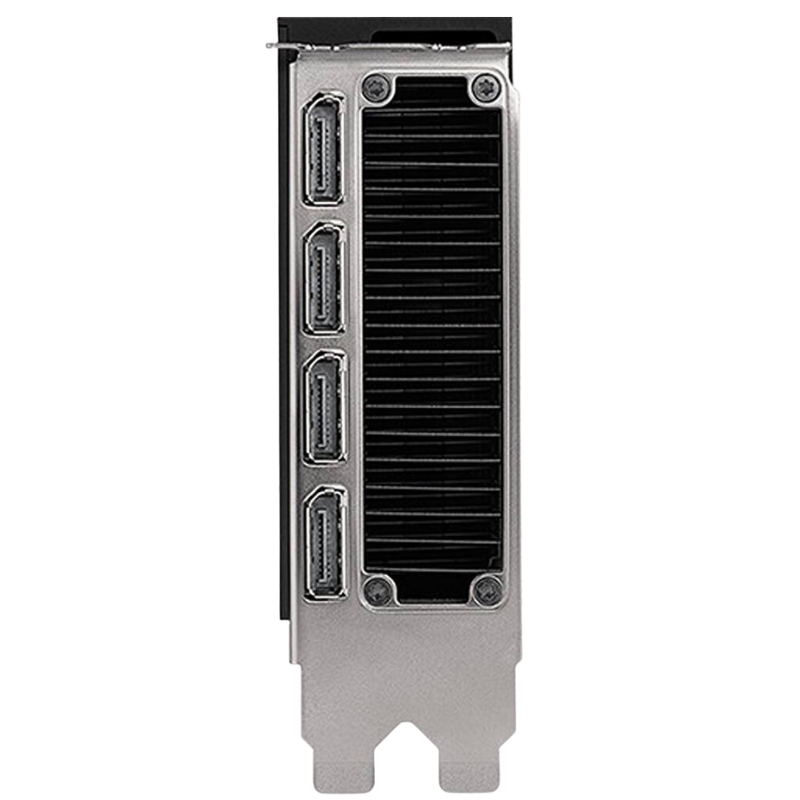
The Nvidia RTX5880ADA (marketed as the RTX 5880 Ada Generation) is a purpose-built professional graphics card targeted at creative studios, engineers, data scientists and visualization professionals who require large onboard memory, robust ray tracing and accelerated AI inference inside a PCI-Express 4.0 x16 form factor. This category centers on the RTX 5880 Ada 48GB GDDR6 configuration: a dual-slot, 285 W thermal and power envelope design that balances dense compute capability with compatibility for standard workstation and tower systems. Key physical and electrical attributes—48 gigabytes of GDDR6 with ECC, a PCIe 4.0 x16 interface, four DisplayPort outputs and a rated peak power consumption of 285 watts—define its role as a workstation GPU rather than a gaming consumer card, and these details are central to any category page copy that aims to attract professional buyers and system integrators.
At the heart of the RTX 5880 Ada is Nvidia’s Ada Lovelace architecture, which brings a combination of high-throughput CUDA cores, advanced RT cores and next-generation Tensor cores. The Ada platform in this SKU is configured to deliver tens of teraflops of single-precision compute and very high RT and Tensor throughput, enabling real-time ray tracing, denoising, AI upscaling and complex simulation tasks that are common in VFX, CAD and scientific visualization workloads. These architecture choices affect how software like rendering engines, DCC applications and AI frameworks map workloads to the card: more RT cores accelerate real-time ray tracing; Tensor cores speed up AI inference and mixed-precision training; and a larger L2 cache plus a wide memory bus reduce data starvation for large models and datasets. For designers and engineers building GPU-accelerated pipelines, the Ada architecture’s balance of raster, ray tracing and tensor compute translates into measurable time savings on production tasks.
One of the RTX 5880 Ada’s defining category attributes is the 48 gigabytes of GDDR6 memory paired with error correcting code (ECC). This large, ECC-protected frame buffer is the difference between a workstation that can hold massive 3D scenes, multi-layered compositing timelines and large scientific datasets in GPU memory, and a card that must repeatedly shuttle data between host RAM and GPU RAM. ECC support is essential for professional deployments where silent data corruption cannot be tolerated; it provides a safety layer for long renders and precision compute tasks. The wide 384-bit memory bus and the high aggregate bandwidth (as documented in official datasheets) are engineered to sustain throughput for memory-intensive operations such as volumetric rendering, large-model inference and multi-viewport CAD sessions.
For studios and professionals who use ray tracing renderers—whether real-time engines like Unreal and Unity for visualization or offline renderers used in animation and VFX pipelines—the RTX 5880 Ada is positioned as a card that reduces render time through a mix of RT core density and general compute throughput. The card’s architecture accelerates path tracing, global illumination integration and denoising passes; it also speeds up lookdev and lighting iterations because more geometry and higher resolution textures can remain resident in GPU memory. When rendering complex scenes with layered shaders and many light sources, the additional VRAM prevents out-of-memory errors and eliminates time-consuming tile swapping to system memory, enabling more predictable and efficient batch renders and interactive previews.
Data scientists and AI engineers will find the RTX 5880 Ada’s Tensor core improvements valuable for mixed-precision training and inference workflows. Large language models, vision transformers and other memory-hungry architectures benefit directly from the 48GB frame buffer; models that previously required model parallelism across multiple cards can sometimes be consolidated to a single RTX 5880 Ada, simplifying development and deployment. The card’s Tensor throughput is suited to accelerated libraries—cuDNN, TensorRT and popular deep learning frameworks—enabling faster iteration on model tuning and shorter experiment cycles. In production inference scenarios, the Ada-based Tensor cores also speed up quantized and mixed-precision inference, making this GPU a sensible choice for on-premise AI appliances and workstation-based model evaluation tasks.
Complex CAD assemblies, finite element simulations and photorealistic design reviews are workflows that benefit from the RTX 5880 Ada’s memory capacity and driver optimizations. Multi-viewport workflows, large assemblies with high-res textures and simulations with dense meshes all place heavy demands on GPU memory and on sustained compute. Certified drivers and ISV optimizations for leading CAD and CAE applications ensure predictable behavior and validated performance; the card’s active thermal solution and 285 W power limit are designed to maintain clock stability under continuous, heavy professional workloads. This makes the RTX 5880 Ada an attractive pick for engineers and visualization specialists who need both reliability and raw throughput.
The RTX 5880 Ada’s dual-slot profile is a critical category consideration for system builders and integrators. Many professional workstations are optimized for dual-slot GPUs because they balance cooling efficiency and chassis compatibility; the RTX 5880 Ada’s form factor enables straightforward integration into a broad range of tower and rack workstation platforms without encroaching on neighboring PCIe slots. Compatibility matrices from workstation OEMs outline supported chassis and PSU recommendations, and many major workstation vendors have validated configurations that include this card. This reduces the architectural friction for enterprises procuring GPU resources for creative and engineering teams.
An active thermal solution matched to the card’s 285 W maximum power draw ensures that clock speeds are maintained during prolonged rendering passes and compute runs. The card’s heat dissipation design, in typical retail and OEM implementations, uses a combination of vapor chamber or copper heat spreader and dual fans or system airflow channels to extract heat efficiently. From a category perspective, highlighting sustained performance and thermal headroom helps buyers understand how the RTX 5880 Ada behaves under workload continuity—an essential detail for customers who run overnight renders or continuous model training jobs. Thermal behavior also influences acoustic considerations in a shared studio environment, where quieter yet effective cooling contributes to a better workplace experience.
Within Nvidia’s ecosystem, the RTX 5880 Ada sits between higher-end flagship workstation cards and more consumer-oriented prosumer options. Its 48GB memory capacity and ECC support place it above gaming-centric GPUs that prioritize peak clock speeds but have smaller frame buffers, and it is often more cost-efficient than top-tier flagship cards that push higher power and compute ceilings for specialized data-center scenarios. When positioning this category on a retail or OEM site, it is useful to present the RTX 5880 Ada as the sweet spot for professionals who need expansive memory and reliable drivers but do not require the absolute highest throughput of the very largest server GPUs. Comparative copy should focus on memory size, ECC, certified drivers and TDP as primary axes of differentiation.


 Contact Us
 Information
 Catalog
 Solid State Drives (SSD)
 Network Switches
 Hard Disk Drives
 HBA & Controllers
 PC & Servers
 PC & Server Memory
 CPU & Processors
 Network Routers
 Power Supplies
 Tape Drives & Libraries
 Network Devices
 Computer & Network Cables