(7% discount is applied at checkout)
Cart is empty
Your go-to destination for cutting-edge server products
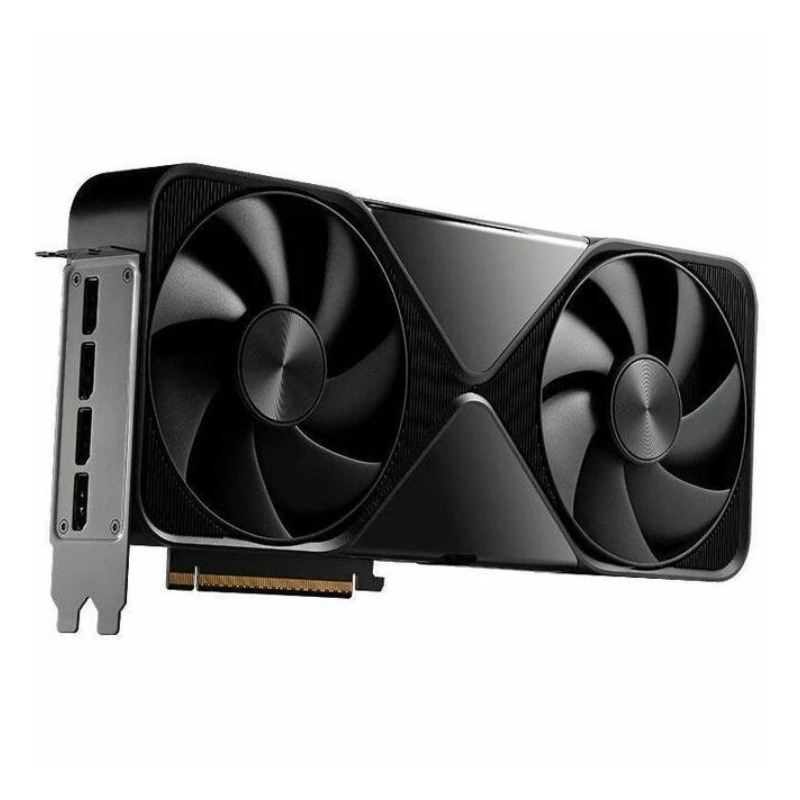


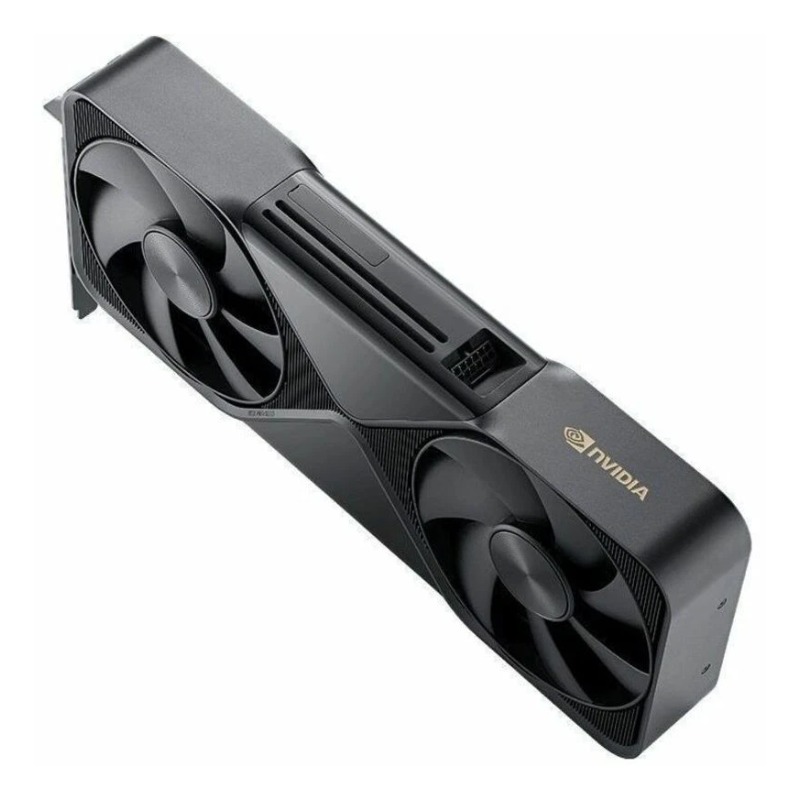
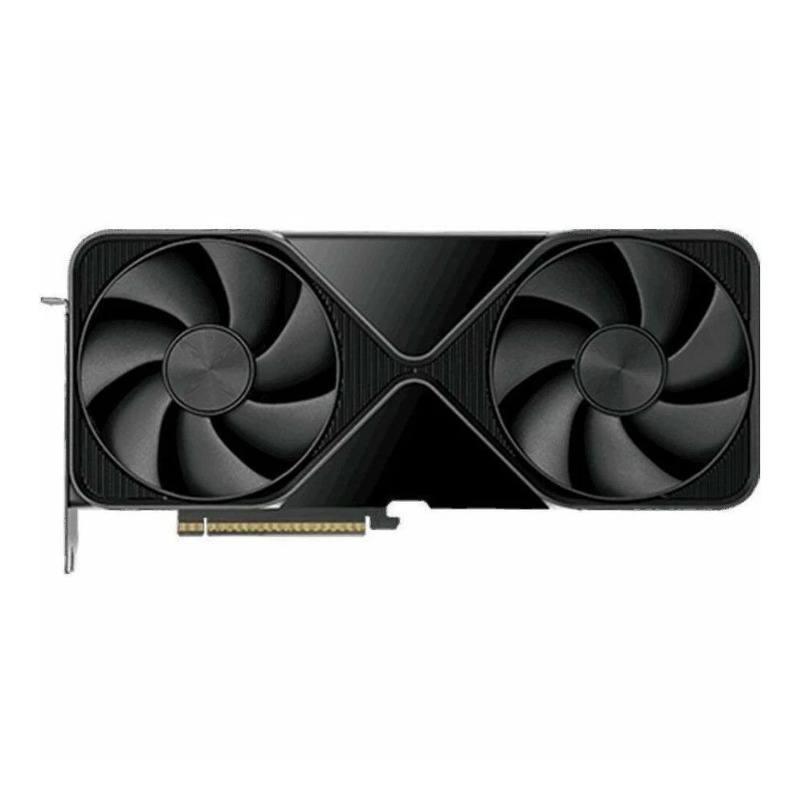
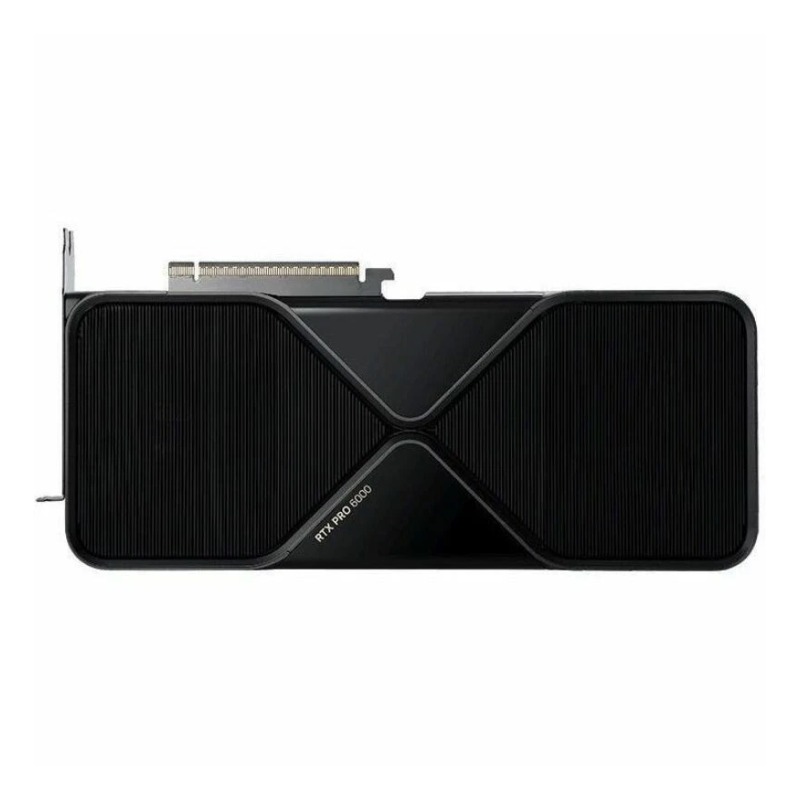
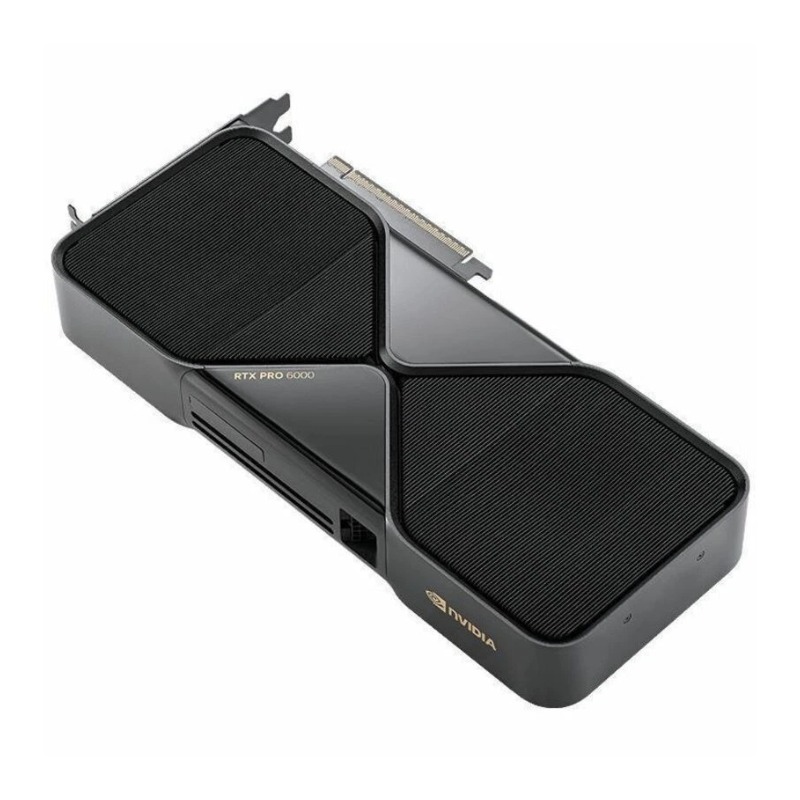
Nvidia RTXPRO6000B RTX PRO 6000 Blackwell Architecture 24,064 CUDA Cores 752 188 Nvidia RT Cores 96 GB GDDR7 With ECC Memory 1792 GB Memory GPU. New Sealed in Box (NIB) with 3 years Warranty. Eta 2-3 Weeks. No Cancel No Return
Experience next-generation performance with the NVIDIA RTXPRO6000B, engineered on the powerful Blackwell architecture. This workstation GPU delivers exceptional computing capabilities through an impressive array of 24,064 CUDA cores, 752 NVIDIA Tensor Cores, and 188 NVIDIA RT Cores. Designed for demanding creative and scientific workflows, it comes equipped with 96 GB of ultra-fast GDDR7 ECC memory and a 1792 GB/s memory bandwidth for seamless data handling and unmatched rendering precision.
The NVIDIA RTX Pro 6000 Blackwell Workstation Edition is crafted for professionals seeking stability, speed, and scalability. Featuring a dual-slot form factor and PCI Express interface, this card ensures compatibility with modern workstations. The double-flow-through thermal design maintains optimal cooling for sustained peak performance even under intensive workloads.
Built with next-generation GDDR7 memory technology, the RTXPRO6000B offers an ultra-wide 512-bit data bus that significantly boosts performance in memory-intensive operations. Its enormous 96 GB ECC memory capacity enables complex AI computations, high-resolution video editing, and simulation without bottlenecks.
To harness the full potential of the RTX Pro 6000 Blackwell, ensure your system meets or exceeds recommended specifications. Designed to integrate smoothly with high-end CPUs and modern expansion slots, it supports next-level performance for rendering, AI training, and simulation workloads.
The Nvidia RTX PRO 6000, built on the cutting-edge Blackwell architecture, is a powerhouse GPU designed for professionals demanding unprecedented computational performance. With 24,064 CUDA cores, this graphics processing unit delivers unmatched parallel processing capabilities, enabling highly complex simulations, 3D rendering, and artificial intelligence workloads to execute at lightning speed. The RTX PRO 6000 is engineered to accelerate workflows in fields such as scientific research, AI-driven applications, visual effects, and real-time ray tracing. Its architecture ensures optimal power efficiency while providing extreme computational throughput.
The GPU’s 96 GB of GDDR7 memory, equipped with ECC (Error Correcting Code), offers massive capacity for handling large datasets, complex models, and multi-layered textures. This memory configuration ensures data integrity and prevents corruption during high-intensity tasks. Combined with 752 NVIDIA Tensor cores and 188 NVIDIA RT cores, the RTX PRO 6000 allows for advanced AI computations, neural network training, and real-time ray-traced graphics rendering with unparalleled precision.
Professionals leveraging the RTX PRO 6000 benefit from its support for advanced APIs, including CUDA, OptiX, DirectX 12 Ultimate, and Vulkan, enabling seamless integration into a wide range of software ecosystems. This GPU is tailored for industries such as media and entertainment, architecture, scientific visualization, and engineering, where computational efficiency and graphical fidelity are paramount.
The Nvidia RTX PRO 6000 boasts an extraordinary 24,064 CUDA cores, providing immense parallel processing power for high-performance computing tasks. CUDA cores are responsible for executing simultaneous calculations, accelerating tasks such as rendering complex scenes, processing large-scale simulations, and performing deep learning computations. The sheer number of cores ensures that professionals can handle multiple high-demand applications simultaneously without compromise.
With optimized scheduling and enhanced core efficiency, the RTX PRO 6000 ensures maximum throughput across workloads, making it ideal for tasks ranging from photorealistic rendering to scientific computation. This core density allows developers to run larger batch sizes during AI model training, improving accuracy and efficiency in predictive analytics and neural network development.
The 752 NVIDIA Tensor cores within the RTX PRO 6000 provide specialized hardware for AI inference and training operations. Tensor cores accelerate matrix multiplication and accumulation operations, which are critical for deep learning tasks such as convolutional neural networks, natural language processing models, and generative AI algorithms. This makes the RTX PRO 6000 exceptionally suited for research labs, AI startups, and enterprise-grade AI projects that require cutting-edge acceleration.
These Tensor cores deliver mixed-precision computing, enabling high-performance processing while minimizing memory usage. This combination enhances the efficiency of AI model development, enabling quicker iteration cycles, faster convergence, and reduced energy consumption per computation. By leveraging Tensor cores, professionals can experience significant speedups in workflows that were previously limited by traditional GPU architectures.
The RTX PRO 6000 features 188 NVIDIA RT cores, which are designed to handle real-time ray tracing operations efficiently. Ray tracing simulates the behavior of light to produce photorealistic imagery with accurate reflections, shadows, and global illumination. The RTX PRO 6000 allows creators to visualize complex scenes in real time, reducing rendering times and enhancing creative workflows. For industries like architecture, film production, and gaming development, this capability enables more immersive and visually stunning outputs.
RT cores accelerate the computationally intensive task of ray-object intersection testing, which is critical for rendering realistic lighting and shadows. Combined with CUDA and Tensor cores, the RTX PRO 6000 delivers a comprehensive GPU solution capable of balancing AI workloads with high-fidelity graphics rendering, making it a versatile tool for professionals in multidisciplinary fields.
The 96 GB of GDDR7 memory in the RTX PRO 6000 offers an unprecedented level of memory bandwidth and capacity for professional workloads. This high-speed memory ensures rapid data transfer between the GPU and system memory, reducing bottlenecks during large-scale simulations and data-intensive rendering projects. ECC memory adds a layer of error correction, detecting and correcting memory errors automatically, which is crucial for high-precision applications in engineering, scientific research, and AI.
This memory configuration allows users to work on extremely large datasets without performance degradation, supporting tasks such as multi-layer 3D rendering, complex volumetric simulations, and AI training on massive datasets. For VFX studios and computational scientists, this memory capacity ensures stability and reliability across critical projects.
With its 752 Tensor cores and massive CUDA core count, the RTX PRO 6000 is a prime choice for AI development. From deep learning and natural language processing to generative AI and predictive analytics, this GPU accelerates training and inference processes, enabling faster experimentation and deployment of AI models. Its ECC memory ensures data integrity during long training sessions, and the high memory capacity supports large neural networks that would otherwise require multiple GPU setups.
Researchers can perform multi-GPU scaling effortlessly, leveraging the Blackwell architecture's enhanced connectivity features to synchronize data across multiple cards. This results in faster training times and improved model accuracy, allowing AI developers to push the boundaries of machine learning applications.
The RTX PRO 6000 is perfectly suited for 3D rendering and visual effects workflows. Its 188 RT cores accelerate ray tracing operations, while CUDA cores handle complex simulations, shading, and texture mapping. Whether creating photorealistic environments for film production or interactive assets for virtual reality, this GPU ensures smooth rendering performance without compromising quality.
Advanced software such as Autodesk Maya, Blender, and Houdini can fully utilize the GPU's massive parallel processing capabilities, reducing render times from hours to minutes. Real-time feedback during scene manipulation allows artists to iterate rapidly, improving creative efficiency and enabling high-quality outputs for demanding visual projects.
The RTX PRO 6000 provides unmatched performance for scientific computation. Its CUDA cores accelerate numerical simulations, molecular modeling, and computational fluid dynamics, while Tensor cores enable AI-driven data analysis. The large ECC memory ensures data integrity in sensitive scientific experiments and large-scale simulations, making it indispensable for research institutions and laboratories.
Applications such as MATLAB, ANSYS, and COMSOL can leverage the GPU for complex simulations that require massive parallel processing power. From climate modeling to quantum chemistry, the RTX PRO 6000 reduces computational time significantly, allowing researchers to explore more hypotheses and achieve results faster.
For professionals managing virtualized environments or multi-display workstations, the RTX PRO 6000 provides superior performance and stability. Its Blackwell architecture supports advanced virtualization features, enabling multiple virtual machines to run simultaneously with high graphical fidelity. This is ideal for design studios, financial analytics, and collaborative research environments where multiple users share the same GPU resources.
The GPU’s high memory bandwidth and capacity allow for smooth multi-display operations, even when handling ultra-high-resolution content across several monitors. This capability enhances productivity and ensures a seamless workflow in collaborative settings.
The RTX PRO 6000 has been optimized for leading professional software, including Autodesk, Adobe, Dassault Systèmes, Siemens NX, and more. This optimization ensures faster rendering times, reduced simulation durations, and smoother workflows. Engineers, designers, and content creators benefit from enhanced GPU acceleration that reduces manual adjustments and increases overall productivity.
In addition, the GPU is compatible with AI frameworks such as TensorFlow, PyTorch, and PyCaret, enabling data scientists to scale their models efficiently. The combination of optimized software support and powerful hardware ensures that professional users achieve maximum performance without compromising reliability.
The Blackwell architecture represents the next generation of Nvidia GPU design, focusing on high efficiency, performance, and scalability. This architecture integrates advanced scheduling mechanisms, improved power efficiency, and enhanced memory bandwidth to deliver superior computational power. For professionals, this translates to faster simulation times, smoother rendering, and more efficient AI model training.
Key innovations include improved Tensor core operations for AI acceleration, optimized RT cores for real-time ray tracing, and enhanced caching systems for large data handling. Blackwell architecture ensures that every component of the GPU operates in harmony, delivering consistent performance even under the most demanding workloads.
The RTX PRO 6000’s RT cores provide real-time ray tracing capabilities, delivering unprecedented visual fidelity. From cinematic rendering in post-production to real-time simulations in virtual reality, the GPU enhances image realism through accurate lighting, reflections, and shadows. The combination of CUDA, Tensor, and RT cores ensures balanced performance across AI computations and graphical rendering.
Professionals in media, architecture, and design can create immersive visual experiences without compromise. Real-time previews, interactive scene adjustments, and high-resolution output are all possible, making the RTX PRO 6000 an essential tool for high-end content creation.
Built for mission-critical workloads, the RTX PRO 6000 incorporates ECC memory and rigorous quality control to ensure maximum reliability. This is particularly important in scientific computing, AI model training, and professional rendering tasks, where data corruption or hardware failure can result in significant setbacks. With ECC-enabled memory, professionals can trust that their computations are accurate and consistent.
The GPU is designed for long-duration workloads and high-temperature environments, making it suitable for data centers, high-performance workstations, and continuous computational operations. Its robust thermal design and efficient power usage enhance operational stability and extend the lifespan of the hardware.
The RTX PRO 6000 supports multi-GPU configurations, allowing enterprises and research labs to scale their computational power efficiently. Nvidia’s NVLink technology ensures high-bandwidth interconnects between GPUs, enabling large-scale simulations, deep learning model training, and high-resolution rendering across multiple GPUs. This scalability ensures that even the most demanding professional workloads can be handled with ease.
Organizations can deploy clusters of RTX PRO 6000 GPUs for AI research, cinematic rendering, or scientific simulations, achieving results that were previously unattainable with single-GPU setups. The combination of high-performance cores, massive memory, and inter-GPU connectivity positions the RTX PRO 6000 as a cornerstone for modern high-performance computing environments.


 Contact Us
 Information
 Catalog
 Solid State Drives (SSD)
 Network Switches
 Hard Disk Drives
 HBA & Controllers
 PC & Servers
 PC & Server Memory
 CPU & Processors
 Network Routers
 Power Supplies
 Tape Drives & Libraries
 Network Devices
 Computer & Network Cables