(7% discount is applied at checkout)
Cart is empty
Your go-to destination for cutting-edge server products
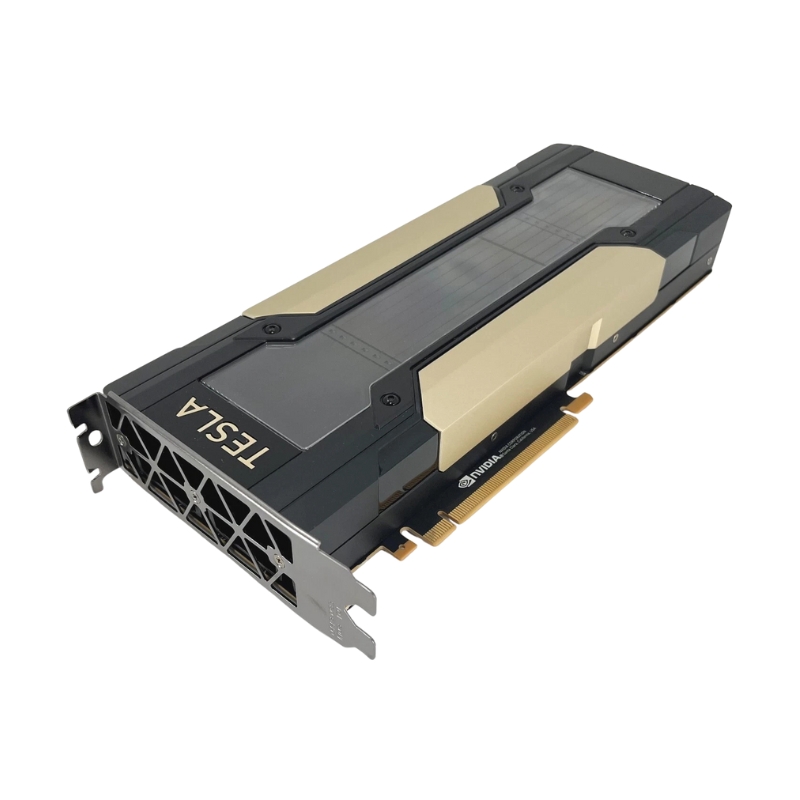


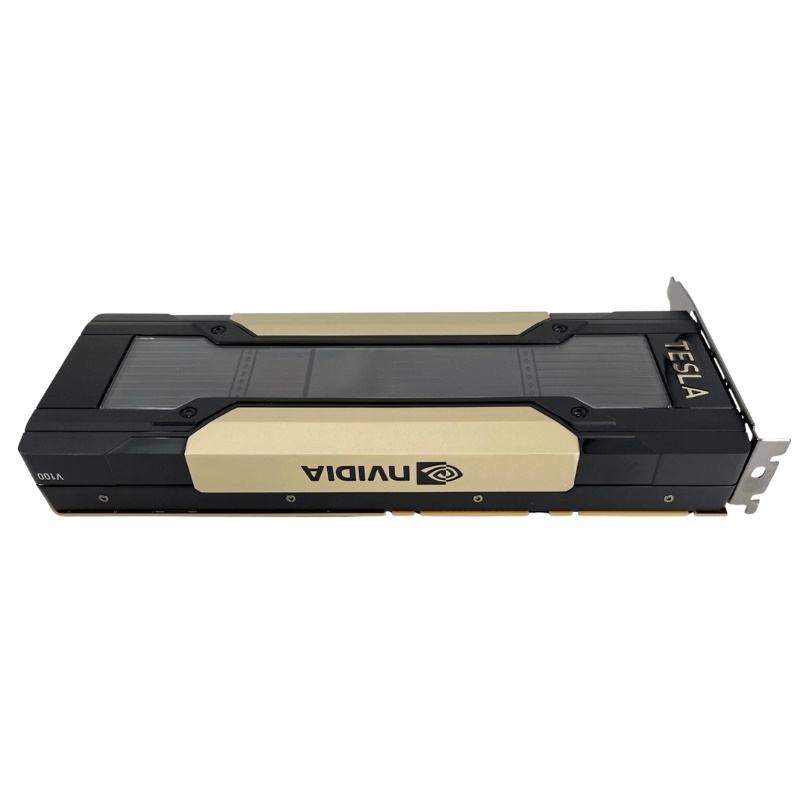
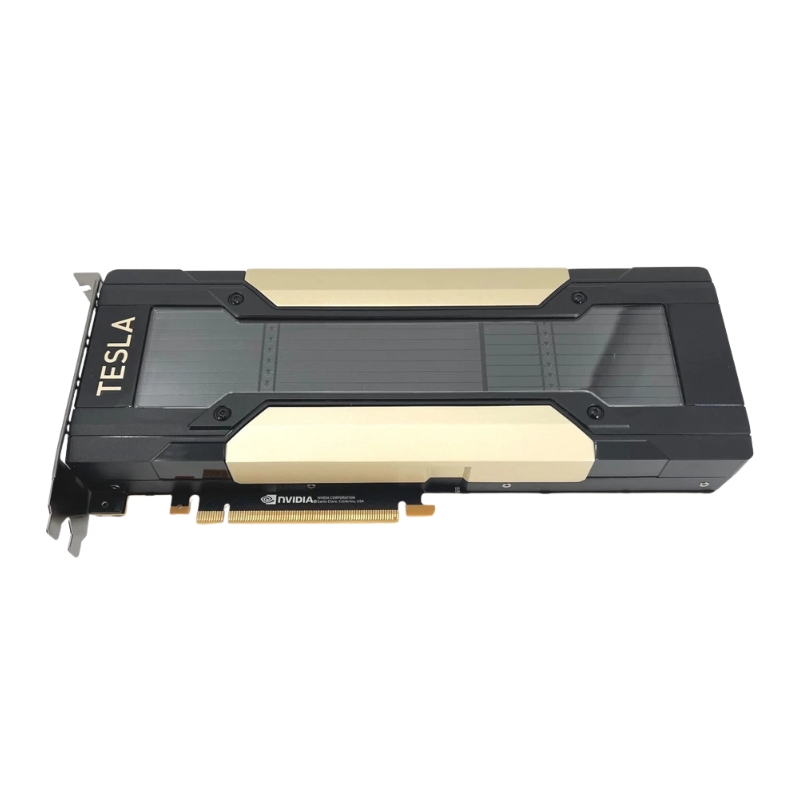
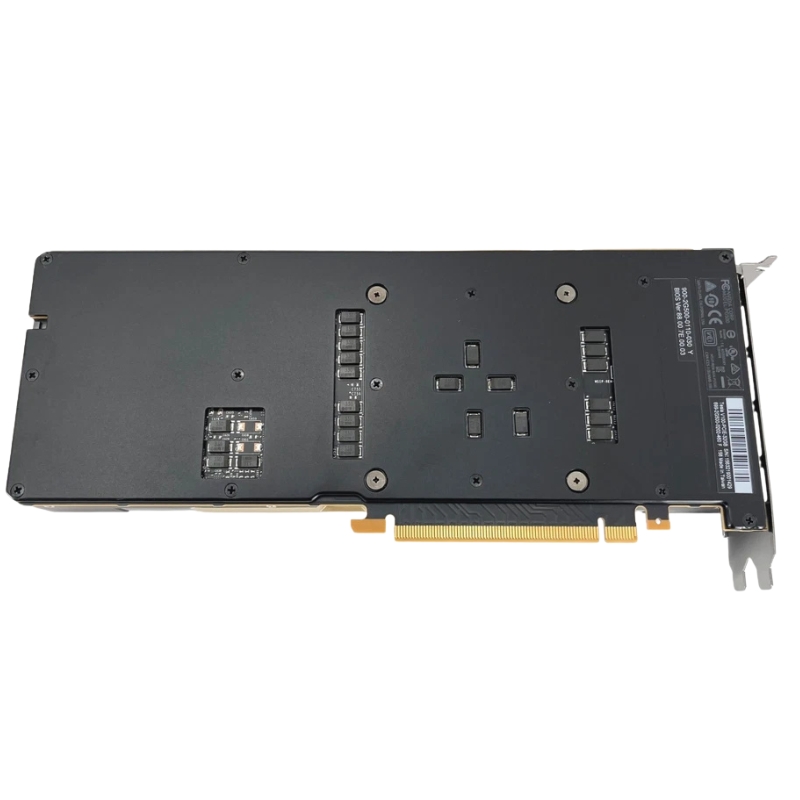
The Dell T39XP Tesla V100 32GB HBM2 CUDA PCIe Graphics Accelerator Card is a high-performance computational powerhouse designed for deep learning, AI workloads, and intensive HPC applications. Trusted by enterprises and researchers, this card delivers extraordinary bandwidth and massive CUDA core counts.
The Dell Tesla V100 architecture is powered by 5120 CUDA cores, enabling unmatched parallel performance. This GPU is optimized for both training and inference of deep learning models.
This high-performance accelerator card is designed with power efficiency in mind, consuming 250 watts under load. Its passive cooling design supports high-density GPU configurations in data centers.
The Dell T39XP Tesla V100 GPU card integrates smoothly into Dell PowerEdge servers and other HPC systems that support PCIe x16 interfaces. This makes it a versatile option for data centers, research institutions, and AI development labs.
The T39XP category of Dell Tesla V100 cards represents a class of GPU accelerator designed for top-tier computing environments. These accelerator cards are specifically engineered to deliver exceptional throughput and computational density, combining 32 GB of HBM2 memory, a wide memory interface, and thousands of CUDA cores. In large‑scale data centers, research labs, and AI/ML clusters, these cards act as the backbone of inference and training workloads. The category encompasses the physical cards themselves, as well as compatible accessories, server integration kits, and firmware updates optimized for CUDA ecosystems.
Within this subcategory, the architecture centers around the Tesla V100 GPU core. The T39XP variant is distinguished by a 5120 CUDA‑core count, which provides intense parallel processing capabilities. Memory architecture plays a pivotal role: the 32 GB HBM2 in this card operates at ultra‑high speed, offering a bandwidth approaching 900 GB/s. The memory controller and interface logic have been calibrated to minimize latency and maximize throughput for dense numerical workloads.
The GPU connects via PCIe 3.0 x16, ensuring high data transfer capacity between the host CPU and GPU card. This interface selection allows compatibility with a broad range of server motherboards and workstation platforms. Internally, power delivery is optimized to support sustained operation under full load while preserving stability and thermal headroom. The card is designed for passive cooling (fanless), which reduces acoustic interference in multi‑GPU clusters and avoids mechanical wear in continuous operation environments.
In the T39XP series, the memory subsystem is integral to performance. Each 32 GB HBM2 stack within the card is accessed through a massive internal bus that enables up to 900 GB/s of aggregate bandwidth. Because AI and HPC algorithms often require streaming large datasets or tensors in parallel, this bandwidth ensures that the GPU cores remain fed with data and are not starved. The memory architecture also supports error detection and correction (ECC) to maintain data integrity under heavy load, which is essential for scientific computing and mission‑critical inference tasks.
The compute engine of the T39XP Tesla V100 leverages 5120 CUDA cores. These cores are grouped into streaming multiprocessors (SMs), each of which handles multiple warps of threads concurrently. The category of T39XP GPUs is tailored toward workloads that can scale horizontally—such as matrix multiplications, convolutional neural networks, and physics simulations. The card’s architecture supports both single‑precision (FP32) and half‑precision (FP16) compute, with capabilities for tensor core operations which accelerate deep learning training and inference tasks.
The T39XP variant is not sold in isolation alone; the category encompasses compatible host systems, integration modules, and server extensions. Within this category page, users may navigate through subcategories such as “Dell server kits for T39XP,” “thermal backplates and connector modules,” and “firmware packages and BIOS updates.” Each subcategory addresses key concerns for deploying the card: mechanical fit, thermal management, software compatibility, and driver updates.
Dell server kits tailored for Tesla V100 T39XP cards ensure physical and electrical compatibility within Dell PowerEdge chassis. These kits often include risers, retention brackets, and airflow baffles engineered for the passive cooling design. In the “thermal accessories” subdivision, users find heatsinks, shrouds, and conductor plates designed to wick heat away from the GPU’s copper base. In the “software & firmware” segment, customers locate specialized firmware builds, NVLink firmware for multi‑GPU setups, and versioned BIOS images that guarantee full access to the card’s capabilities under Linux or Windows server distributions.
Every T39XP card is intended to function seamlessly within the broader Nvidia ecosystem. This includes support for CUDA Toolkit, cuDNN, TensorRT, and NVSwitch/NVLink topologies. The category includes subpages pointing to driver packs, software optimizations, and performance tuning guides. When multiple T39XP cards are deployed within a single node, NVLink bridging (when supported) can increase effective data exchange bandwidth. The category also highlights best practices for PCIe bifurcation, I/O tuning, and NUMA alignment to avoid bottlenecks in multi‑GPU systems.
A distinguishing feature of the T39XP Tesla V100 series is its fanless or passive cooling design. By eliminating fans, the cards avoid mechanical noise and potential failure points, making them ideal for dense server environments or silent laboratory settings. The card transfers heat through its baseplate into the chassis structure, which must be equipped with adequate airflow to dissipate waste heat. The category description details deployment advice: ambient air intake must be maintained, airflow directions must avoid creating hot recirculation paths, and chassis clearance must accommodate the card’s thermal envelope.
Users exploring this category can access recommended chassis designs and airflow baffle kits optimized for passive Tesla V100 operation. The subcategory “chassis compatibility” provides dimensions, clearance specifications, and recommended airflow volumes (in CFM) required to support multiple T39XP cards under continuous load.
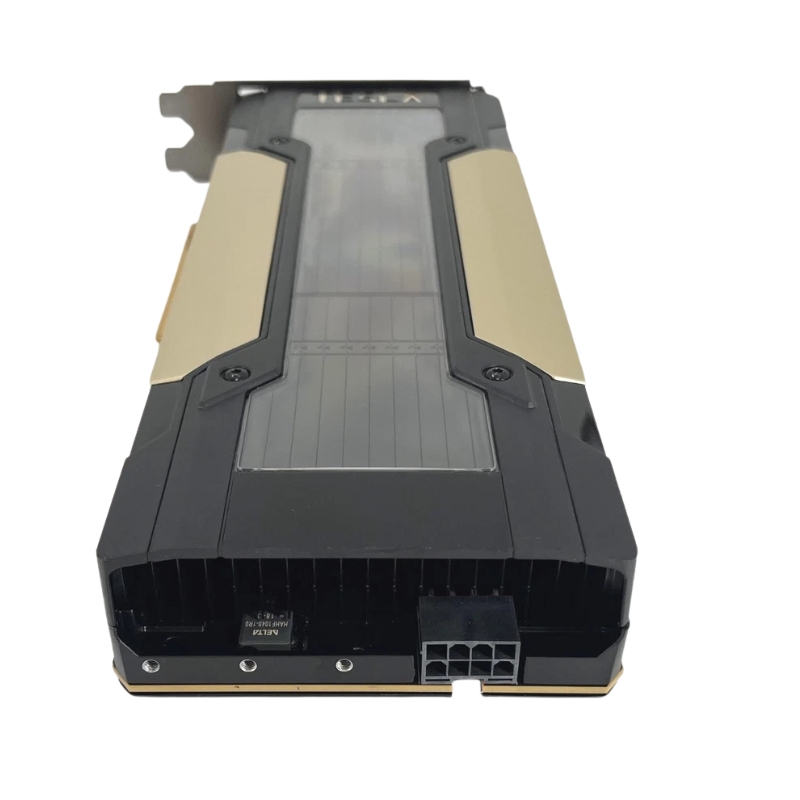
Power is delivered to the T39XP cards through auxiliary connectors or power buses within server backplanes. Under full operational load, each card draws up to 250 watts. The category includes guidance on power supply sizing, rail budgeting, and voltage drop mitigation in extended bus structures. It also explores how to sequence card activation, mitigate inrush current, and coordinate power management during boot to avoid undervoltage events.
The subcategory “power management” educates on how to configure server BIOS settings, enable dynamic voltage/frequency scaling (DVFS), and engage power capping to balance thermals and energy consumption in GPU clusters. For hyperscale deployments, the category links to whitepapers on power vs performance tradeoffs when scaling T39XP cards across racks.
The T39XP category explores the role of PCIe 3.0 x16 in high‑throughput system architectures. Within multi‑GPU servers, PCIe lanes must be allocated carefully to minimize bandwidth contention. The category describes strategies like lane bifurcation, CPU root complex mapping, and peer‑to‑peer GPU transfers. It also outlines the limitations and workarounds when using PCIe switches or PLX devices with multiple T39XP cards.
Another subtopic within the category addresses signal integrity and board layout—especially critical at PCIe Gen3 speeds. The T39XP series page includes design notes emphasizing trace impedance, length matching, and differential pair routing for high‑speed data paths. For custom integration projects, downstream pages offer layout reference files, differential pair simulation data, and compliance checklists for PCIe lane quality.
The category description delves into benchmark data across standard AI/ML, HPC, and scientific computing workloads. It references convolutional neural network training (ResNet, BERT), matrix multiplications (GEMM), and large sparse linear algebra problems. For instance, in deep learning training tasks, the T39XP category demonstrates how the 32 GB HBM2 memory allows larger batch sizes and deeper networks compared to smaller memory GPUs. The description explains throughput gains: more than 2x improvement in FP16 mixed precision workloads versus earlier-generation cards, and consistent scaling in multi‑card configurations.
Use‑case narratives enrich the category: from climate simulation and fluid dynamics in scientific research, to recommendation system training in AI platforms, to inference serving in production clusters. The continuous text shows how multiple T39XP GPUs can be deployed in synchronized training (with NCCL) or used for distributed inference pipelines across nodes.
Within the category, there is guidance on horizontal scaling and orchestration. It details how to arrange T39XP cards across PCIe slots, group them into connectivity zones, and leverage NVLink (where available) or PCIe peer transfers. The description addresses software libraries like NCCL, Horovod, and MPI, and how to tailor them to maximize data throughput and minimize synchronization overhead. Design considerations include GPU-to-GPU topology, CPU affinity, and interconnect saturation analysis.
The category narrative positions the T39XP Tesla V100 series against competing accelerators. It describes how the 32 GB HBM2 variant accommodates larger models than mainstream gaming GPUs. It contrasts T39XP with newer architectures, highlighting trade‑offs between maturity, stability, driver maturity, and cost efficiency. Subpages linked in the category compare performance per watt, memory density, and ecosystem support across generations.
Within this category page, the narrative shares best practice guidelines. It explains optimal seating of the cards, host machine BIOS settings (e.g. above 4G decoding, PCIe settings), NUMA locality alignment, and airflow path planning. It also advises on firmware upgrade order, driver installation sequencing, and cluster benchmarking calibration routines. The narrative flows through decision logic: validate system power budget, verify sufficient chassis clearance, check BIOS settings, then install card, flash firmware, and run stress tests.
This section describes how to design chassis layouts with directed airflow. It advises placing intake fans against the GPU side and exhaust fans opposite, avoiding recirculation loops. The continuous prose covers acceptable ambient temperature ranges, recommended delta‑T limits, and how to stage airflow for multiple contiguous T39XP cards. For dense racks, the description suggests cascading heat extraction modules or ducting kits.
The category text elaborates on synchronizing system BIOS versions, BMC firmware, and GPU firmware across nodes. It describes techniques for uniform deployment, rollback safety, and profiling GPU boot logs. The category indicates that mismatched firmware may disable features or lead to suboptimal performance, so uniformity is critical in production clusters.
The narrative explores how to partition workloads across T39XP cards for optimal utilization. It covers job scheduling in Slurm, Kubernetes with GPU plugin, and partitioning by memory footprint or compute intensity. The description emphasizes avoiding hotspots: a card should not be overburdened while others remain idle. It also describes fallback strategies for fault tolerance if one card encounters thermal throttling or errors.
The continuous description focuses on how the T39XP series supports digitally signed firmware images and interacts with UEFI secure boot environments. It explains that secure boot must trust the GPU firmware loader and outlines how to audit firmware authenticity as part of system boot chains. Linked subpages in the category direct users to integration guides for enabling secure firmware validation.
Because these accelerator cards may process sensitive data in AI inference pipelines or analytics clusters, the category narrative includes compliance practices. It describes proper encryption of GPU memory dumps, segregation of workloads by data sensitivity, and safeguarding kernel driver access. For customers bound by GDPR, HIPAA, or similar regimes, the description mentions how to configure driver and OS-level restrictions to reduce data exposure risks.


 Contact Us
 Information
 Catalog
 Solid State Drives (SSD)
 Network Switches
 Hard Disk Drives
 HBA & Controllers
 PC & Servers
 PC & Server Memory
 CPU & Processors
 Network Routers
 Power Supplies
 Tape Drives & Libraries
 Network Devices
 Computer & Network Cables