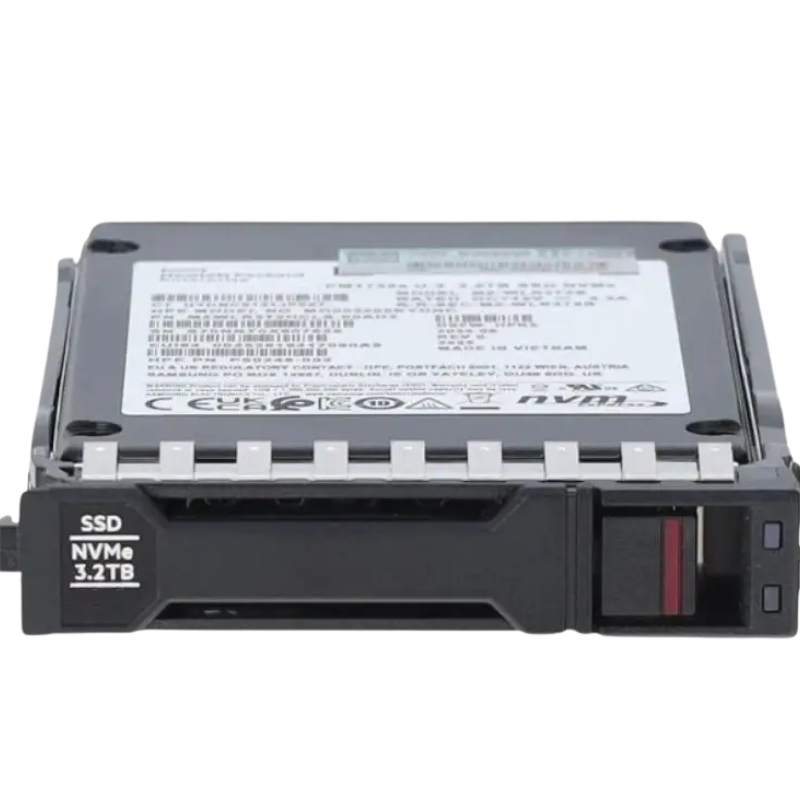
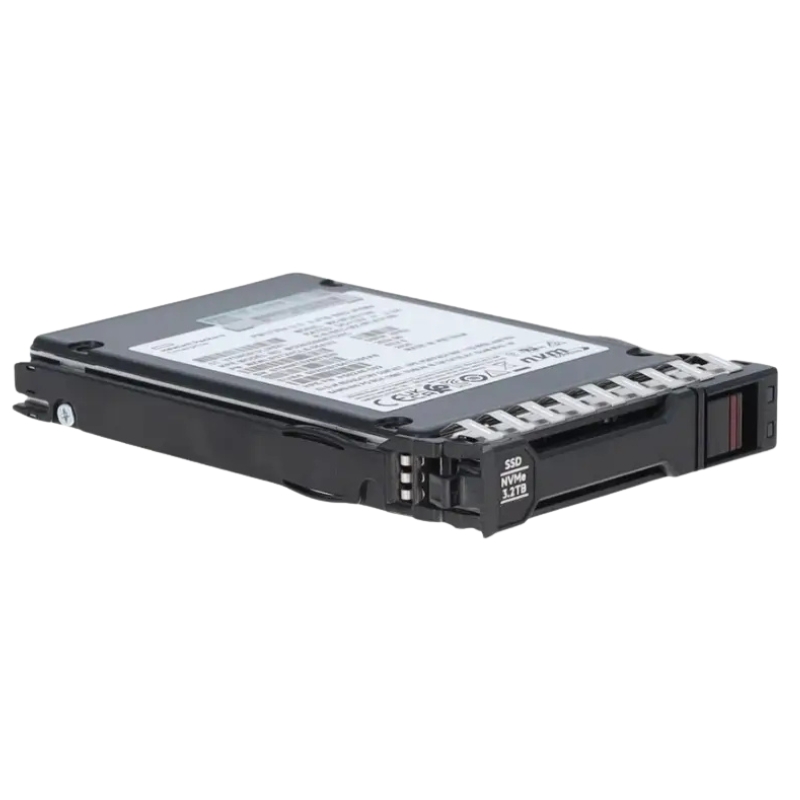
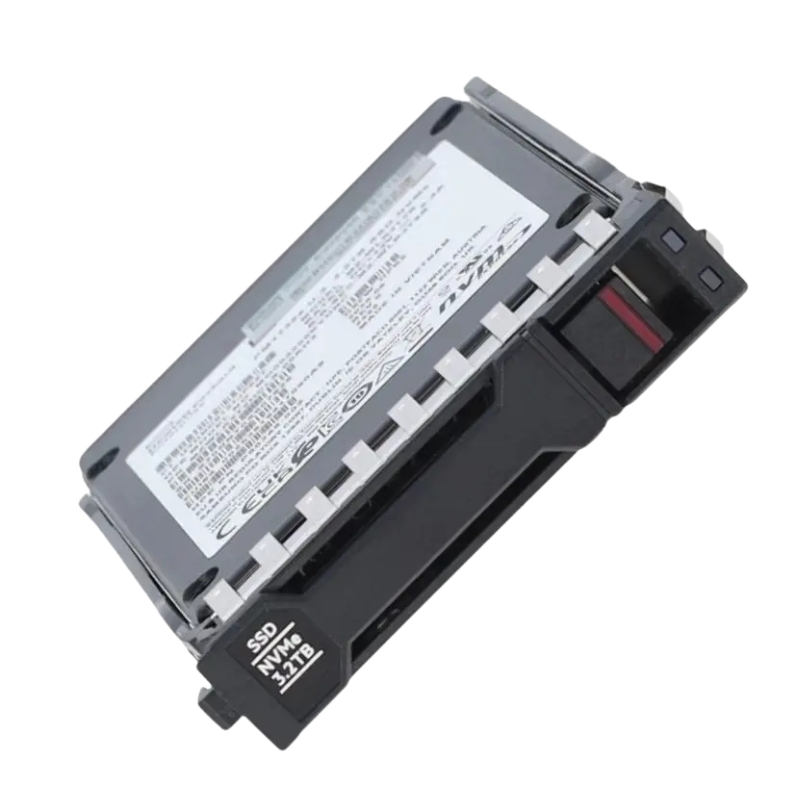
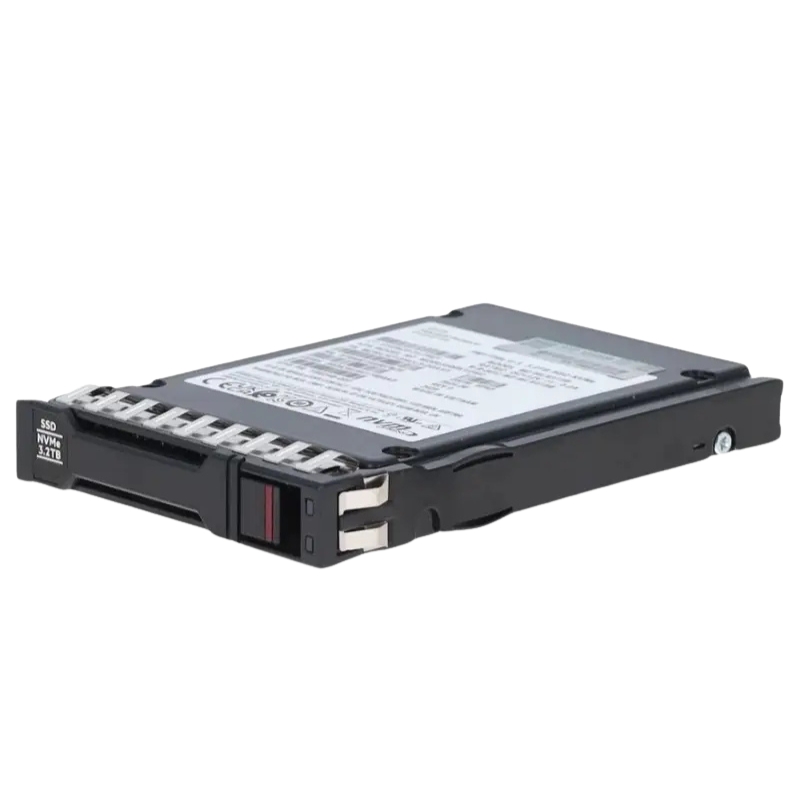
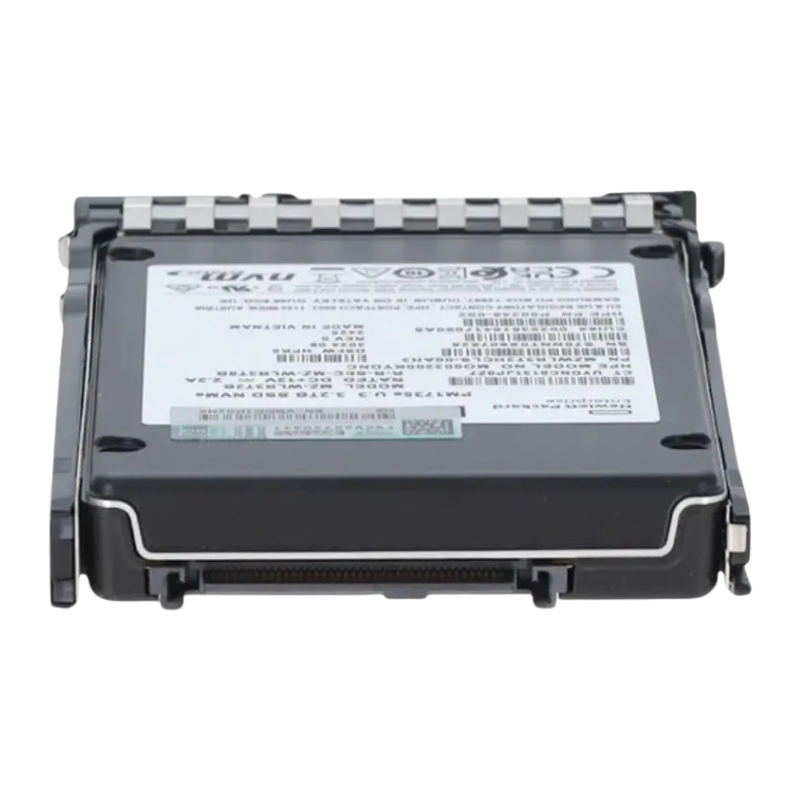
HPE P06726-B21 3.2TB NVME x4 MU 2.5 Inch CL PM1725B Solid State Drive.
- — Free Ground Shipping
- — Min. 6-month Replacement Warranty
- — Genuine/Authentic Products
- — Easy Return and Exchange
- — Different Payment Methods
- — Best Price
- — We Guarantee Price Matching
- — Tax-Exempt Facilities
- — 24/7 Live Chat, Phone Support
- — Visa, MasterCard, Discover, and Amex
- — JCB, Diners Club, UnionPay
- — PayPal, ACH/Bank Transfer (11% Off)
- — Apple Pay, Amazon Pay, Google Pay
- — Buy Now, Pay Later - Affirm, Afterpay
- — GOV/EDU/Institutions PO's Accepted
- — Invoices
- — Deliver Anywhere
- — Express Delivery in the USA and Worldwide
- — Ship to -APO -FPO
- — For USA - Free Ground Shipping
- — Worldwide - from $30
Product Overview of HPE P06726-B21 3.2TB NVME SSD
The HP P06726-B21 offers cutting-edge storage performance, engineered specifically for high-demand environments and enterprise workloads. Designed with reliability and speed in mind, this solid-state drive is ideal for data centers, cloud applications, and virtualized systems.
General Information
- Manufacturer: Hewlett Packard Enterprise (HPE)
- Part Number: P06726-B21
- Drive Capacity: 3.2TB
- Interface Protocol: PCI Express (NVMe)
- Drive Type: Internal Solid State Drive (SSD)
Key Highlights of the HP P06726-B21 SSD
- Massive 3.2 Terabyte storage capacity for scalable enterprise applications
- Advanced PCIe NVMe interface ensures ultra-fast data transfer rates
- Form factor: 2.5-inch U.2 for compatibility with existing infrastructure
- Designed for mixed-use workloads, balancing read/write operations efficiently
High-Performance Mixed Workload Drive
This SSD is optimized for environments that require a mix of read and write-intensive operations. Whether you're running databases, handling transactional data, or supporting virtual machines, the P06726-B21 provides consistent throughput and endurance.
Drive Interface and Form Factor Explained
- NVMe (Non-Volatile Memory Express): Delivers lower latency and higher IOPS compared to traditional interfaces
- U.2 Connectivity: Ensures compatibility with enterprise-grade backplanes
- 2.5-inch form factor: Compact and space-efficient, ideal for dense server environments
Durability and Reliability
With a focus on endurance, this drive is built to withstand continuous read and write cycles. It is tested for enterprise-grade durability, making it a trusted option for mission-critical data storage solutions.
Ideal for Enterprise Infrastructure
Deploy this SSD in high-performance servers or enterprise-grade storage systems to experience unmatched efficiency and responsiveness in mixed workload operations.
Use Cases
- Virtual Desktop Infrastructure (VDI)
- Cloud data services and platforms
- Enterprise-level databases
- Big data analytics
- Transactional and financial systems
Compatibility and Integration
The HP P06726-B21 is engineered to integrate smoothly into existing enterprise server configurations, especially those that support U.2 NVMe SSDs. Its standardized 2.5-inch format ensures easy installation and replacement across multiple systems.
Drive Overview & Class Definition
The P06726‑B21 SSD (also referred to by its OEM alias PM1725B) is engineered for enterprise class storage systems. It belongs to the mixed‑use (MU) Solid State Drive category, combining both high read and write performance with endurance required for demanding data center, virtualization, analytics, or cloud deployment. It uses NVMe protocol, adheres to the Form Factor and interface standards matching enterprise U.2 / U.3 / HHHL or similar designs, and is built with the durability and consistency specifications expected in heavy workload environments.
Mixed‑Use SSD Tier
- Balanced read/write workload support: not read‑intensive only, nor pure write‑intensive, but a hybrid mix for both I/O types.
- Higher endurance than standard consumer SSDs: rated to withstand a specified number of Drive Writes Per Day (DWPD).
- Low latency, high IOPS performance: compelling for virtual machines, databases, transactional systems.
- Reliability and resilience: enterprise features like power‐loss protection, robust error detection/correction, firmware integrity.
Performance under Stress: Mixed & Heavy Workloads
When deployed in environments with mixed read/write operations—such as transactional databases, virtual desktop infrastructure (VDI), or hybrid cloud / big data analytics—the P06726‑B21 class SSDs maintain consistent performance even under sustained load. Key aspects:
- Sustained random write performance: Unlike drives optimized only for read, these MU SSDs deliver appreciable write IOPS even when queue depths increase.
- Consistent latency: Critical for user experience or database response time; enterprise SSDs like this are built to avoid latency spikes under heavy I/O load.
- Thermal management: Proper heat dissipation, adequate airflow, or heatsink support helps maintain performance; otherwise drive may throttle to avoid overheating.
Use Cases & Ideal
Enterprise Data Centers & Cloud Infrastructure
Perfect for data centers, cloud service providers, or large scale storage networks where high throughput and durability are essential. These drives are used as part of storage arrays, caching layers, or as primary storage for VMs, containers, or persistent volumes.
Big Data Analytics, Machine Learning, AI Workloads
Handling large datasets, frequent read/write patterns for model training, data preprocessing, or inference workloads benefit greatly from these MU NVMe SSDs. Fast access to data, large capacity, and high IOPS provide reduction in processing time.
Virtualization & VDI / SAN / Shared Storage
In virtualized server environments where multiple VMs share storage, random I/O demands increase. A mixed‑use NVMe drive helps flatten out performance dips across multiple threads and tasks.
Transactional Systems and Databases
Applications like financial record keeping, order management, logging, real‑time transaction processing rely upon fast writes, consistency, and reliability. Mixed‑use SSD handles frequent small writes and reads with minimal lag.
High Performance Compute (HPC) / Simulation / Scientific Use
Simulated workloads, modeling, or compute clusters often perform large sequential reads and writes, but also many small random accesses. A drive like the PM1725B with mixed‑use rating is especially suited.
Form Factors, Interface Variants & Compatibility
Form Factor Options
- 2.5‑inch (U.2 / U.3): Common in server hot‑swap bays, easily managed in data centers; benefits from standard tray carriers.
- HHHL PCIe Card: Used when there are spare PCIe slots and when direct board mounting (not tray) is acceptable; some PM1725B models are HHHL cards. :contentReference[oaicite:9]{index=9}
Interface Generations & Protocols
- PCIe 3.0 vs PCIe 4.0: Most PM1725B are PCIe 3.0 x4, x8 lanes depending on model; newer generation mixed‑use drives from HPE may use PCIe Gen4 for even greater throughput. :contentReference[oaicite:10]{index=10}
- NVMe specification: NVMe version 1.2 or newer, ensuring modern command sets, security, efficient queueing. :contentReference[oaicite:11]{index=11}
- Backwards compatibility: Drives may be backwards compatible with earlier generations of NVMe or PCIe slots, though at reduced speed; ensure firmware and system firmware (BIOS/UEFI) support.
Carrier, Hot‑Swap & Tray Considerations
When using the 2.5‑inch MU NVMe drives, make sure the system supports hot‑swappable trays or carriers. Cooling and tray design affect airflow. Using proper heat sinks or shuttle trays can mitigate heat buildup in dense server racks.
Reliability, Endurance & Mean Time Between Failures
MTBF and Error Rates
The PM1725B family is typically rated for ~2,000,000 hours mean time between failures, meaning very high expected lifespan under proper environmental conditions. Uncorrectable Bit Error Rates (UBER) are very low (for example 1 sector per 1017 bits read in many models). Robust ECC and internal error detection and correction are often included. :contentReference[oaicite:12]{index=12}
Endurance Metrics: DWPD / Total Bytes Written (TBW)
Mixed use drives aim for about 3 DWPD (Drive Writes Per Day) over their warranty period. This translates to very high TBW over the drive's useful life. When specifying usage (e.g., write cache, logging, VM swap), check whether the drive’s write workload stays within the endurance envelope. :contentReference[oaicite:13]{index=13}
Data Integrity & Power Protection
- Power‑loss protection: Capacitors or other hardware to ensure data in flight is safely committed in event of sudden power outage.
- Full data path error detection: From controller through interface to NAND, ensuring that corrupt sectors are detected, not silently passed.
- Firmware security / digitally signed firmware: Ensures only trusted firmware updates; helps avoid firmware tampering. Many HPE / Samsung enterprise SSDs include these. :contentReference[oaicite:14]{index=14}
Thermal & Power Design Considerations
Power Consumption Under Load
Under heavy read/write workloads, especially sequential writes or mixed I/O with high queue depths, power draw increases. In many PM1725B models, active power may be significantly above idle; when designing server racks or storage arrays, ensure adequate power budgeting. Also, consider that higher temperatures raise resistance and degrade performance.
Cooling, Heat Dissipation & Environmental Limits
- Ensure airflow across drive bays or PCIe cards; use chassis with proper cooling design.
- Check ambient temperature and temperature thresholds of drive; exceeding them may trigger throttling or reduce reliability.
- Use firmware and system monitoring to respond to thermal warnings; ensure drives are not blocked by airflow impediments.
Form Factor Density & Rack‑Scale Considerations
Because enterprise environments often deploy many drives in limited space, density (how many drives per rack/shelf) and tray layout matter. The 2.5‑inch drives with hot‑swap trays or HHHL PCIe cards must be planned such that power, cooling, and signal integrity are managed.

Category‑Level Variations
By Capacity
- 1.6 TB MU NVMe SSDs – lower cost, still high performance; useful for lighter workloads or lower storage density per drive. :contentReference[oaicite:15]{index=15}
- 3.2 TB MU NVMe SSDs – sweet spot between cost, capacity, performance. P06726‑B21 / PM1725B series exemplify this class.
- 6.4 TB and larger MU NVMe SSDs – higher cost, increased power/heat, but useful for very large data sets or fewer drive bays. :contentReference[oaicite:16]{index=16}
By Interface / Protocol Type
- NVMe over PCIe 3.0 / 4.0 – most common in this category, affecting peak throughput and backwards compatibility.
- U.2 / U.3 / HHHL form factors – each constrained differently by physical slot count, power, cooling.
- SATA / SAS MU alternatives – lower throughput but possibly sufficient in some settings; however NVMe MU category targets high performance where latency and IOPS matter.
By Endurance / Performance Tier
- Mixed Use (MU) – 2‒3 DWPD, balanced read/write; this P06726‑B21 / PM1725B is in this class.
- Read‑Intensive (RI) – lower write endurance but good read performance; not usually ideal for frequent write operations.
- Write‑Intensive (WI) – high write endurance (often 10+ DWPD), more expensive; reserved for logging, caching, high write‑load layers.