We strive to dispatch all orders—including the HPE P12496-001—on the same business day. Our logistics team ensures prompt shipping to keep your infrastructure deployment on schedule.
Partner with us for large-scale deployments. Whether you need 10 or 1,000 units of the HPE P12496-001, we can supply your infrastructure needs efficiently and economically. Reach out today for custom procurement solutions.
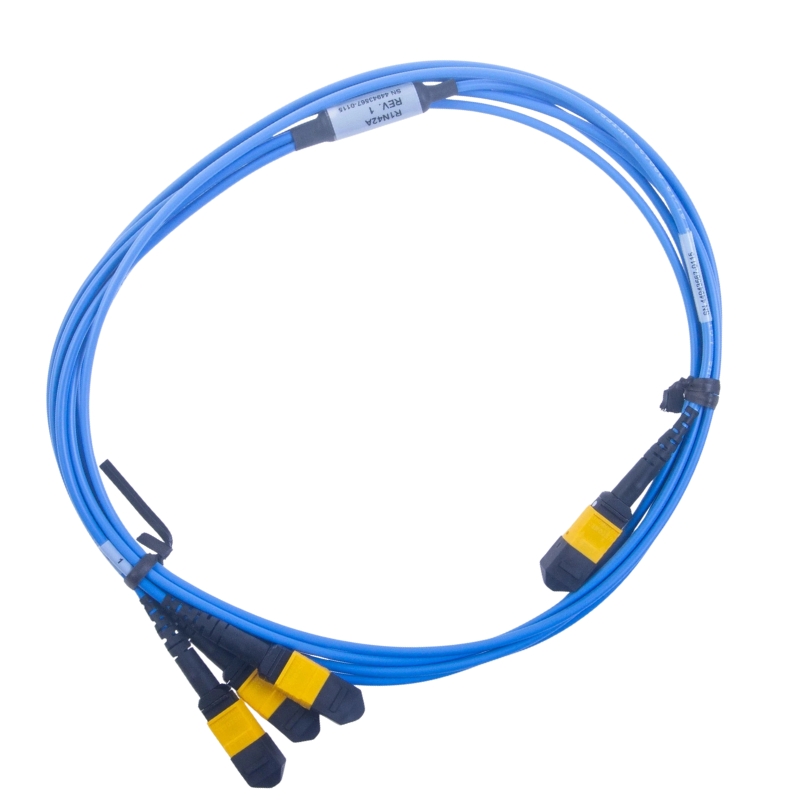
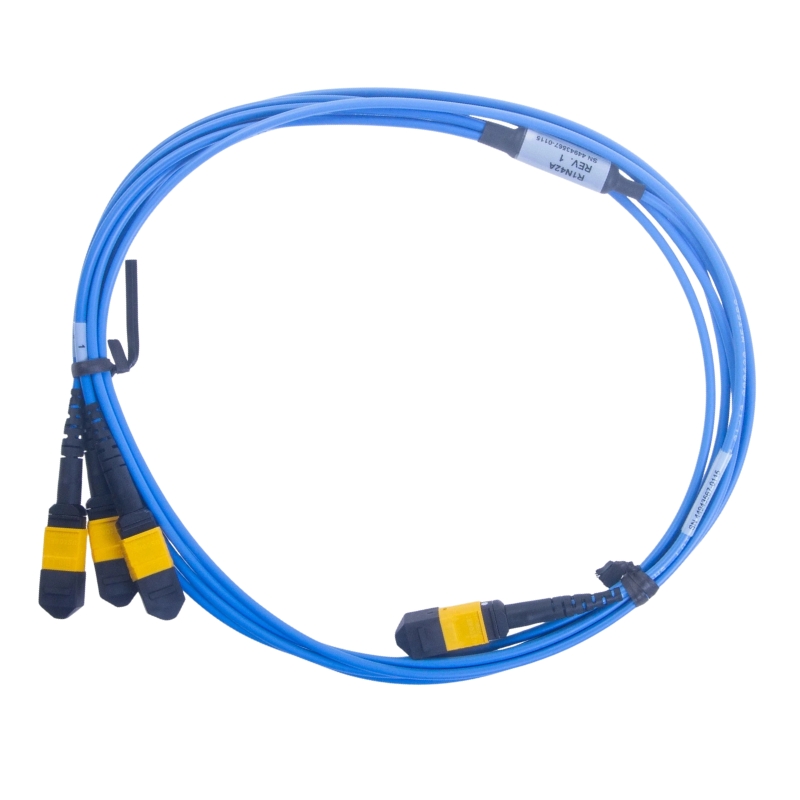
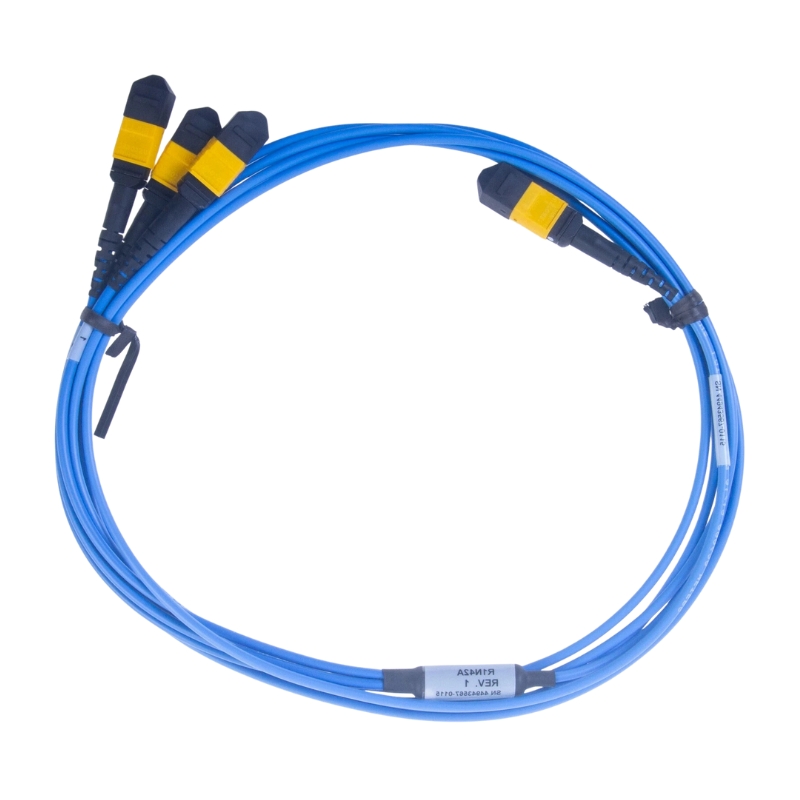
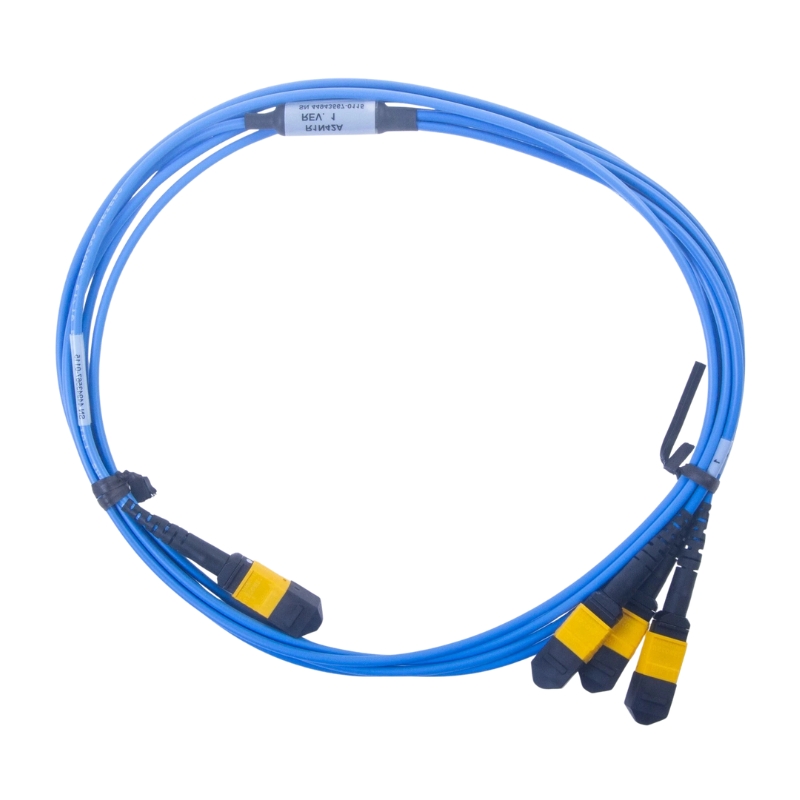
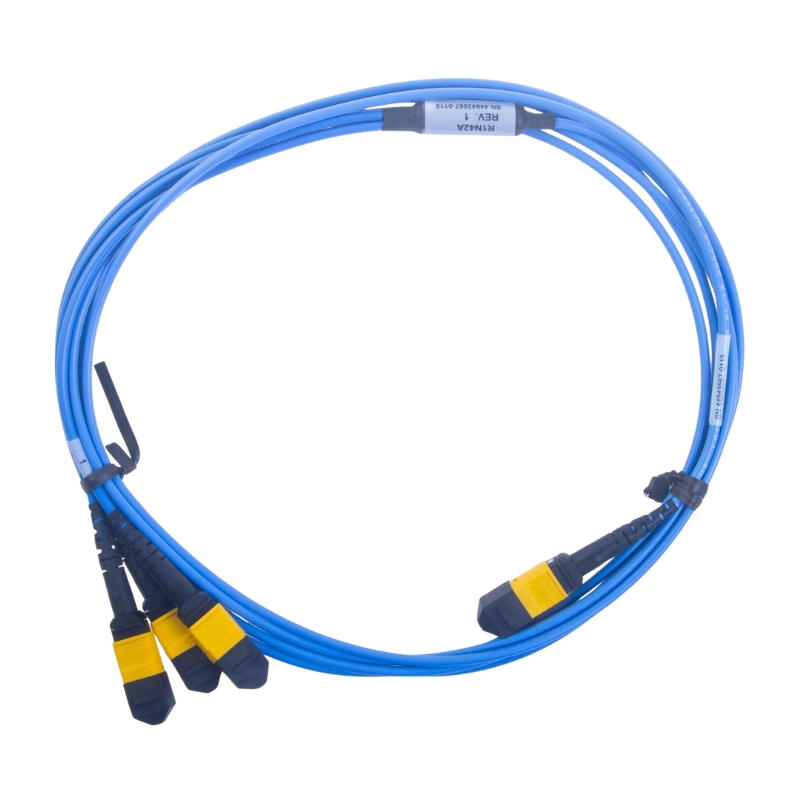
P12496‑001 HPE 24 Fiber MPO to 3×12 Fiber MPO Cables
Explore the category of the P12496‑001 HPE single‑mode fiber optic cables designed to split a single 24‑fiber MPO into three separate 12‑fiber MPO outputs. These specialized cables are engineered for high‑density, high‑performance network environments where bandwidth, signal integrity, and scalability are critical. Whether for data centers, telecom hubs, or enterprise network backbones, this cable category meets stringent demands for optical loss, physical durability, and compatibility with modern hardware.
Split/Breakout Configurations & MPO Fiber Count
This category specifically deals with cables that convert one **MPO‑24** (24‑fiber) connection into **three MPO‑12** (12‑fiber) outputs. Related subcategories include:
- MPO‑24 to 2×12 fiber MPO cables
- MPO‑24 to MPO‑24 straight through
- Breakout-type cables (MPO to LC, MPO to SC, etc.)
- Hybrid assemblies combining MPO‑24 to multiple smaller connectors
The P12496‑001 is ideal when you require splitting of fiber bundles for modular deployment, patch panel integration, or for distributing signals to multiple subsystems with MPO‑12 interfaces.
Connector and Fiber Infrastructure
- MPO Connectors: One MPO‑24 plug on one end, three MPO‑12 connectors on the other ends. Ensures proper mating with standard MPO adapters, trunk cables, and MPO‑12 ports.
- Single‑Mode Fiber: Designed for low dispersion, high coherence in long‑reach applications. Supports longer distances with minimal signal loss.
- Polarity & Keying: Ensures proper orientation and mating. MPO keying systems must match on the hardware to prevent misalignment, cross talk, or signal degradation.
- Fiber Grade: Likely OS2 (for single mode) with a typical attenuation ≤ 0.4 dB/km at 1310 nm and ≤ 0.3 dB/km at 1550 nm, depending on manufacturer specs.
Performance Metrics & Signal Integrity
- Insertion Loss: The total optical loss caused by connector mating and fiber path; should be minimized. Splitting MPO‑24 to MPO‑12s adds connector interface losses, so high‑quality polishing and precise alignment are essential.
- Return Loss / Back Reflection: Critical for single‑mode fiber; the MPO connectors need good endface polish (UPC or APC) depending on whether the system is tolerant to reflections.
- Chromatic Dispersion: Single‑mode fiber helps reduce dispersion over distance, especially important for high‑bit‑rate or high‑wavelength DWDM systems.
- Environmental Resilience: Temperature operating range (often ‑20°C to +70°C), humidity tolerance, resistance to mechanical stress (pulling tension, crushing, vibration).
Data Center Interconnects & Backbone Links
P12496‑001‑type cables are frequently used in data centers to connect high‑density switch fabric interconnects, spine‑leaf topologies, and core routers where a single trunk (MPO‑24) needs to feed multiple 12‑fiber modules or breakout points. Typical uses include:
- Connecting MPO‑24 trunks to three MPO‑12 patch panels.
- Distributing signal from core switches to top‑of‑rack (ToR) switches that use MPO‑12 inputs.
- Supporting high‑lane optical modules (e.g. QSFP, QSFP28, QSFP‑DD) which might interface with MPO‑12 ports or require breakout connections.
Telecommunication Rooms & Central Offices
In telco closets, central offices, and CO/OLT environments, this cable helps reduce the number of MPO connectors and adapters required, simplifies fiber management, and improves modularity. Use cases here include:
- Feeding multiple OLT/ONU pairs from one upstream fiber trunk.
- Splitting single‑mode runs to serve different remote sites or floors where each area uses MPO‑12 or compatible hardware.
- Optimizing fiber plant infrastructure during expansions or upgrades.
Enterprise Campus Networks & Long‑Distance Links
For enterprise campuses, research facilities, and university networks, long single‑mode fiber runs are common. The P12496‑001 style cable helps by consolidating paths, minimizing termination points, reducing maintenance and simplifying troubleshooting:
- Use in backbone racks between buildings or across campus grounds.
- Deploying in industrial or harsh environmental routes where single‑mode fiber’s lower attenuation is crucial.
- Serving high‑speed, high‑bandwidth links for storage networks, video streaming, or remote lecture/broadcast facilities.
Benefits & Advantages of P12496‑001 Cables
High Density & Reduced Footprint
By combining 24 fibers in one MPO connector and then splitting to three MPO‑12s, the P12496‑001 reduces the number of loose connectors, lowers rack space usage, and simplifies cable routing and management.
Enhanced Signal Quality & Reliability
- Single‑mode fiber minimizes modal dispersion and supports longer distances with stable performance.
- High‑quality MPO connector polish and alignment helps maintain low insertion and return losses.
- Reduced number of mated connector pairs can lessen potential failure points in the network path.
Simplified Deployment
Using cables like the P12496‑001 simplifies network build‑outs and ongoing maintenance:
- Easier cable management in dense MPO environments.
- Quicker installation: fewer patch cables and fewer connectors to handle.
- Reduced risk of mis‑plugging or polarity mismatches since fewer connector transitions.
Compatibility with Hardware & Optics
- Check that your transceivers, switches, patch panels, or chassis have MPO‑12 or MPO‑24 ports compatible with single‑mode fiber.
- Ensure connector gender (male/female) matches your device or adapter panels.
- Polarity (Type A, Type B, etc.): mismatched polarity can lead to misrouting or signal inversion in arrays.
- Consider whether your optics require APC connectors for low back‑reflection vs. UPC.
Length, Attenuation & Distance Requirements
- Select adequate cable length to run between endpoints plus slack — avoid tight bends or overrun, which can degrade performance.
- Review attenuation per km for your required wavelength(s), ensuring enough margin for future scaling.
- Factor in connector loss (each MPO mating adds a little loss) when evaluating total path budget.
Preparing the Cable and Connectors
- Inspect the end‑faces of MPO connectors before insertion—dust, debris, or damage degrade signal quality.
- Use appropriate cleaning tools (fiber endface cleaners, lint‑free wipes, isopropyl alcohol) for MPO connectors.
- Ensure proper hand posture when mating connectors—avoid bending the latch or key incorrectly.
Proper Cable Routing
- Maintain recommended bend radius (both static and dynamic) to prevent micro‑bending losses.
- Provide sufficient slack loops near racks or panels for maintenance or rerouting without strain.
- Label or color code cables for easy identification and troubleshooting downstream.
Minimizing Signal Loss Over Connectors
- Use high‑precision MPO connectors with UPC or APC polish as required.
- Ensure mating adapters or panels are clean and properly aligned.
- Check for consistent fiber core alignment across all MPO splits to avoid high insertion loss.
Standards & Compliance
Fiber Optic Standards
- ITU‑T G.652 / G.657 (single‑mode standards) for core and clad geometry, attenuation, and bending performance.
- Telcordia / ANSI / TIA standards for MPO connector performance, including insertion loss, return loss, and mechanical durability.
- IEC standard for fiber counts, fiber ribbon or loose tube construction, environmental and safety compliance (e.g., RoHS, REACH, CPR if used in EU).
Safety, Fire & Environmental Ratings
- Jacket ratings: LSZH, OFNR, OFNP depending on plenum, riser, or outdoor use.
- Temperature/humidity: cable should tolerate typical operating ranges (‑20 to 70°C or equivalent) and storage beyond that.
- Mechanical robustness: tensile strength, crush resistance, impact resistance if used in trays or harsh paths.
Selecting the Right Length & Customizations
Custom Lengths & Tailored Ends
Some vendors offer custom cut lengths for P12496‑001‑style cables. Along with custom lengths, options may include:
- Pre‑terminated end boots with weather/dust plugs.
- Strain relief enhancements or ruggedized jackets for industrial or exposed environments.
- Armored cable variants for mechanical protection in ducts or where rodents or crushing are a concern.
Excessive Lengths
- Excessively long cables can result in unnecessary signal attenuation and higher cost; purchase closer to required length when possible.
- Avoid tight bends, kinks, twisting: these degrade single‑mode performance severely compared to multimode.
- Ensure slack is managed properly; coils or loops should adhere to permitted bend radius.
Neglecting Connector Cleanliness & Endface Quality
Even the best single‑mode MPO cable will underperform if endfaces are dirty, scratched, or poorly polished:
- Use proper cleaning tools before mating.
- Inspect under fiber scope when possible, especially in high‑speed or long distance links.
- Replace or repolish connectors if wear or damage is visible.





 Contact Us
 Information
 Catalog
 Solid State Drives (SSD)
 Network Switches
 Hard Disk Drives
 HBA & Controllers
 PC & Servers
 PC & Server Memory
 CPU & Processors
 Network Routers
 Power Supplies
 Tape Drives & Libraries
 Network Devices
 Computer & Network Cables