(7% discount is applied at checkout)
Cart is empty
Your go-to destination for cutting-edge server products
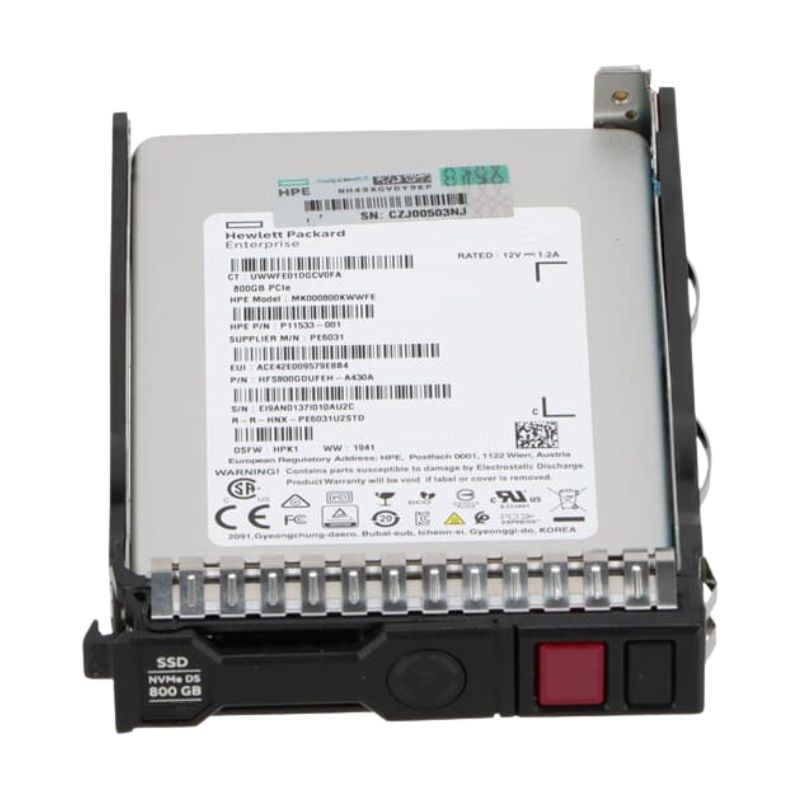


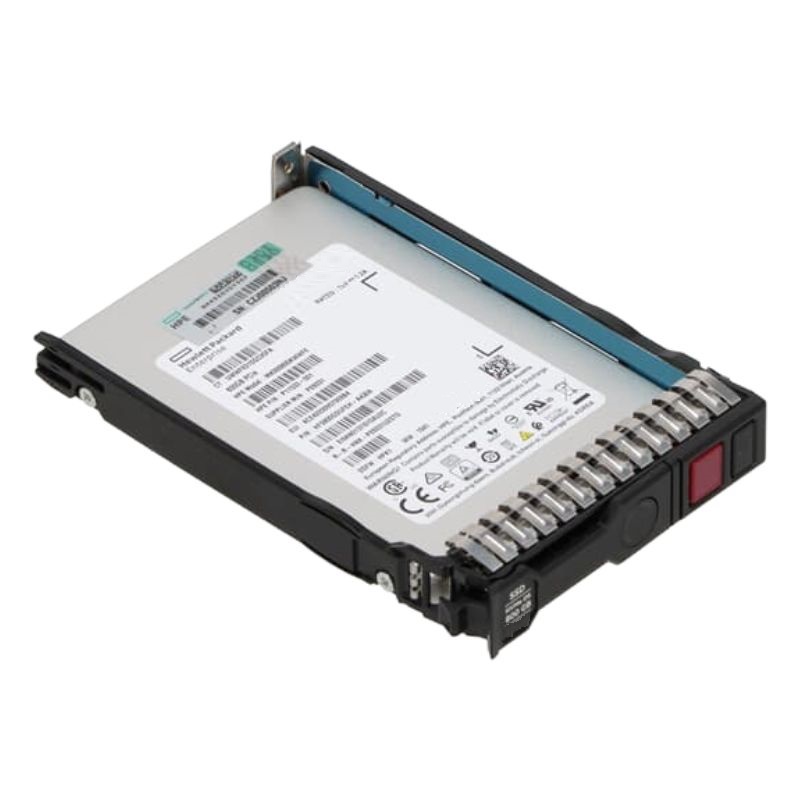
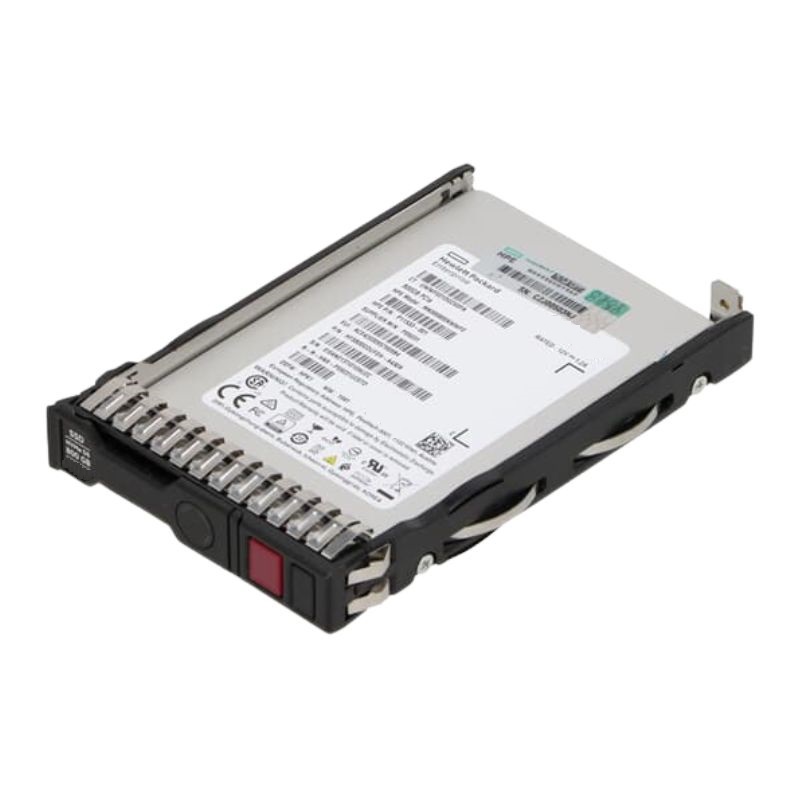
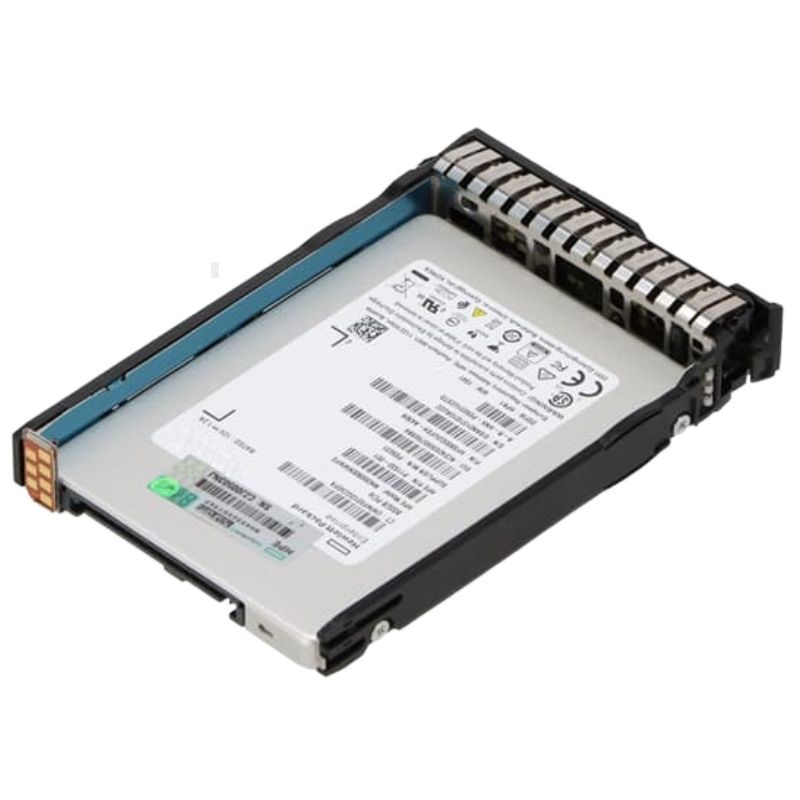
HPE P40569-B21 800GB Mixed Use SFF BC U.3 PM1735 Nvme Gen4 SSD. Excellent Refurbished with 1 year replacement warranty
Engineered for modern data centers, the HPE PM1735 P40569-B21 is an internal 2.5-inch solid-state drive designed for mixed-use workloads that demand balanced endurance and performance. Leveraging the U.3 interface over PCI Express NVMe 4.0, it delivers high throughput, low latency, and dependable service for virtualized environments, database acceleration, and cloud-native stacks.
The HPE P40569-B21 800GB Mixed Use SFF BC U.3 PM1735 NVMe Gen4 SSD represents a high-performance, enterprise-grade storage option engineered for modern server environments. This category covers the 800GB capacity variant of the PM1735 family in the small form factor U.3 (2.5-inch SFF) packaging, optimized for mixed-use workloads where a balance of high sustained throughput, low latency, and strong endurance is required. The product line is designed to meet the needs of cloud providers, hyperscalers, virtualization platforms, and enterprise data centers that require reliable NVMe Gen4 performance with HPE compatibility and management features.
Physically, the P40569-B21 800GB U.3 PM1735 is engineered to fit modern SFF bays on HPE servers and compatible third-party chassis. The U.3 interface provides backward compatibility with U.2 and standard 2.5-inch trays while enabling NVMe Gen4 signaling and optimized power delivery. The small form factor supports dense server configurations, allowing system architects to maximize raw capacity per rack unit without resorting to larger 3.5-inch drives. The drive chassis and connector placement follow enterprise design practices for hot-swap serviceability, enabling rapid replacement in serviced data centers without disrupting adjacent hardware.
At the heart of the category is NVMe Gen4 technology, which doubles the theoretical PCIe bandwidth per lane compared to Gen3. For enterprise users, this translates into higher sequential throughput for large data transfers and substantially improved IOPS headroom for concurrent random workloads. The PM1735 family is designed to exploit the higher lane bandwidth and server CPU capabilities to reduce application latency and increase transaction rates. This category emphasizes predictable, low-latency performance under mixed workloads, with firmware and controller firmware tuned to maintain consistent Quality of Service during peaks and sustained activity.
The mixed-use orientation means the drives are balanced for both sequential and random operations. System integrators value this because day-to-day server workloads rarely remain purely read or write—virtual machine boot storms, database transactions, and caching all create variable I/O patterns. The category emphasizes high sustained throughput for bulk transfers while maintaining strong random I/O responsiveness for small-block operations. This balance reduces bottlenecks at the storage tier and improves end-to-end application performance.
One of the strongest selling points for NVMe Gen4 SSDs in this category is the reduction in tail latency. The drive firmware prioritizes consistent latency under load and implements internal queue management techniques to preserve Quality of Service. For real-time services, multi-tenant clouds, and transactional databases, this consistency is often more impactful than peak throughput because it translates directly into predictable user experience and stable service-level agreement compliance.
Built-in security capabilities distinguish enterprise SSD categories. Hardware-based encryption and support for drive self-encryption simplify compliance with regulatory frameworks and corporate data security policies. These features allow administrators to enable encryption at rest without a significant performance penalty, facilitating secure deployment for sensitive workloads across multi-tenant and regulated environments.
Regular firmware updates provided by the vendor improve device stability, compatibility, and performance. The category supports in-field firmware upgrades through HPE management channels and standard NVMe tooling, allowing IT staff to deploy enhancements or fixes across multiple systems with minimal disruption. Attention to firmware compatibility with host systems and BIOS versions is essential to ensure uninterrupted operations and optimal performance.
Compatibility with HPE server lines, validated storage backplanes, and common RAID/NVMe controllers is central to the category. The U.3 interface was designed to unify the ease-of-service of U.2 with NVMe capabilities. These drives are intended for tight integration with HPE ProLiant and modular systems, but they are also frequently validated with other major server vendors and storage platforms. Integration considerations include BIOS/firmware versions, NVMe driver support in operating systems, and HPE-specific management utilities.
Enterprise NVMe SSDs require host-level driver compatibility for optimal operation. Modern enterprise operating systems and hypervisors include native NVMe drivers supporting the advanced feature set of Gen4 devices. It is recommended to follow HPE’s compatibility guides and vendor interoperability matrices to ensure that the OS, hypervisor, and server firmware combination delivers predictable performance and supportability.
This category adapts well to a variety of storage architectures, including direct-attach NVMe, NVMe-oF front-end arrays, and tiered storage where NVMe functions as a cache or primary layer. For virtualized workloads, NVMe Gen4 drives reduce I/O wait times and improve VM density per host. For database and analytics workloads, the reduced latency and high concurrency enhance query throughput and reduce transaction times.
Virtualization platforms benefit from the drive’s mixed-use endurance because VMs produce varied I/O patterns—small random I/Os during boot, mixed writes during application use, and larger sequential transfers for backups. The reduced latency and reliable IOPS profile increase VM performance density per server, enabling organizations to consolidate more workloads without sacrificing responsiveness.
Transactional databases and caching services depend on fast, deterministic storage. Drives in this category deliver the low-latency operations and concurrency support necessary to maintain high transaction rates. The combination of enterprise-grade reliability features and consistent performance ensures that database service levels remain stable under load.
For analytics and certain AI/ML pipelines, storage that supports sustained throughput for large model or dataset reads and fast random accesses for parameter lookups is critical. These NVMe Gen4 drives can accelerate data ingestion and model checkpointing, reducing end-to-end pipeline duration and improving iteration time for data scientists and engineers.


 Contact Us
 Information
 Catalog
 Solid State Drives (SSD)
 Network Switches
 Hard Disk Drives
 HBA & Controllers
 PC & Servers
 PC & Server Memory
 CPU & Processors
 Network Routers
 Power Supplies
 Tape Drives & Libraries
 Network Devices
 Computer & Network Cables