(7% discount is applied at checkout)
Cart is empty
Your go-to destination for cutting-edge server products
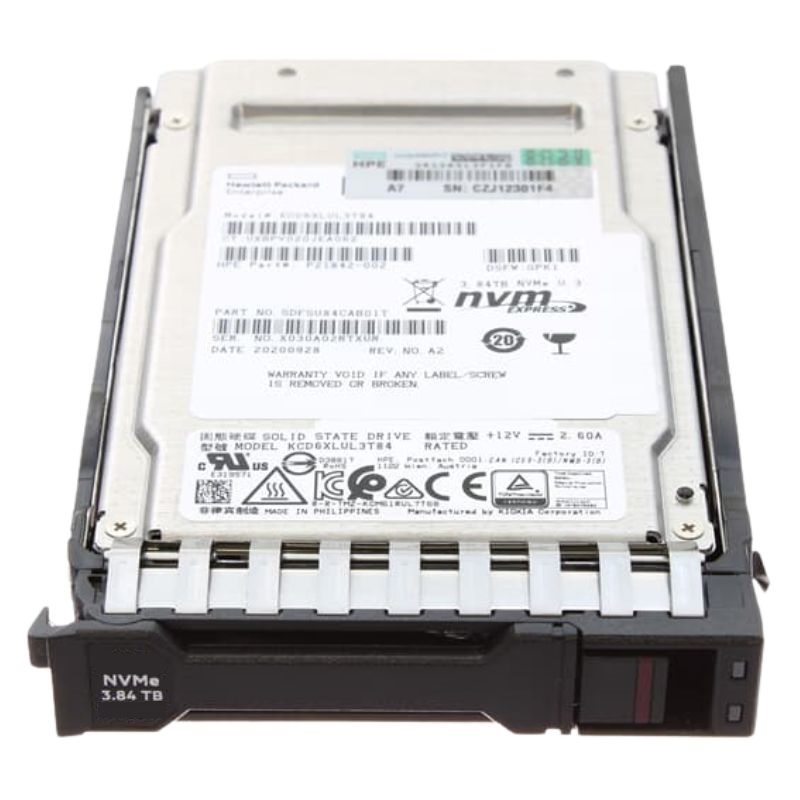


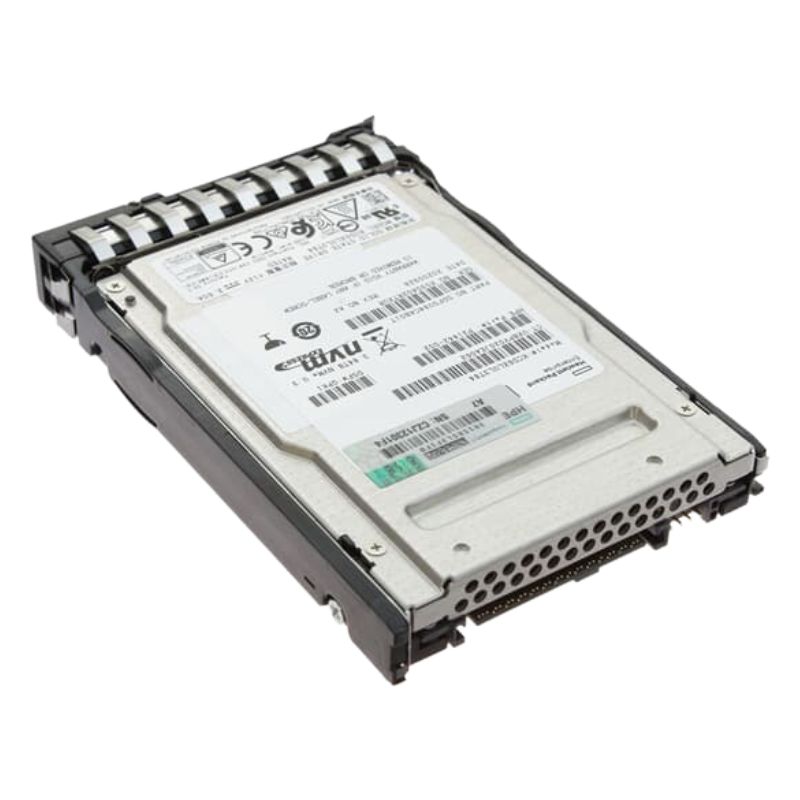
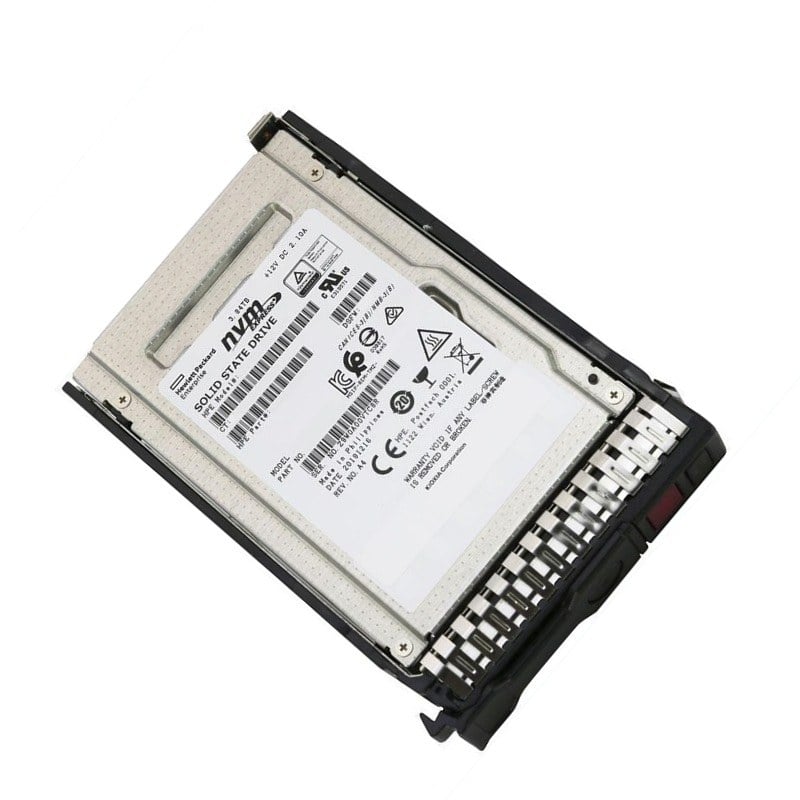
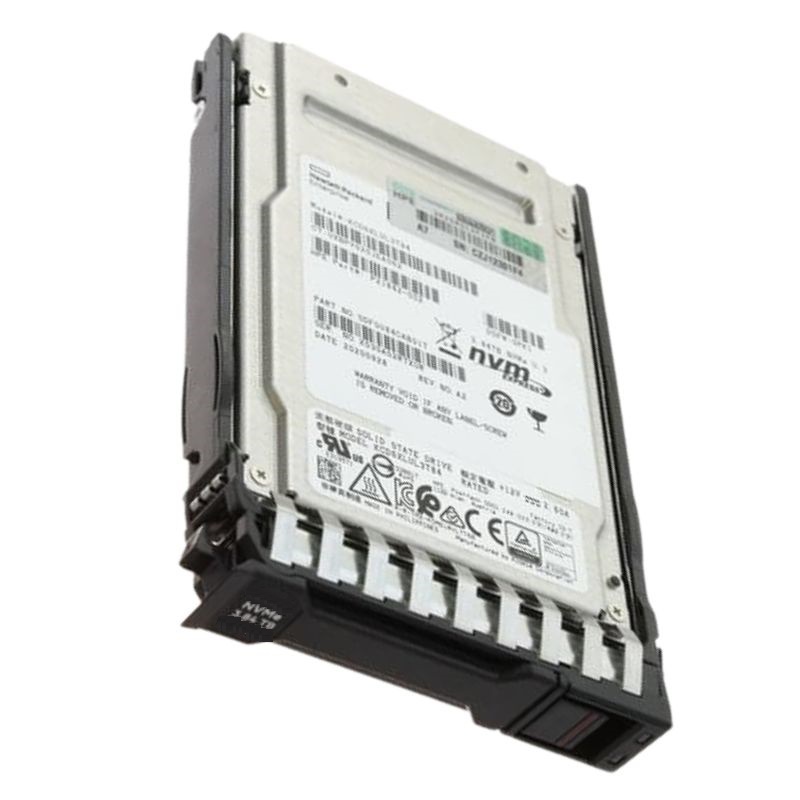
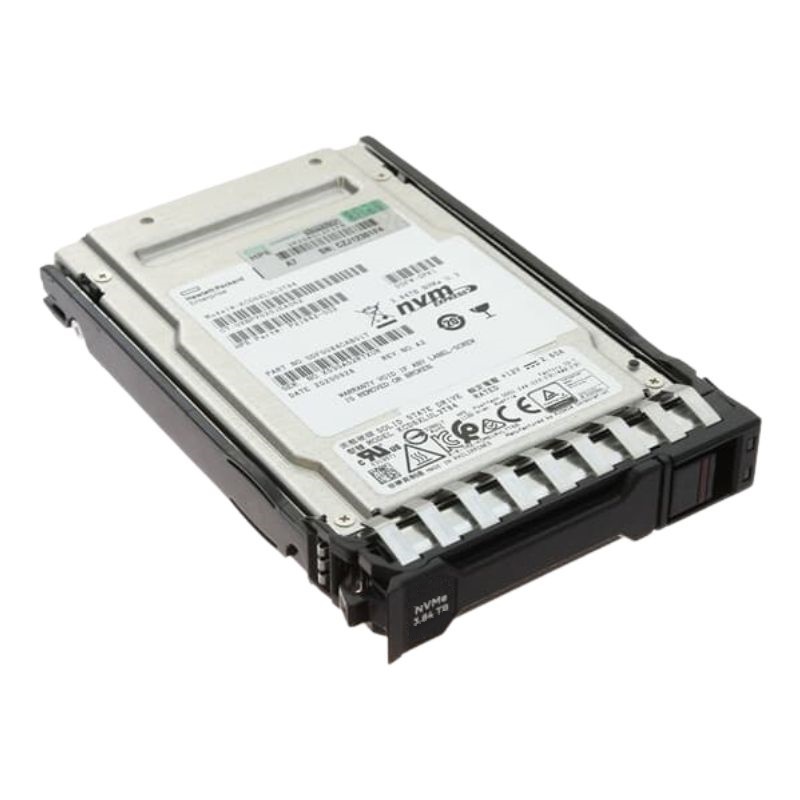
HPE P41564-001 3.84TB SFF BC Nvme Gen4 PM1733 Read Intensive SSD. Excellent Refurbished with 1 year replacement warranty
Optimized for demanding read-heavy workloads, the HPE P41564-001 is a 3.84TB NVMe Gen4 solid-state drive designed for modern HPE ProLiant Gen10 Plus servers. Built with TLC flash and engineered as a hot-pluggable 2.5″ drive (15mm profile), this module delivers a balance of sustained.
Ideal workloads
P41564-001 HPE 3.84TB SFF BC NVMe Gen4 PM1733 (Read-Intensive) Overview
The P41564-001 HPE 3.84TB SFF BC NVMe Gen4 PM1733 Read Intensive SSD is an enterprise-class, small-form-factor (2.5") NVMe drive tailored for read-heavy workloads in modern data centers. Built on PCIe Gen4 NVMe architecture and leveraging the Samsung PM1733 platform under HPE’s OEM offering, this drive delivers a balance of high sequential throughput, excellent random read IOPS, and the endurance profile expected for read-intensive classification. The drive is hot-pluggable, fits HPE ProLiant and Gen10 Plus platforms, and is offered in a Basic Carrier (BC / U.3) interface for broad compatibility with U.3 backplanes.
Below is a concise specification snapshot that highlights the load-bearing performance and form-factor details customers search for when comparing enterprise NVMe SSDs.
PCIe Gen4 doubles the per-lane throughput compared to Gen3, enabling NVMe drives like the PM1733-based P41564-001 to reach sequential and random performance levels that dramatically reduce application latency for database reads, analytics, caching layers, and virtual desktop infrastructure (VDI) workloads. For systems that perform heavy read amplification, such as large-scale OLAP queries, object stores, and content delivery nodes, the increased bus bandwidth translates directly into faster response times and higher throughput without having to scale out as many nodes.
This drive is tuned to deliver top-tier sequential read bandwidth (up to ~7,000 MB/s in ideal conditions) and very strong random read IOPS (~150K+), which is critical for use cases where many small reads occur concurrently (e.g., metadata access for large file systems or many small-object retrievals). Write performance is lower than read performance by design in a read-intensive SKU, but remains sufficient for log writes, snapshots, and occasional checkpointing operations.
OLAP databases, read-replica nodes, and analytical reporting servers benefit from the strong sequential and random read characteristics of this drive. Typical deployments include caching of hot data sets, acceleration of query engines, and reducing read latency on data warehouses. The read-intensive endurance profile gives an optimal cost-per-GB trade-off for stores where reads dominate.
The P41564-001 is hot-pluggable, designed for serviceability in live server environments. When replacing drives in production, follow HPE service guidelines — place the server in the correct maintenance mode, ensure RAID controllers (if present) are healthy, and monitor the server’s iLO/management console for rebuild progress. Using genuine HPE parts reduces the risk of management firmware rejecting a replacement drive or losing health telemetry.
Enterprise drives used in HPE systems often come with digitally signed firmware to ensure compatibility and maintain server health status. Keep firmware current but follow vendor guidance: apply firmware updates during scheduled windows and confirm that the new firmware revision is validated for your server generation. HPE and Samsung documentation for the PM1733 series contain firmware advisories and compatibility matrices.
The “read-intensive” class denotes that the SSD’s endurance is optimized primarily around read-dominant workloads — manufacturers trade some write endurance for higher capacities and lower cost per GB while maintaining strong read performance. For applications with heavy write amplification (e.g., sustained heavy logging, continuous writes at high rates), a “mixed-use” or “write-intensive” part should be considered instead. For typical read-heavy server roles, the P41564-001 presents a cost-effective and robust option.
Enterprise SSDs like the PM1733 family are designed with enterprise-grade error correction, power-loss protection features (on selected models/configurations), and robust internal wear-leveling to maximize data integrity under heavy use. HPE's parts listings and technical data sheets provide MTBF and qualification data; consult the datasheet for exact numbers for a specific SKU and firmware revision.
Within the PM1733 family and HPE’s lineup, capacities range from sub-TB sizes up to multi-TB (3.84 TB, 7.68 TB, etc.). The P41564-001’s 3.84 TB capacity strikes a middle ground — it offers a high usable capacity while still delivering high read bandwidth. Higher-capacity SKUs (e.g., 7.68 TB) may offer greater overall throughput in some configurations, but at higher cost and different endurance characteristics. Evaluate capacities against application working set size, caching requirements, and rack-space budget.
The PM1733 platform uses a high-performance NVMe controller and enterprise TLC 3D NAND in multi-channel configurations to reach high queue-depth throughput and IOPS. Firmware supports advanced features such as namespace management, secure erase, and enterprise SMART reporting. These elements together allow the P41564-001 to maintain performance under high concurrency and multi-tenant server environments. For the most exact internal block diagrams, consult the Samsung PM1733 technical brochure and the HPE data sheet.
As a 15mm 2.5" enterprise SSD, adequate drive bay airflow and chassis cooling are essential. Thermal throttling policies in firmware protect drive reliability but will reduce throughput under sustained high-power scenarios when cooling is inadequate. Ensure your HPE chassis and drive carriers provide the recommended airflow and thermal interface for NVMe U.3 drives.
High-performance NVMe drives consume more power during peak IO than legacy SATA/SAS SSDs. When planning a dense NVMe deployment, estimate peak and idle power per drive and ensure your power distribution and cooling budgets are adequate to prevent thermal throttling and to maximize lifetime. Check the drive’s datasheet for typical active and idle power numbers for precise rack-level planning.
Use cases and search phrases we naturally support in this description include: "HPE P41564-001 NVMe PM1733 3.84TB U.3 SSD", "HPE 3.84TB NVMe Gen4 read intensive server SSD", "PM1733 enterprise NVMe performance specs 3.84TB", and "replace HPE NVMe drive P41564-001 compatibility". These phrases are embedded above and will help shoppers and administrators find this SKU when searching for server-ready NVMe read-intensive drives.
In a well-cooled U.3-equipped Gen10+ environment, expect sequential reads approaching ~7,000 MB/s and sequential writes in the 3,500–3,800 MB/s range under ideal conditions, with random read IOPS in the six-figure range depending on queue depth. Use fio or industry-standard storage benchmarks to validate results against your specific workload profile.
For deeper technical validation, consult the HPE PM1733 family datasheet and Samsung’s PM1733 enterprise SSD brochure for micro-architectural details, supported features, and firmware guidance. Always cross-reference HPE part numbers and firmware compatibility matrices before purchase or firmware updates.
HPE P41564-001 3.84TB NVMe Gen4 Read-Intensive SFF (2.5”, 15mm) SSD (PM1733 OEM) in Basic Carrier (U.3) delivering up to ~7,000 MB/s sequential reads and enterprise random read IOPS for database, VDI, and caching workloads. Ideal for HPE ProLiant Gen10/Gen10 Plus servers. Keep product titles, SKUs, and technical specs synchronized with HPE’s official product pages and datasheets. For regionally different SKUs (HPE uses different part numbers in some territories), link to the specific HPE regional product or datasheet in the product’s technical tab. Verify pricing and stock status with authorized distributors and the HPE parts portal.


 Contact Us
 Information
 Catalog
 Solid State Drives (SSD)
 Network Switches
 Hard Disk Drives
 HBA & Controllers
 PC & Servers
 PC & Server Memory
 CPU & Processors
 Network Routers
 Power Supplies
 Tape Drives & Libraries
 Network Devices
 Computer & Network Cables