(7% discount is applied at checkout)
Cart is empty
Your go-to destination for cutting-edge server products
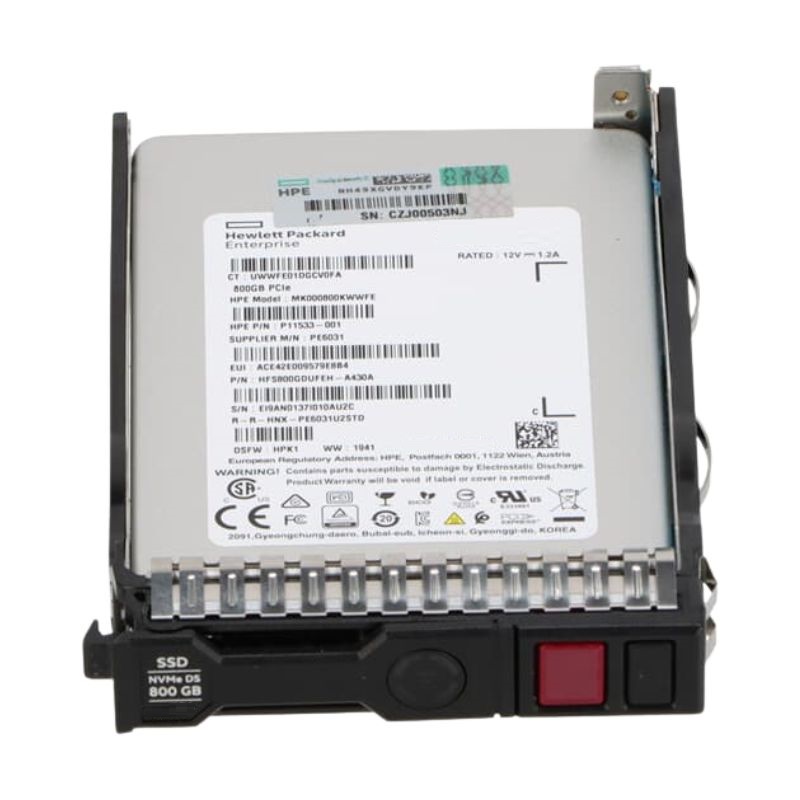


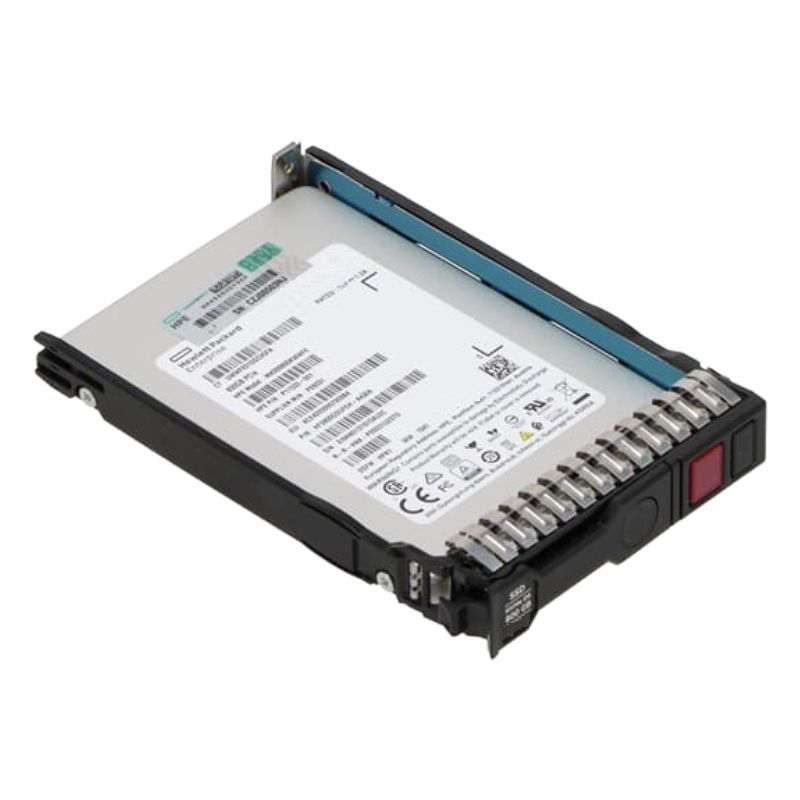
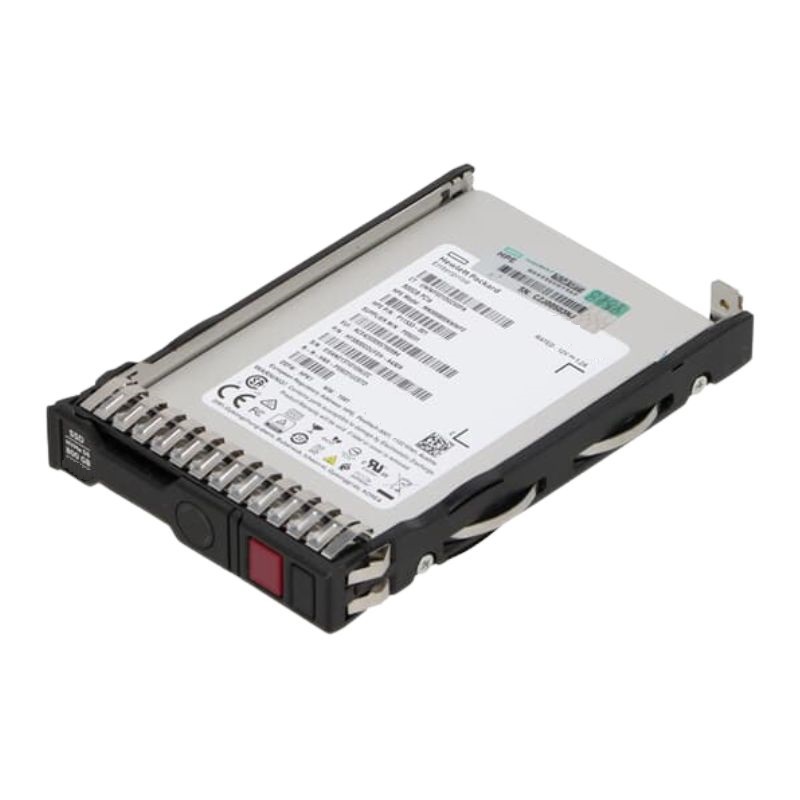
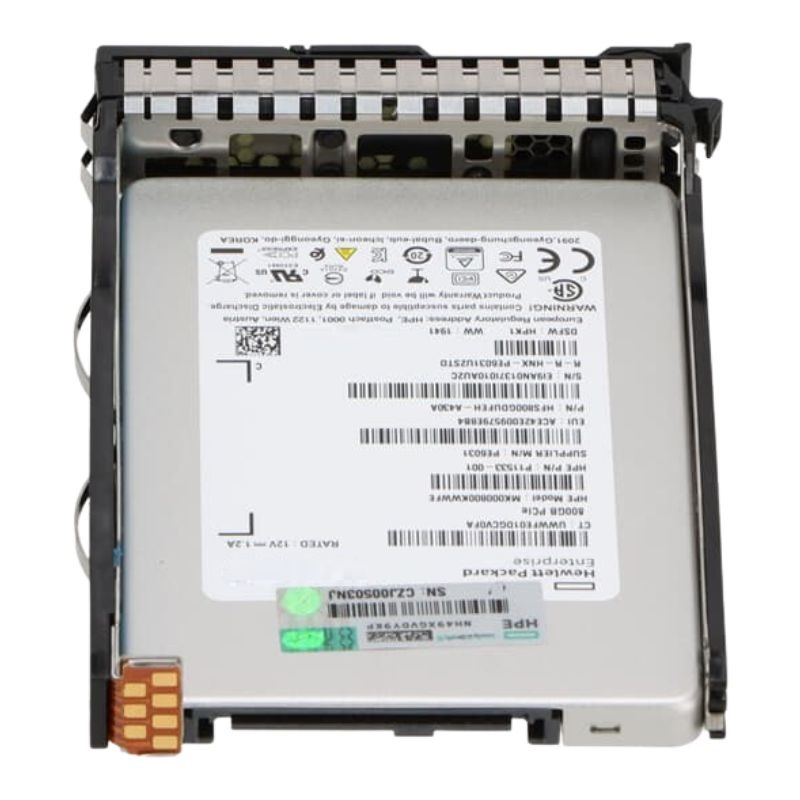
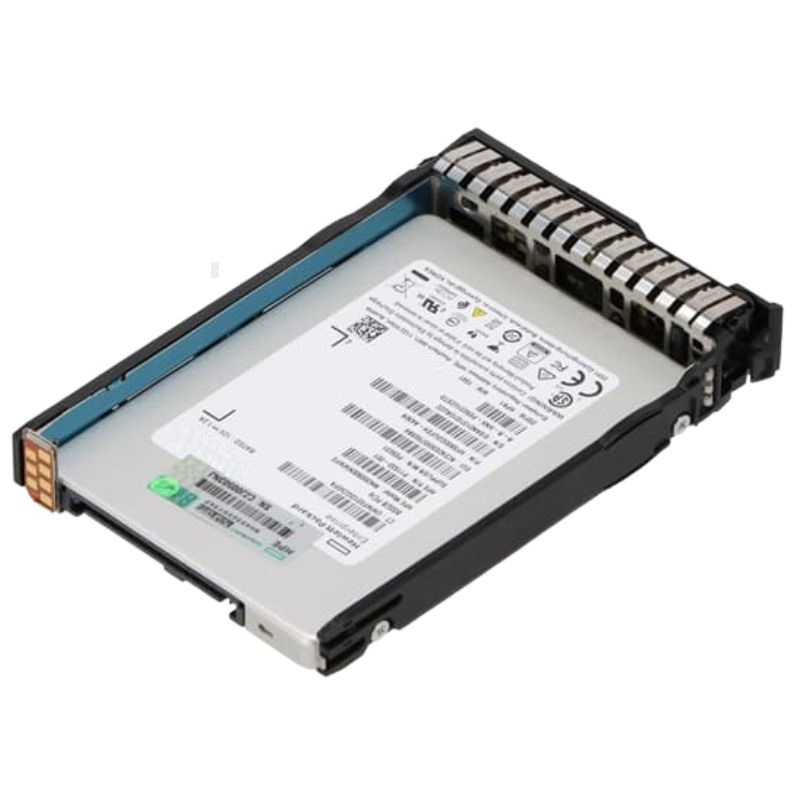
HPE P41567-001 800GB Mixed Use Nvme Gen4 SFF BC Pci Express U.3 PM1735 SSD. Excellent Refurbished with 1 year replacement warranty
The P41567-001 HPE 800GB Mixed Use NVMe Gen4 SFF U.3 PM1735 SSD represents a class of enterprise solid-state drives designed to balance performance, endurance, and cost for modern datacenter workloads. Engineered for servers and storage nodes that demand fast random I/O, predictable latency, and efficient power use, this PM1735 series drive delivers next-generation PCIe Gen4 throughput in a short form factor compatible with U.3 interfaces. The category focuses on mixed-use endurance characteristics, making these drives suitable for a broad set of applications that require both read and write longevity while maintaining NVMe-level responsiveness.
This drive is identified by its HPE part number P41567-001 and is built on a PM1735 platform, which leverages PCIe Gen4 x4 lanes and NVMe command sets to maximize bandwidth and minimize latency. The small form factor U.3 design allows for hot-swap compatibility within high-density server trays and storage enclosures, combining the mechanical footprint of a 2.5-inch drive with the electrical advantages of U.3 connectors. The 800GB capacity targets mixed-use workloads by delivering an optimal balance of usable storage and write endurance for enterprise environments that cannot justify the higher cost per gigabyte of higher-capacity endurance-focused models.
PCIe Gen4 doubles the available bandwidth per lane over Gen3, enabling the PM1735 family to offer significantly greater sequential bandwidth and improved queue depth performance. For applications that require fast large-block transfers or sustained throughput under parallel workloads, Gen4 improves time-to-completion and reduces bottlenecks at the storage layer. The mixed-use 800GB model typically exhibits strong sustained sequential reads and writes, complemented by high IOPS numbers for random 4K and 8K workloads. This combination makes it particularly effective where a mix of database queries, virtual machine boot storms, caching activities, and tiered storage reads and writes occur concurrently.
Endurance for mixed-use drives is engineered to support a broad variety of write-intensive operations over the product lifecycle. The P41567-001 category emphasizes drive-managed features that enhance reliability, including power-loss protection circuitry, advanced wear leveling algorithms, and integrated error correction mechanisms. These features work together to protect data integrity, reduce unplanned downtime, and extend the drive’s usable lifespan. Enterprise-class SMART attributes and telemetry expose health metrics that allow datacenter management systems to proactively monitor endurance consumption, predicted remaining life, and other key health indicators.
Mixed-use SSDs are frequently chosen by organizations running consolidated workloads where both read and write operations are important. The P41567-001 800GB model is optimized for virtualization platforms hosting medium-density virtual machines, relational and NoSQL databases with balanced read/write ratios, and software-defined storage layers that perform caching and metadata operations. The drive’s combination of responsive random I/O and solid sequential throughput also makes it effective for analytics pipelines that intermix streaming ingest with queryable storage. In environments where multiple tenants share the same infrastructure, the predictable latency profile of this SSD helps maintain consistent application experience.
Because the P41567-001 conforms to U.3 physical interface standards and NVMe protocol requirements, it integrates seamlessly with modern HPE servers and many third-party platforms that support U.3 connectors. Compatibility considerations include firmware requirements, platform BIOS or UEFI NVMe support, and enclosure backplane compatibility. Datacenter engineers should verify U.3 cage support or use appropriate adaptors where a different backplane type is present. System-level firmware updates may be necessary to unlock optimal Gen4 performance or to ensure that drive telemetry is fully reported to host monitoring tools.
Firmware plays a critical role in enterprise SSD behavior. The PM1735 family benefits from vendor-supplied updates that refine garbage collection, improve stability under mixed workloads, and occasionally expand feature sets exposed via NVMe Admin commands. Organizations should adopt a structured firmware update policy that balances the benefits of new firmware against the operational risks of an update in production. Leveraging HPE’s management utilities and the NVMe command-line tools, administrators can apply firmware revisions, run diagnostics, and extract health logs. Proactive management reduces the chance of unexpected performance degradation and helps plan replacements before drives reach end-of-life thresholds.
When architecting a solution that uses P41567-001 HPE 800GB mixed-use NVMe drives, integrate them into capacity and performance planning models rather than treating them as generic block devices. Account for endurance consumption metrics in your storage allocation policies, plan over-provisioning where appropriate to extend useful life, and maintain spare capacity within RAID groups or erasure-coded pools for resiliency. Use tiering strategies where the PM1735 series serves as a middle tier between ultra-low-latency NVMe cache and high-capacity archival storage. For hyperconverged environments, balance the number of drives across nodes to avoid hotspots and to make sure rebuilds and background maintenance operations do not impair production performance.
Enterprises that require a compromise between cost efficiency and operational durability frequently turn to mixed-use NVMe drives. The 800GB size is particularly useful when administrators need meaningful drive density without overshooting cost targets tied to higher-capacity endurance models. Typical use cases include transactional databases with moderate write amplification, content delivery services that mix reads with periodic writes, virtual desktop infrastructure with fluctuating boot and update cycles, and software-defined caching layers that accelerate frequently accessed objects. The PM1735’s latency profile and throughput capabilities also support real-time analytics engines where ingest and query operations alternate rapidly.
Performance tuning for mixed-use NVMe requires aligning application I/O patterns with the drive’s strengths. Sequential streaming workloads benefit from the Gen4 sequential bandwidth, while small random I/O workloads leverage the drive’s robust IOPS capabilities. Optimizing queue depths, consolidating small writes at the host level, and leveraging write coalescing strategies can reduce write amplification and extend endurance. Where possible, enable multi-queue I/O frameworks and consider NVMe-aware software stacks that can take advantage of the drive's parallelism. Monitoring latency percentiles, rather than average latency alone, helps reveal tail-latency issues important for user-facing applications.
Security-conscious deployments should note that enterprise NVMe drives often include self-encrypting drive (SED) options or support for hardware-based encryption engines. Policies for data-at-rest protection can be enforced through drive-native encryption and key management integration with host-based key servers. Additionally, the PM1735 family supports secure erase features and sanitization commands which can be used as part of a compliant decommissioning workflow. Ensure that key lifecycle processes and access controls are established so that encryption provides meaningful protection and does not lead to unrecoverable data loss if keys are mishandled.
Within the PM1735 lineup, the 800GB mixed-use model occupies a middle ground between higher-capacity mixed-use models and lower-capacity read-intensive variants. Compared to read-intensive counterparts, the mixed-use drive provides superior write endurance and broader applicability across workloads. Against higher-endurance models, the mixed-use option trades maximum write durability for improved cost per usable gigabyte. When evaluating against competing NVMe models from other vendors, consider real-world application metrics including sustained IOPS under mixed workloads, tail latency under heavy concurrency, and the quality of vendor support and firmware update cadence rather than raw sequential benchmarks alone.
Databases perform best when underlying storage can provide consistent low latency and predictable I/O completion times. Configure database storage to make efficient use of the PM1735’s write caching and NVMe queue capabilities. Align log and data file placement to leverage the drive’s IOPS strengths while limiting write amplification. For virtualization, spread virtual machine disk images across multiple drives for better parallelism and ensure that snapshot and backup schedules are coordinated to avoid peak load windows. Consider using tiered caching strategies where the mixed-use NVMe acts as a high-performance layer for active data while colder data remains on bulk storage.
Even with robust enterprise features, SSDs can fail due to controller faults, NAND degradation, firmware bugs, or environmental stresses. Design systems to tolerate single and multiple drive failures by using appropriate redundancy schemes. Regularly test recovery procedures and validate that rebuild operations do not exceed acceptable performance impacts. Monitor for early warning signs such as rising reallocated sectors or increasing error correction activity and replace at-risk devices during scheduled maintenance windows when possible.


 Contact Us
 Information
 Catalog
 Solid State Drives (SSD)
 Network Switches
 Hard Disk Drives
 HBA & Controllers
 PC & Servers
 PC & Server Memory
 CPU & Processors
 Network Routers
 Power Supplies
 Tape Drives & Libraries
 Network Devices
 Computer & Network Cables