(7% discount is applied at checkout)
Cart is empty
Your go-to destination for cutting-edge server products
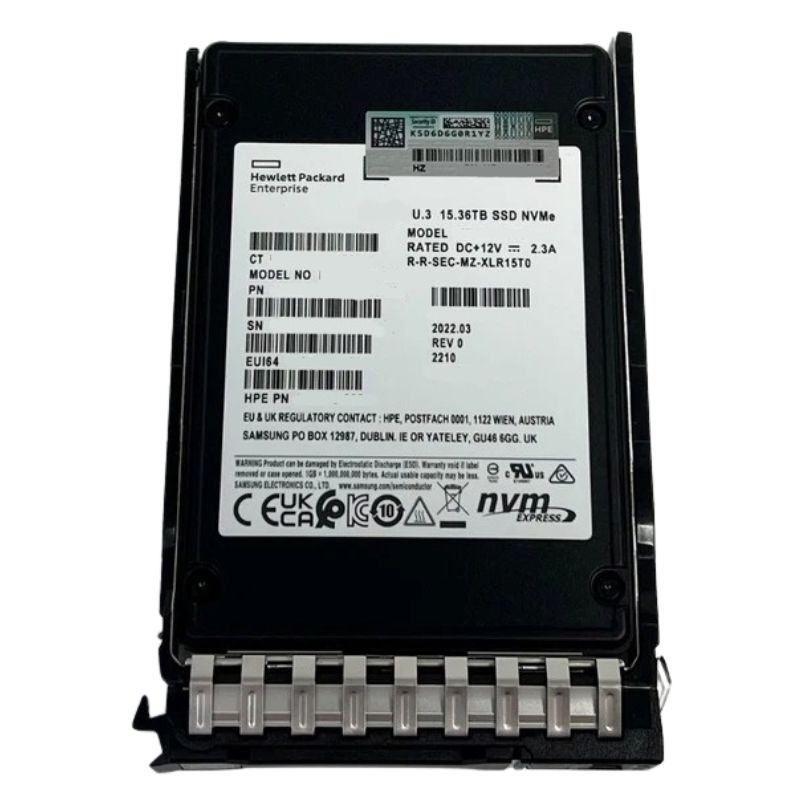


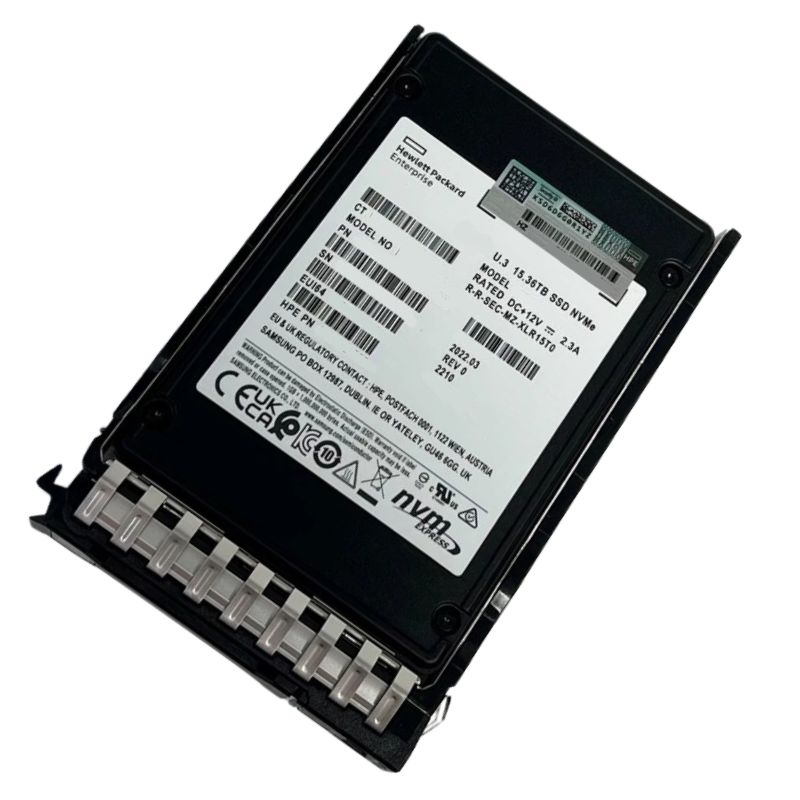
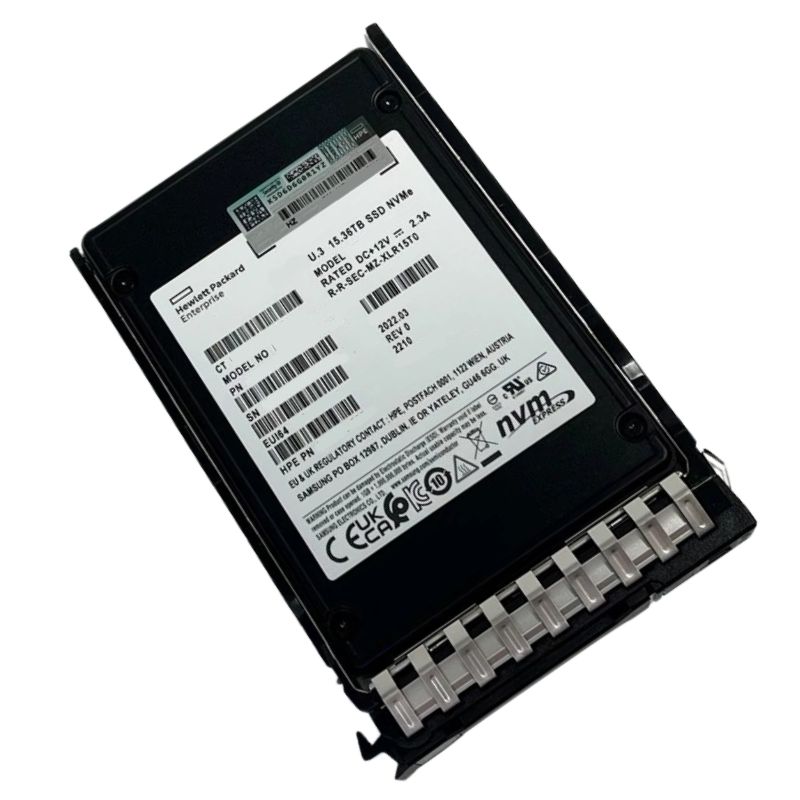
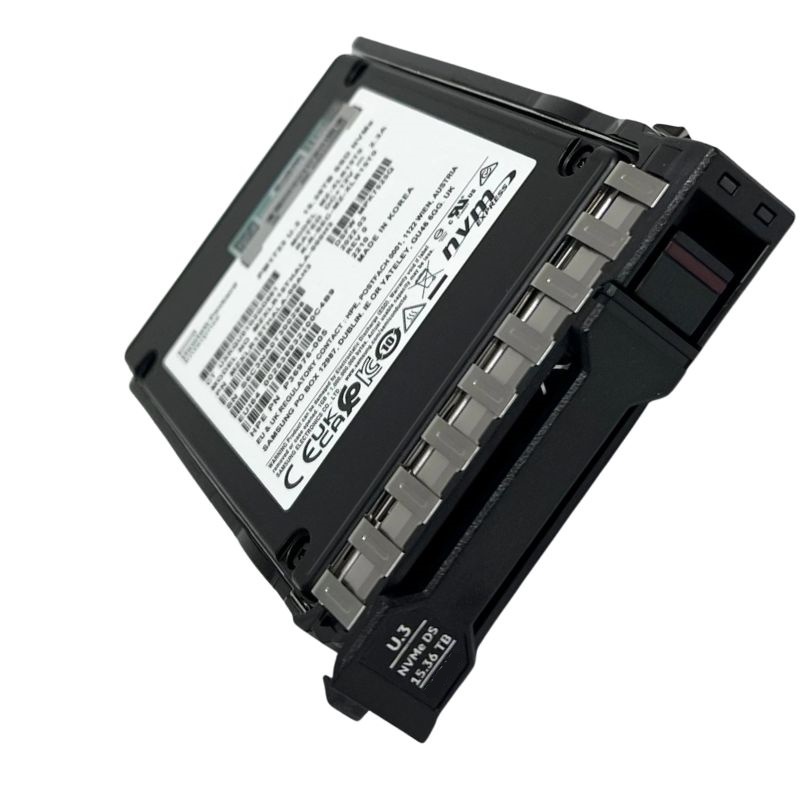
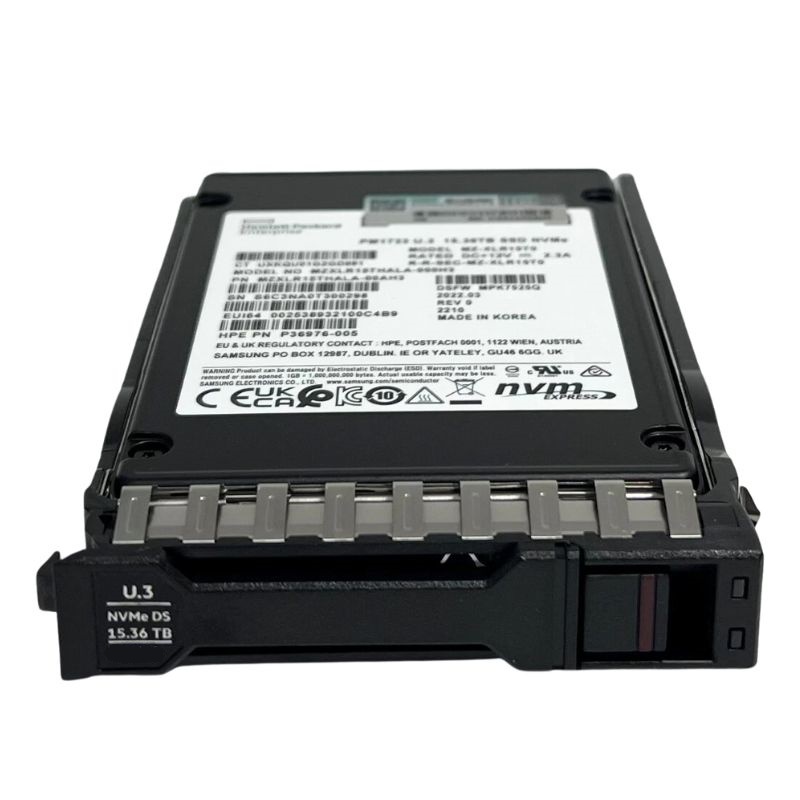
HPE P50961-001 15.36TB NVMe High Performance RI SFF BC U.3 SSD. New Sealed with 1 Year Replacement Warranty
| SKU/MPN | Warranty | Price | Condition | You save |
|---|---|---|---|---|
| P50961-001 | 1 Year Warranty | $5,272.00 | Factory-Sealed New Retail in Original Box (FSB) | You save: $1,845.20 (26%) |
| P50961-001 | 1 Year Warranty | $4,199.00 | New Sealed in Box (NIB) | You save: $1,469.65 (26%) |
Product snapshot
The HPE P50961-001 is a high-capacity enterprise solid-state drive designed for data-center workloads that demand sustained throughput and low-latency access. With a massive 15.36 TB raw capacity and an NVMe interface in a compact SFF profile, this drive is engineered to accelerate performance-sensitive applications while simplifying storage tiering and consolidation.
Built to deliver balanced random and sequential throughput, this HPE SSD is suitable for mixed transactional and streaming workloads. The drive's performance figures translate into faster database queries, quicker virtual machine boot times, and smoother data analytics pipelines.
High IOPS reduces application latency and increases concurrency — more users and threads can access the same dataset without queuing delays. High sequential throughput shortens time-to-insight for analytics and improves throughput for backup/restore operations. Together, these metrics make the P50961-001 an ideal building block for high-density storage arrays, hyperconverged platforms, and performance tiers in hybrid storage infrastructures.
The small form factor and 15 mm height enable dense drive population in 2.5" bays while still accommodating enterprise-grade thermal and electrical design. Hot-plug support lets administrators replace drives without service interruption, minimizing downtime in mission-critical environments.
The drive implements a dual-port architecture and ships with a BC carrier — features that improve availability and allow flexible backplane connectivity in enterprise chassis. Dual ports can be paired with multi-pathing software to provide non-disruptive failover and enhanced throughput aggregation.
For SQL and NoSQL databases where random I/O dominates, the P50961-001 delivers the IOPS and low latency required to maintain consistent query response times under heavy concurrency.
Virtual machine boot storms and desktop virtualization environments benefit from the drive’s strong random read and write profile, reducing user wait times and improving VM density per host.
The combination of high sequential bandwidth and low-latency random access supports data pipelines that need fast access to large models and datasets during inference and analytics tasks.
High sequential write bandwidth speeds up replication and snapshot workflows; the capacity helps consolidate colder datasets onto fewer devices while maintaining quick restore performance.
This enterprise SSD is intended for data-center duty cycles, where predictable endurance, consistent performance, and robust error handling are paramount. Admins can integrate the drive into existing monitoring and lifecycle-management frameworks to track health and plan replacements proactively.
At 15.36 TB per device, the drive enables higher usable capacity per chassis, lowering the number of spindles or devices required for large datasets and simplifying storage management.
The P50961-001 delivers a combination of strong random IOPS and high sequential throughput—making it a pragmatic choice for environments that serve both transactional and large-file workloads.
Hot-plug capability and carrier compatibility reduce maintenance windows and streamline field replacements, which is crucial for always-on operations.
When integrating this SSD into regulated environments, pair it with host and array-level encryption and documented key-management practices to satisfy compliance and data-protection requirements.
The P50961-001 pairs substantial 15.36 TB capacity with robust NVMe performance numbers (up to 200k random read IOPS and 7,100 MiB/s sequential reads), wrapped in a service-friendly hot-plug SFF package. That blend of capacity, speed, and manageability makes it an effective option for high-density, performance-conscious storage tiers.
Product overview and positioning
The P50961-001 HPE 15.36TB NVMe High Performance RI SFF BC U.3 SSD is a purpose-built enterprise storage component engineered to deliver exceptional capacity, sustained performance, and serviceability for modern datacenter workloads. Designed for read-intensive (RI) environments, this U.3 NVMe device combines a 2.5" small form factor (SFF) chassis, a back-compatible (BC) carrier, and hot-plug capability to provide administrators with a dense, manageable building block for performance tiers, caching layers, and high-capacity flash arrays.
The P50961-001 is tuned to excel in read-heavy scenarios while providing ample write capability to support mixed-use cases. Its published performance metrics reflect a balanced profile that benefits both small-block transactional operations and large sequential transfers.
With random read performance reaching up to 200,000 IOPS and random writes up to 175,000 IOPS, this drive is well-suited to latency-sensitive services. These metrics translate into quicker database query execution, improved responsiveness for virtualized desktops, and reduced queuing under multi-threaded access patterns.
Sequential read bandwidth of up to 7,100 MiB/s and sequential write throughput up to 4,200 MiB/s make the P50961-001 a strong performer for bulk I/O operations. High sequential speeds shorten backup windows, accelerate snapshot operations, and speed up large-scale data ingestion for analytics pipelines.
The drive’s small form factor and 15 mm height support dense server and storage chassis configurations while preserving airflow and thermal headroom necessary for enterprise reliability. The back-compatible (BC) U.3 carrier simplifies deployment across mixed-generation platforms, and hot-plug capability ensures field maintenance can be performed without taking hosts offline.
Dual-port support enables multipath connectivity and non-disruptive failover schemes when integrated with multipathing drivers and storage fabrics. This architecture enhances availability and allows administrators to route I/O through alternate controllers if a path or controller needs servicing.
Although this model is characterized as read-intensive, it remains architected for datacenter longevity with enterprise-grade error handling, SMART telemetry, and predictable wear behavior. Proper monitoring and lifecycle management are essential to maintain performance consistency and to plan for replacements before end-of-life scenarios begin to impact service quality.
Read-intensive drives typically allocate more resources toward improving read latency and throughput rather than maximizing write endurance. That makes them ideal for datasets where reads predominate, such as content delivery, analytics read caches, and large-scale lookup services. When provisioning, assess write amplification factors, host write patterns, and deduplication/compression effects to ensure the drive class aligns with workload endurance demands.
The P50961-001 can play several roles within a modern storage architecture. Its blend of capacity and speed positions it as a candidate for warm-to-hot tiers, capacity-optimized flash pools, or central cache layers that accelerate backend HDD arrays.
In hyperconverged infrastructure (HCI) and hybrid arrays, deploy P50961-001 drives where their density reduces node count and their NVMe performance drives cluster-wide efficiency. Pair them with appropriately tiered persistent memory or ultra-low-latency NVMe devices to create multi-tiered storage policies that optimize for cost and latency.
When deploying at scale, combine the drive’s capabilities with host-level or array-level encryption and integrated key management to meet regulatory and corporate compliance needs. Ensure firmware management and secure provisioning procedures are in place to prevent unauthorized access and to maintain an auditable chain of custody for sensitive datasets.
Proper installation, firmware management, and host tuning are essential to extract maximum value from the P50961-001. The following operational suggestions help maintain performance stability and extend useful lifetime.
The P50961-001 strikes a balance between capacity density and NVMe performance. Compared to smaller-capacity NVMe flash or lower-density SAS SSDs, it offers fewer devices per terabyte and lower overall rack-level management overhead. Against more write-endurance-focused models, it offers greater capacity at typically lower cost-per-GB while still providing strong read performance.
When modernizing older arrays or replacing HDD-based tiers, use P50961-001 drives to reduce device counts and simplify management. Consider mixing drive classes during transition: retain a small set of ultra-low-latency devices for the most critical hot data while using the P50961-001 for warm-hot consolidation.


 Contact Us
 Information
 Catalog
 Solid State Drives (SSD)
 Network Switches
 Hard Disk Drives
 HBA & Controllers
 PC & Servers
 PC & Server Memory
 CPU & Processors
 Network Routers
 Power Supplies
 Tape Drives & Libraries
 Network Devices
 Computer & Network Cables