(7% discount is applied at checkout)
Cart is empty
Your go-to destination for cutting-edge server products
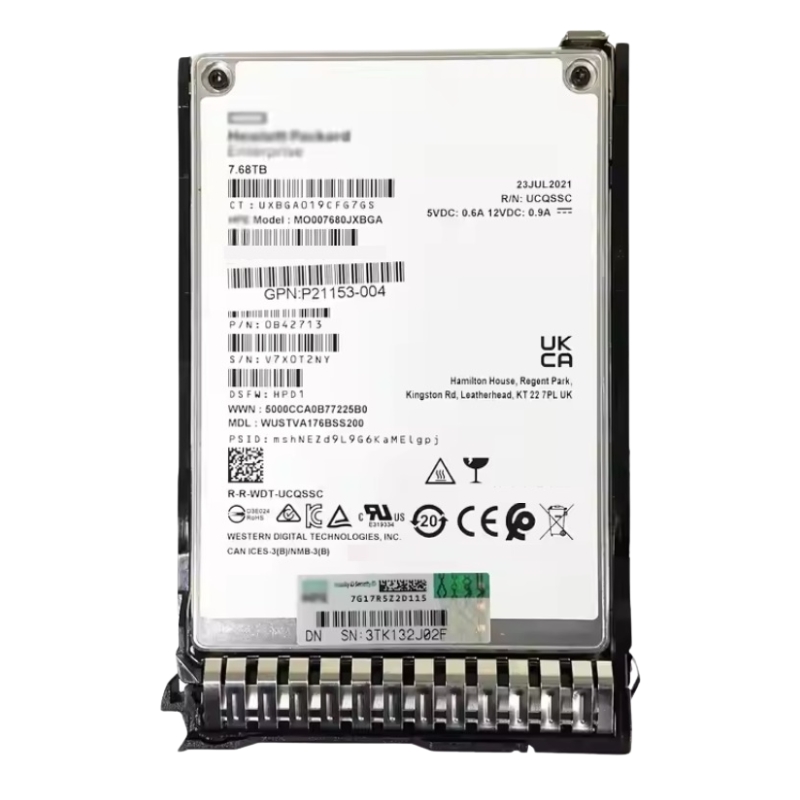


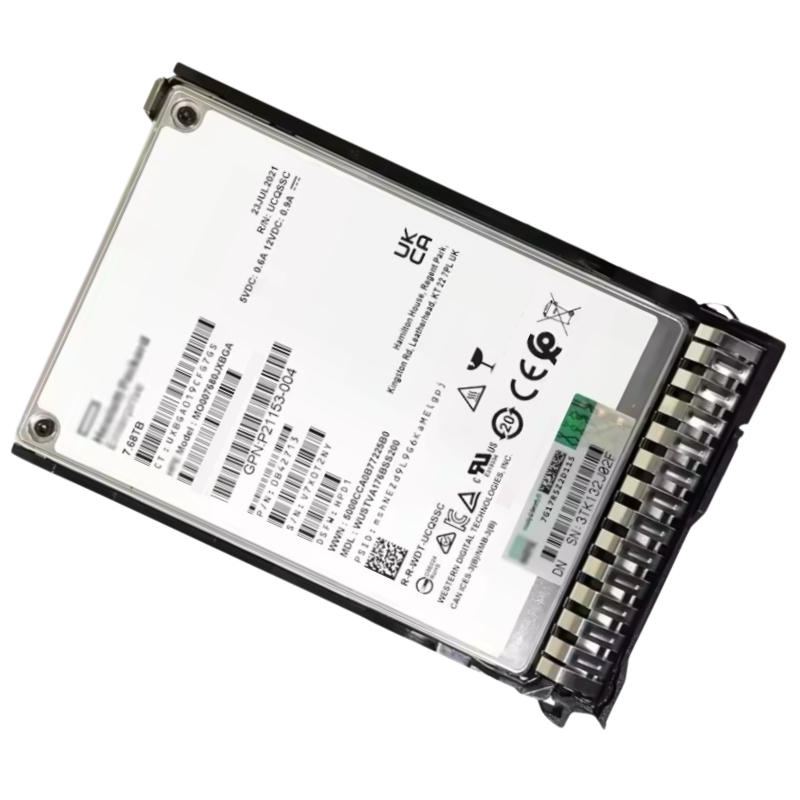
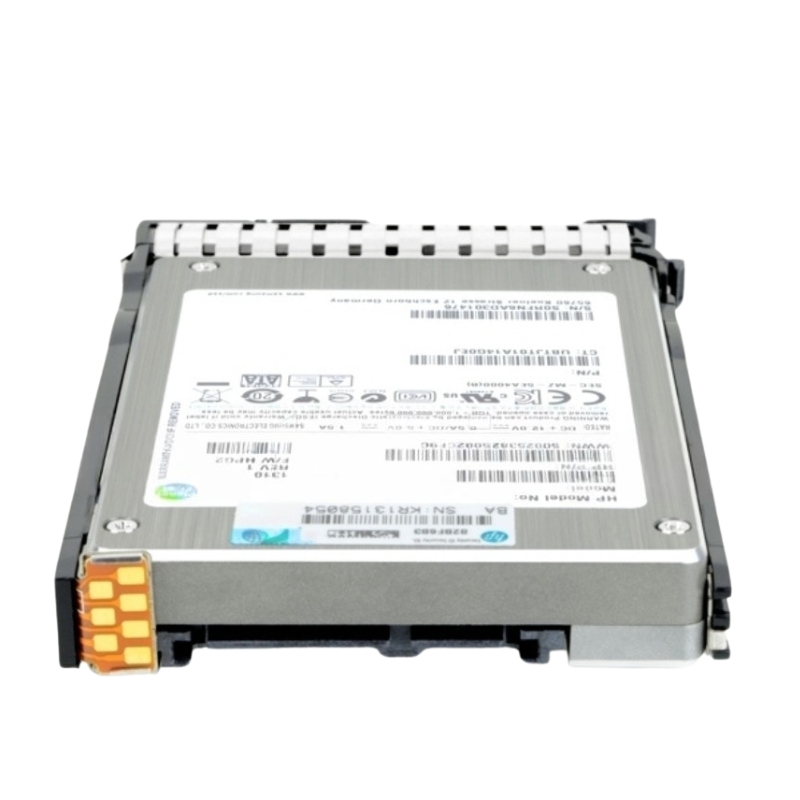
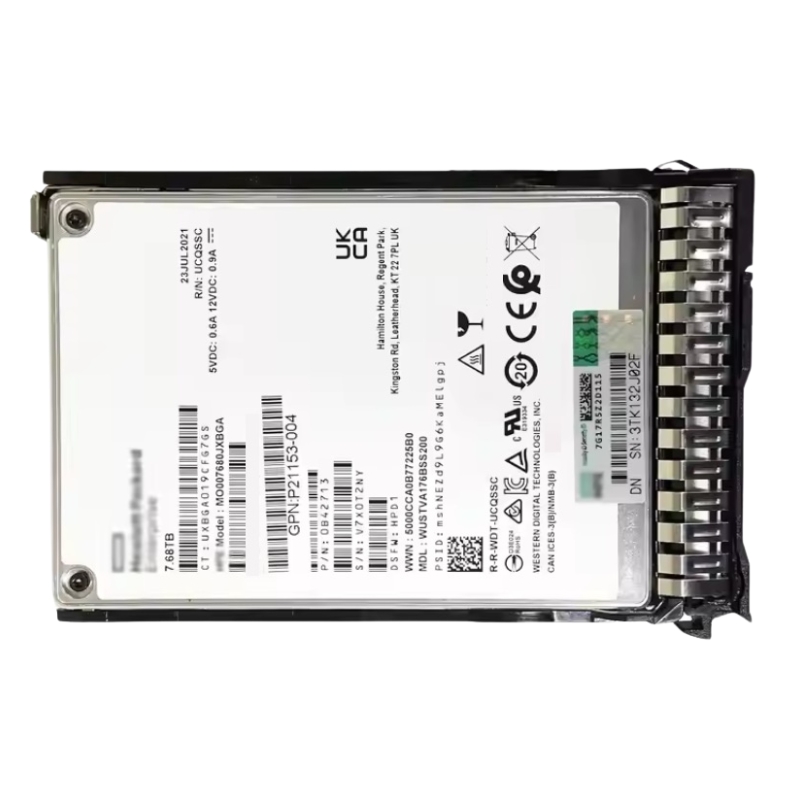
HPE P58230-001 7.68TB SATA 6GBPS 2.5-inch Very Read Optimized Hot Plug Solid State Drive. Factory-Sealed New in Original Box (FSB) with 3 Years Warranty
HPE P58230-001 7.68TB SATA 6GBPS 2.5-inch Very Read Optimized Hot Plug Solid State Drive represents a purpose-built enterprise storage solution engineered to meet the demanding read-centric workloads found in modern data centers. Combining a high-capacity 7.68TB 2.5-inch form factor with a SATA 6Gbps interface and Very Read Optimized firmware profile, this SSD is tailored for applications such as cloud content delivery, large-scale virtualization read caches, analytics query acceleration, and other workloads where high read throughput, low latency, and cost-effective capacity are paramount. The drive’s hot-plug capability supports live replacement and serviceability, enabling minimal disruption in rack-mounted servers and storage enclosures.
The 2.5-inch form factor of the HPE P58230-001 aligns with industry-standard rack and blade servers, facilitating high-density storage architectures. By leveraging a small 2.5-inch footprint, data center architects can populate more drive bays per chassis, increasing usable capacity per rack unit without sacrificing airflow or cooling efficiency. The mechanical design adheres to enterprise shock and vibration tolerances, and the drive’s physical connectors and tray compatibility simplify installation in HPE-branded server sleds and universal hot-swap bays. This mechanical consistency allows system administrators to plan capacity upgrades and refresh cycles with confidence, reducing the complexity of hardware management at scale.
Enterprise environments benefit from the 2.5-inch format through improved rack efficiency and better thermal profiles when compared to larger form factors. The smaller drive diameter allows for denser storage arrays, which in turn lowers the overall cost-per-rack-unit of storage provisioning. In cloud and hyperconverged infrastructures where space, power, and cooling are tightly budgeted, the HPE P58230-001 delivers a compelling combination of capacity and operational economy.
The SATA 6Gbps interface on the HPE P58230-001 ensures broad compatibility with a wide range of server motherboards, RAID controllers, and storage backplanes. Although NVMe and PCIe-based devices have become more prevalent for ultra-low-latency applications, SATA 6Gbps remains a ubiquitous, cost-effective interface for dense, read-optimized capacity where absolute top-tier IOPS is not the primary requirement. This interface choice positions the drive as a practical tier within hierarchical storage architectures: a read-optimized SSD tier that delivers faster access than spinning media while preserving budget predictability across fleet rollouts.
In real-world deployments the expected sequential read and mixed read performance of the HPE P58230-001 will heavily depend on system-level factors such as controller configuration, queue depth, and workload characteristic. For predominantly sequential read workloads, throughput approaches the practical limits of the SATA 6Gbps channel under optimal conditions, while random read latencies remain significantly lower than spinning media. The drive’s firmware tuning under the Very Read Optimized profile prioritizes read caching and garbage collection patterns that minimize read latency jitter and maintain predictable throughput under sustained read traffic.
The 7.68TB capacity point positions the HPE P58230-001 as an attractive choice for capacity-dense, read-heavy storage tiers. High-capacity SSDs allow data center teams to consolidate datasets, reduce the number of drives needed, and lower the overall power and cooling footprint. In budget-sensitive architectures, replacing multiple lower-capacity drives or hybrid HDD/SSD caches with fewer large SSDs can simplify storage topologies and reduce total cost of ownership over the drive lifecycle. The economics of cost per gigabyte on read-optimized SSDs are often favorable for large-scale deployments where I/O is read-focused and harsh write endurance is unnecessary.
Capacity planning for 7.68TB drives requires understanding application working sets, retention requirements, and growth forecasts. Administrators should model wear rates for read-optimized media differently from general-purpose SSDs, as write amplification and the distribution of writes across the drive will directly influence effective lifespan. Lifecycle management strategies for these drives frequently include scheduled capacity audits, background sanitization procedures for decommissioned drives, and integration with asset management systems to track drive health and firmware levels across the fleet.
Hot plug functionality allows the HPE P58230-001 to be inserted or removed while the host system remains powered, facilitating in-service maintenance, hot-swap replacements, and rapid fault remediation. Hot plug support reduces downtime windows for critical services and simplifies field service workflows. In redundant architectures with mirroring or erasure coding at the storage layer, hot-pluggable read-optimized SSDs enable technicians to replace failed drives without service interruption, thereby improving overall availability and operational resilience.
When performing hot swap operations, it is vital to follow manufacturer and system vendor guidelines to prevent data loss and maintain system integrity. Recommended practices include ensuring drive rebuilds complete before removing redundant members, monitoring drive LED and controller status indicators for fault conditions, and coordinating firmware compatibility across arrays. Many modern storage controllers also support predictive failure analytics which can pre-flag drives for replacement, enabling proactive hot-plug maintenance using the HPE P58230-001 as a direct replacement option.
Performance characteristics for the HPE P58230-001 reflect its read-optimized orientation. Read latency is minimized through firmware prioritization and intelligent buffering, which benefits applications requiring consistent, predictable response times. While absolute random write IOPS will be lower than write-optimized enterprise SSDs, the read IOPS and sequential throughput are tuned to handle read-heavy database queries, large object retrieval, and streaming workloads with minimal contention. Performance tuning at the host level — such as adjusting queue depths, using appropriate file system options, and aligning partitions — can further unlock predictable performance for this drive profile.
Common use cases that see tangible improvements with the HPE P58230-001 include content delivery network edge caches, index-serving nodes for search engines, read-heavy database shards, virtual desktop infrastructure (VDI) boot storms where many VMs perform concurrent reads, and analytics/reporting systems that issue large-scale read queries. In these scenarios the drive’s combination of capacity and read-focused responsiveness reduces query latency and improves end-user perceived performance without the premium cost of NVMe-based storage.
Though the HPE P58230-001 is optimized for reads, it still incorporates enterprise-grade features to ensure reliability over extended deployment cycles. Power-loss protection mechanisms, robust error-correcting code (ECC) algorithms, and SMART telemetry are integrated to maintain data integrity and provide actionable health metrics. The drive’s endurance rating is specified for read-optimized usage patterns and should be consulted in vendor documentation when modeling long-term sustainability. Reliability features combined with HPE’s integration testing ensure the drive meets server and storage platform compatibility expectations.
Compatibility with HPE server platforms, storage controllers, and drive enclosures is a practical advantage of the HPE P58230-001. The drive is validated against many HPE ProLiant server generations and HPE storage architectures which simplifies procurement decisions and ensures smoother integration. HPE’s validated compatibility matrices should be consulted for exact firmware pairings and controller combinations to avoid subtle interoperability issues, and administrators should plan coordinated firmware updates when integrating large numbers of drives.
Interoperability concerns often arise in mixed-fleet environments. Admin teams should verify that controller firmware supports the drive’s SATA features and that RAID or HBA modes are configured for read-optimized performance when required. In heterogeneous datacenter environments, ensuring that drive firmware is uniform across an array reduces the risk of anomalous behavior under stress and simplifies troubleshooting by reducing variability.
Security in enterprise SSDs includes both physical and logical protections. The HPE P58230-001 typically supports secure erase commands, optional encryption features when paired with compatible controllers, and integration points for higher-level data protection policies. Administrators implementing drive-level encryption should ensure key management aligns with organizational security policies and that responsible sanitization procedures are followed when decommissioning drives. Combining drive-level security with array and application layer encryption provides a layered defense against data leakage.
End-of-life procedures for SSDs must address secure data sanitization; for the HPE P58230-001 this can include ATA secure erase commands or vendor-provided cryptographic erase routines when hardware-based encryption is enabled. Proper documentation of sanitization steps and logging of operations is a compliance necessity in regulated industries. When returning drives to vendors or disposing of them, ensure adherence to local regulations and corporate policies governing data destruction and asset disposal.
Resilience patterns such as mirroring, erasure coding, and RAID configurations remain important when using read-optimized SSDs. Mirrored pairs or multi-node replication offer immediate failover and minimal read disruption, while erasure-coded pools provide storage efficiency at the cost of more complex rebuild operations. Considering the drive’s read-centric profile, architects may choose configurations that bias rebuild priority to restore read availability quickly while planning rebuild windows to minimize write amplification during recovery.
Read-optimized SSDs like the HPE P58230-001 find broad adoption across industries where read latency directly impacts business outcomes. In financial services, read-intensive analytics and historical data retrieval benefit from the drive’s low-latency reads. In media and entertainment, content streaming and video-on-demand platforms use read-optimized tiers to accelerate file serving. Cloud providers apply these drives for object storage hot tiers and caching layers. Additionally, large online retailers benefit from faster product search and catalog retrieval when using read-optimized SSDs to hold indices and catalog snapshots.
When compared to NVMe SSDs, the HPE P58230-001 offers larger capacity at a lower cost per gigabyte but with higher latency and lower maximum IOPS. Compared to enterprise HDDs, it delivers dramatically lower latency, higher throughput for random reads, and reduced power consumption, albeit at a higher acquisition cost. Within the SATA SSD family, the HPE P58230-001’s Very Read Optimized firmware distinguishes it by delivering superior read consistency and predictable performance under read-heavy conditions. This makes it a compelling option for read-tier consolidation and cache layers in mixed storage architectures.
Energy efficiency is an increasingly important factor in procurement decisions. Because SSDs lack mechanical platters and motors, they generally deliver significant energy savings per I/O operation compared to HDDs. For large-scale read-intensive deployments, using high-capacity SSDs like the HPE P58230-001 can reduce overall power consumption and cooling requirements, contributing to lower operational expenses and improved sustainability profiles.


 Contact Us
 Information
 Catalog
 Solid State Drives (SSD)
 Network Switches
 Hard Disk Drives
 HBA & Controllers
 PC & Servers
 PC & Server Memory
 CPU & Processors
 Network Routers
 Power Supplies
 Tape Drives & Libraries
 Network Devices
 Computer & Network Cables