(7% discount is applied at checkout)
Cart is empty
Your go-to destination for cutting-edge server products
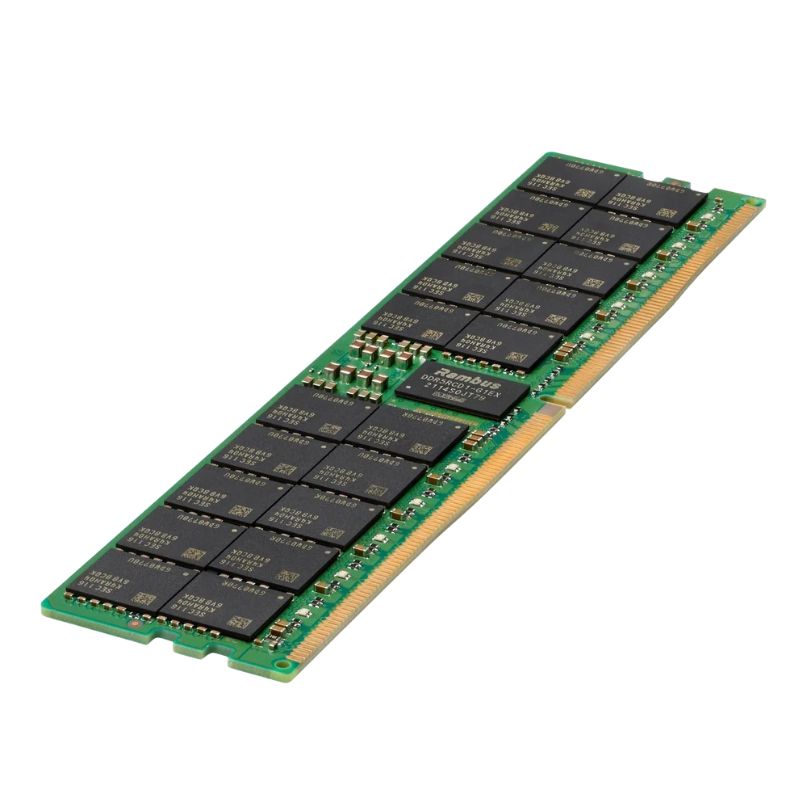


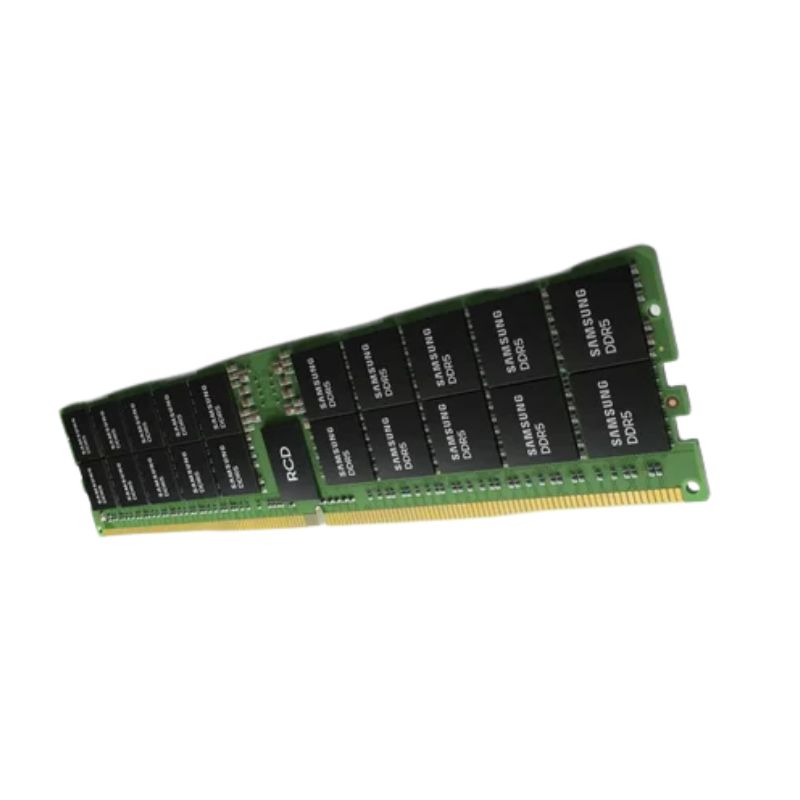
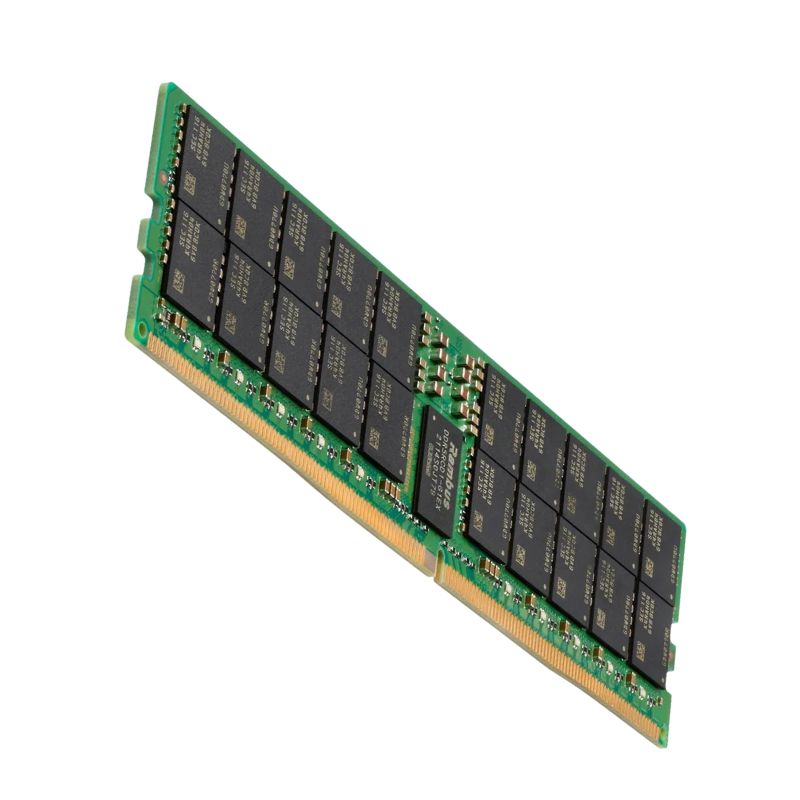
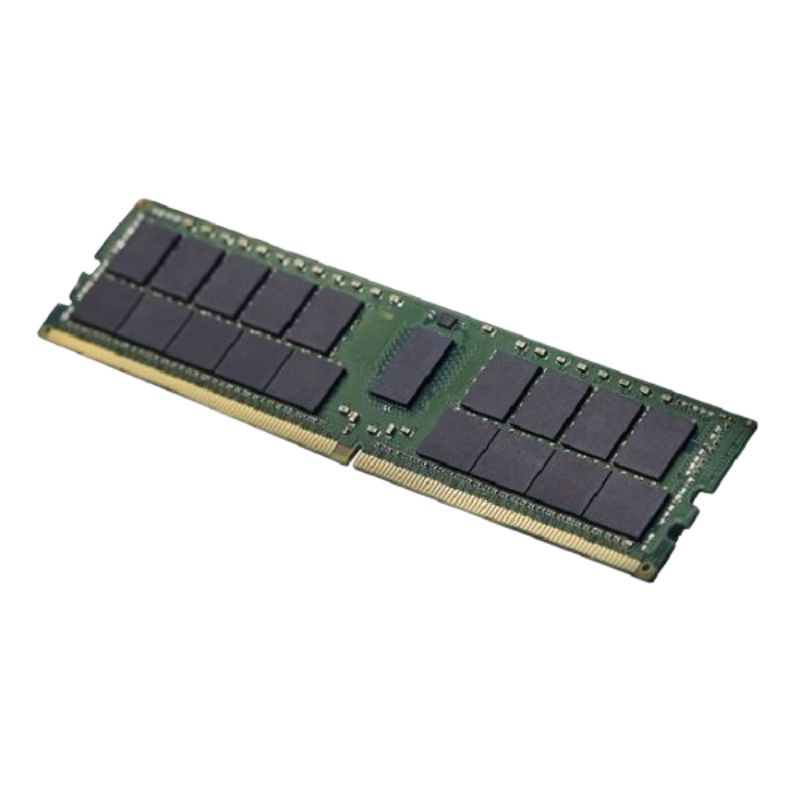
P64984-H21 HPE 16GB DDR5-6400MHz PC5-51200 ECC Registered RDIMM CL52 1.1V Memory Module. New Sealed in Box (NIB) with 3 Years Warranty
The HPE P64984-H21 16GB DDR5-6400 PC5-51200 Registered RDIMM is designed to deliver exceptional performance, reliability, and stability for modern servers and data-intensive environments. This single-rank x8 memory module optimizes bandwidth while reducing latency, making it a trusted choice for enterprise-grade applications. With advanced ECC (Error-Correcting Code) technology and low 1.1V operating voltage, it balances power efficiency with uncompromised data integrity.
The HPE P64984-H21 16GB DDR5-6400 ECC Registered Module is engineered for enterprise servers that demand superior performance and reliability. It is widely used across industries for.
Explore the P64984-H21 family of HPE 16GB DDR5-6400MHz PC5-51200 memory modules — engineered for enterprise servers, high-density compute nodes, and mission-critical storage systems. This continuous category description focuses on ECC Registered RDIMM DDR5 memory modules that deliver a balance of high bandwidth, low latency CAS timing, power efficiency, and error-correction reliability essential for data center workloads. The modules in this category conform to modern JEDEC DDR5 specifications and HPE validation profiles, offering 16GB capacity per module, a peak transfer rate equivalent to PC5-51200, an operating voltage of 1.1V, and a CAS latency around CL52. Ideal for virtualized environments, database servers, analytics clusters, and high-availability applications, these RDIMM modules give system architects predictable performance, memory scaling capability, and enterprise-grade stability.
A thorough technical breakdown helps technical buyers quickly verify compatibility and performance expectations. Below is a detailed list of the most important specifications you’ll need when choosing modules from the P64984-H21 category.
DDR5 SDRAM — JEDEC-compliant DDR5-6400 modules that support bank-group improvements, on-die ECC, and internal innovations unique to DDR5 while retaining system-level ECC via the RDIMM design. These modules are registered (buffered) to reduce electrical loading on large memory channels and to support higher capacity per channel in multi-socket server configurations.
Each module in the P64984-H21 line typically provides 16GB of raw DRAM capacity. This capacity is geared toward building flexible memory footprints — combine multiple modules across channels and sockets to achieve memory configurations tailored to virtualization, in-memory databases, or compute-intensive tasks.
Rated DDR5-6400 (PC5-51200) — this denotes a peak data rate of 6,400 MT/s and a theoretical bandwidth of 51,200 MB/s per module width equivalence reference. Practical sustained throughput depends on CPU memory controller, platform topology, and interleaving, but DDR5-6400 provides a meaningful bandwidth uplift compared to lower-frequency DDR5 or DDR4 options.
CAS Latency (CL52) is the column access strobe delay parameter and an important metric for latency-sensitive applications. CL52 at DDR5-6400 provides a balanced compromise between ultra-high frequency and manageable access latency for server workloads.
Nominal operating voltage is 1.1V, which is lower than many DDR4 modules and helps reduce power draw on memory subsystems. The DDR5 architecture also includes power-management improvements such as on-module PMIC (power management IC) and bank-level scalability to help with thermal and power budgeting in dense deployments.
These modules are ECC Registered RDIMMs: system-level ECC corrects single-bit errors and detects multi-bit errors, while the registered buffer reduces electrical loading to enable higher memory capacities and improve signal integrity across large memory populations — essential for enterprise-grade uptime and data integrity.
Standard 288-pin RDIMM form factor for DDR5 server memory. Thermal labels, part numbers, and HPE-specific firmware/firmware ID strings may be present on the module heats preader or PCB silkscreen depending on HPE’s validation and warranty labeling.
Designed to operate inside rack-mounted servers and static-controlled assembly environments. Typical operating temperature ranges and humidity tolerances follow server-grade JEDEC and HPE guidelines; always confirm exact operating range on module datasheets for extreme or custom deployments.
Compatibility is a primary concern for servers where memory mix-and-match errors can lead to instability or suboptimal performance. Modules in this category are developed to pass HPE’s qualification tests and are engineered to work with a range of HPE ProLiant and Apollo servers as well as other systems that explicitly support registered DDR5 RDIMMs. When planning upgrades, consult platform-compatibility matrices and firmware release notes for memory population rules, recommended slots, and supported DIMM speeds per CPU type and BIOS version.
Follow platform-specific population rules: for optimal performance install DIMMs across channels in the order specified by the server handbook. Mismatched DIMMs (different capacities or speeds) can force the memory controller into lower-performance modes or mixed-speed operation. If mixing is unavoidable, match capacity and similar speed/timings to minimize downclocking or increased latency.
For enterprise applications that demand consistent throughput and error resilience, P64984-H21 DDR5-6400 RDIMMs offer several tangible performance benefits. The increased frequency improves memory bandwidth, which reduces bottlenecks for memory-bound workloads such as large in-memory databases, analytics operations, and AI/ML training inference pipelines. Error-correcting RDIMM architecture reduces rare, random bit flips and contributes to higher application-level uptime. For cloud, virtualized, and multi-tenant environments, predictable memory behavior reduces the risk of service interruptions.
While DDR5-6400 raises available bandwidth, absolute latency (measured by CAS cycles multiplied by cycle time) may be slightly higher in nanoseconds compared to lower-frequency parts because of the CL52 numerical value. However, the net effect in throughput-centric tasks is generally positive — more data per second is moved between CPU and memory, improving workload completion time for parallel and streaming operations. Evaluate both latency and bandwidth relative to your target applications: transactional databases and real-time systems may value lower average latency; large analytical jobs will benefit from higher bandwidth.
Enterprise memory categories like P64984-H21 are sold with extensive validation testing and often backed by warranties tailored for server deployments. HPE-qualified memory may include warranty coverage when used within supported HPE systems; OEM validation ensures firmware compatibility and thermal/power behavior under load. Always check vendor warranty terms, replacement procedures, and RMA (return merchandise authorization) processes when procuring modules — and retain purchase documentation for warranty claims and support escalations.
DDR5 introduces on-die ECC (ODECC) which helps protect individual DRAM chips from certain internal errors. However, system-level ECC (enabled by RDIMM architecture and the server’s memory controller) remains essential to detect and correct multi-bit errors at the module level and to preserve data integrity across the entire memory subsystem. The combination of ODECC and system ECC provides layered protection against memory errors.
Enterprise memory vendors often publish mean-time-between-failure (MTBF) figures and typical error rates, though actual reliability is influenced by operating temperature, system stress, and manufacturing variance. Implementing proper thermal management and using validated heat dissipation within server chassis will extend module life and reduce error incidence.
Choosing the right server memory requires comparing RDIMM DDR5 modules against alternatives like UDIMM DDR5, LRDIMM, or legacy DDR4 RDIMMs. Below is a concise comparison to guide selection decisions.
Compliance Considerations
Data center memory components must meet regulatory and corporate-compliance needs. When procuring P64984-H21 modules, consider supply-chain traceability, OEM or third-party validation stamps, and whether the modules carry certifications required by your industry (for example, environmental or manufacturing standards). Work with suppliers who provide clear provenance and compliance documentation to meet internal audits and external regulatory requirements.
Initial purchase price is one factor; consider total cost of ownership across the lifecycle — including failure rates, energy consumption, and administrative overhead for troubleshooting and warranty claims. Lower voltage DRAM (1.1V DDR5) reduces energy consumption per module which can translate into measurable savings in large-scale racks. RDIMM reliability reduces downtime risks and operational cost associated with data corruption or server outages.
After installation, use vendor tools and OS-level monitoring to ensure peak performance and reliability. Monitor ECC correction counts, temperature sensors near memory banks, and BIOS-reported memory training results. Adjust BIOS memory profiles only when you understand the implications — enabling aggressive XMP-like profiles may increase frequency but can also reduce stability if platform firmware does not fully support the setting.
To maximize search visibility and conversion for the P64984-H21 category, follow these content and technical recommendations. Integrate long-tail keywords such as “HPE 16GB DDR5-6400 RDIMM CL52 1.1V” and “PC5-51200 server RAM for HPE ProLiant” into headings and product description snippets.


 Contact Us
 Information
 Catalog
 Solid State Drives (SSD)
 Network Switches
 Hard Disk Drives
 HBA & Controllers
 PC & Servers
 PC & Server Memory
 CPU & Processors
 Network Routers
 Power Supplies
 Tape Drives & Libraries
 Network Devices
 Computer & Network Cables